A school science teacher called our sales team last year with a simple question. She had budget for fifteen microscopes. Should she buy fifteen monocular models, or ten binocular ones?
We get some version of this question every week. A pathology lab wants to know if a binocular is enough or if they need a camera port. A college wants to know if a trinocular is worth the extra money for its research wing.
Here is the thing. In the monocular vs binocular vs trinocular microscope debate, the only real difference is the head, the part you look through. The objectives, the stage and the light can be exactly the same. But that one part changes comfort, brightness, price, and whether you can take pictures at all.
SUSWOX is a microscope manufacturer in India based in Ambala, Haryana, making ISI-marked microscopes since 1973. We build all three head types in-house, so this guide comes from the factory floor, not from a catalogue.
What is the difference between monocular, binocular and trinocular microscopes?
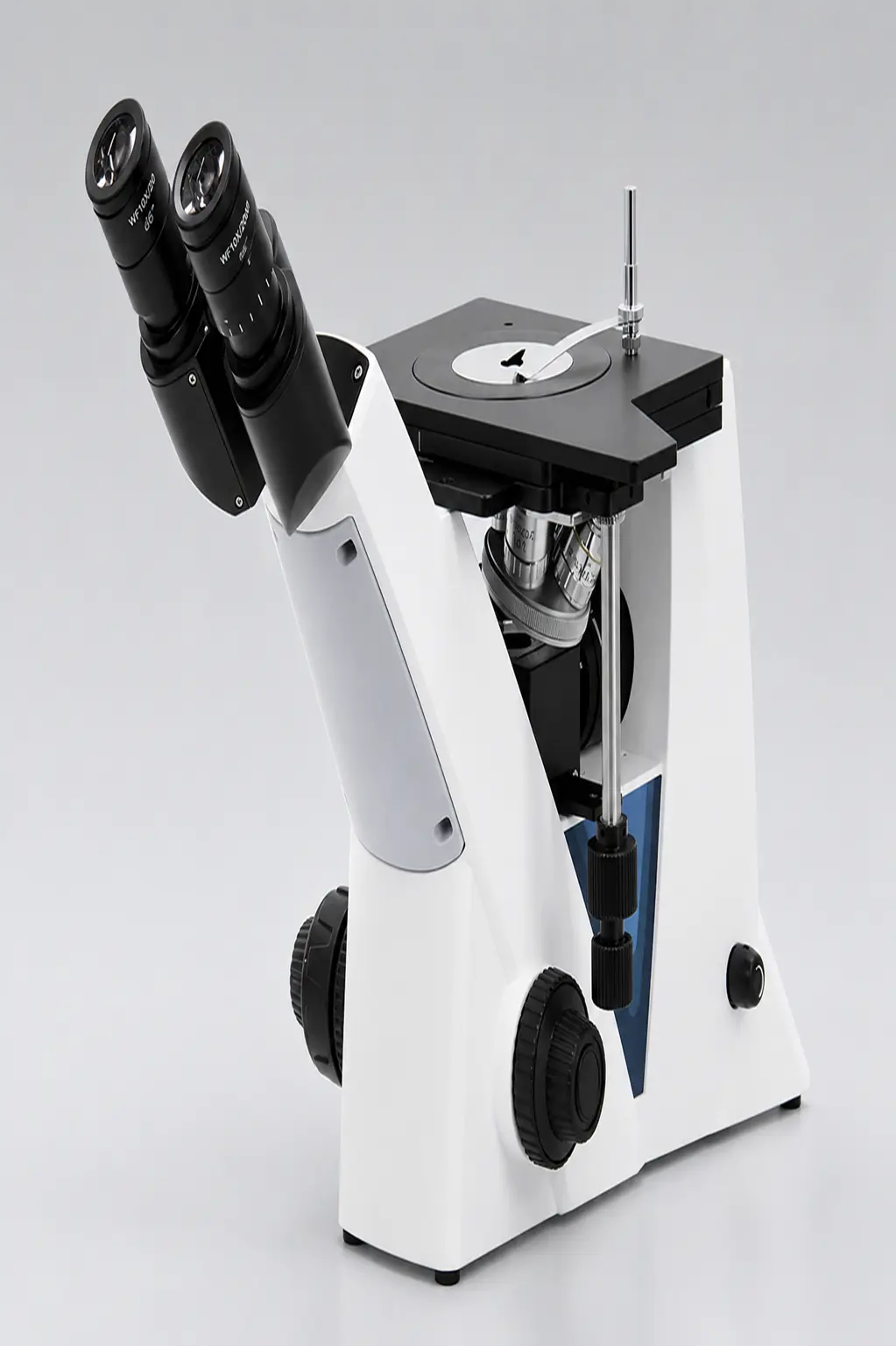
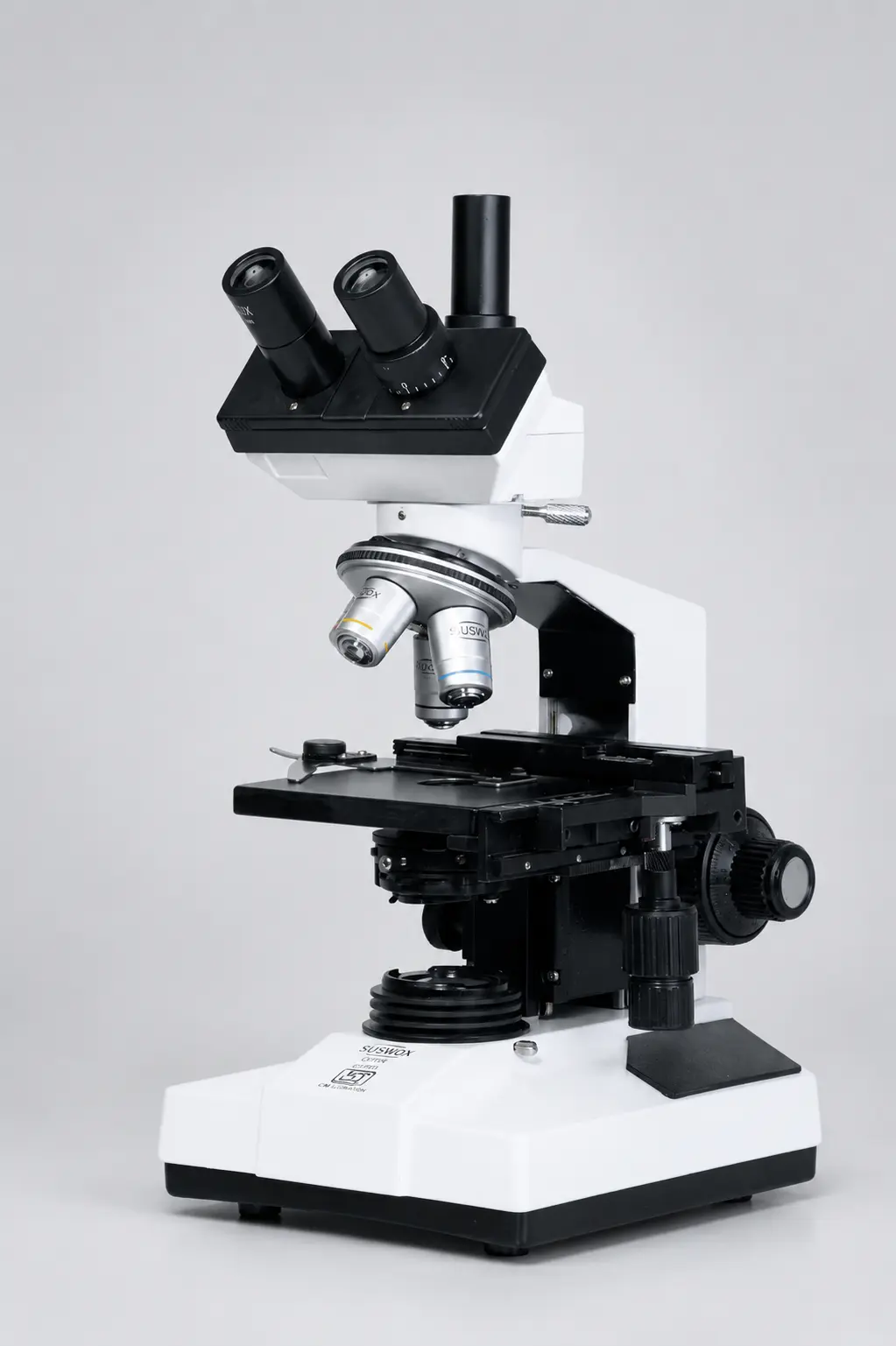
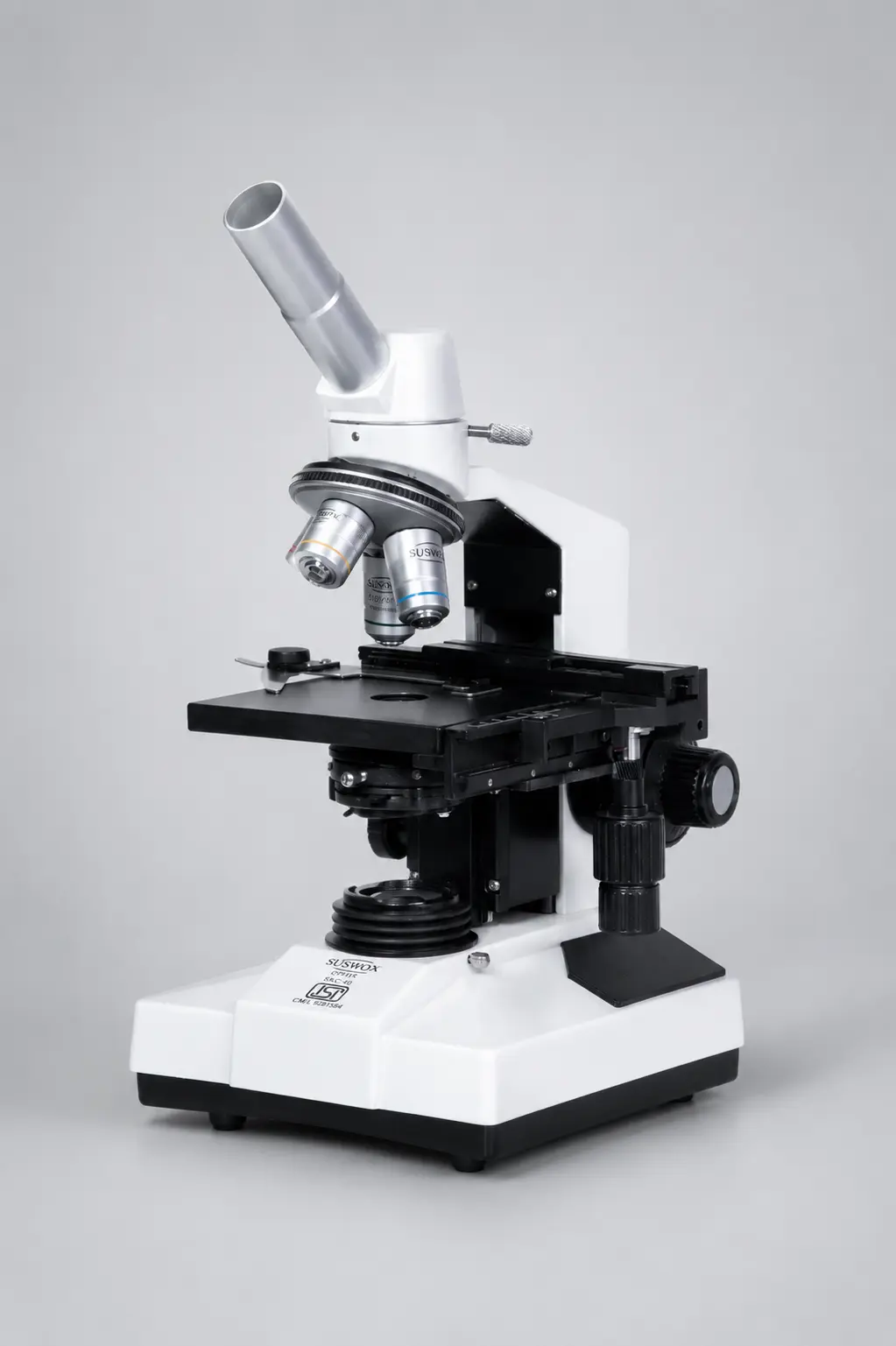
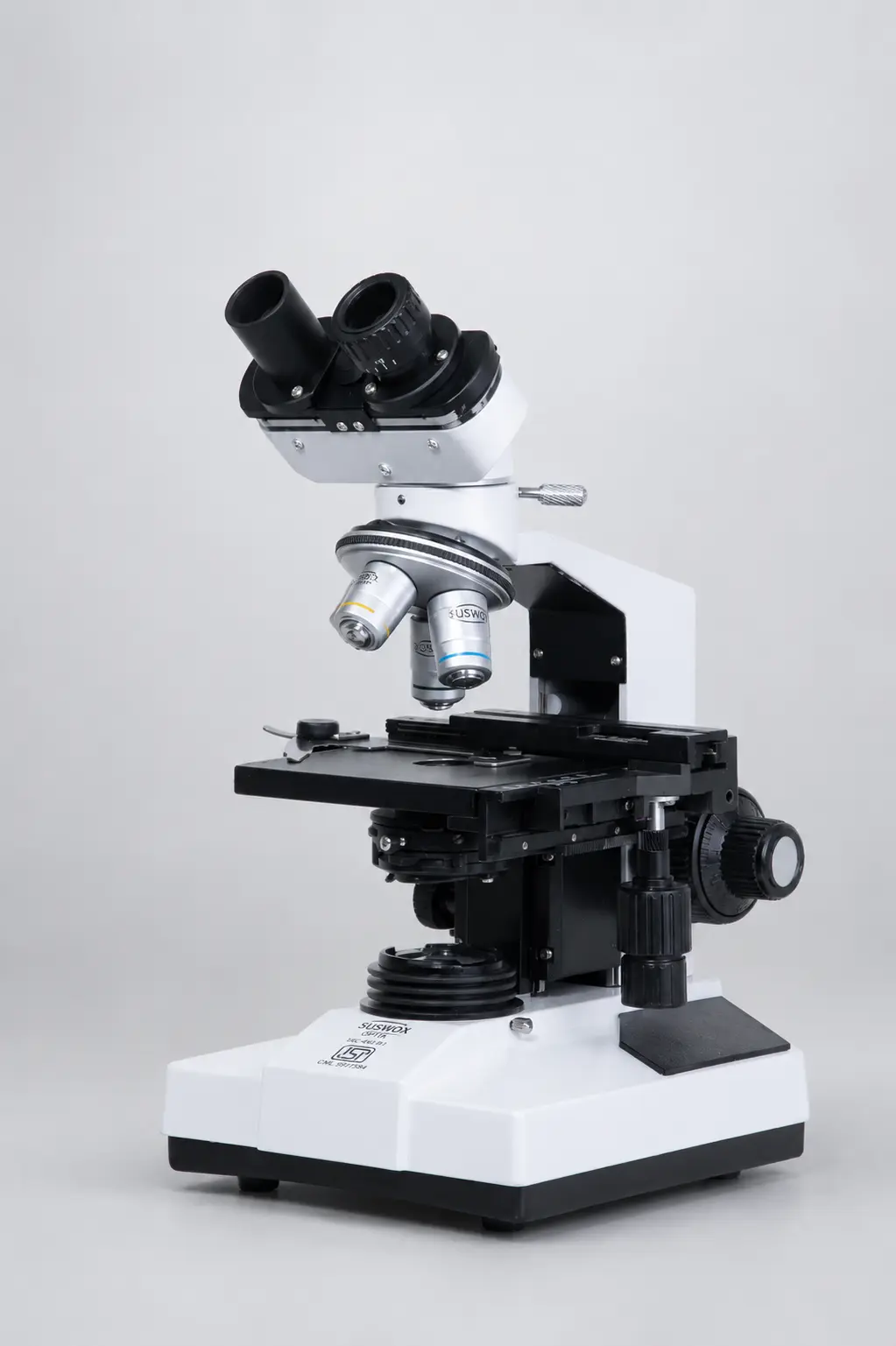
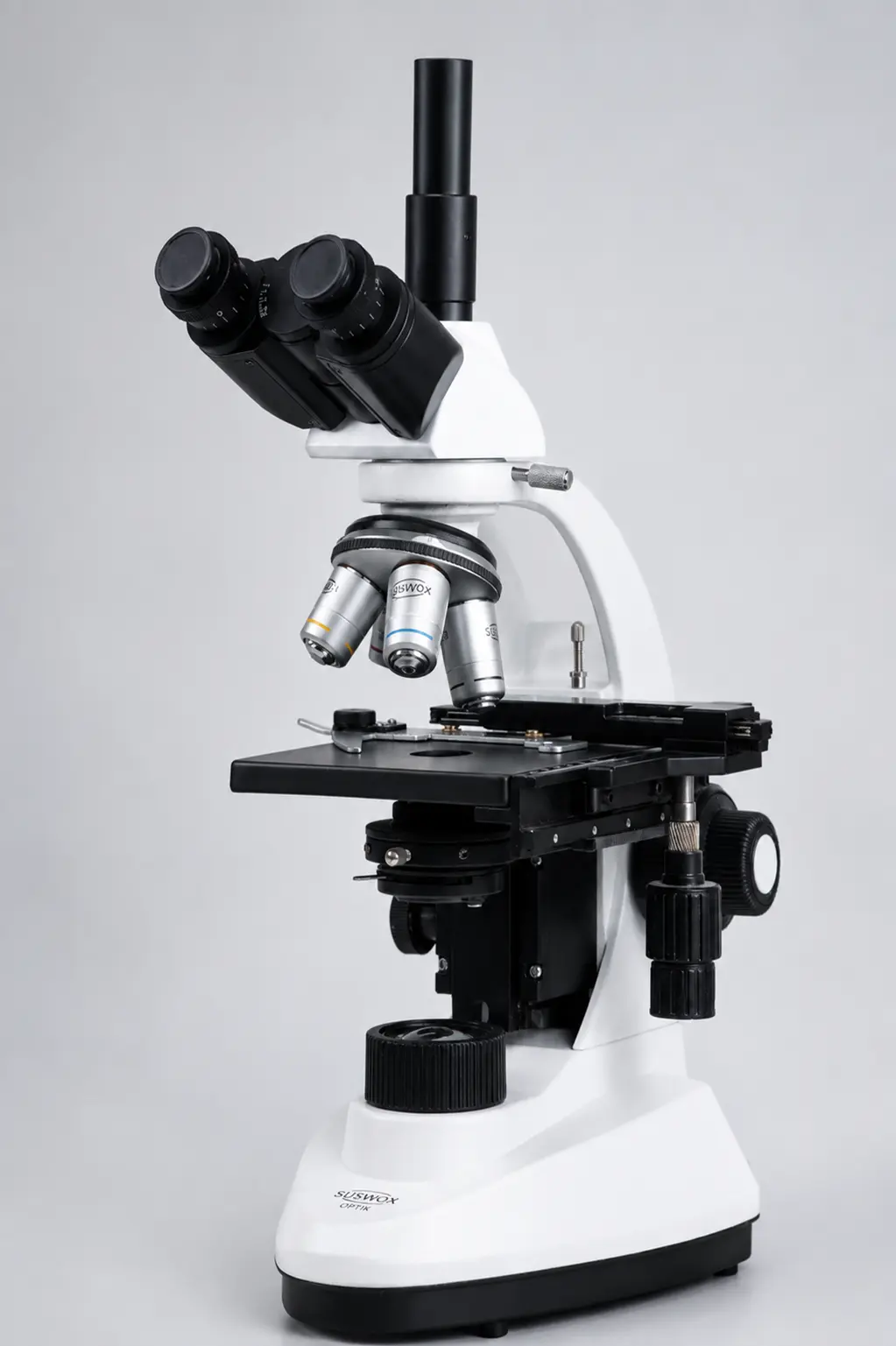
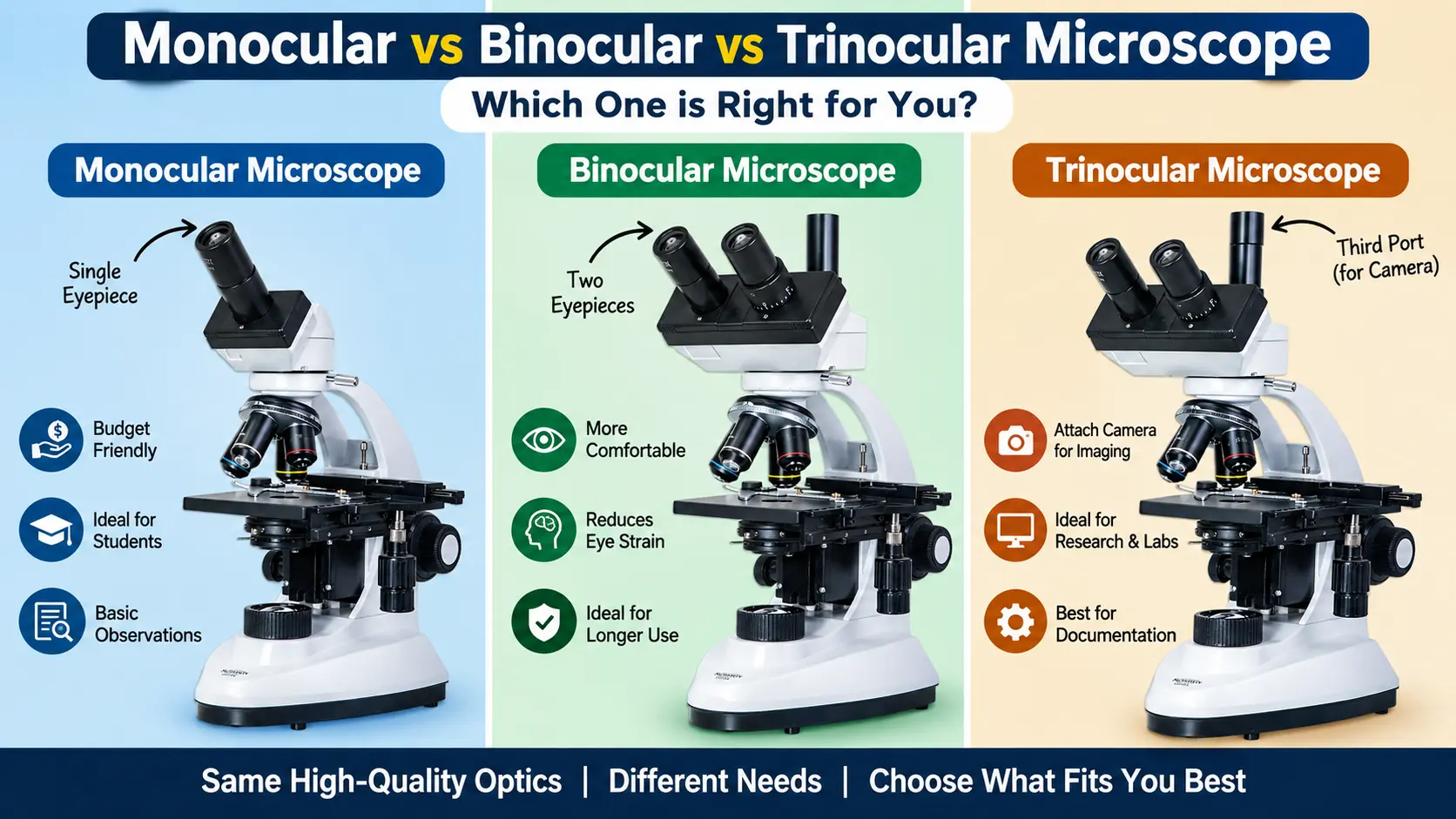
A monocular microscope has one eyepiece, a binocular microscope has two eyepieces, and a trinocular microscope has two eyepieces plus a third port for a camera. Monocular is the cheapest and suits school students. Binocular is more comfortable for long lab work. Trinocular is for labs that need to capture images or video.
That is the short version. The table below gives you the full picture in one look.
| Feature | Monocular | Binocular | Trinocular |
| Eyepieces | One | Two | Two + camera port |
| How you view | One eye | Both eyes | Both eyes, plus screen |
| Comfort in long sessions | Low | High | High |
| Image brightness | Brightest (all light goes to one eye) | Slightly lower (light is split in two) | Slightly lower (light may also go to camera) |
| Camera use | Only with an eyepiece camera | Only with an eyepiece camera | Yes, dedicated C-mount port |
| Adjustments | Head rotation | Eye distance + diopter | Eye distance + diopter + light path |
| Best for | Schools, beginners | Pathology, clinics, college labs | Research, teaching on screen, records |
| Relative cost | Lowest | Medium | Highest |
| SUSWOX examples | SK-33, SK-77 I | SK-77 Bi, SC-300 R | SKC 400 TR, CXL Ti |
What is a monocular microscope?
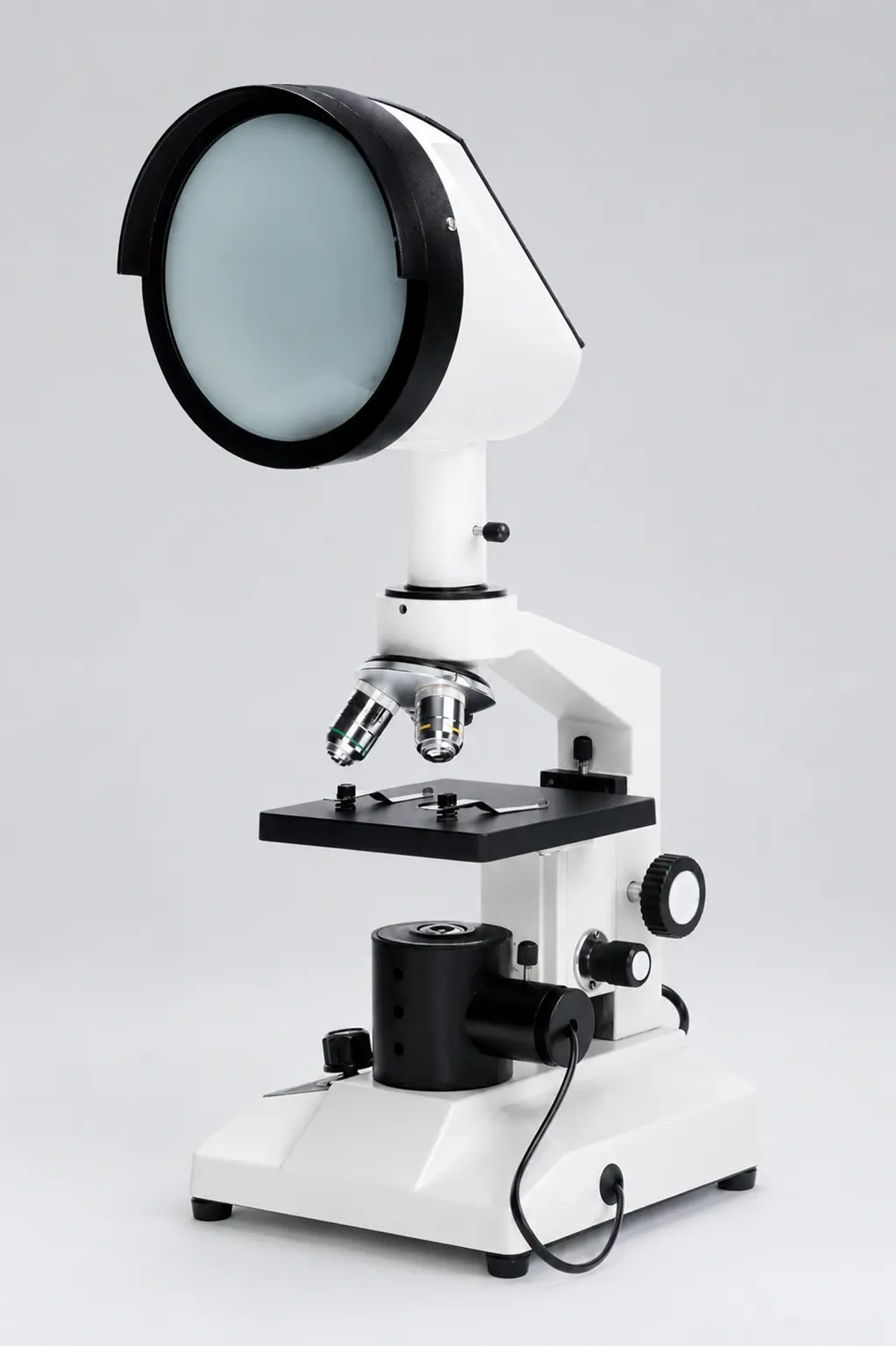
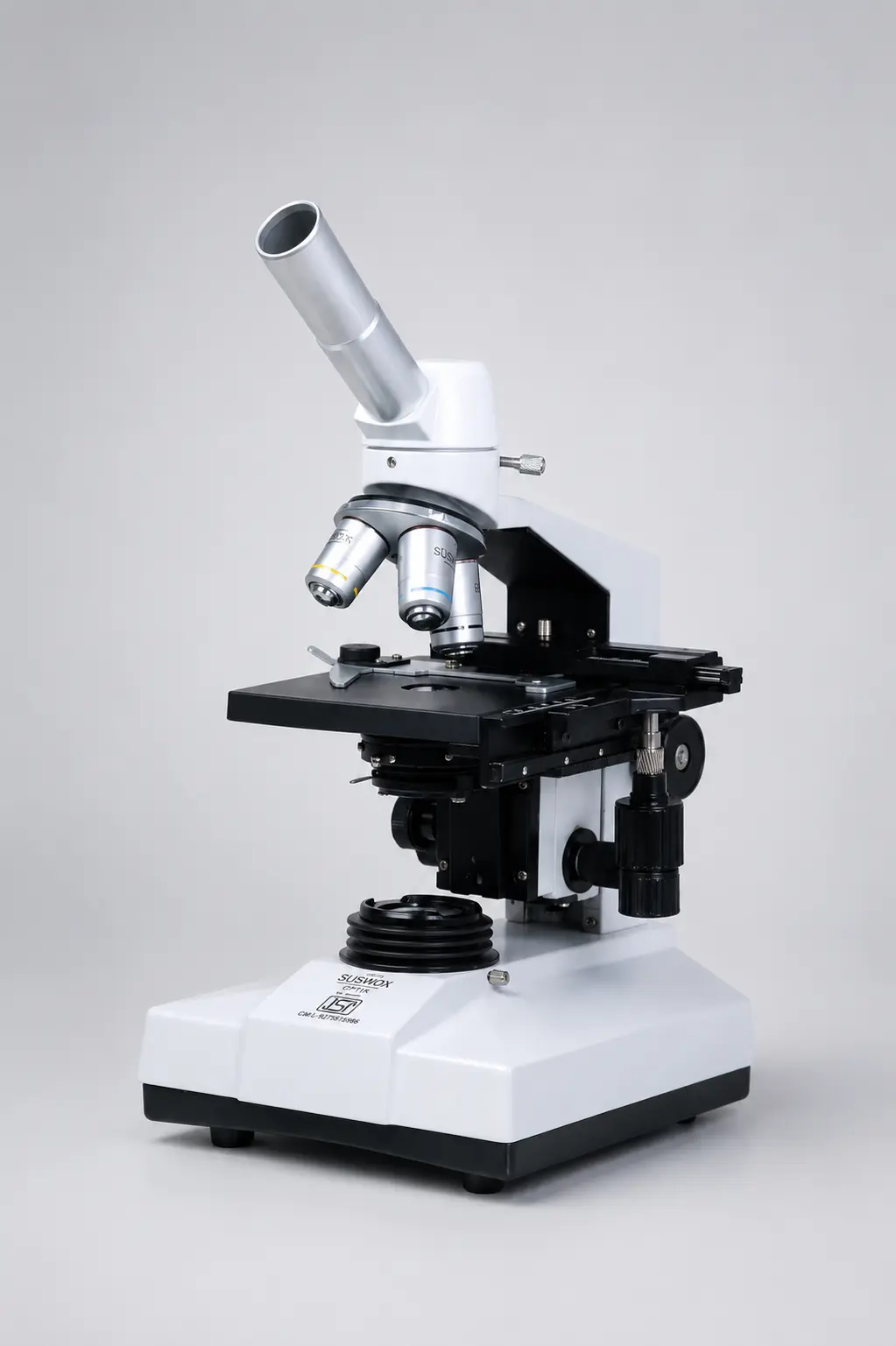
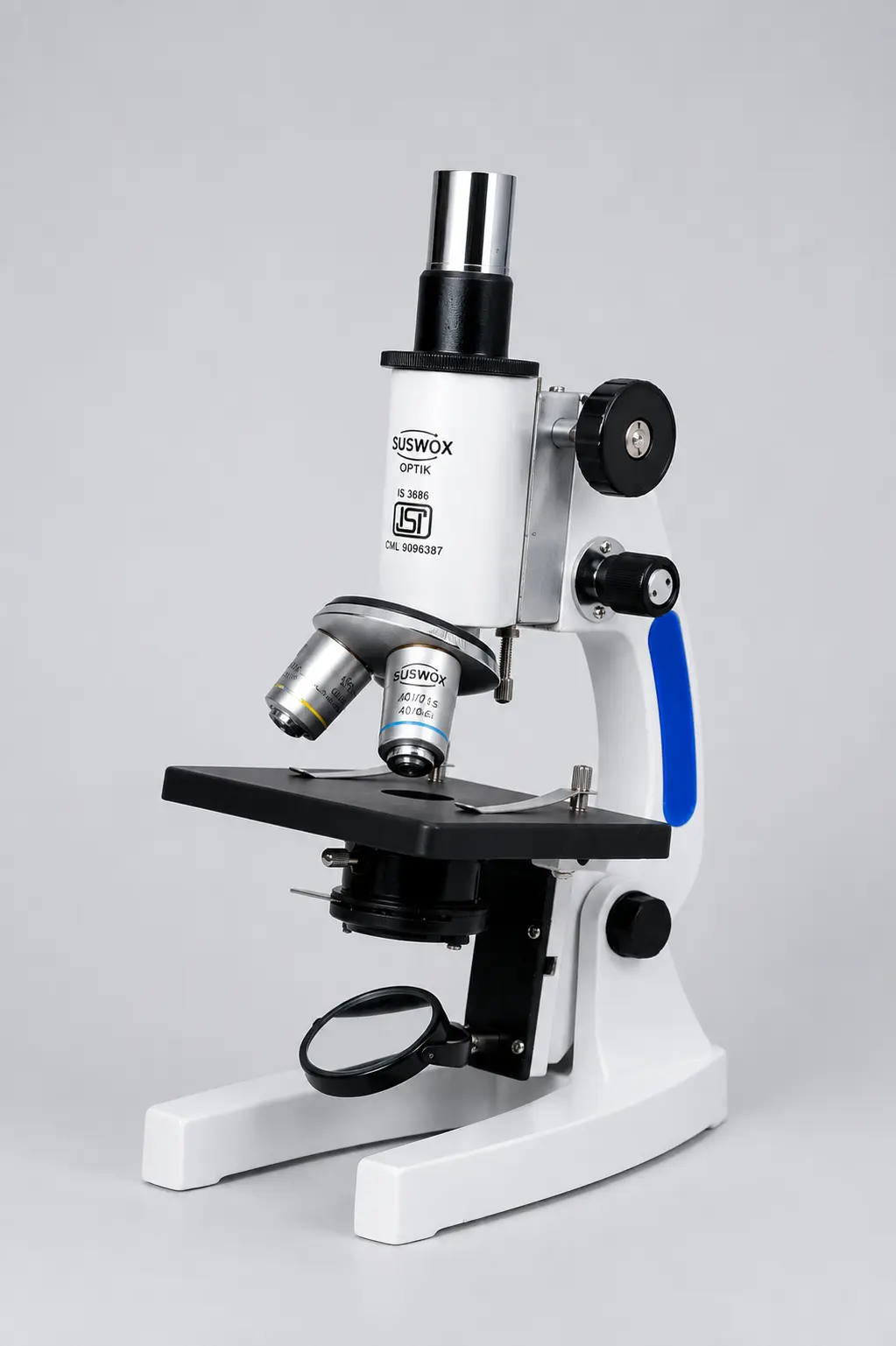
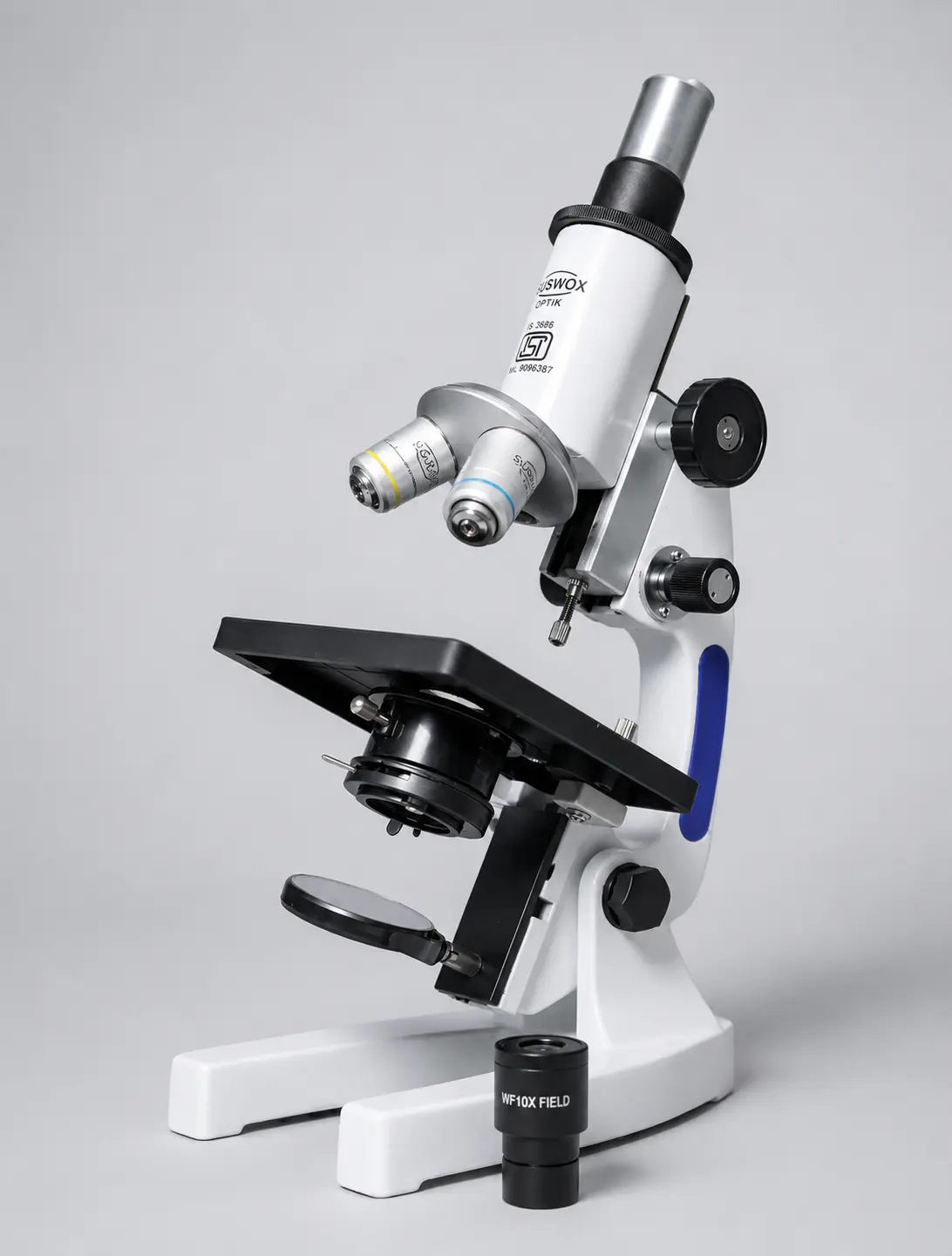
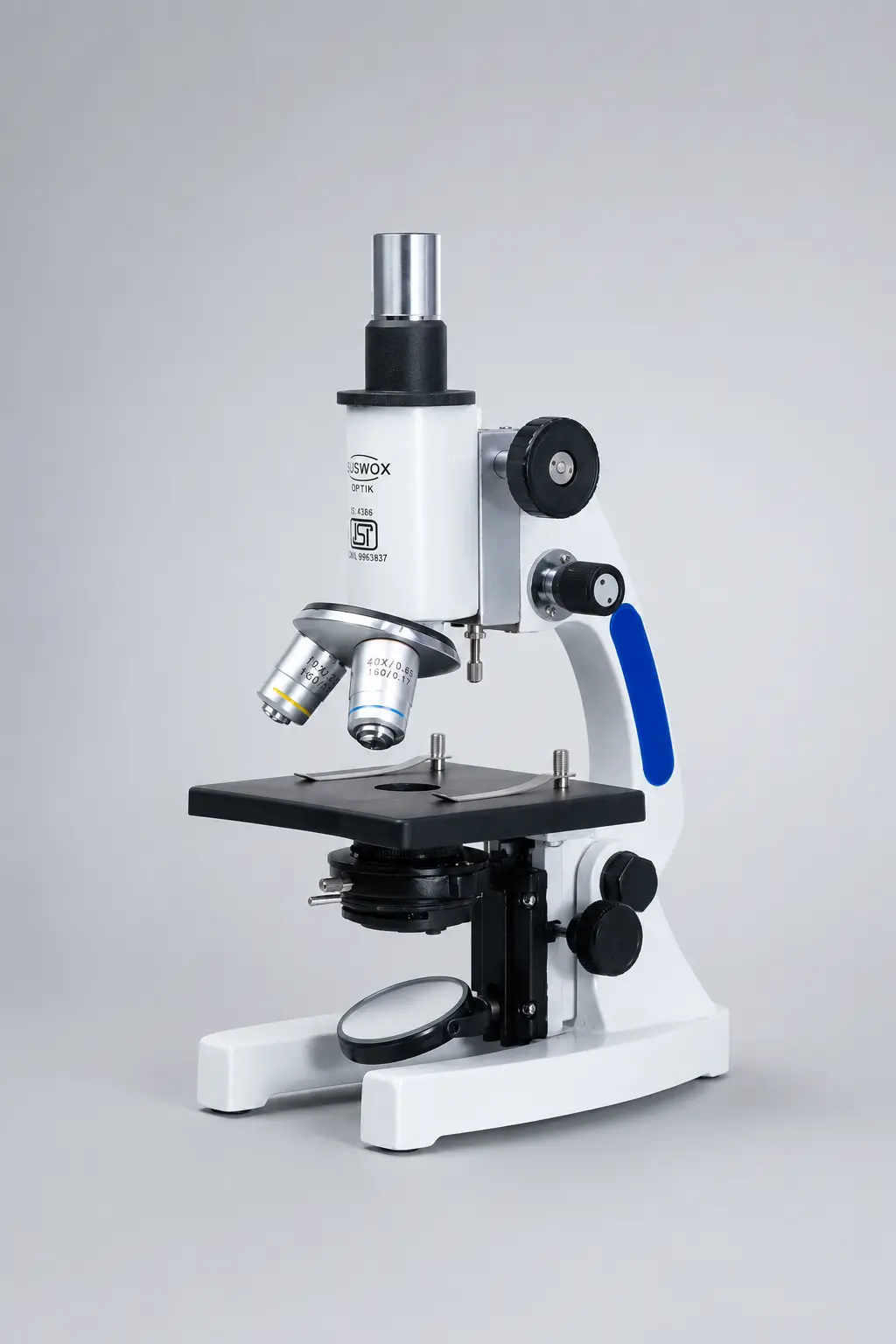
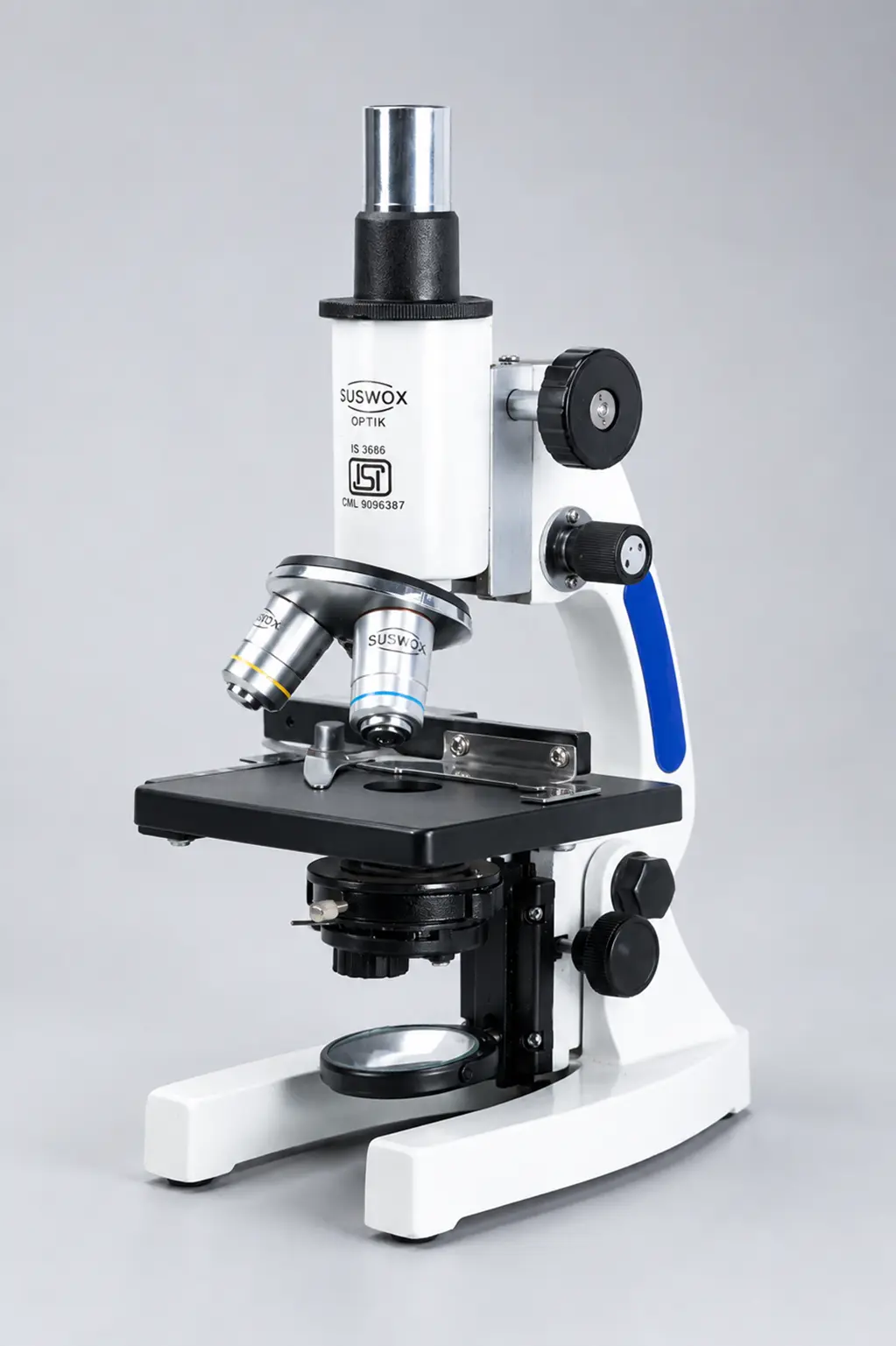
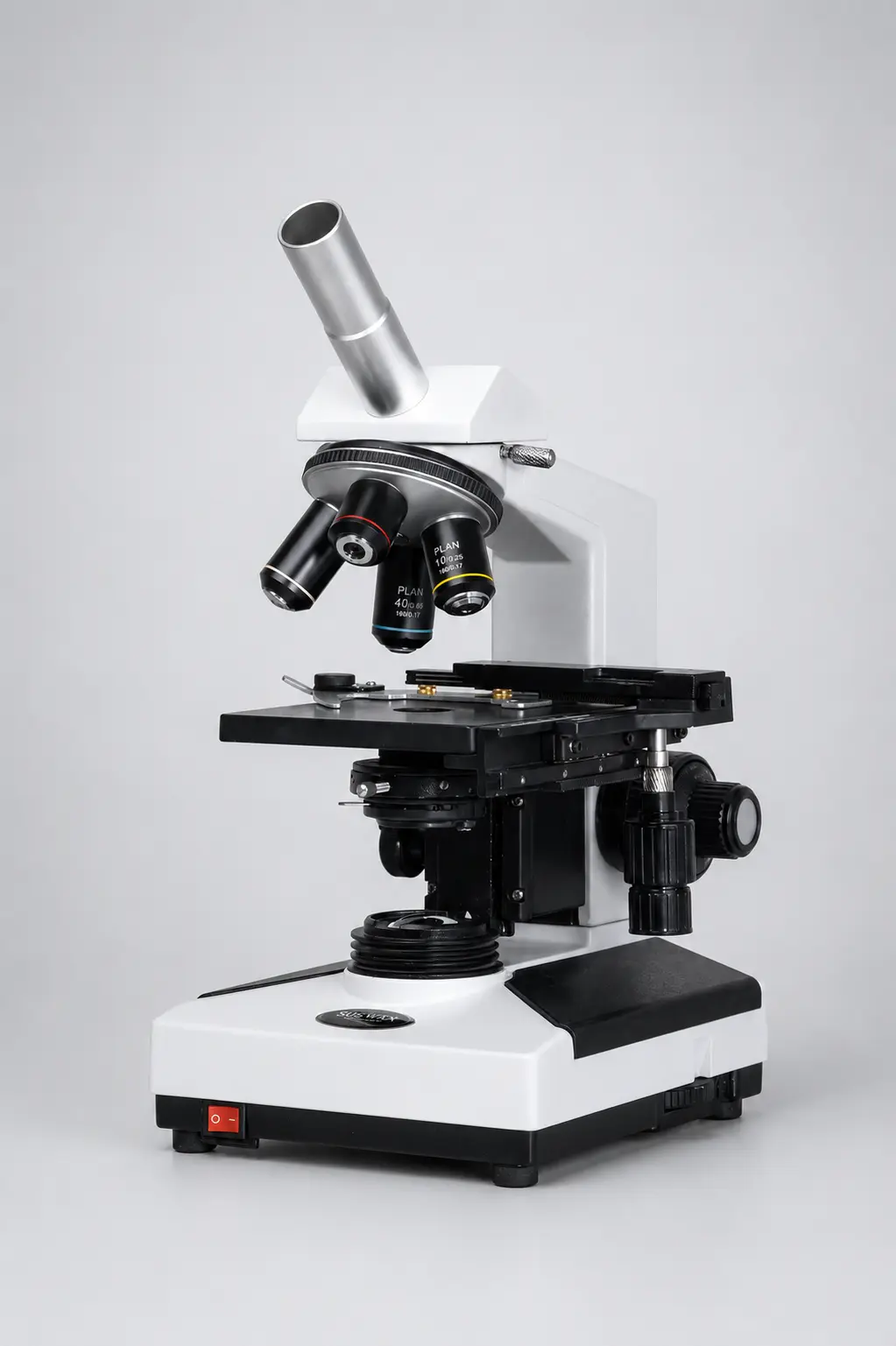
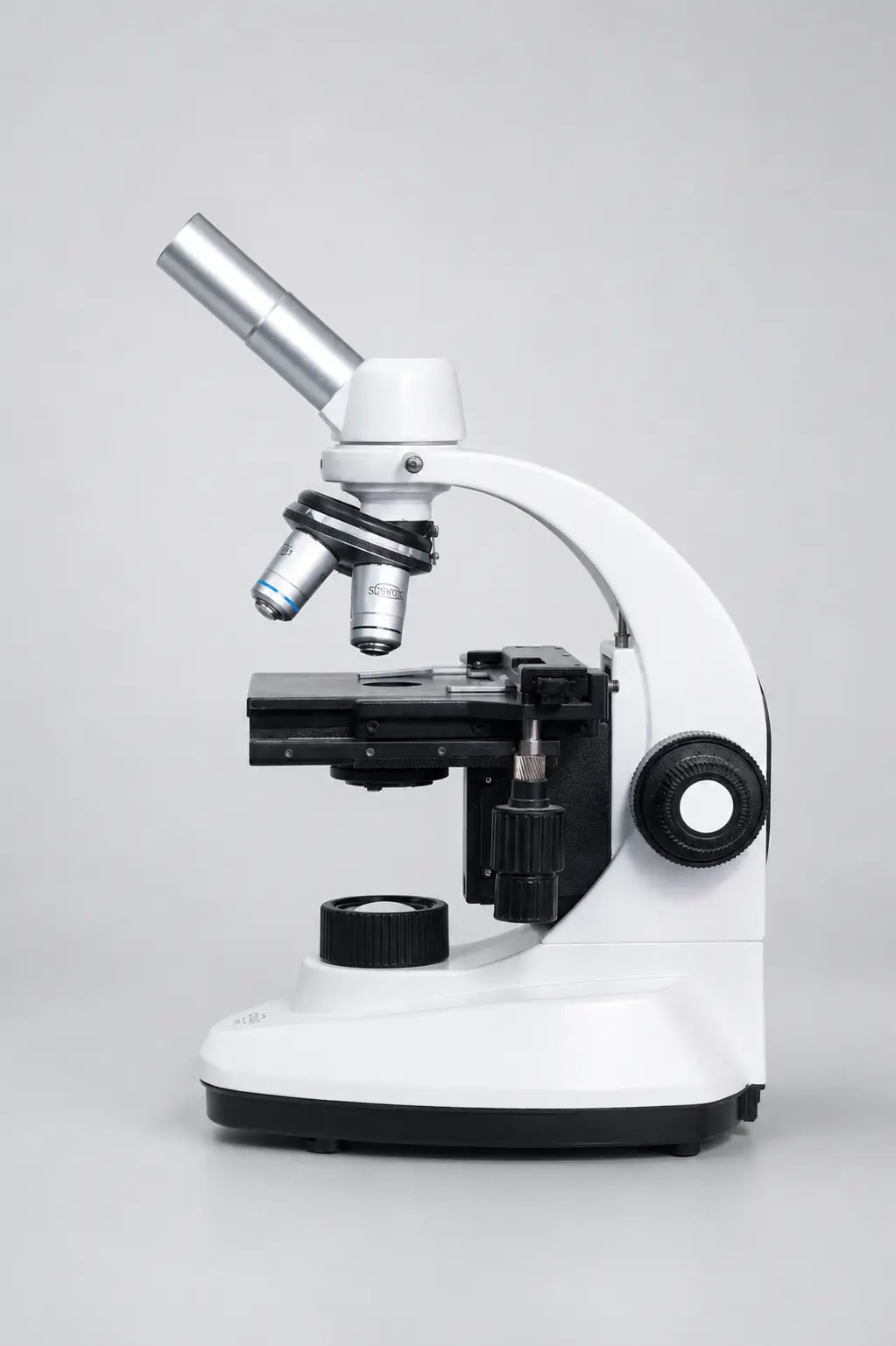
A monocular microscope has a single eyepiece tube. You look through it with one eye and keep the other one closed, or open and ignored, which takes some practice.
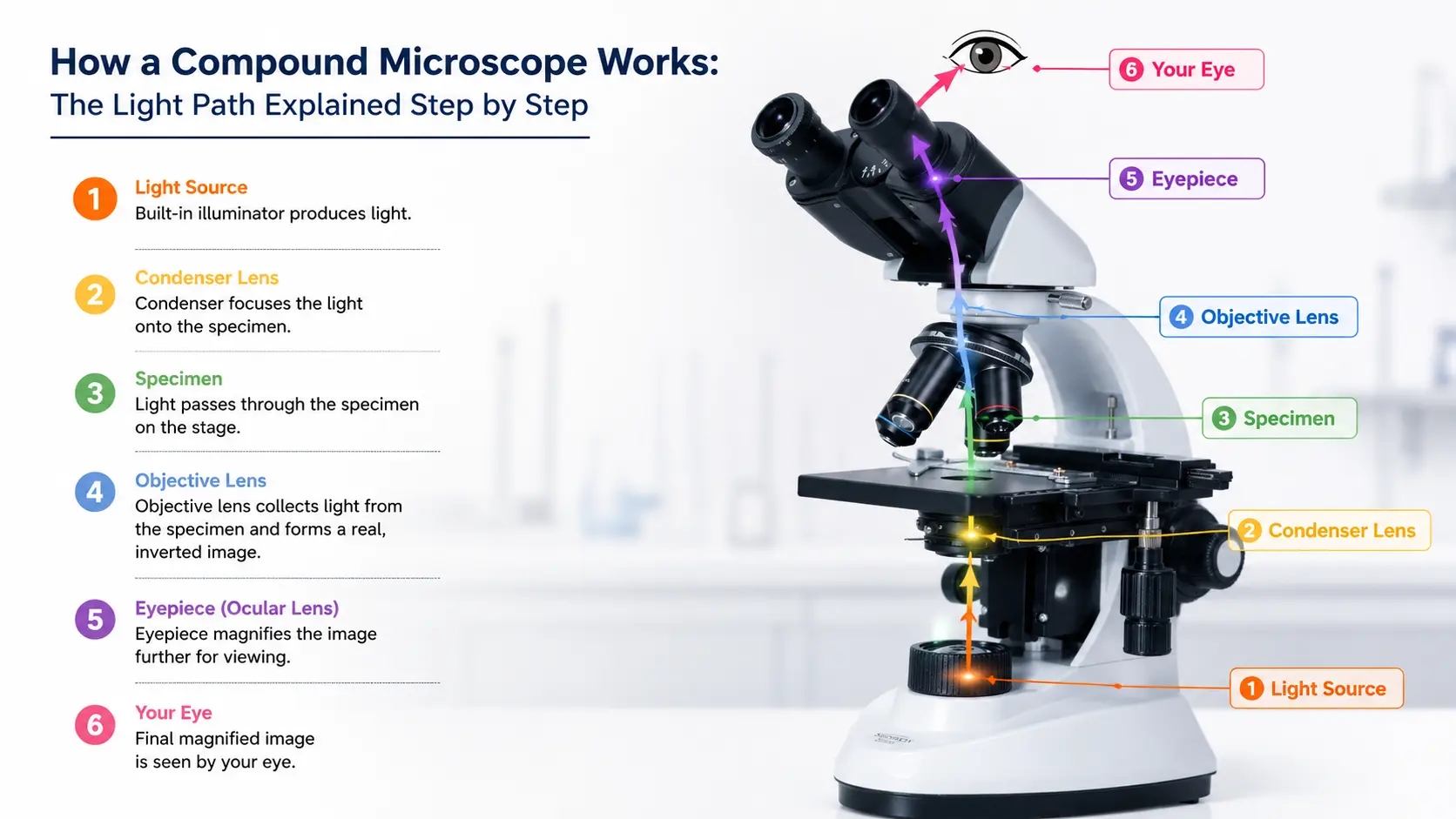
It is the simplest design. Light comes up through the slide, passes through the objective lens and goes straight to one eyepiece. No prisms split it. So every bit of light reaches your eye, which is why a monocular often looks a little brighter than a binocular with the same lamp.
Most monocular heads are inclined at about 45 degrees and can rotate 360 degrees. That rotation is handy in a classroom. Two students can sit on either side of one bench and turn the head towards themselves.
The weak point is comfort. After 20 or 30 minutes, the eye you are using starts to tire. For a student who looks at an onion peel slide for five minutes, that is not a problem. For a lab technician reading 60 blood smears a day, it is. Models like the SUSWOX SK-33 student microscope are built for exactly the first case, while the SK-77 I monocular lab microscope serves small labs on a tight budget.
What is a binocular microscope?
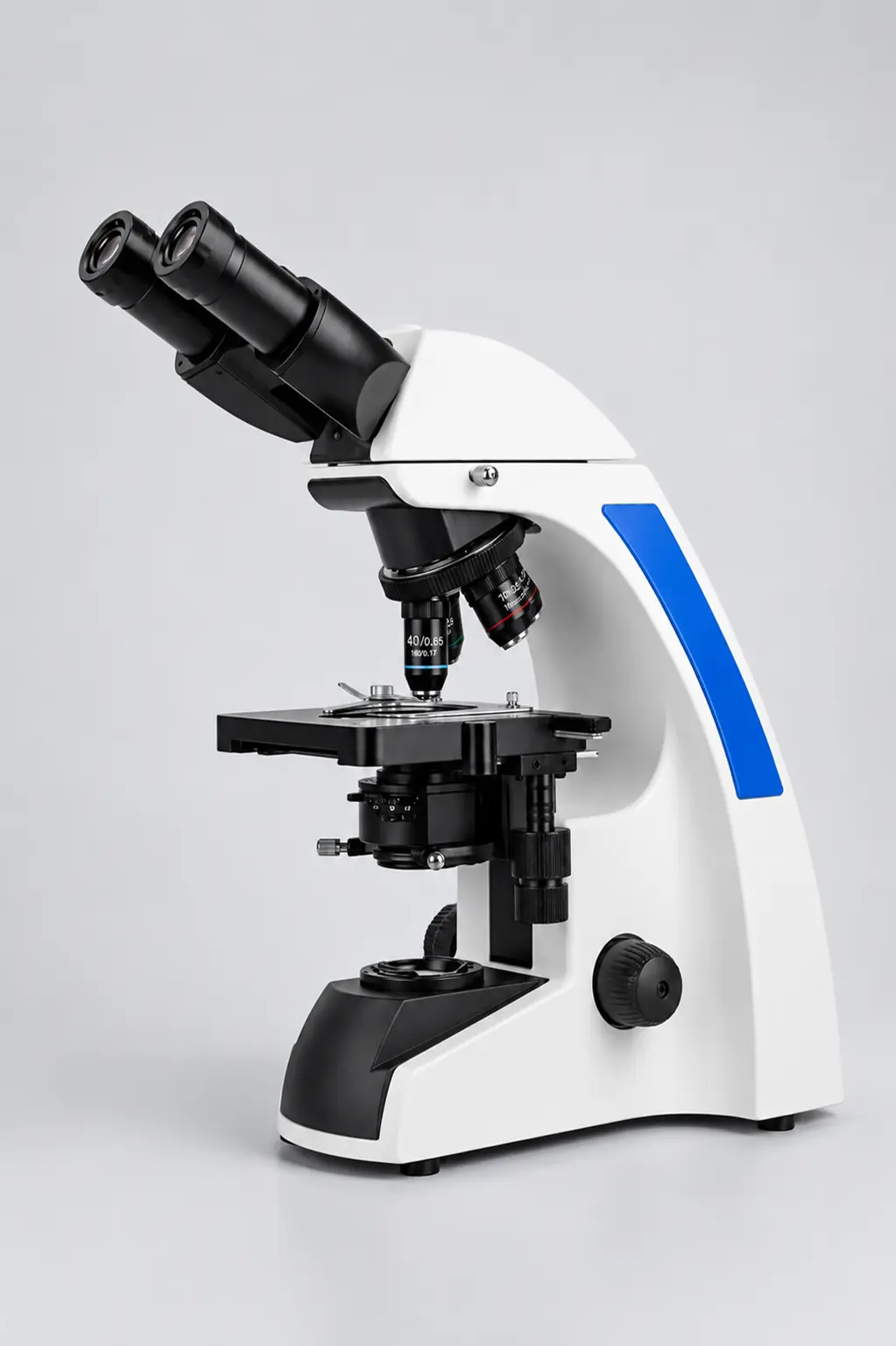
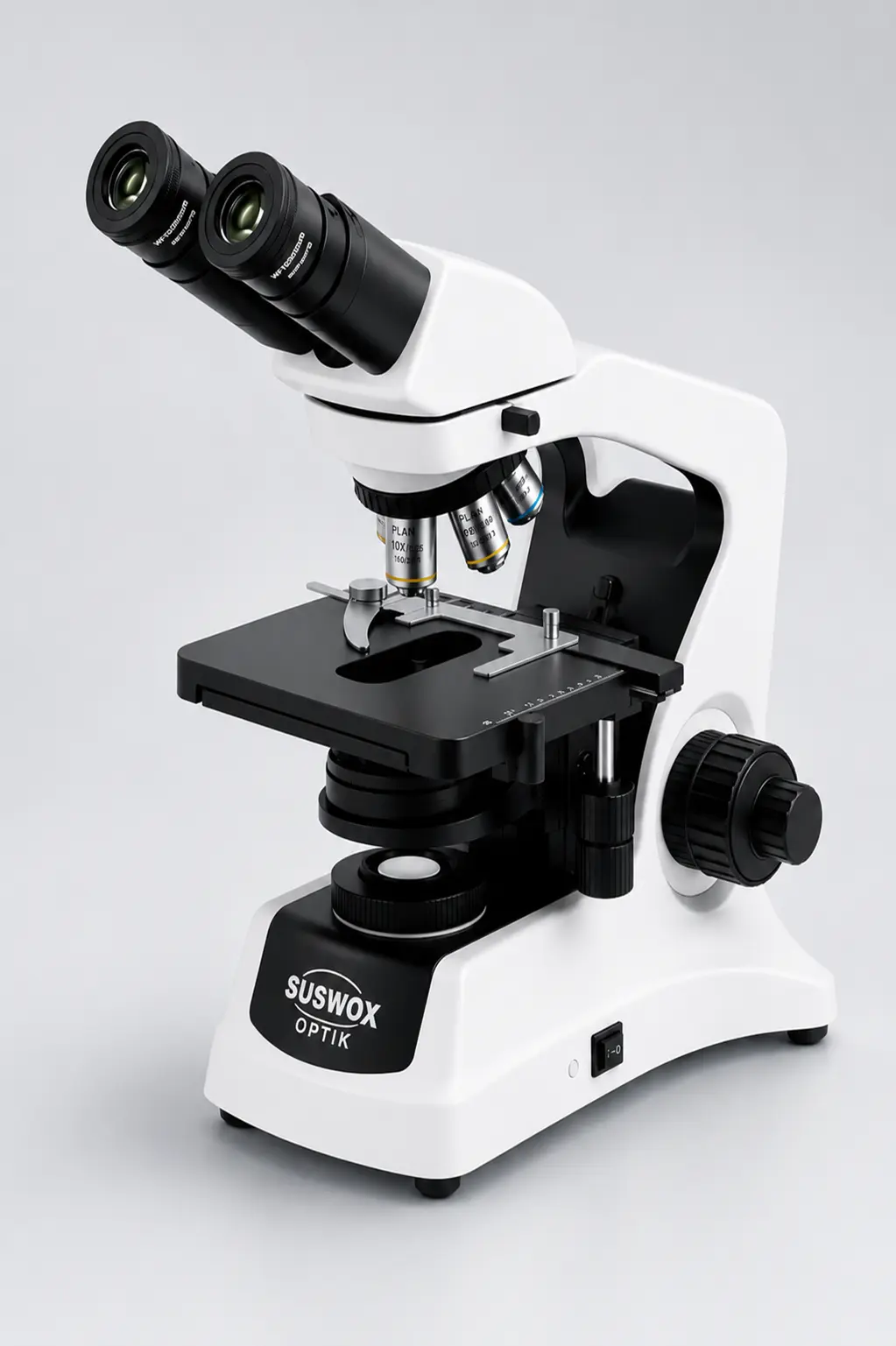
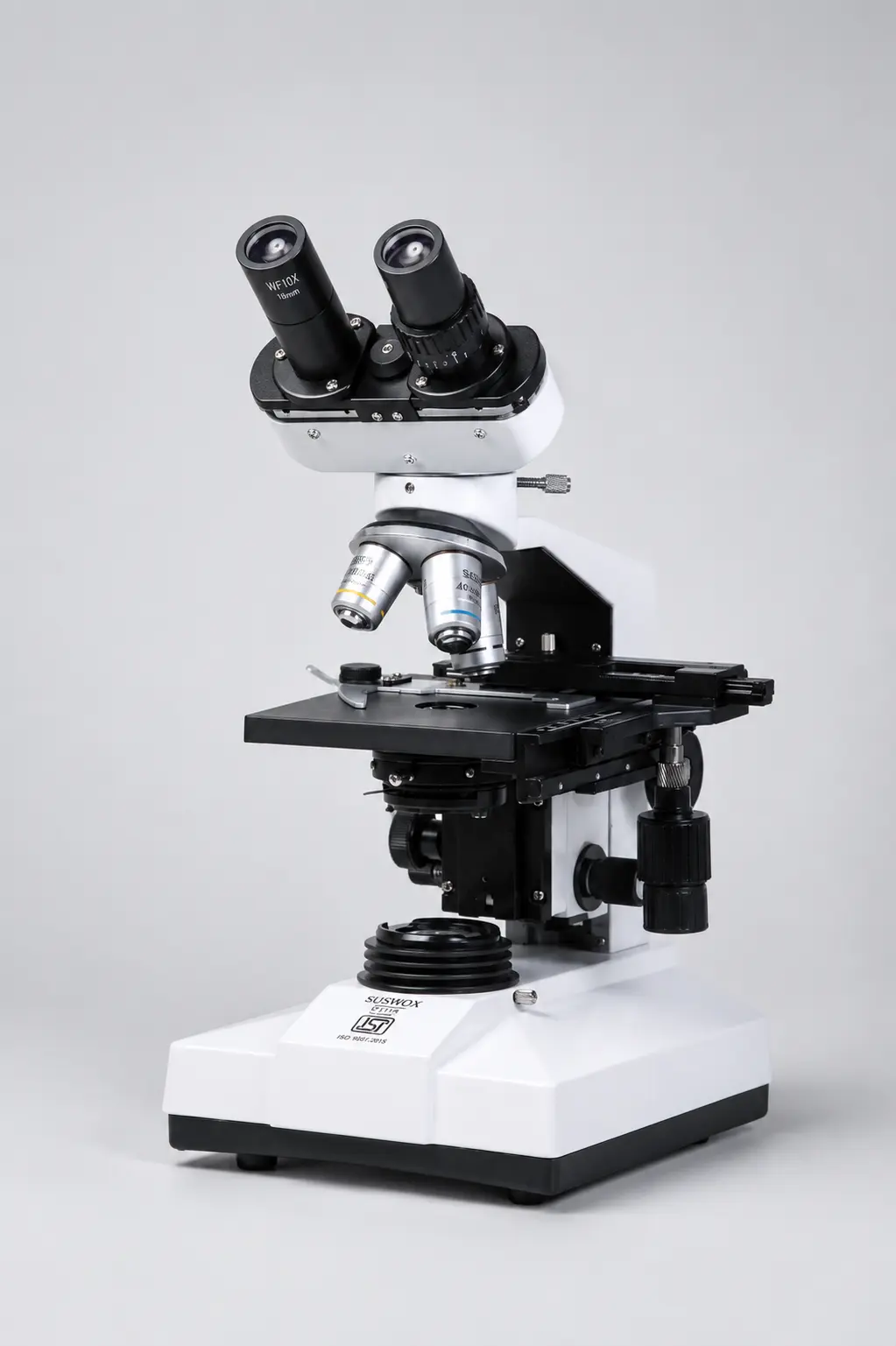
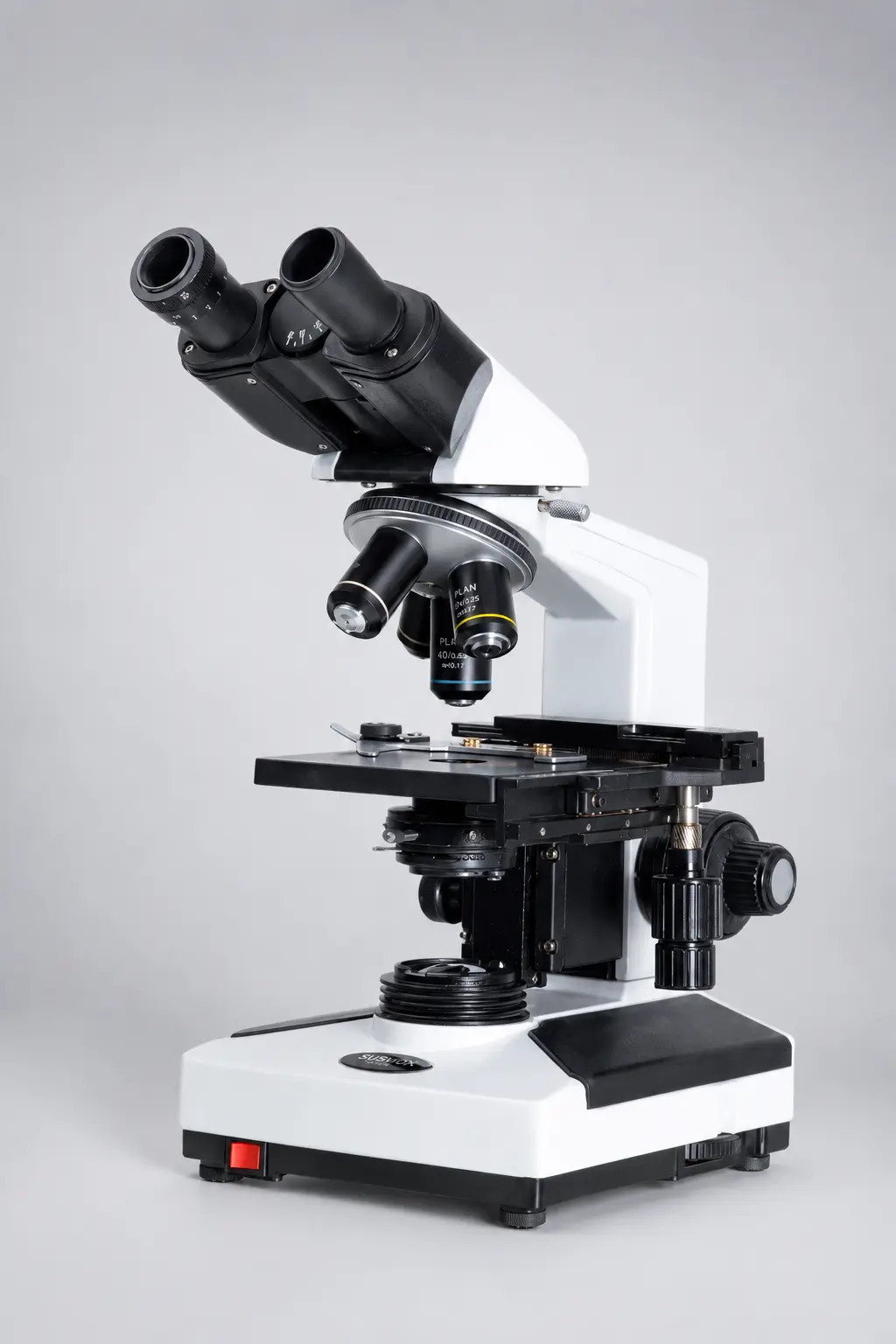
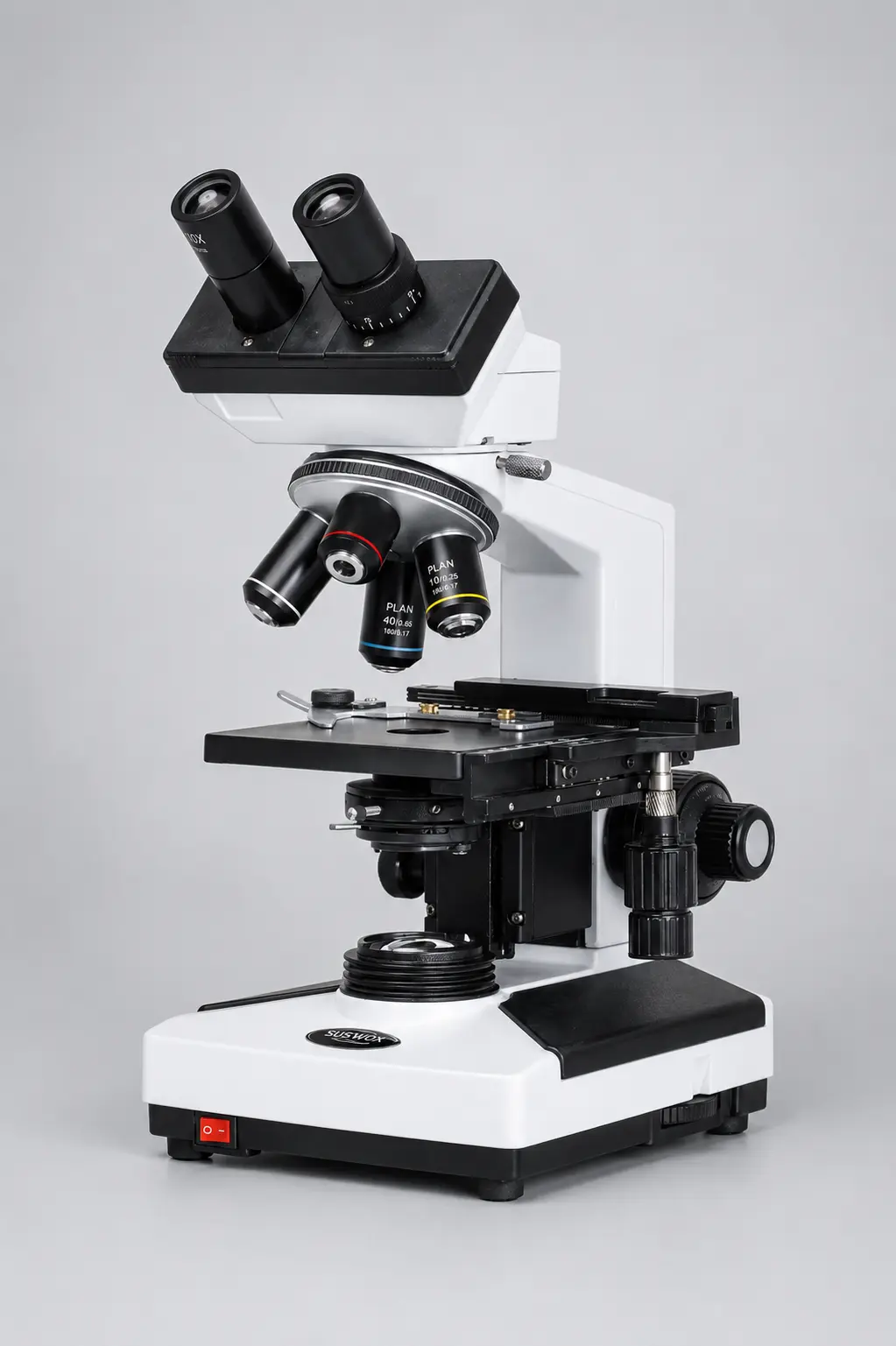
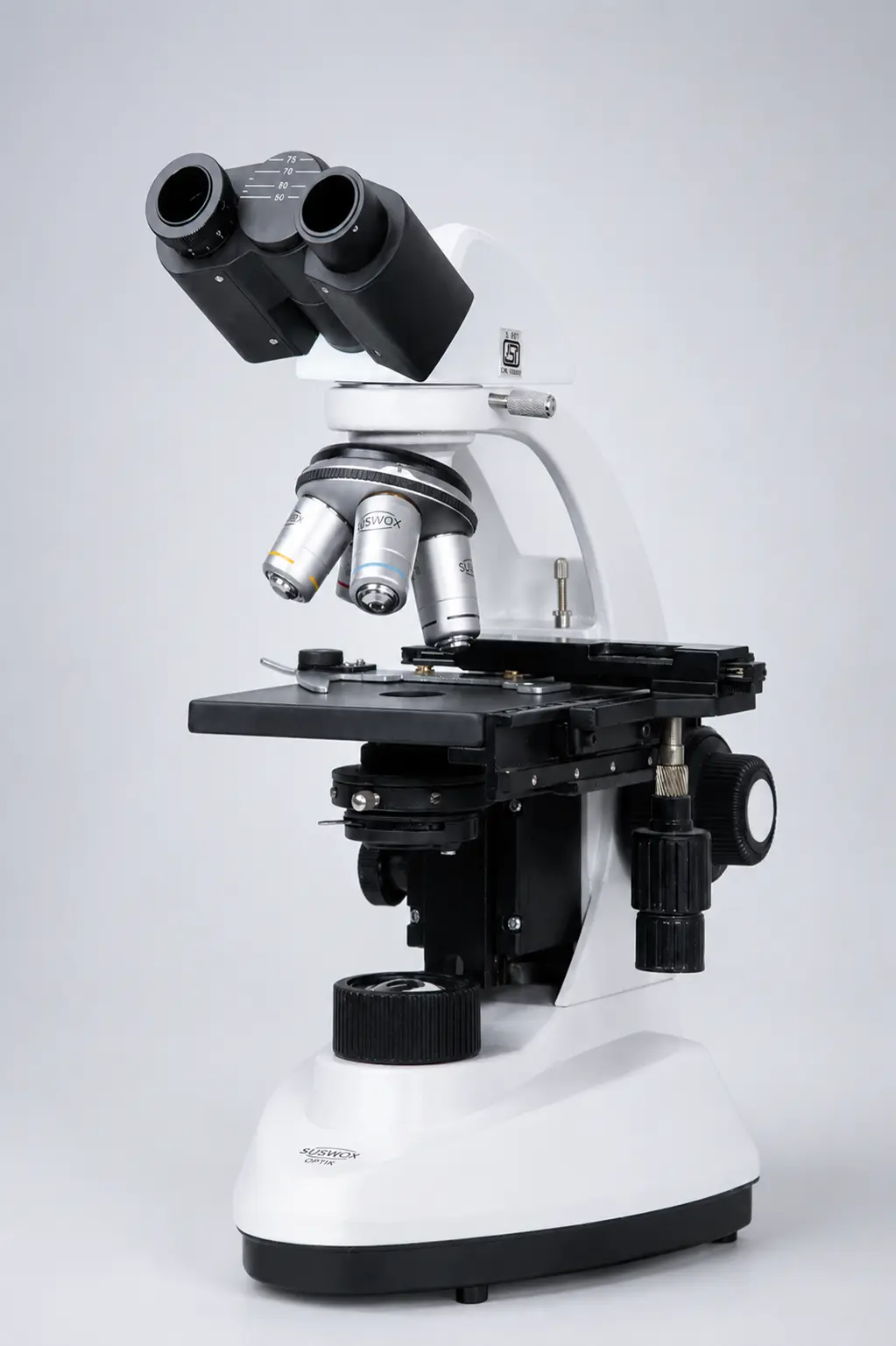
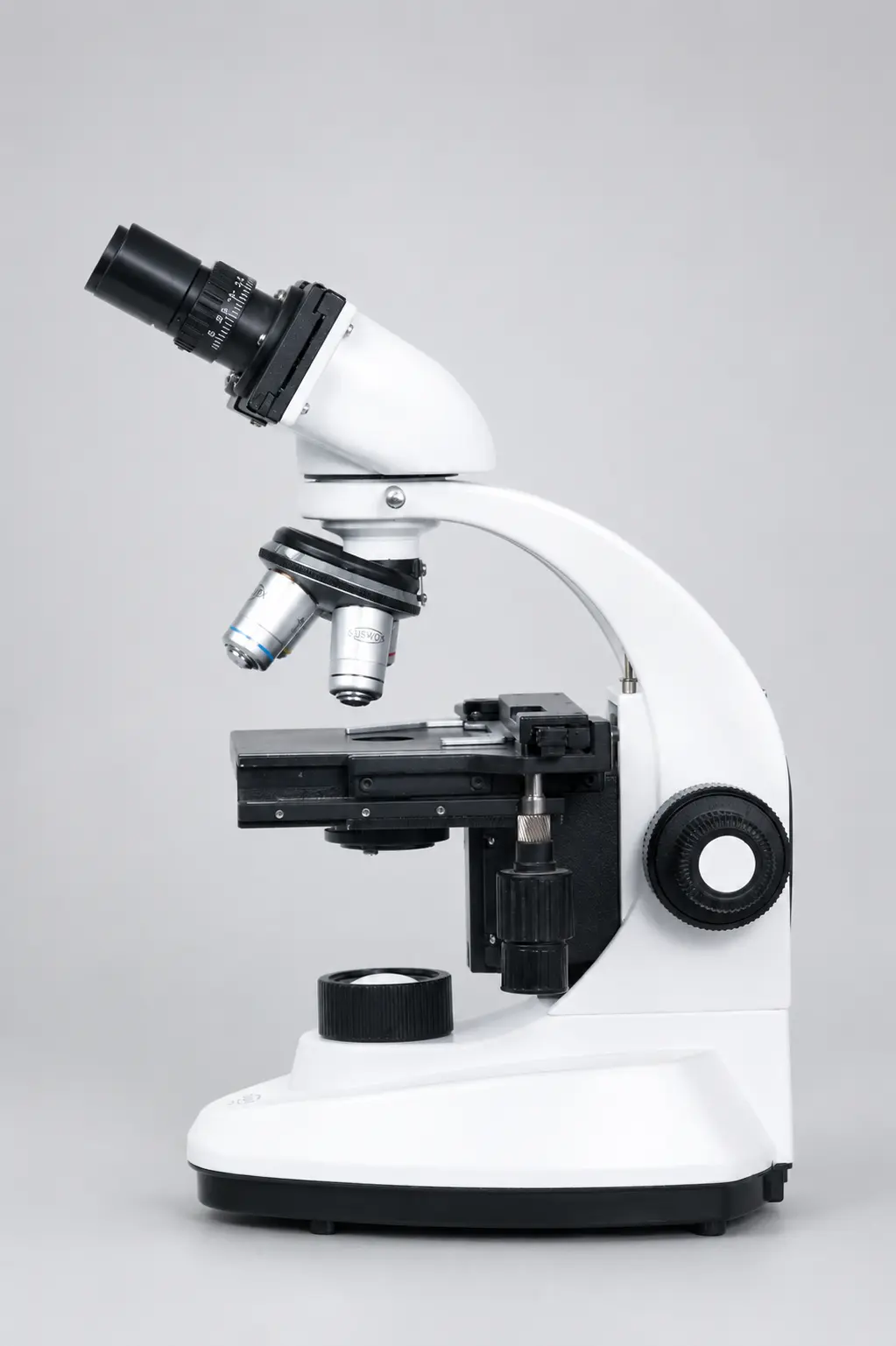
A binocular microscope has two eyepieces. Inside the head, a prism splits the single image from the objective into two identical paths, one for each eye.
Two things make a binocular head comfortable. The first is interpupillary adjustment. You slide or hinge the two eye tubes closer or further apart until they match the distance between your eyes. The second is the diopter ring on one eyepiece, which corrects for the small difference in focus most people have between their left and right eye.
Get these two settings right, and you can work for hours. Get them wrong, and a binocular can feel worse than a monocular. We see this often during installations.
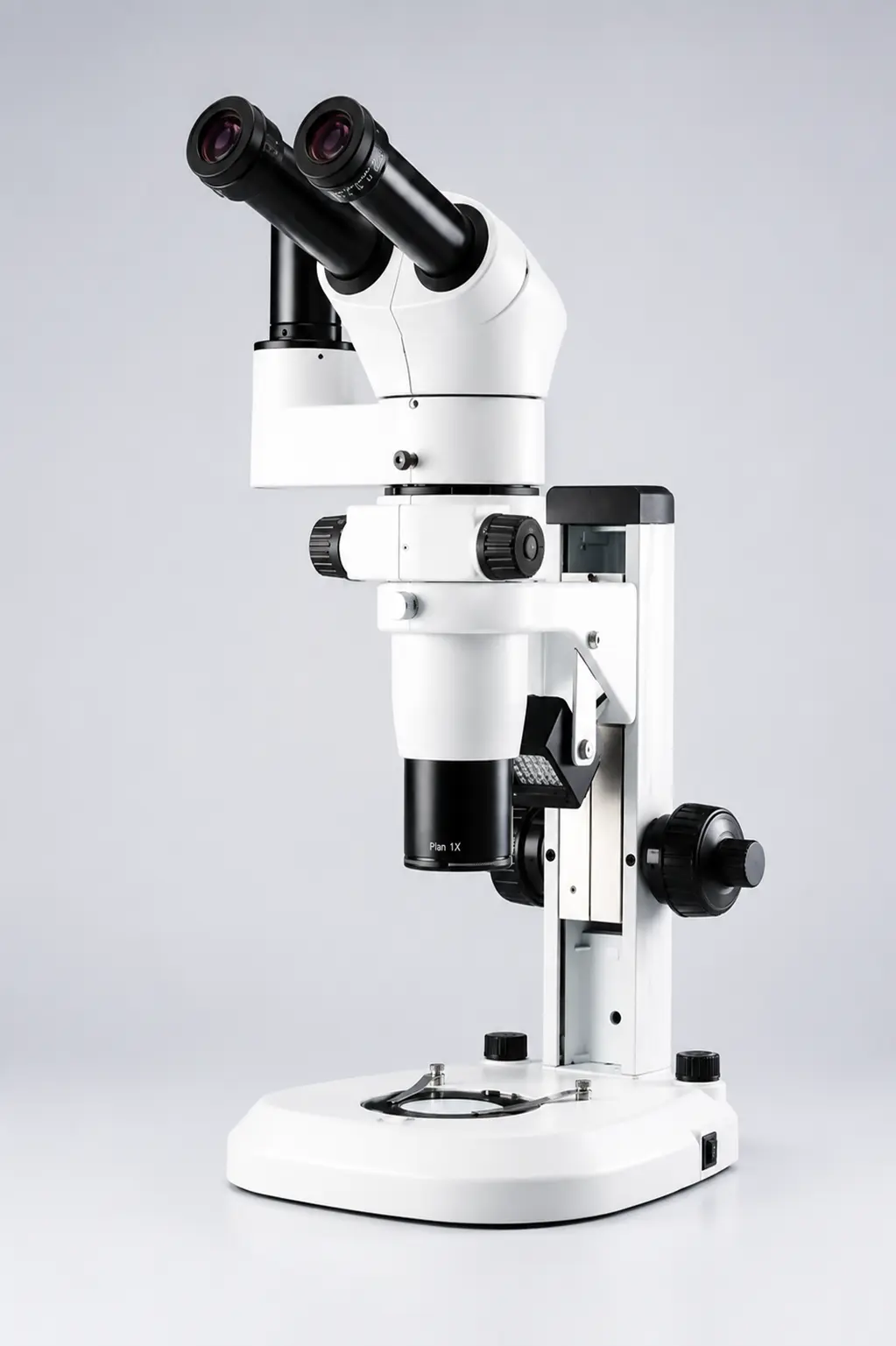
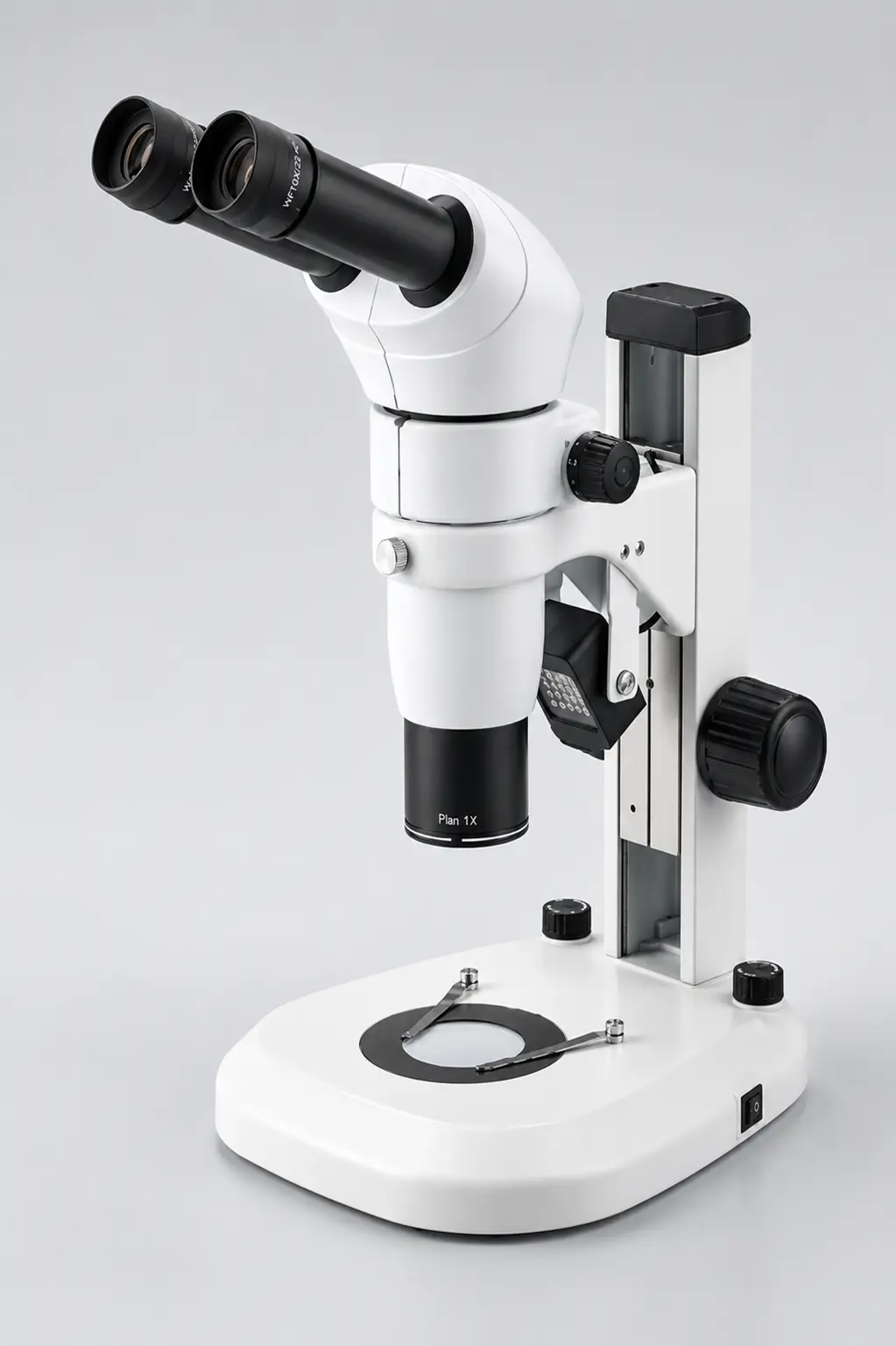
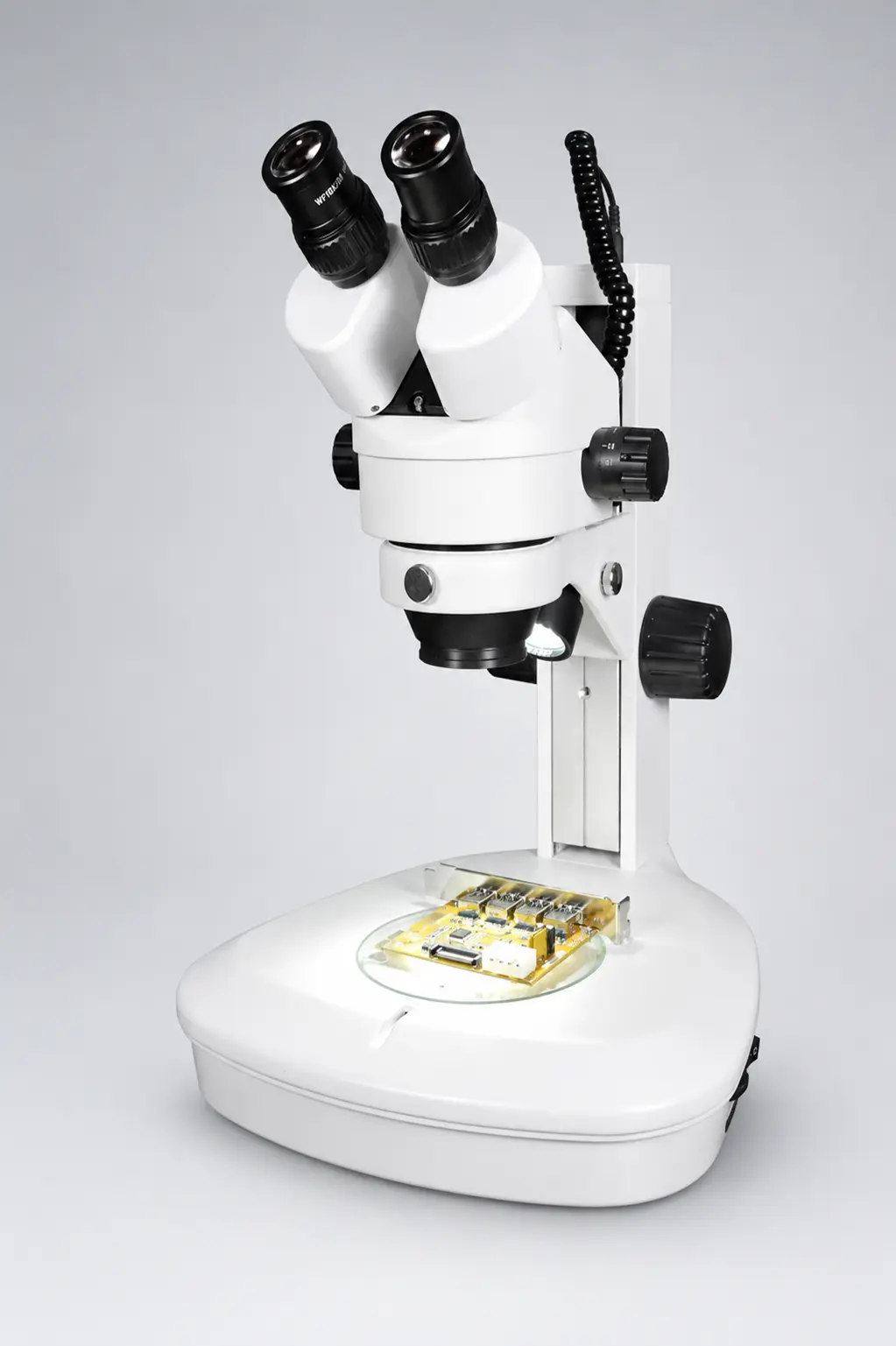
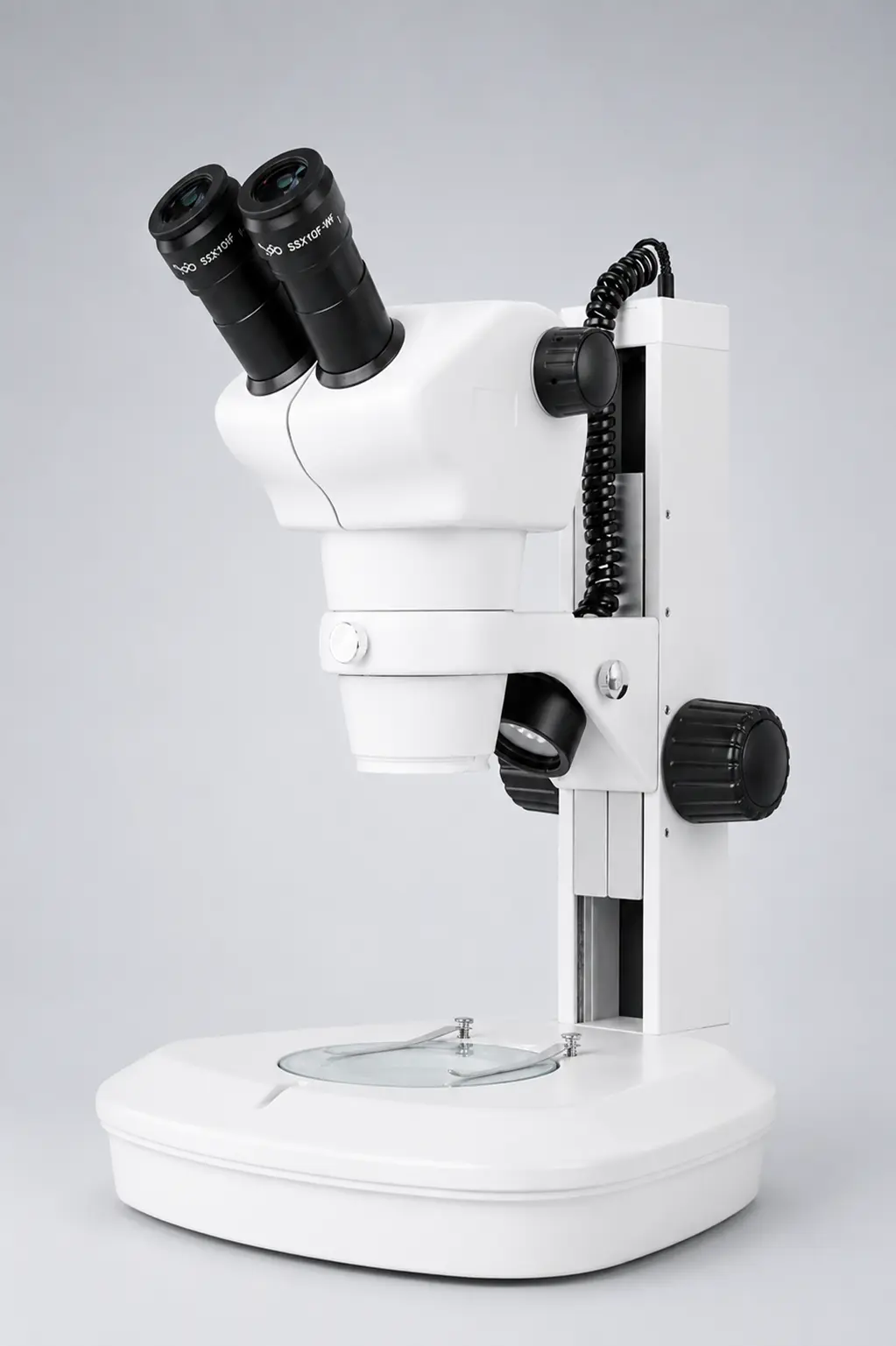
One common myth is worth clearing up. A compound binocular microscope does not give a true 3D image. Both eyes see the same flat image. The comfort comes from using both eyes naturally, not from depth. If you need real 3D, for dissection or PCB inspection, you need a stereo microscope instead. Our guide on stereo vs compound microscopes explains that difference.
Binocular is the default choice for pathology and diagnostic labs. The SUSWOX SK-77 Bi and CXL Bi are popular with hospital labs, and you can browse the full range of laboratory microscopes here. For a deeper look at the parts and working, read what is a binocular microscope.
What is a trinocular microscope?
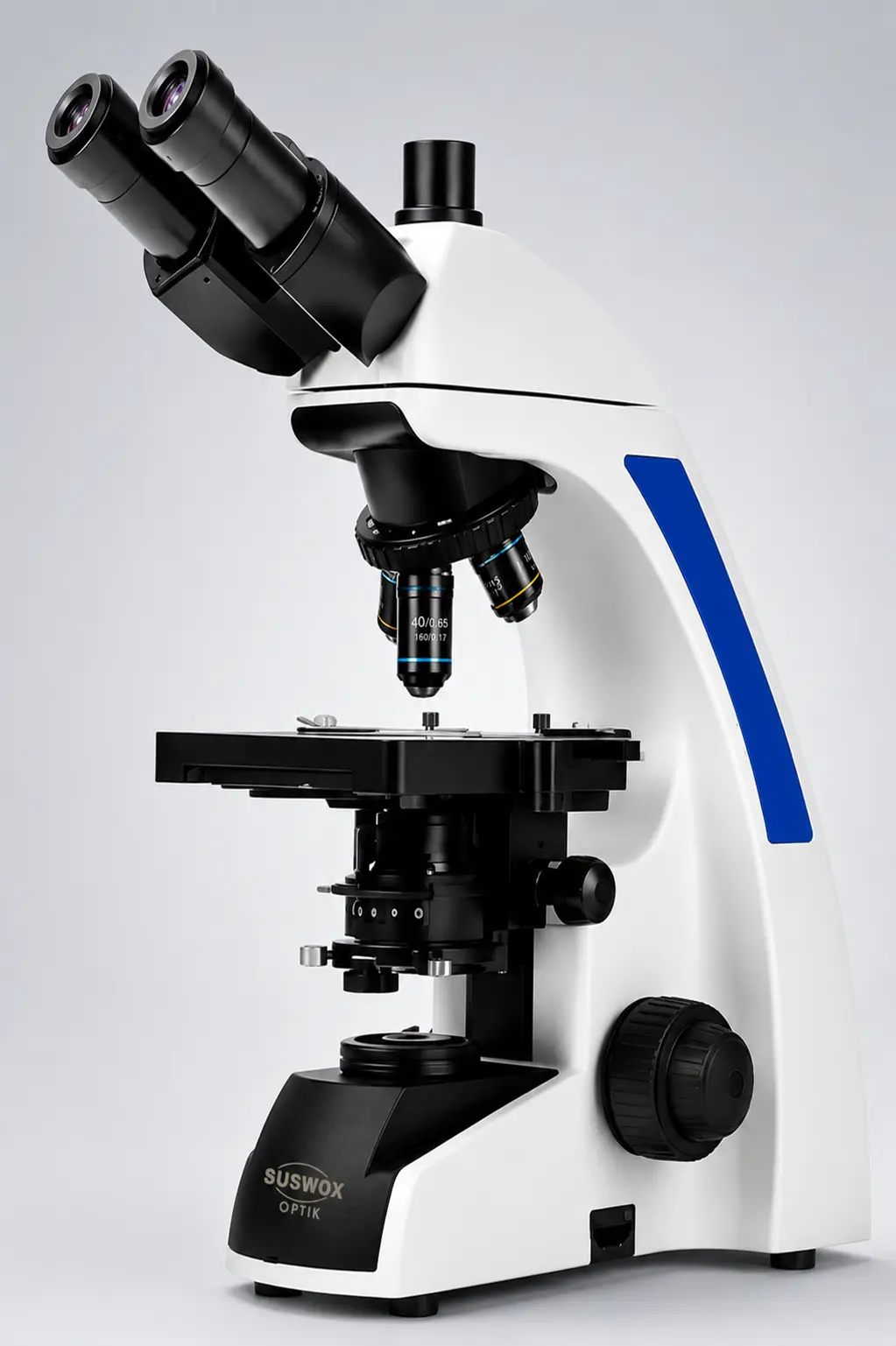
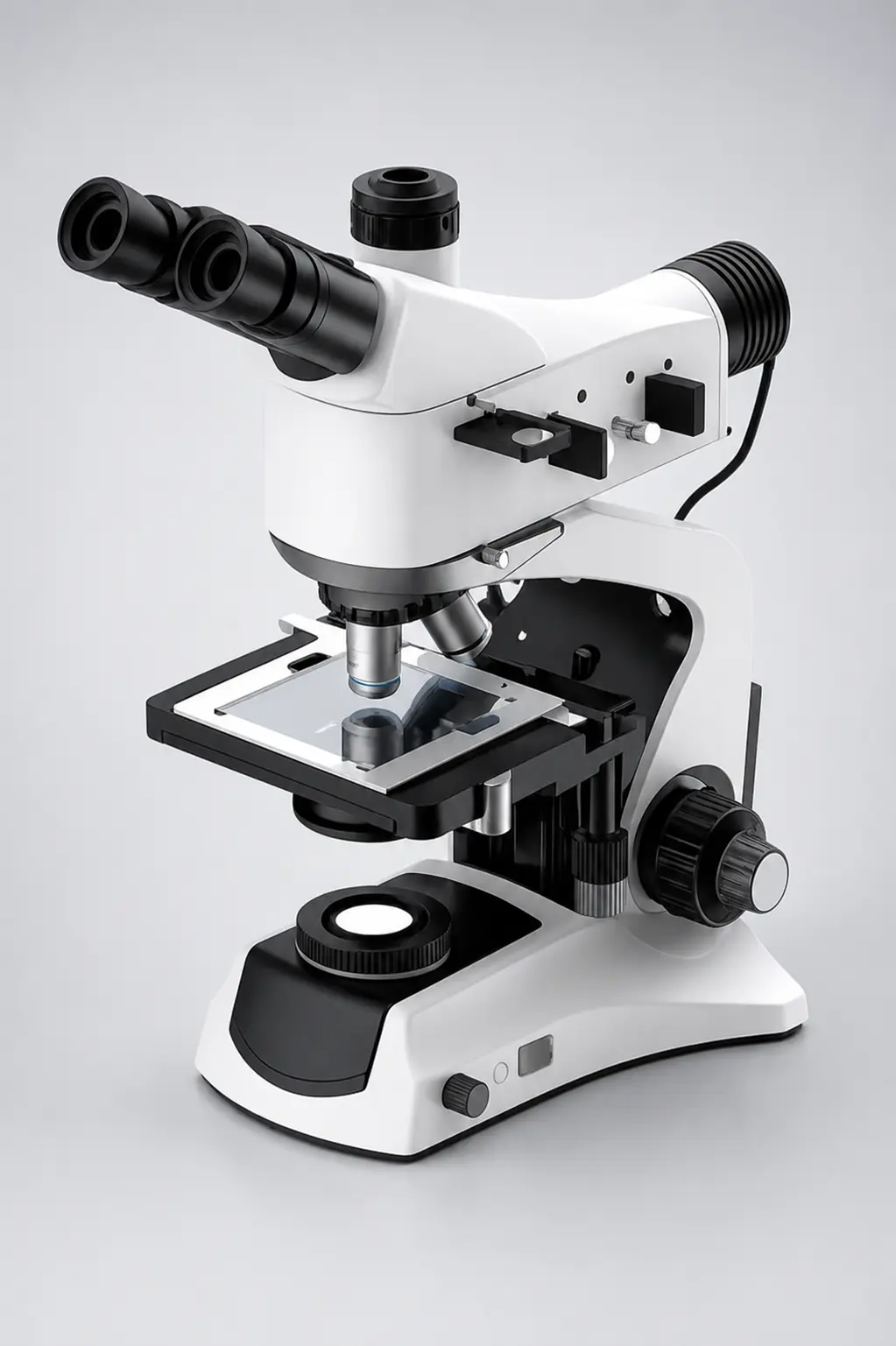
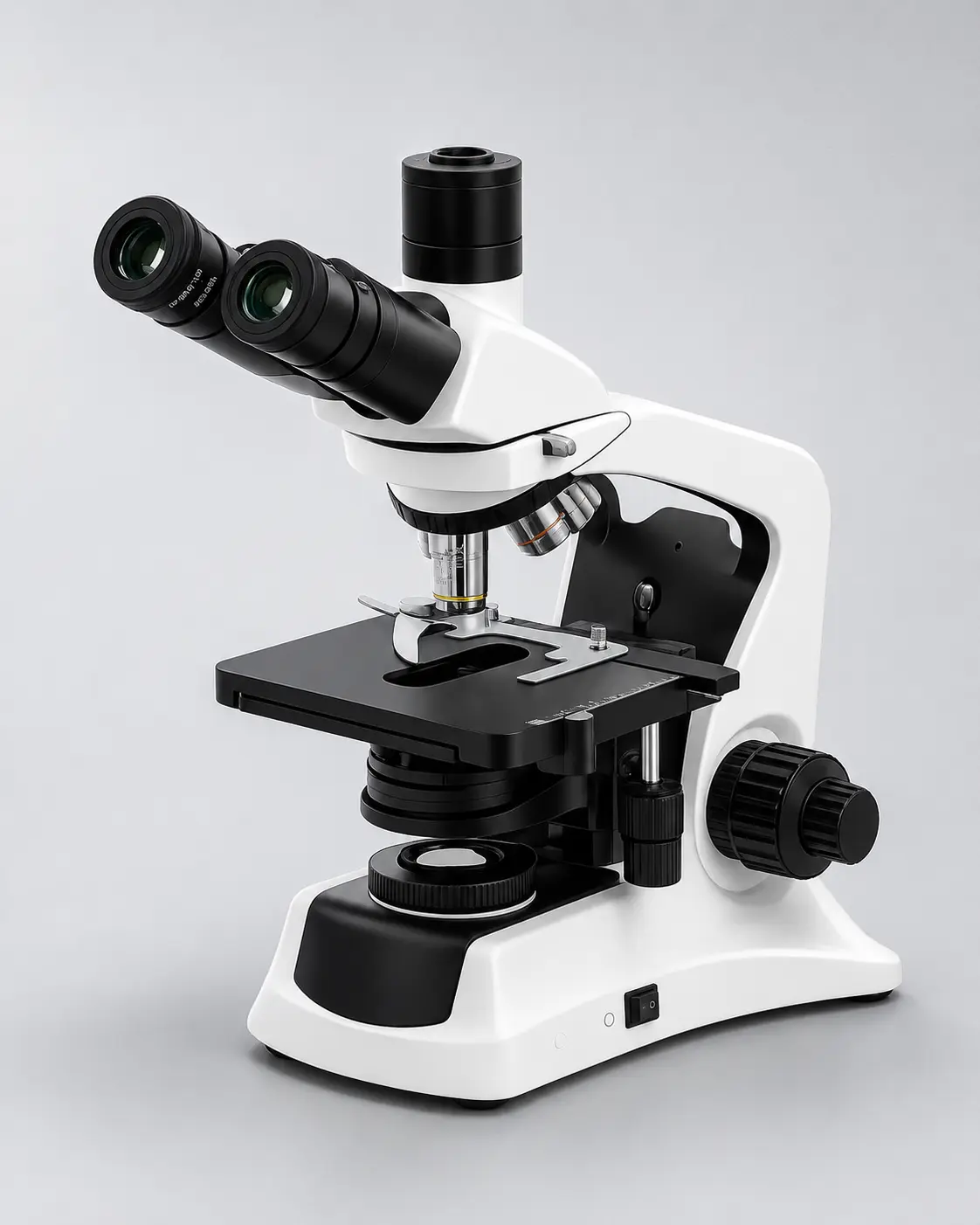
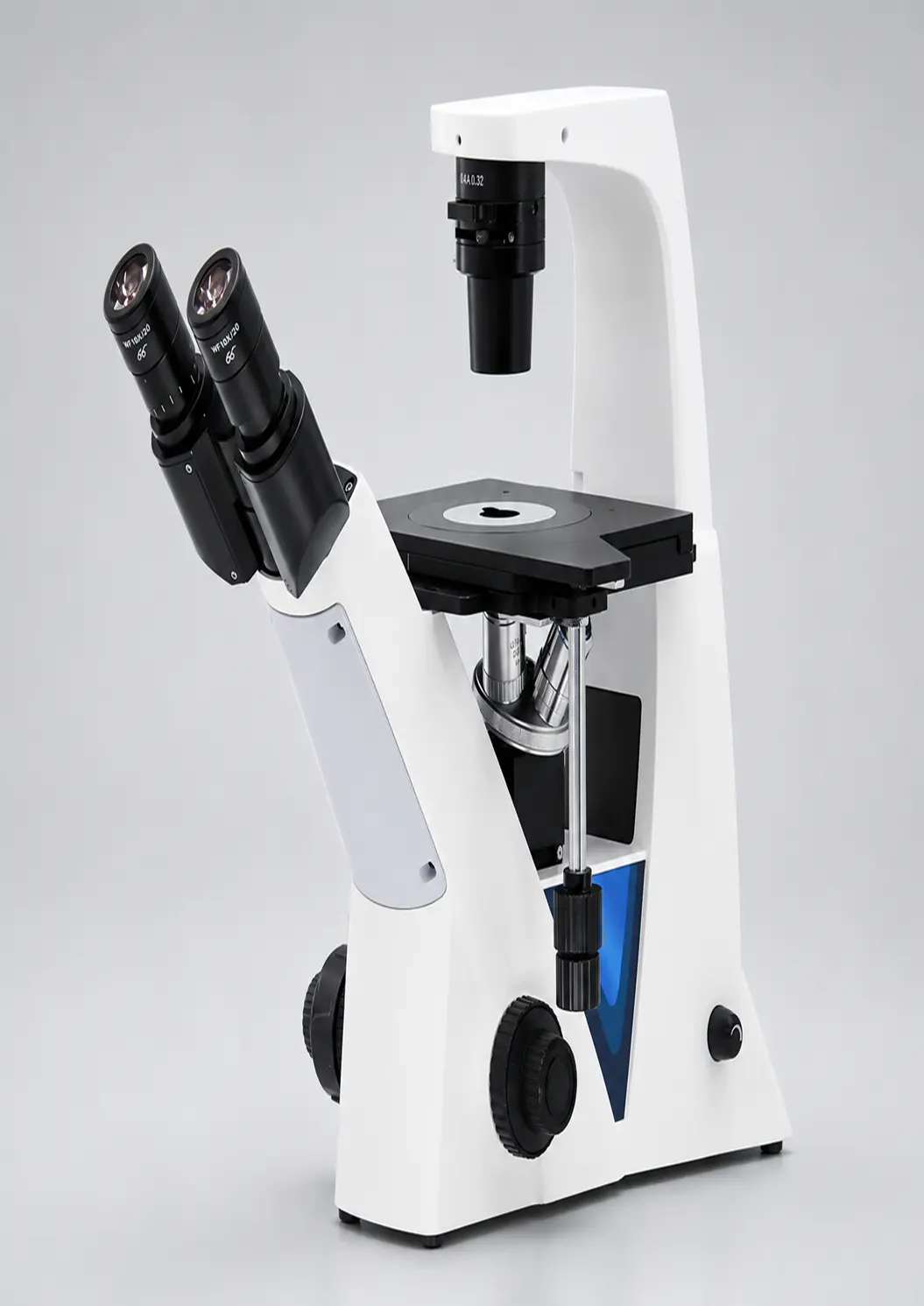
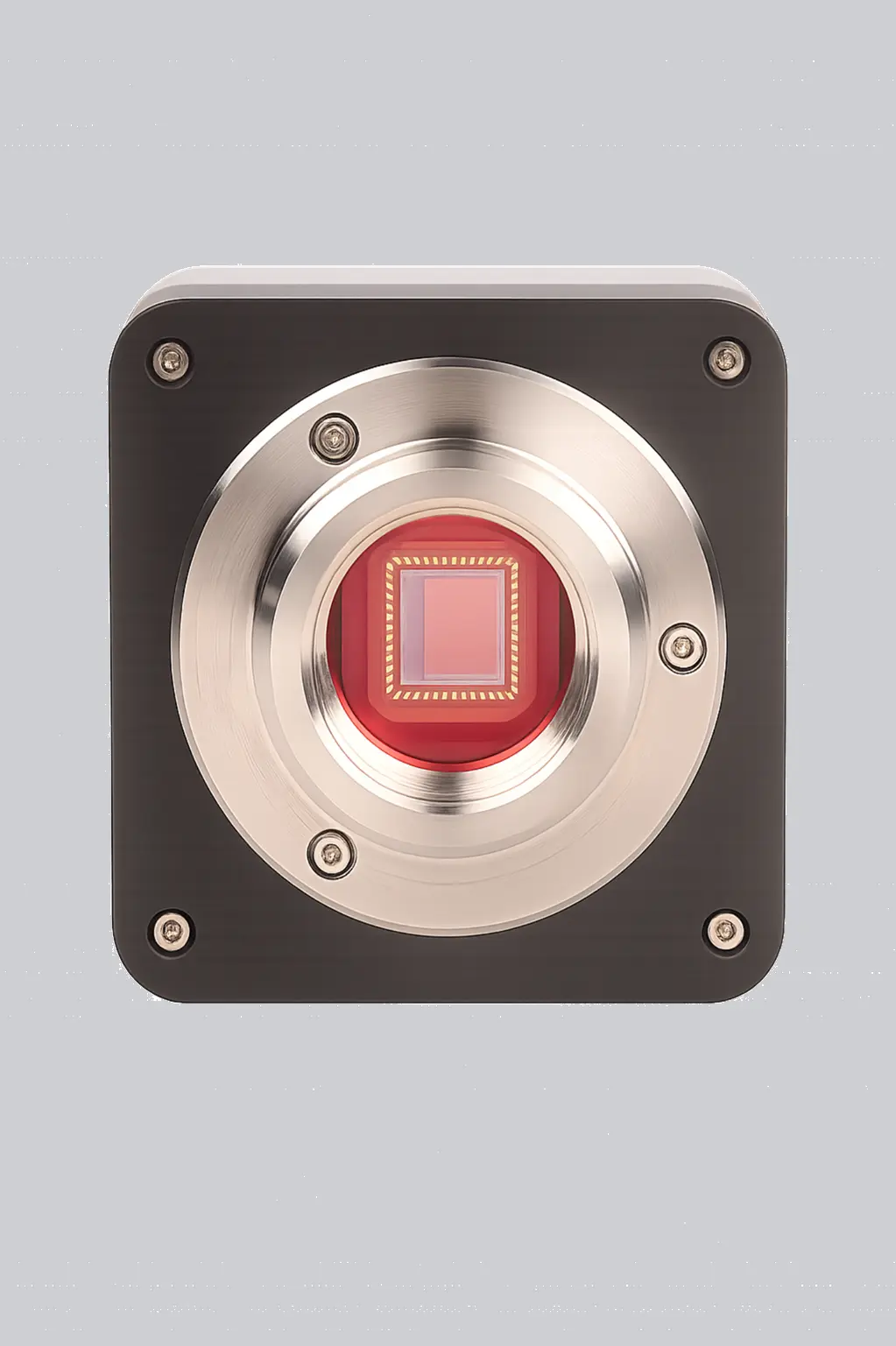
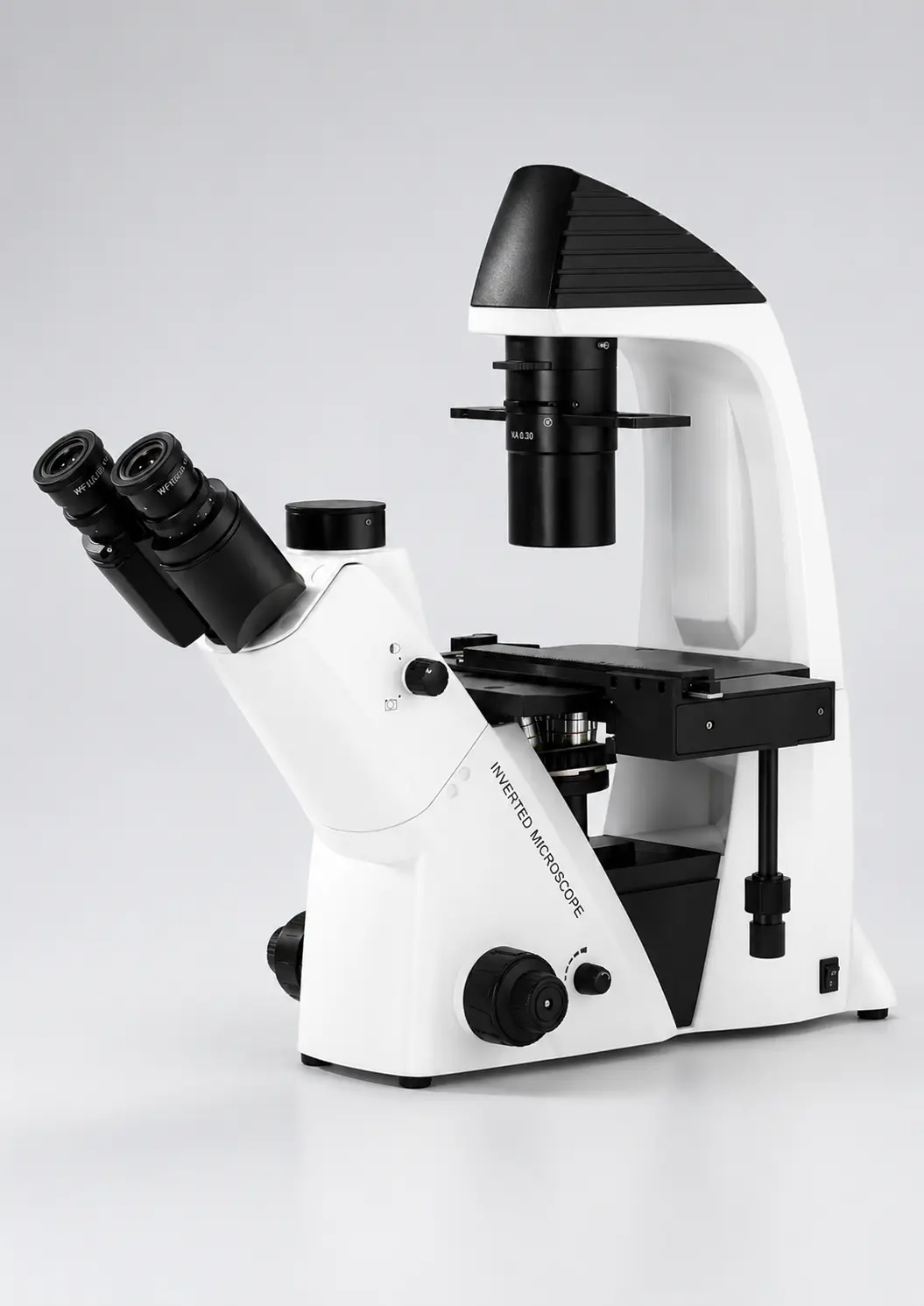
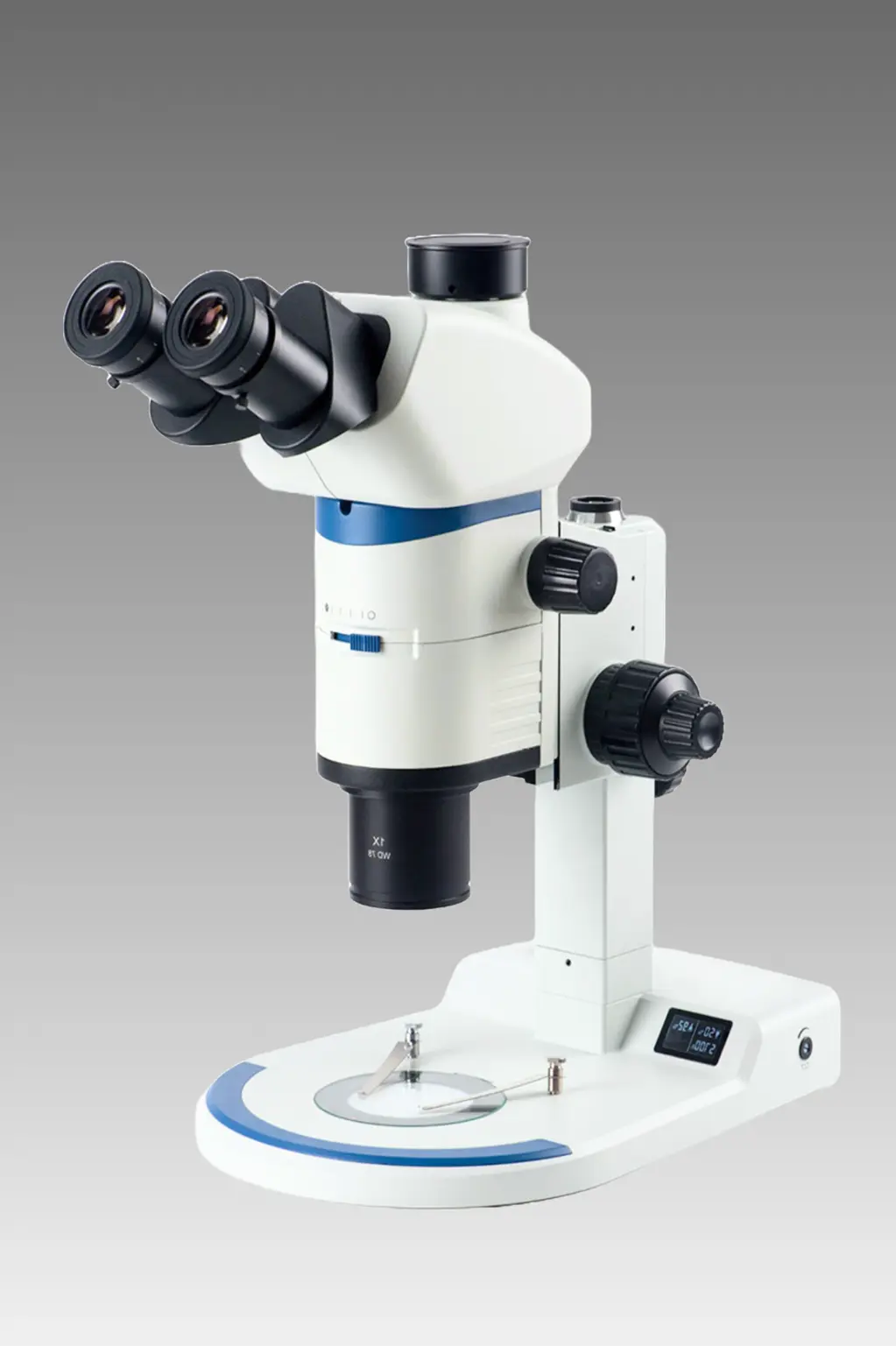
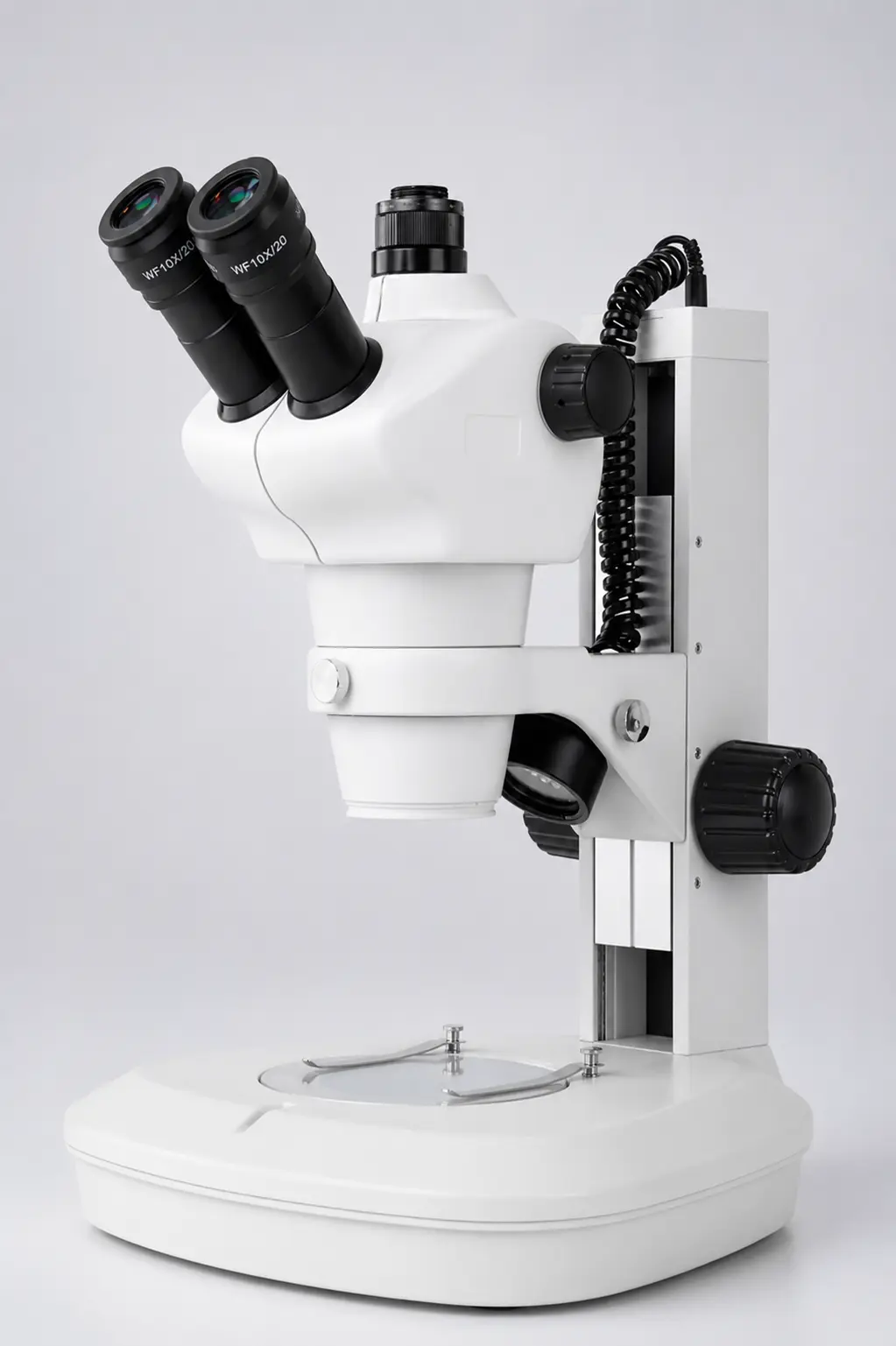
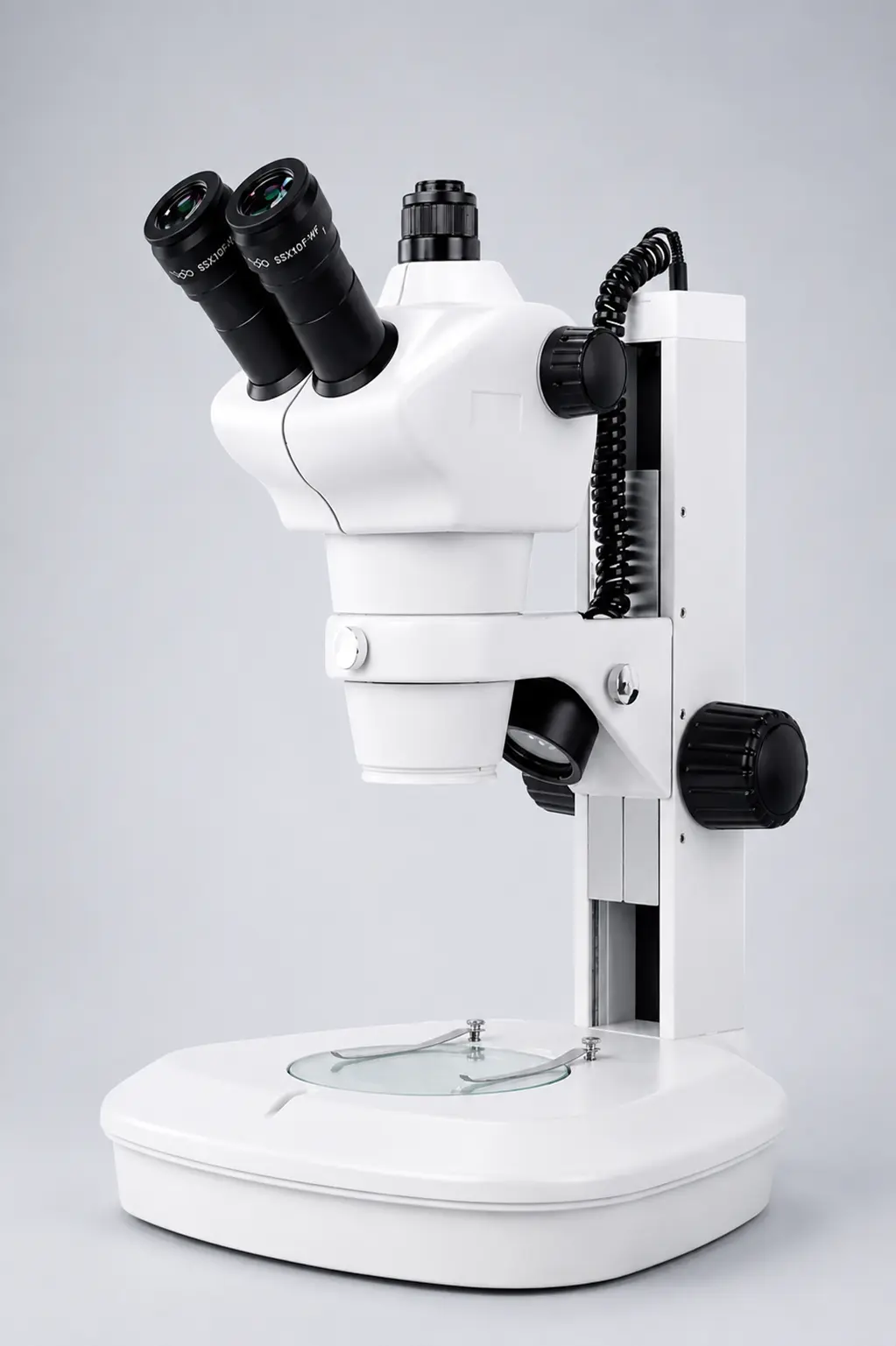
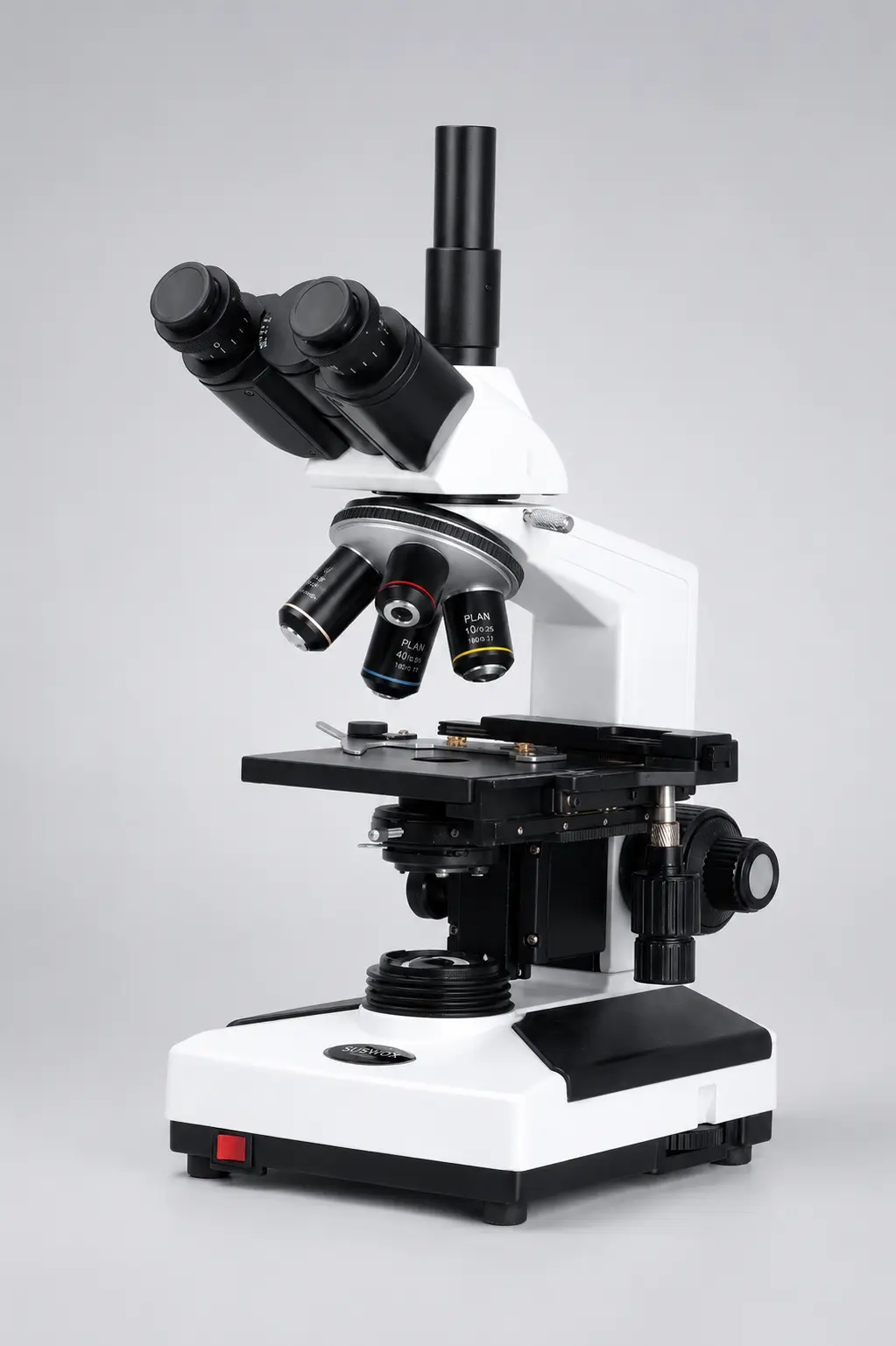
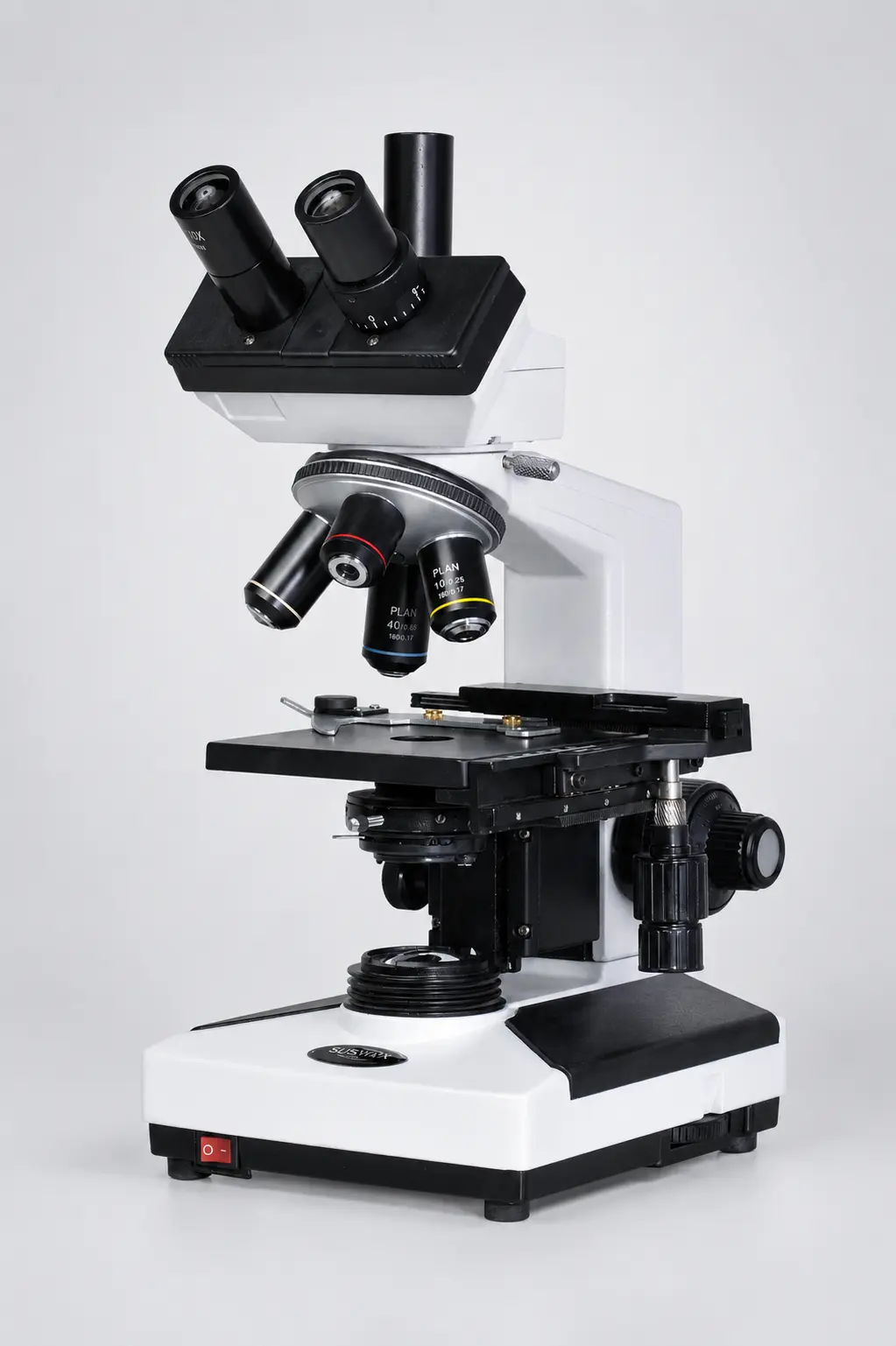
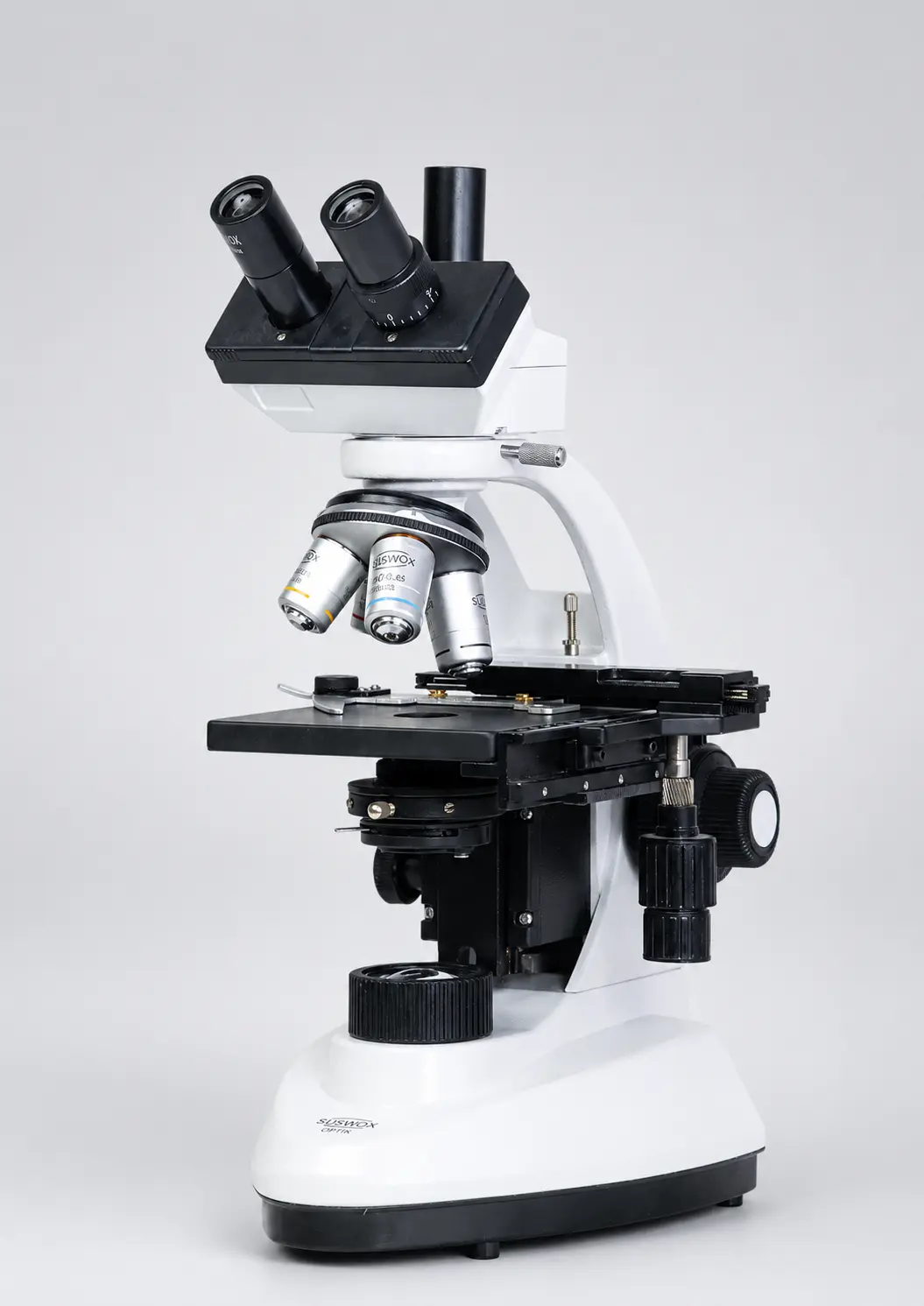
A trinocular microscope is a binocular microscope with a third tube on top. That third tube is a camera port. You fit a C-mount adapter on it, attach a microscope camera, and the image appears on a computer or monitor.
The clever part is how the light is shared between your eyes and the camera. On many models, a push-pull rod sends all the light either to the eyepieces or to the camera. Other models split it, for example 80 percent to the camera and 20 percent to the eyes, or 50/50, so you can look and record at the same time.
So who actually needs one?
Teachers who want to show one slide to 40 students on a projector. Pathologists who attach images to patient reports or send them for a second opinion. Researchers publishing papers. Pharma QC teams who must keep photo records for audits. In all of these cases, the image has to leave the microscope.
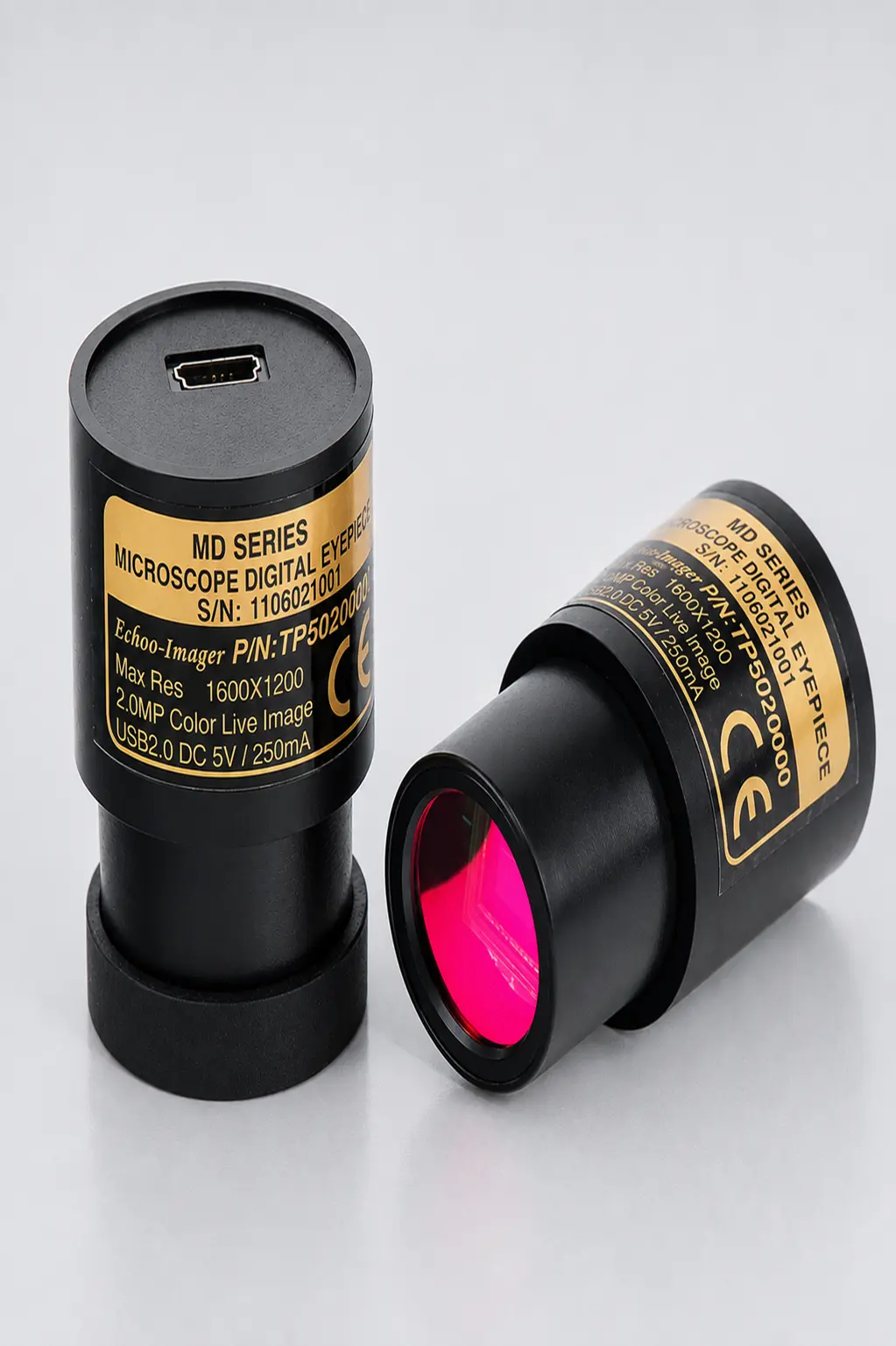
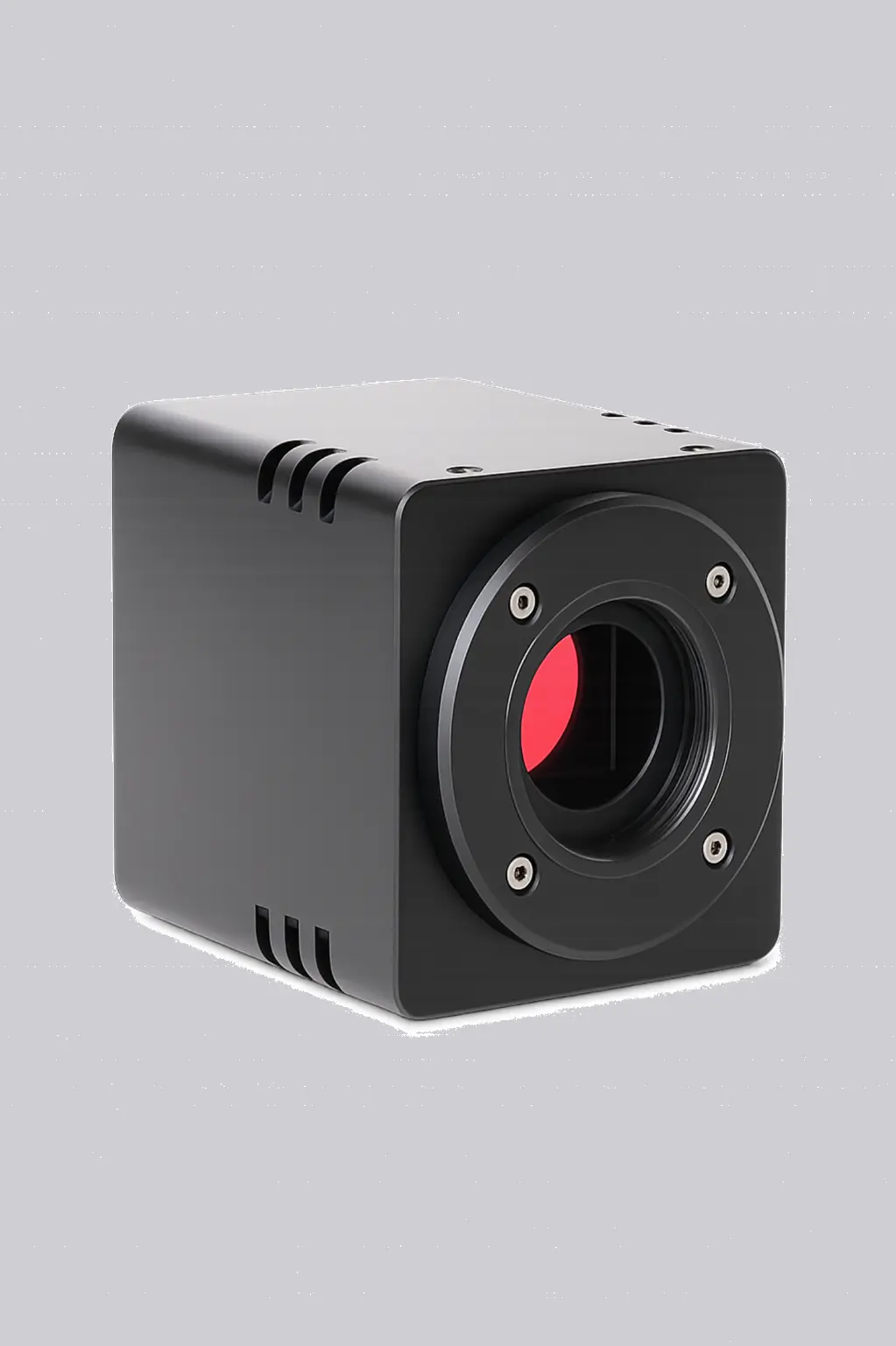
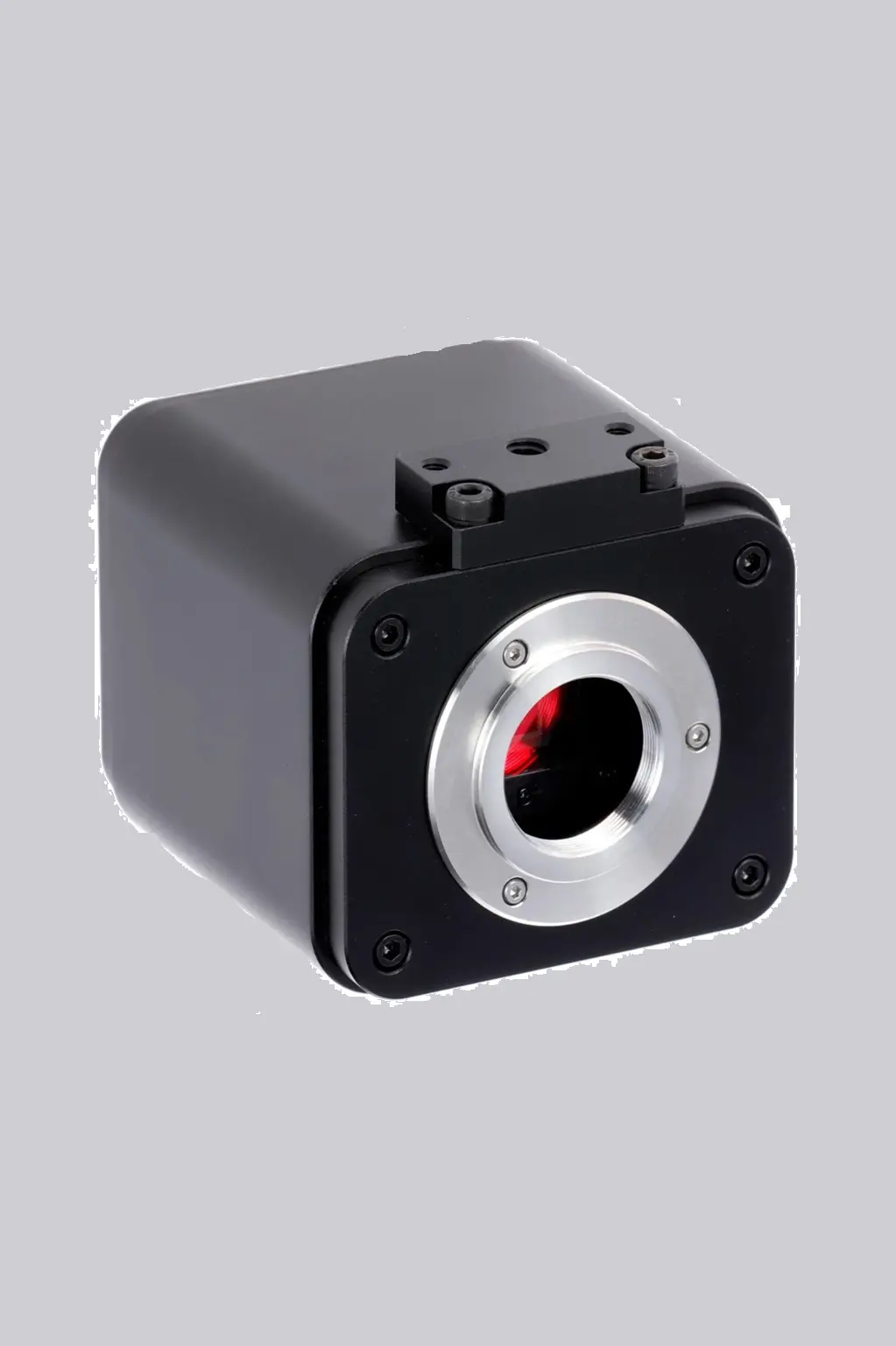
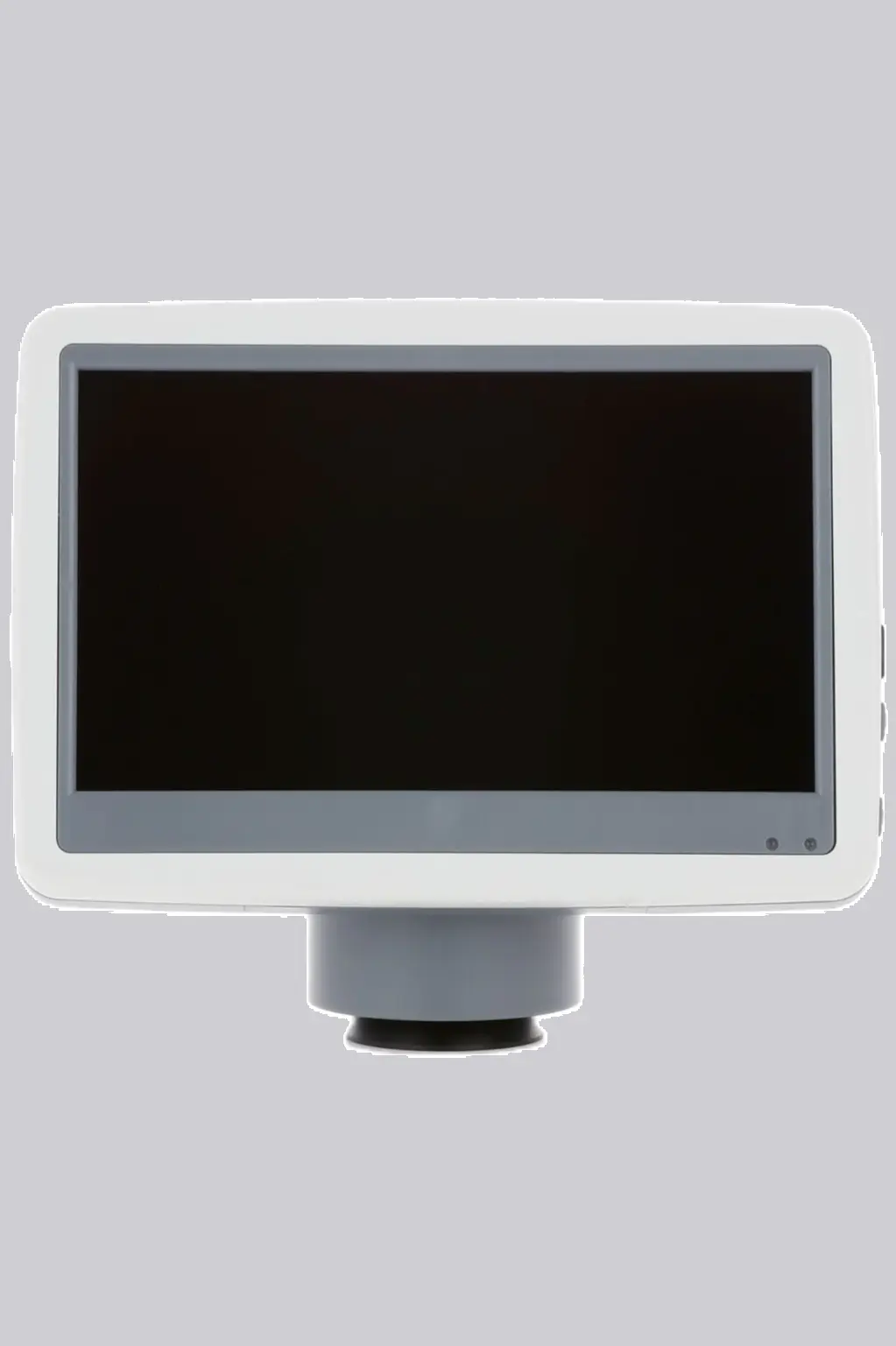
A camera is only half the setup, though. You also need software to capture, measure and annotate. SUSWOX pairs trinocular models like the SKC 400 TR and SKC APEX TR with cameras such as the X Cam digital camera and our SSW-CAPTURE image analysis software. See all options under digital microscopes and imaging systems.
Monocular vs binocular microscope: are two eyes really better?
For adults doing long work, yes. For young children, not always.
That surprises people. But the distance between a small child’s eyes can be narrower than the smallest setting on many binocular heads. The two images never merge properly, and the child ends up seeing double or closing one eye anyway. For primary and middle school labs, a good monocular is often the smarter buy.
From about Class 9 upward, and for every college and working lab, binocular wins. Less eye strain, less neck strain, better focus over long sessions. The price difference between a monocular and a binocular of the same series is usually modest, and it pays back quickly in comfort.
Brightness is the one place monocular has an edge. Because light is not split, the image is a touch brighter. With modern LED illumination, though, this rarely matters in practice.
Binocular vs trinocular microscope: do you need the camera port?
Ask yourself one question. Will anyone in this lab need to photograph, record or display a slide in the next five years?
If the answer is yes, or even maybe, buy the trinocular now. You can always add a camera later. But turning a binocular into an imaging system later means using an eyepiece camera, which takes over one eye tube and usually gives a lower quality image than a proper C-mount port.
If the answer is honestly no, save the money. A routine urine or blood lab where one technician reads slides all day does not need a camera port. Spend the difference on better objectives instead.
One more point that buyers often miss. The trinocular price you see is usually for the microscope alone. Budget separately for the camera, the adapter and the software, or you will end up with a camera port that stays capped for a year.
Which type of microscope should you buy?
The right head depends on who will use it and for how long. Here is how we guide buyers at SUSWOX.
Schools (Class 6 to 8)
Monocular. Children use the microscope in short turns, and a rotating monocular head works well on shared benches. Look at our student and educational microscopes.
Senior secondary and college labs
Binocular for the practical lab. Add one trinocular for the teacher’s bench, connected to a projector, so the whole class can see what “a good slide” should look like before they start.
Pathology and diagnostic labs
Binocular for every reporting station. One trinocular per lab for documentation, teaching residents and second opinions.
Research labs and PG departments
Trinocular, almost always, with infinity-corrected optics. Research work needs images for records and publications. Browse research microscopes.
Pharma, food and industrial QC
Trinocular with a camera and software. Audit trails need image records, and measurements are faster on screen.
Common mistakes buyers make
The biggest mistake is choosing the head before the optics. A binocular with poor objectives will show a worse image than a monocular with good ones. The head decides comfort. The objectives decide what you actually see. Our article on the resolving power of a microscope explains why.
The second mistake is skipping the setup. Many labs complain that their new binocular “gives a headache”. Nine times out of ten, nobody set the eye distance or the diopter. Five minutes of setup fixes it.
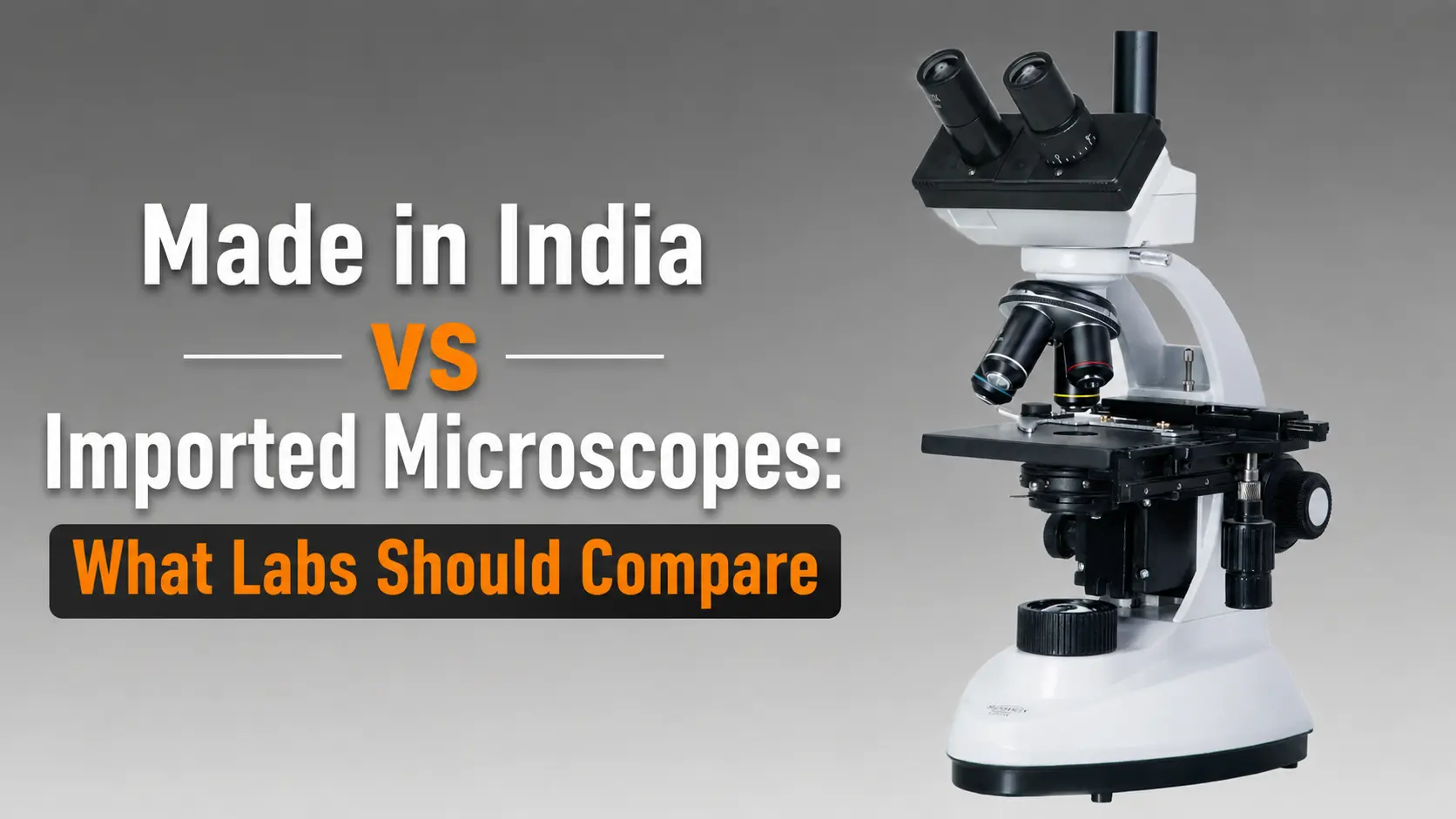
The third is forgetting after-sales support. Prisms can get dusty and eyepieces get scratched. Buy from a maker who can service the head and supply spares for years. We covered this in detail in made in India vs imported microscopes.
How SUSWOX builds monocular, binocular and trinocular heads
Every SUSWOX microscope is assembled and quality-checked at our unit in Ambala. For binocular and trinocular models, the key check is alignment. Both eye tubes must show the same field, centred and in focus, or the brain struggles to merge the two images. That is what causes the “headache microscope” problem in cheap imports.
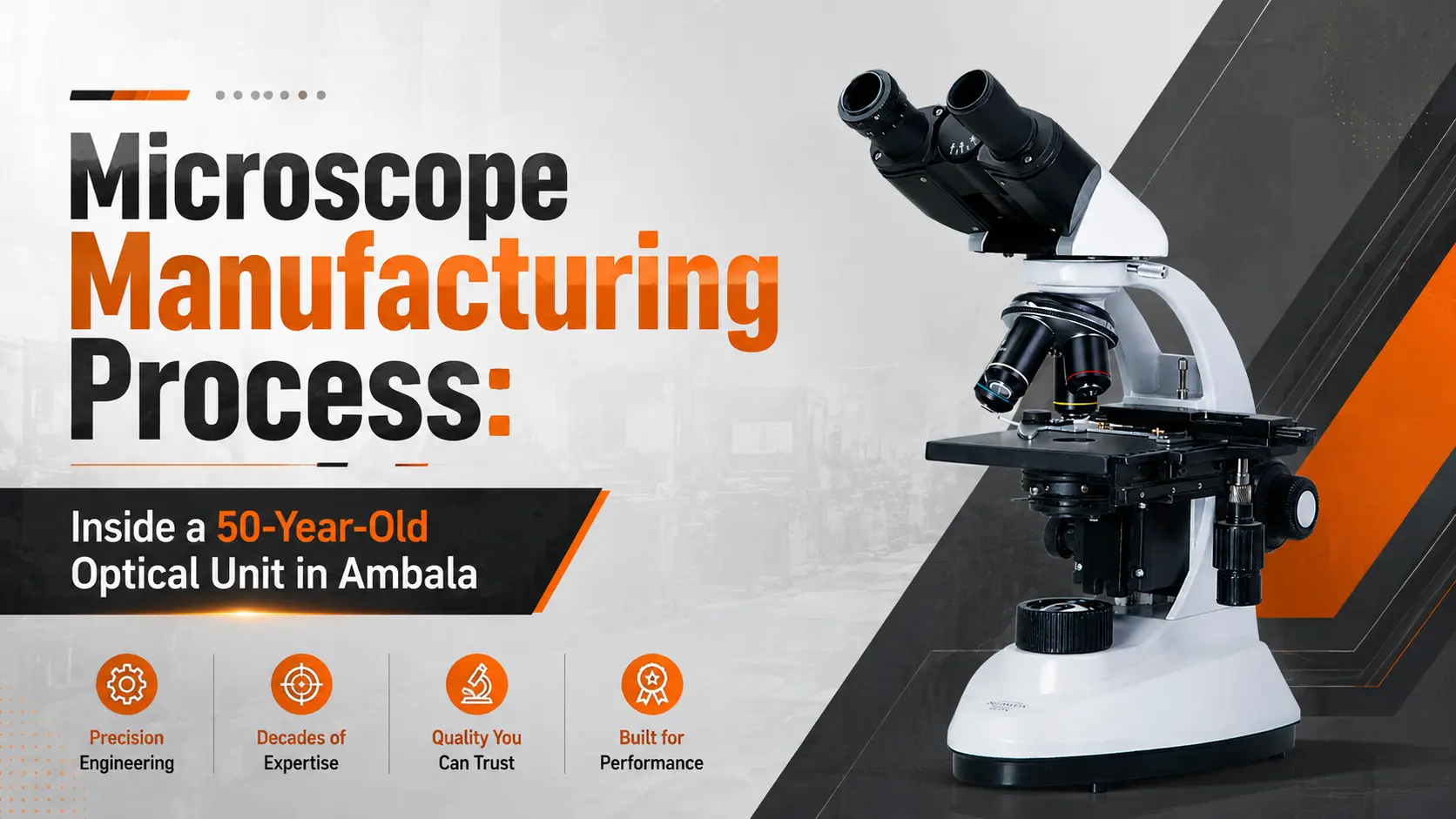
Our microscopes carry the ISI mark under the Bureau of Indian Standards, and they are in daily use at AIIMS campuses, BHU, MDU Rohtak and Haffkine Institute. If you want to see how this happens on the shop floor, read about our microscope manufacturing process.
That 50-plus year track record is why institutions trust SUSWOX as a leading microscope manufacturer and exporter in India.
Frequently Asked Questions
Which is better, a monocular or a binocular microscope?
A binocular microscope is better for most adults and for long sessions because you use both eyes and feel far less strain. A monocular is cheaper, slightly brighter and a better fit for young school children, whose eyes may be too close together for a binocular head.
Is a trinocular microscope better than a binocular microscope?
Optically, they can be identical. A trinocular simply adds a third port for a camera. It is better only if you need to capture images, record video or show slides on a screen. If you will never use a camera, a binocular gives the same viewing experience for less money.
Can I attach a camera to a binocular microscope?
Yes, using an eyepiece camera that fits into one eye tube. But you lose that eyepiece while the camera is fitted, and the image quality is usually lower than with a trinocular C-mount port. If imaging is a regular need, a trinocular is the better choice.
Does a binocular microscope give a 3D image?
No. A compound binocular microscope sends the same image to both eyes, so the view is flat. It feels more natural, but it is not true 3D. For a real three-dimensional view, you need a stereo microscope, which has separate optical paths for each eye.
Which microscope is best for school students?
For Classes 6 to 8, a sturdy monocular microscope with LED light and a rotating head is usually best. For Class 9 onwards and for college labs, a binocular microscope is more comfortable and helps students work longer without eye strain.
Which microscope is used in pathology labs?
Most pathology labs use binocular microscopes for daily slide reading because technicians work for many hours. Many labs also keep at least one trinocular microscope with a camera for documentation, teaching and second-opinion reports.
Why does a monocular microscope look brighter?
In a monocular microscope, all the light from the objective goes to a single eyepiece. In binocular and trinocular heads, prisms split the light between two or three paths, so each eye gets a little less. With modern LED lighting, this difference is small.
Is a trinocular microscope worth the extra cost?
It is worth it if you will photograph, record or project slides at any point in the next few years. Adding imaging later to a binocular is harder and gives weaker results. If your work is purely visual, the extra cost is not needed.
Final word: choose the head for the person, not the budget
Monocular for young students. Binocular for anyone who reads slides for a living. Trinocular when the image has to leave the microscope, for a screen, a report or a paper.
Still not sure? Tell us who will use the microscope, what they will look at and for how many hours a day. We will suggest the right head, the right objectives and a realistic budget.
Need help choosing? SUSWOX, an ISI-certified microscope manufacturer in India since 1973, builds monocular, binocular and trinocular microscopes for schools, hospitals, research labs and industry. Request a factory quote or call +91 8727015757 (Mon to Sat, 9 AM to 6 PM).
Related reading
Types of Microscopes: 12 Types with Uses
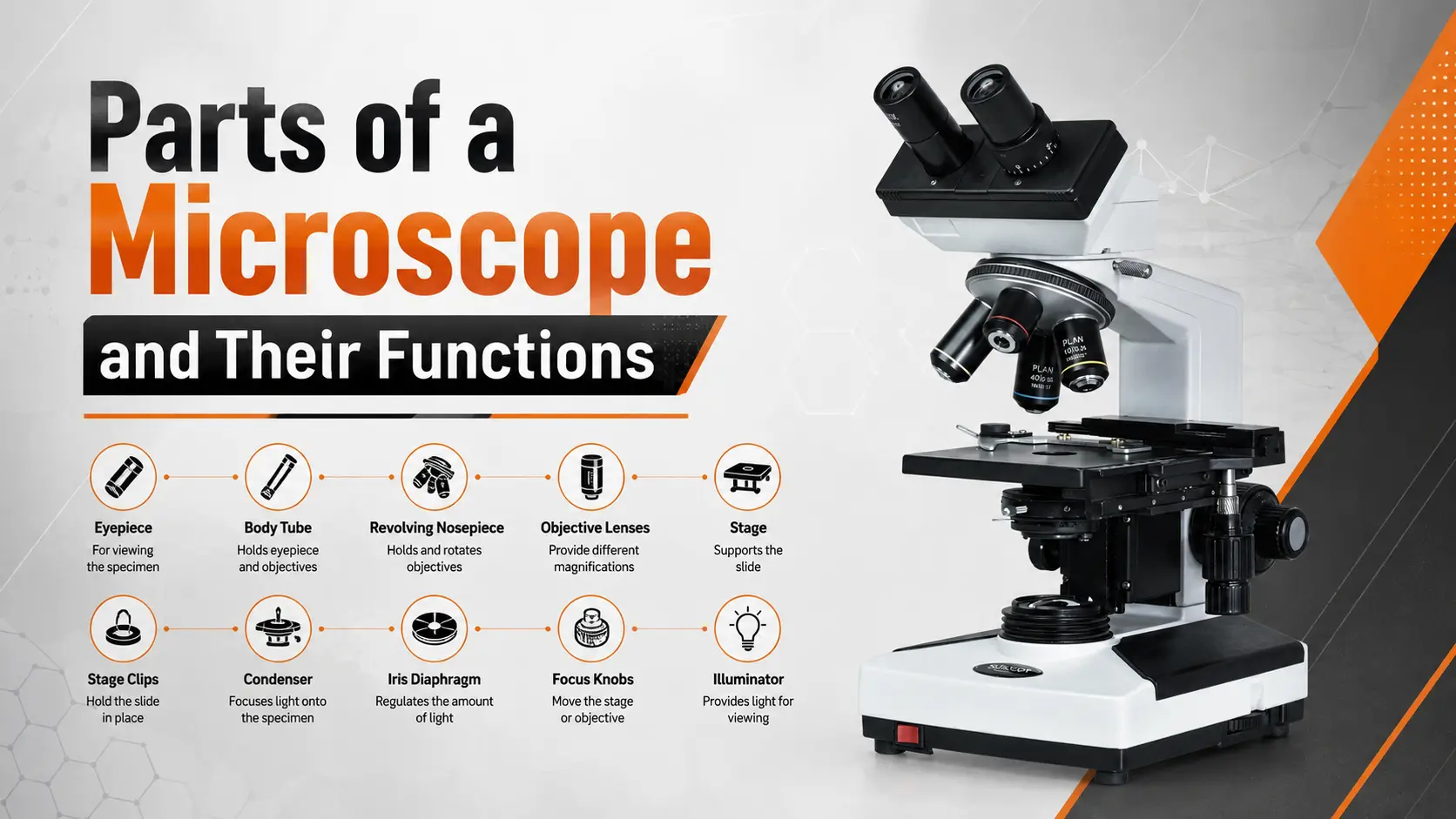
Parts of a Microscope and Their Functions