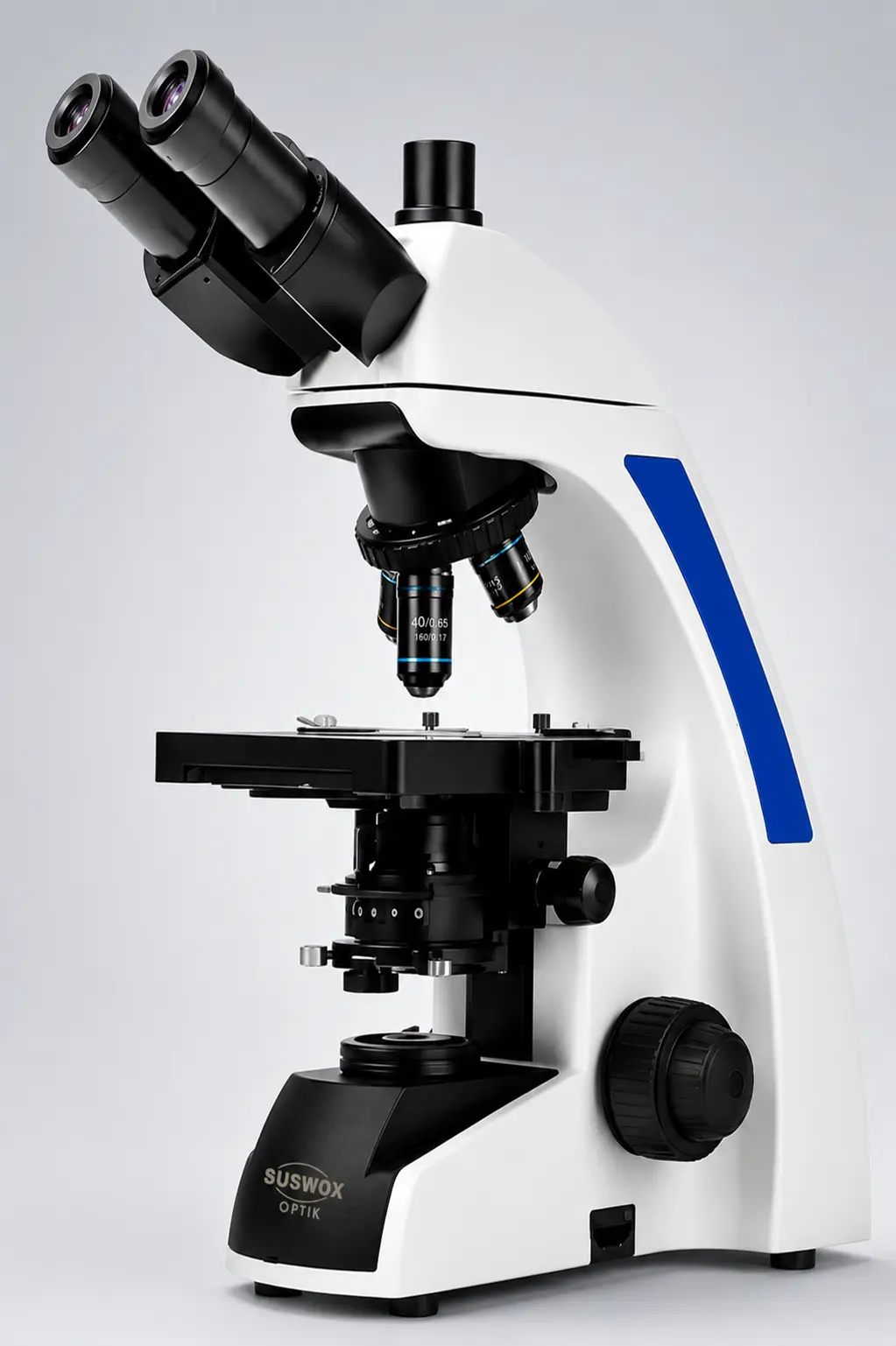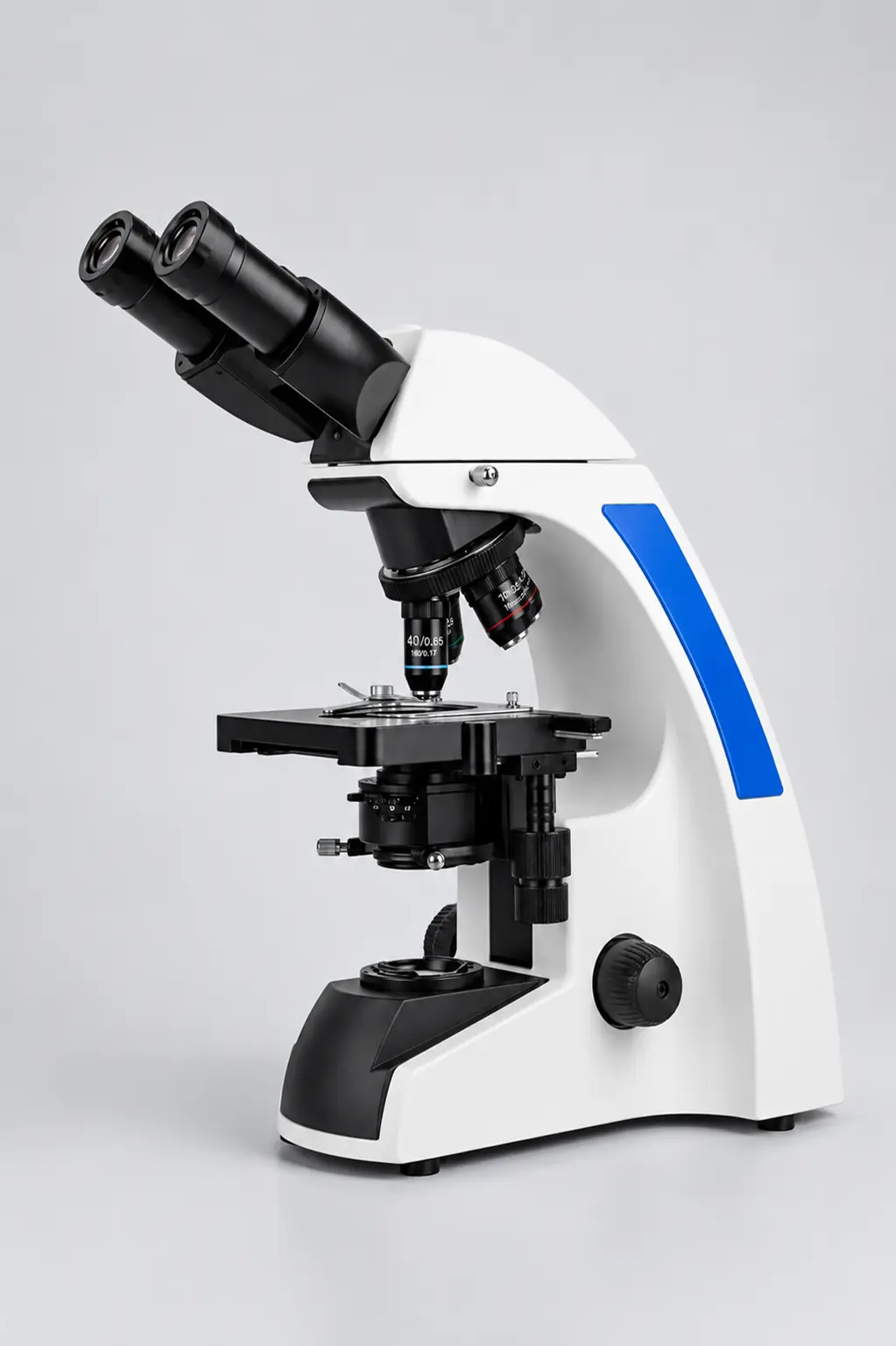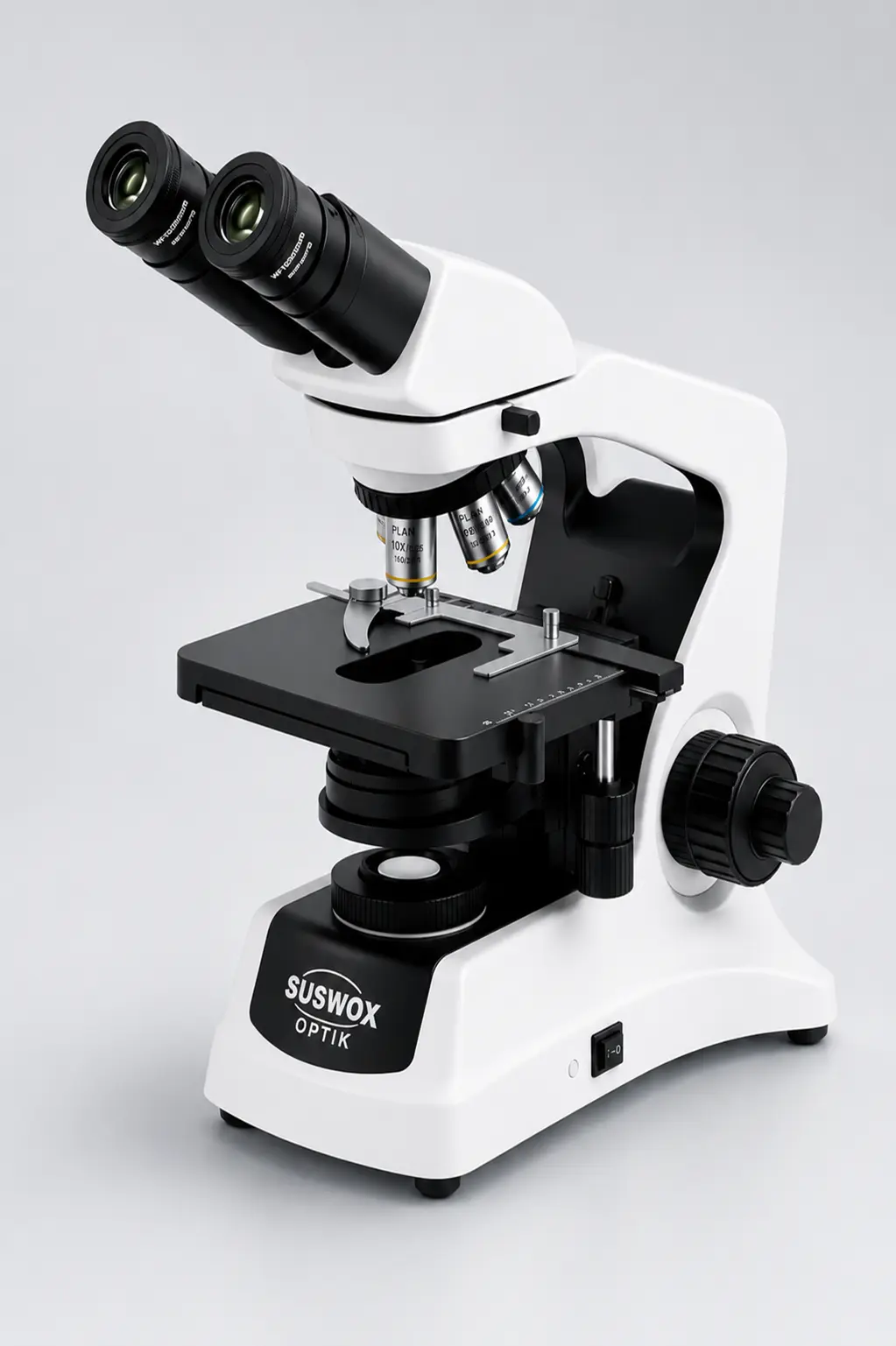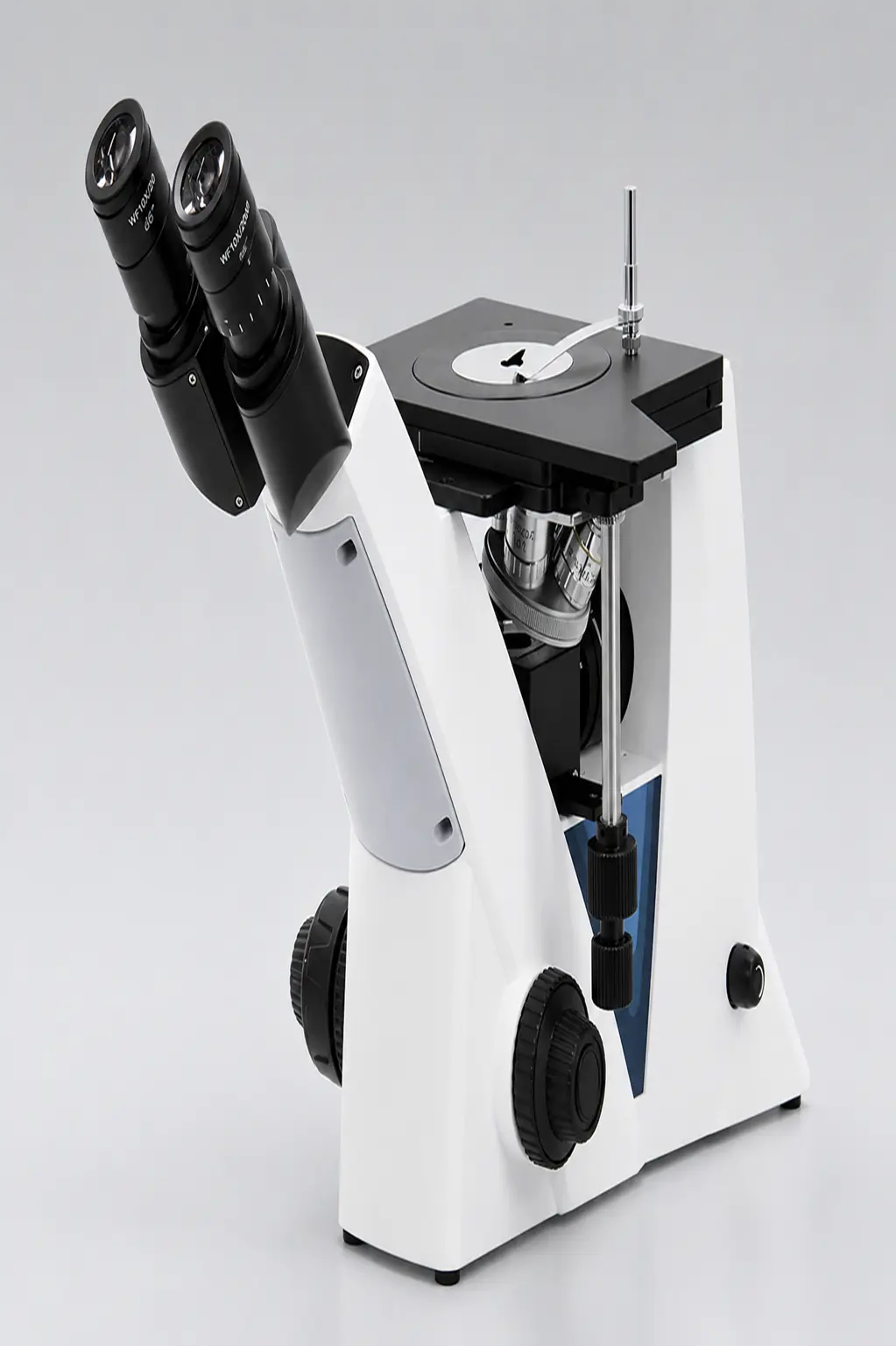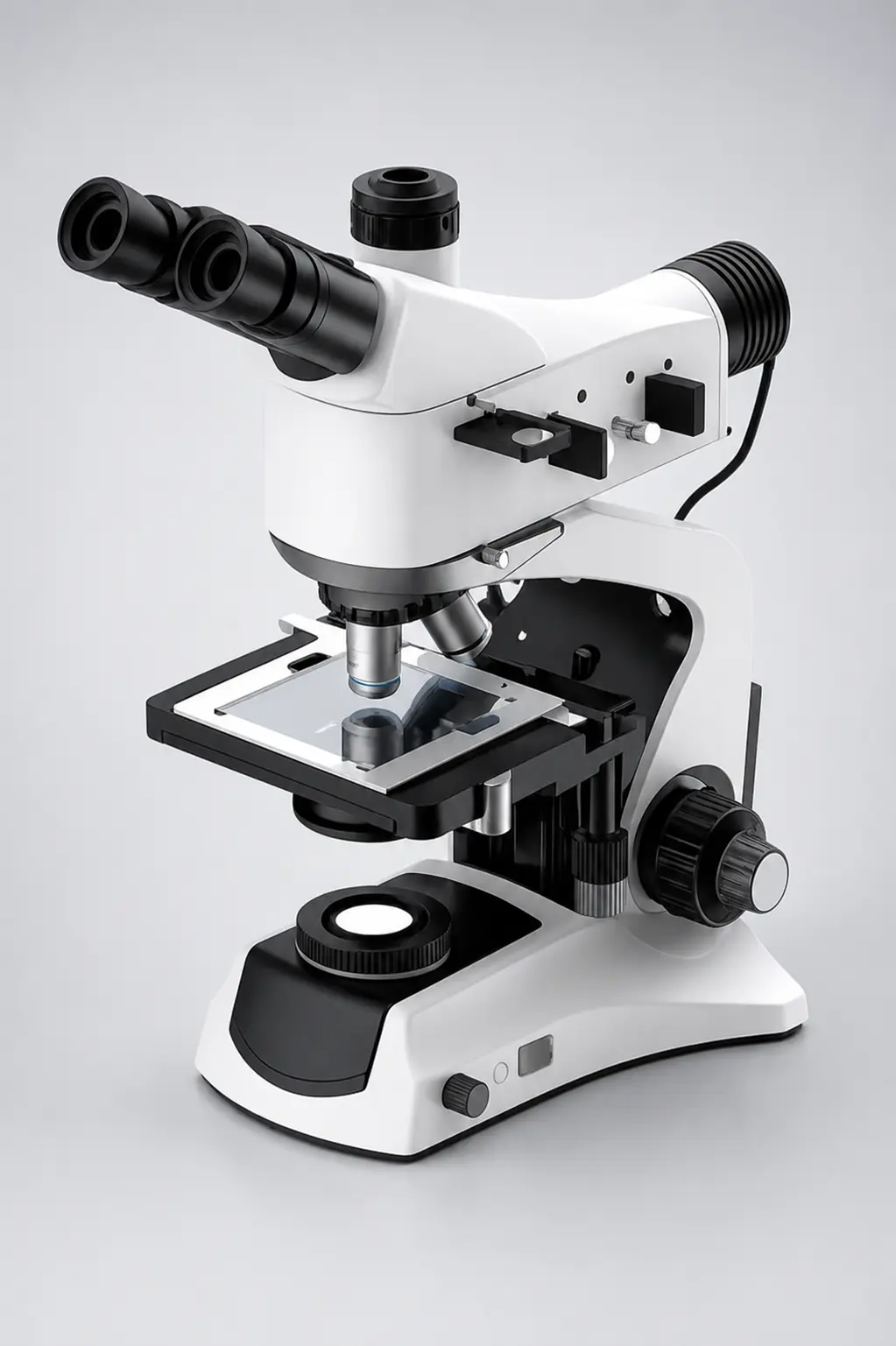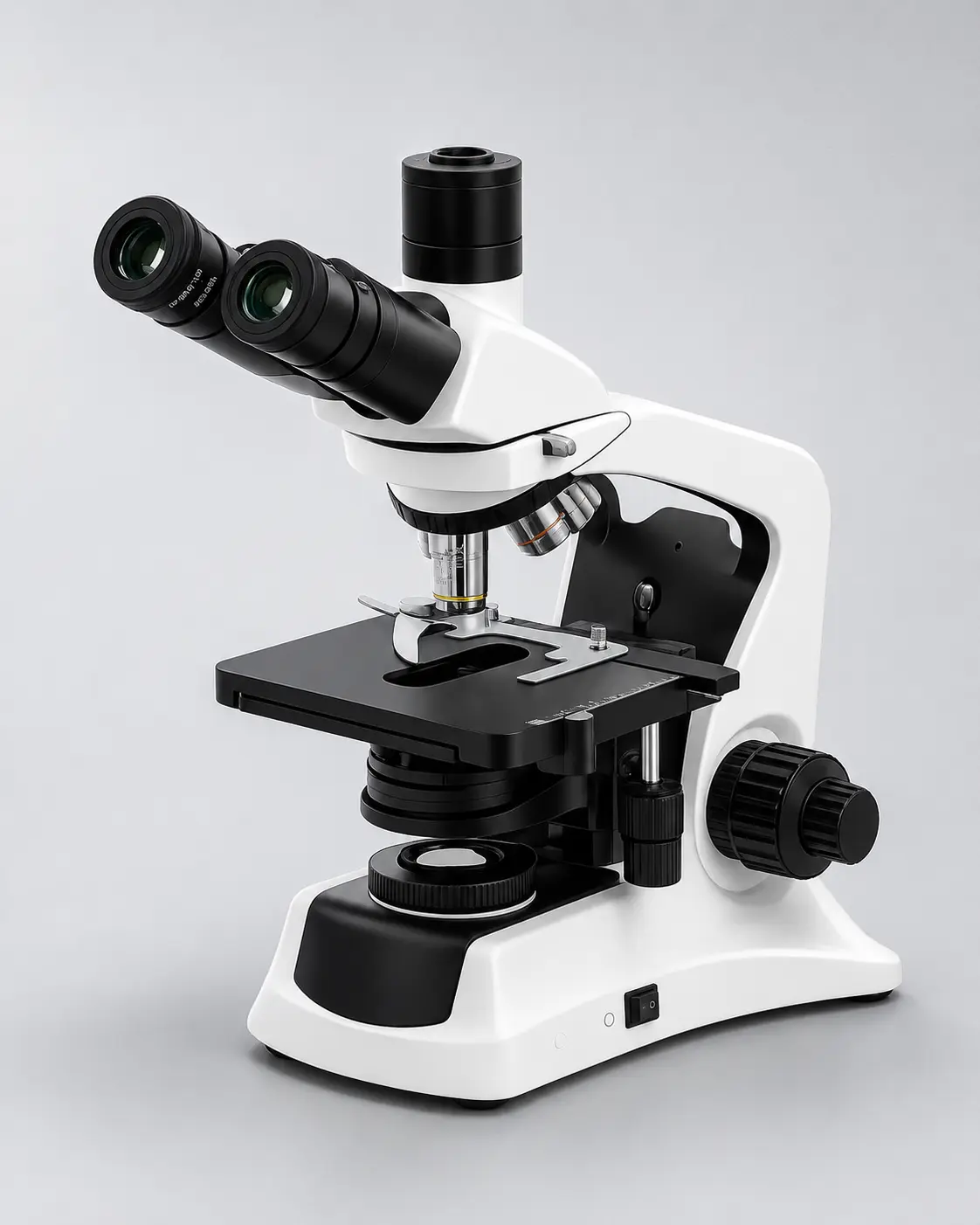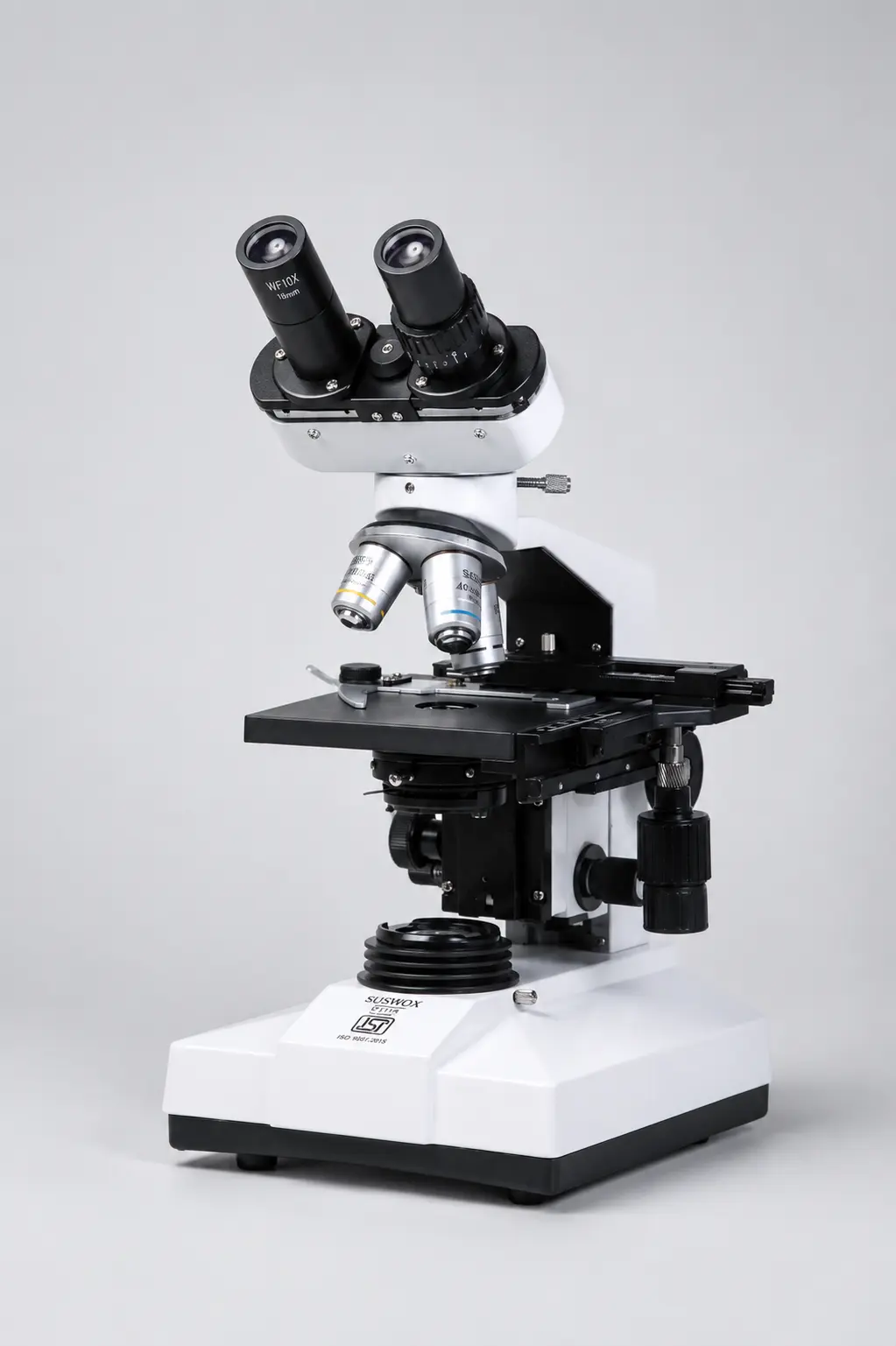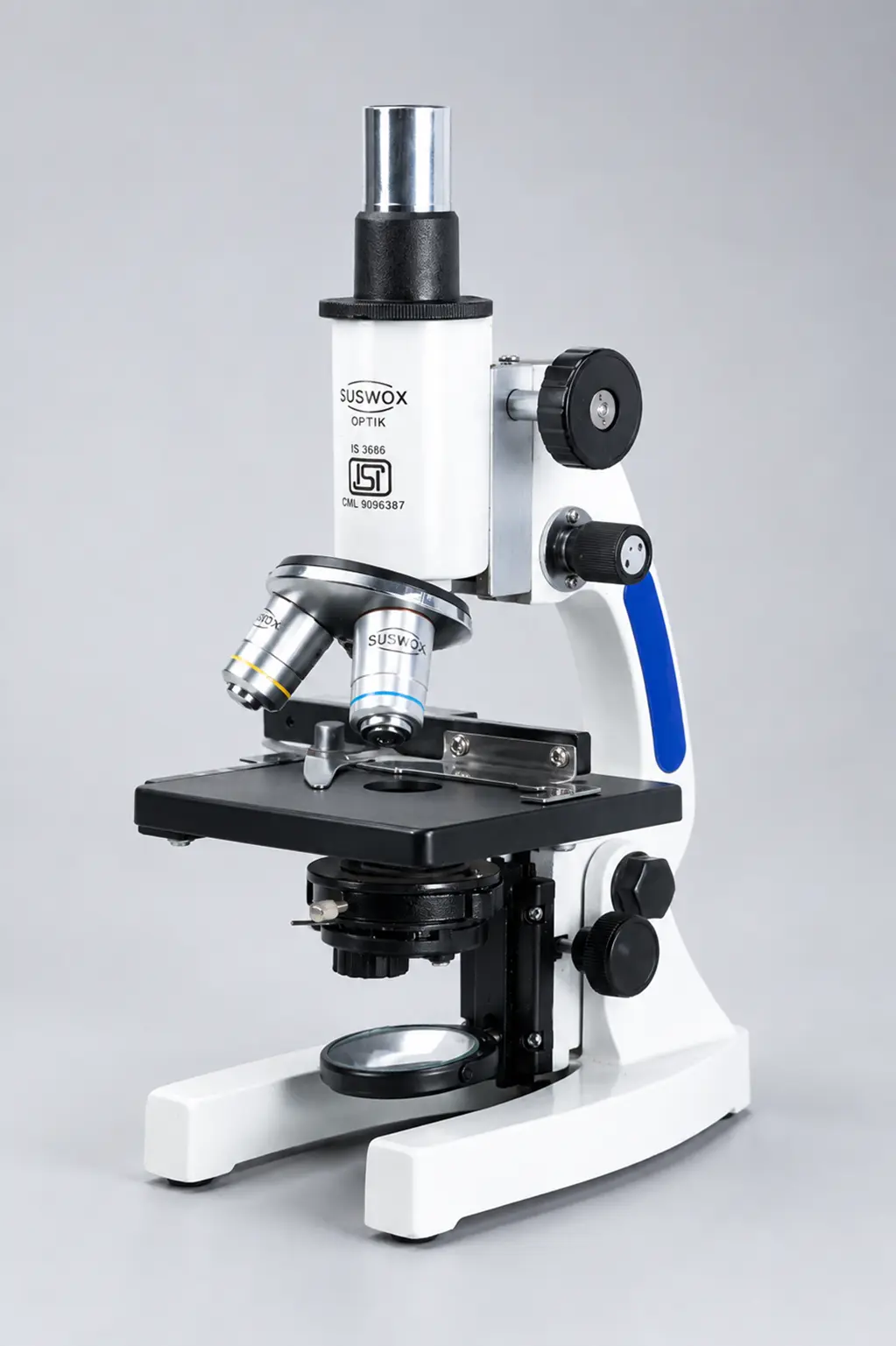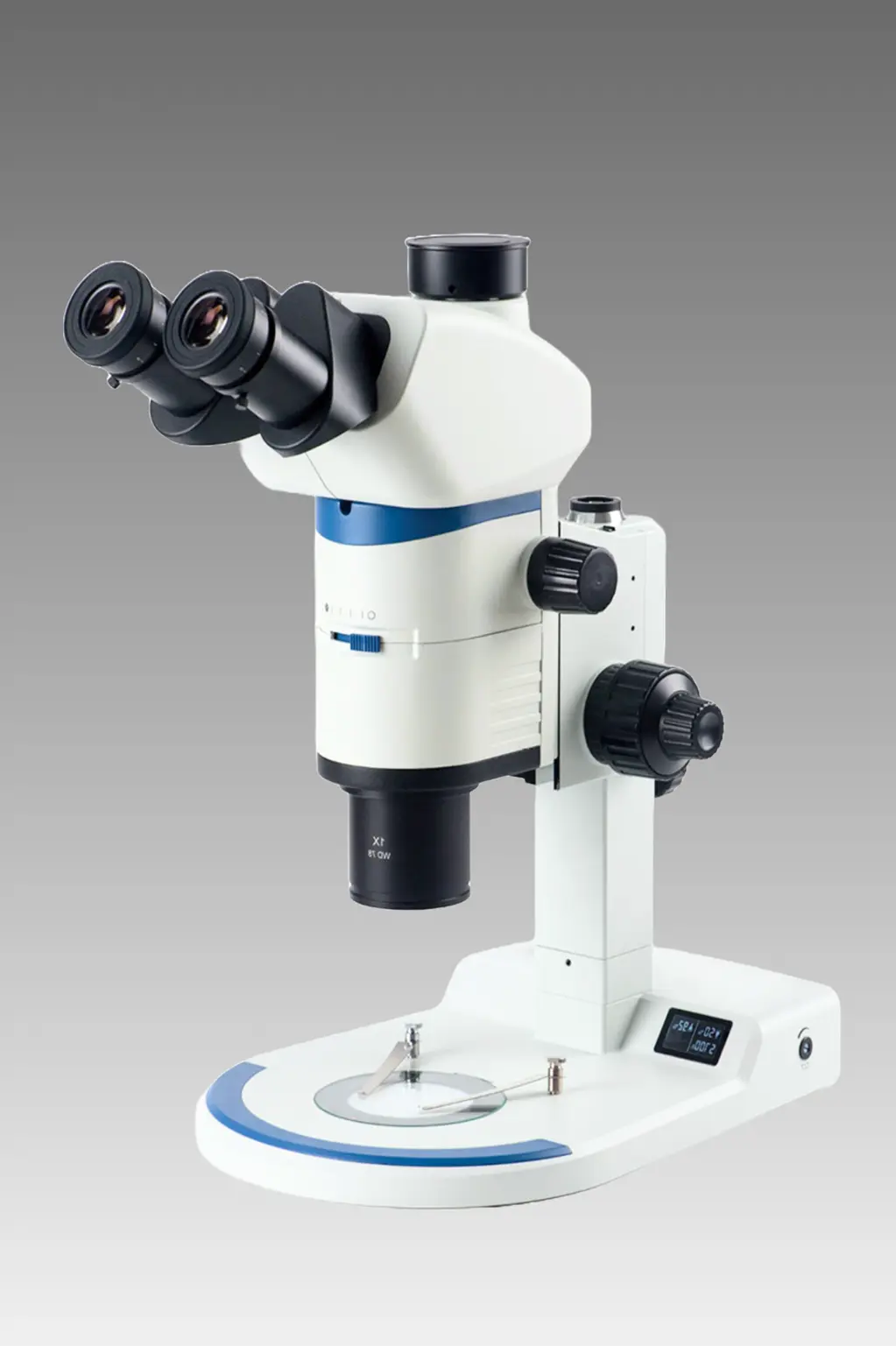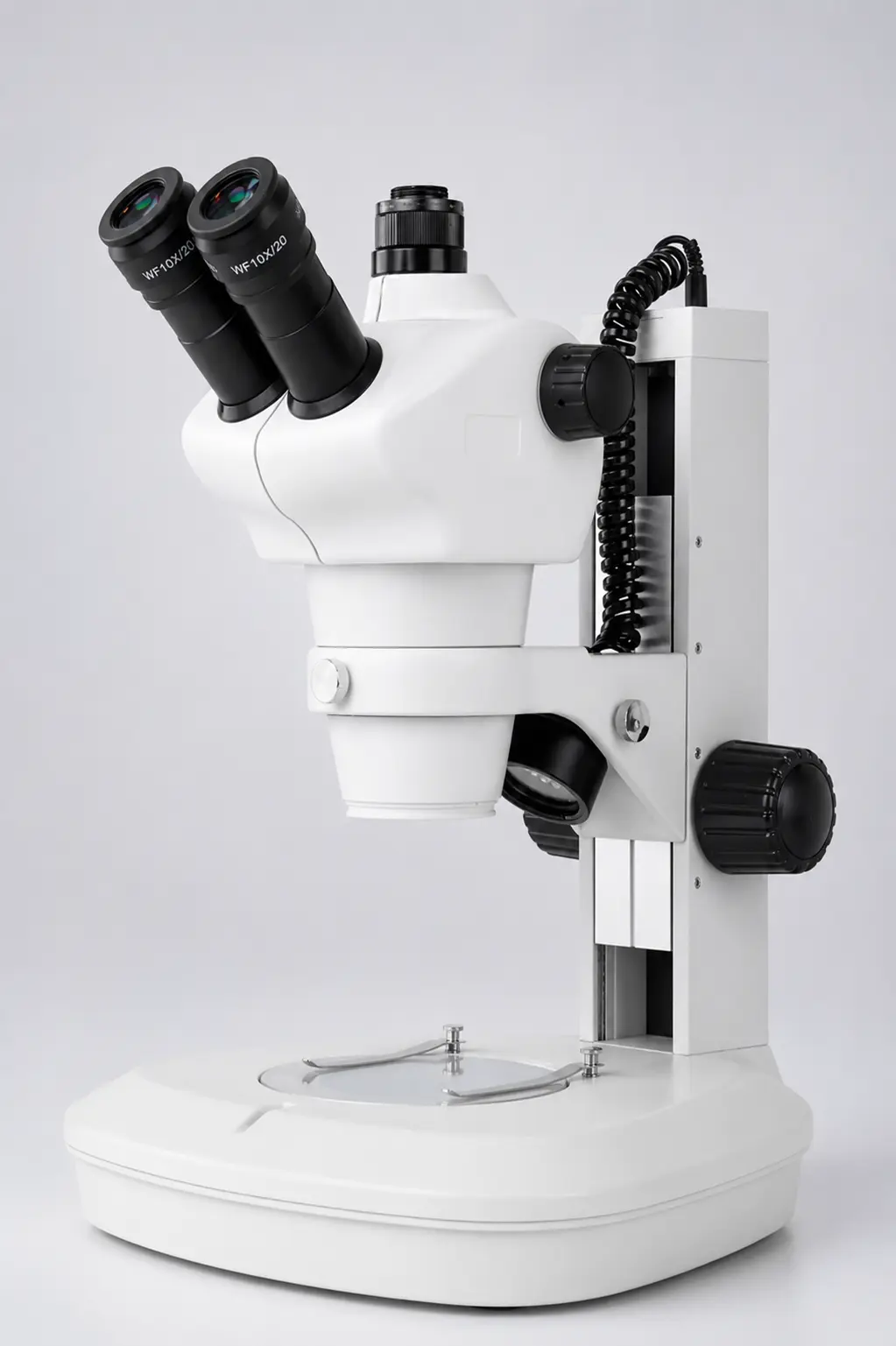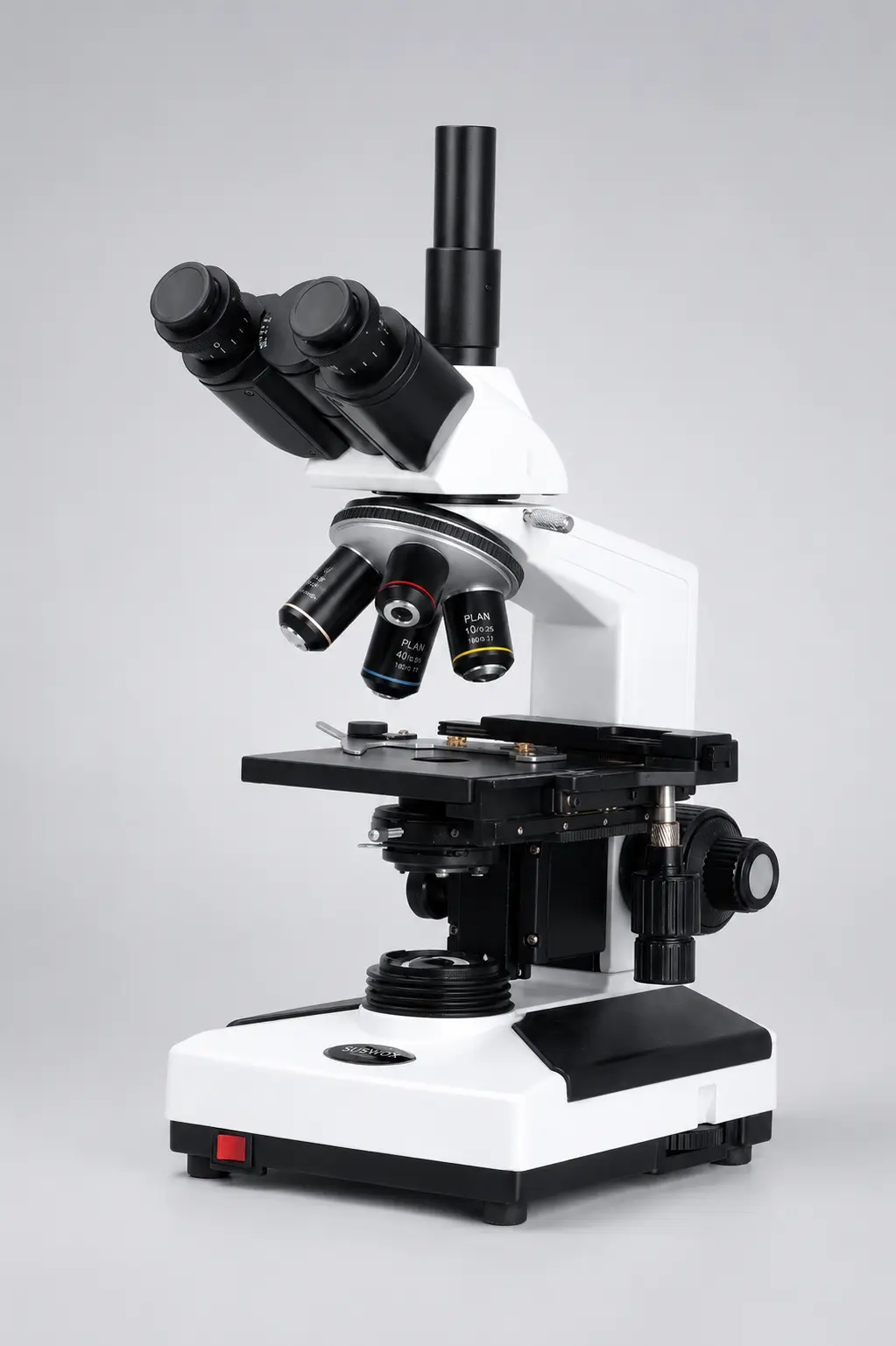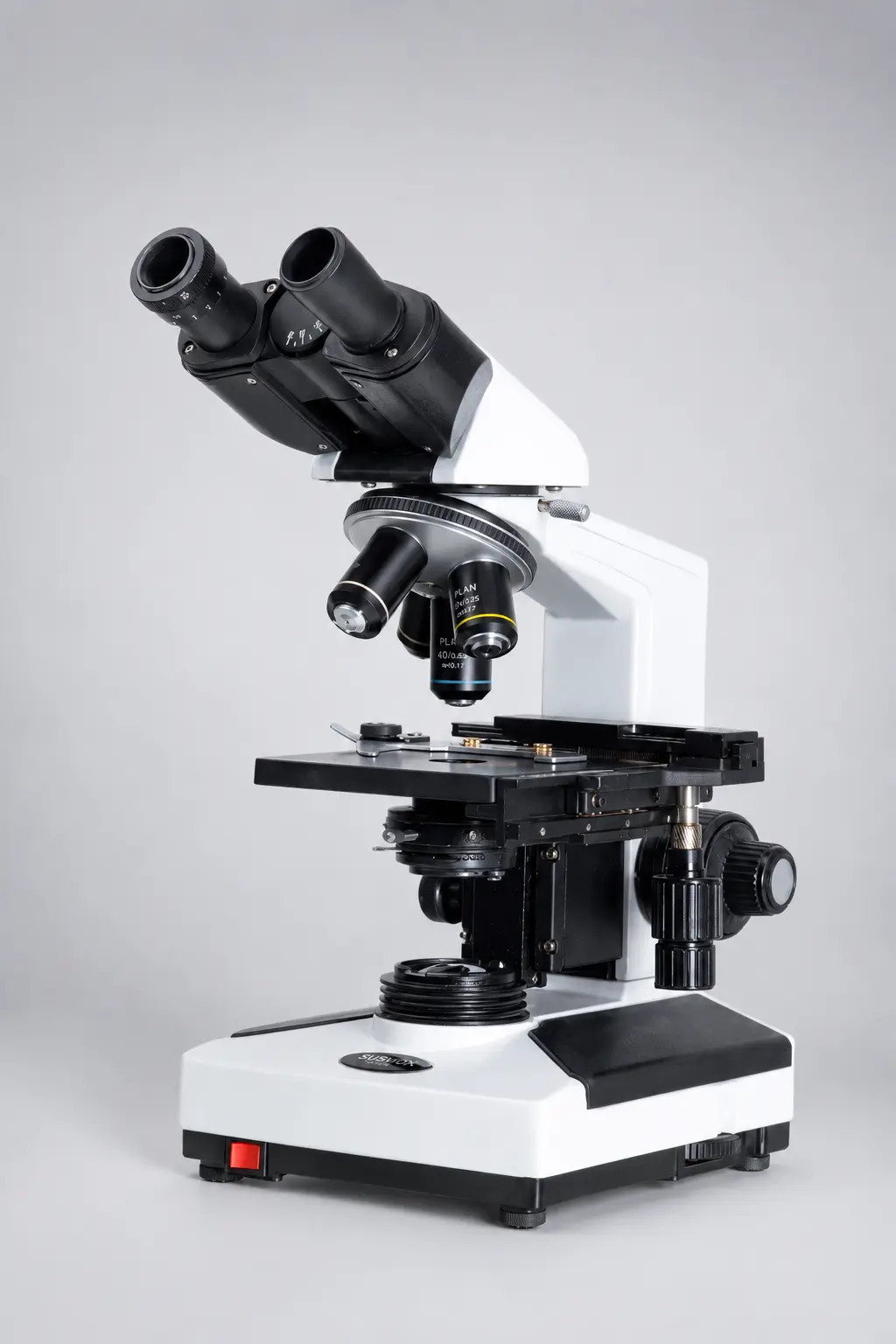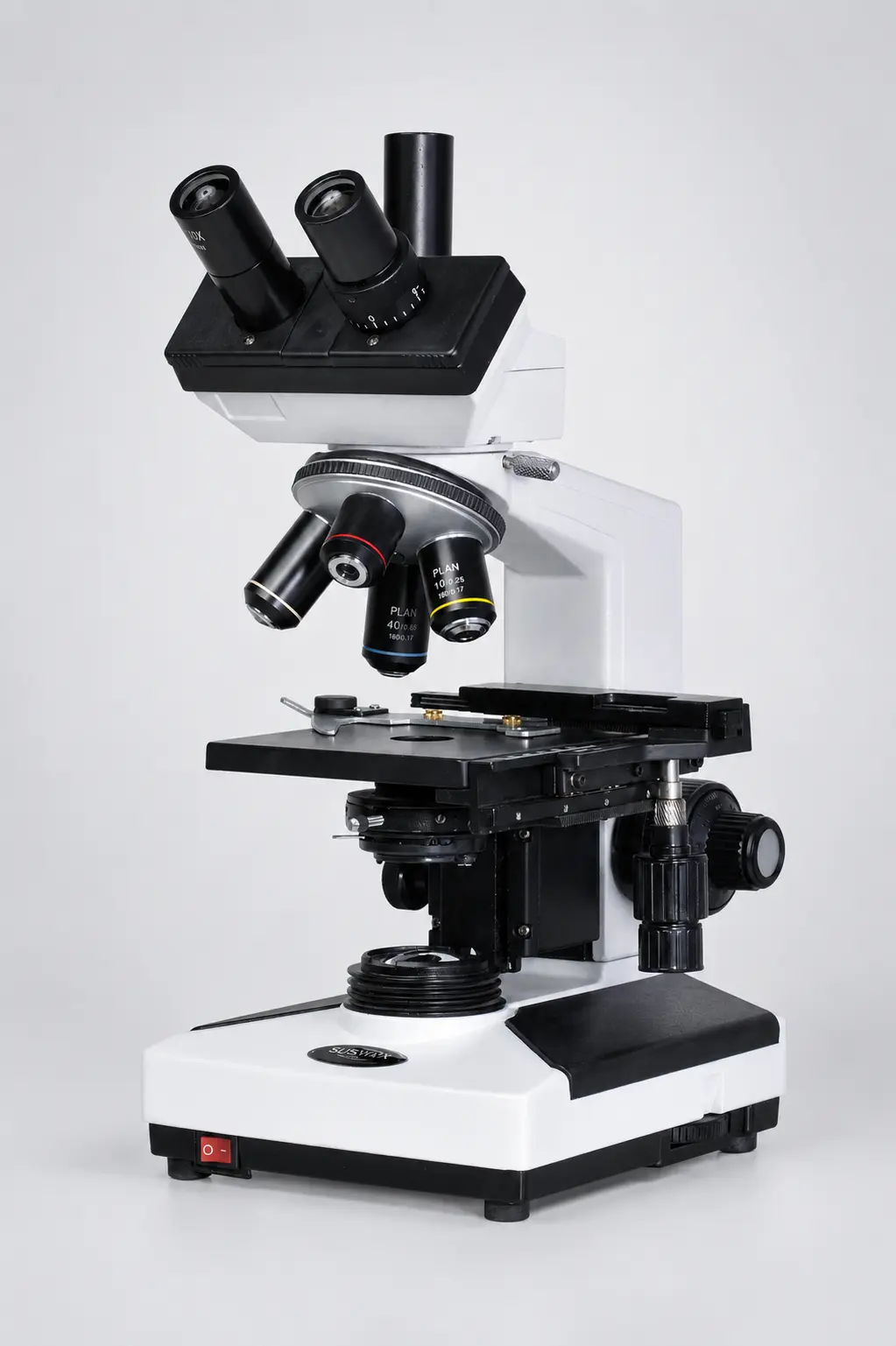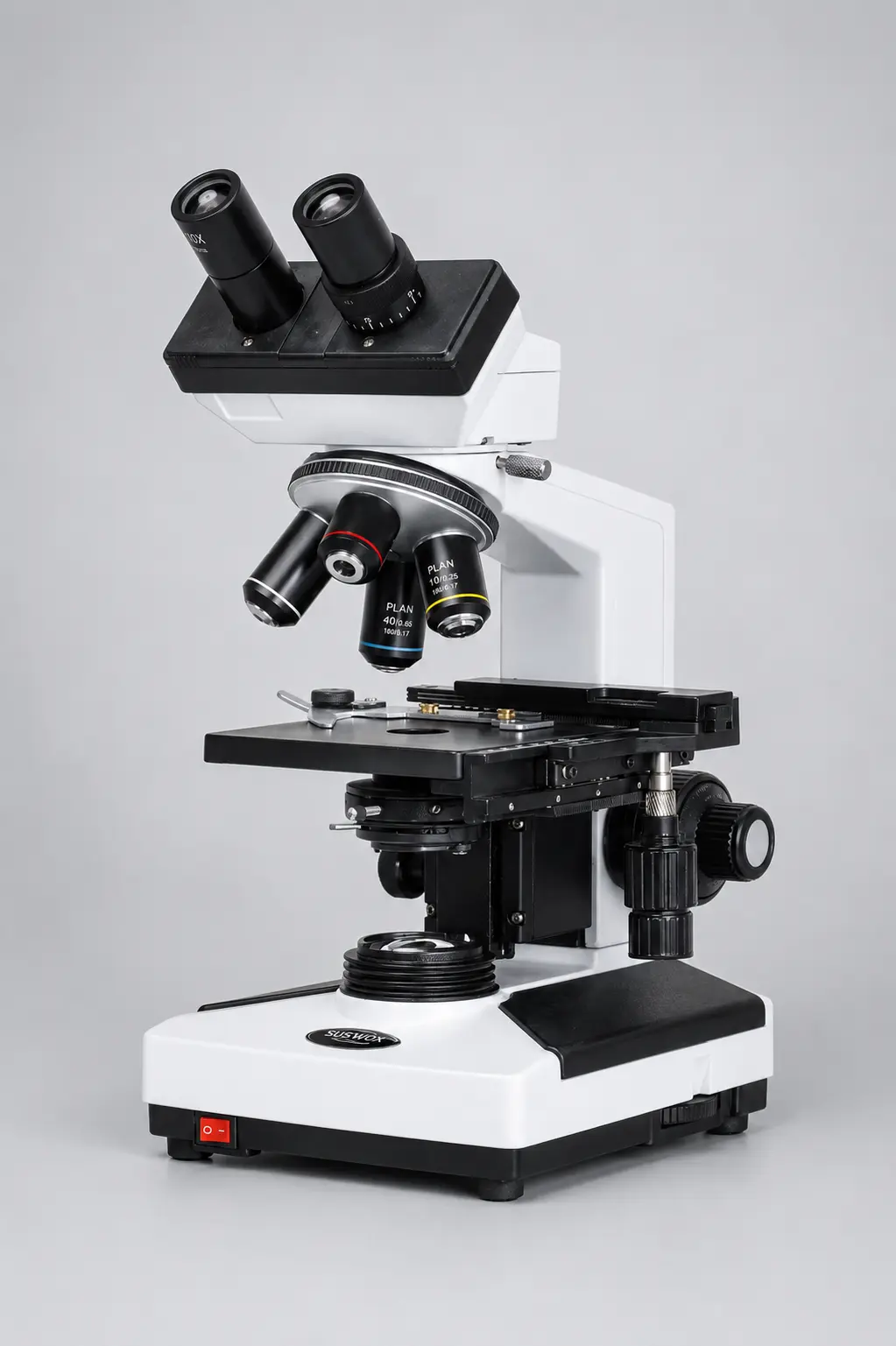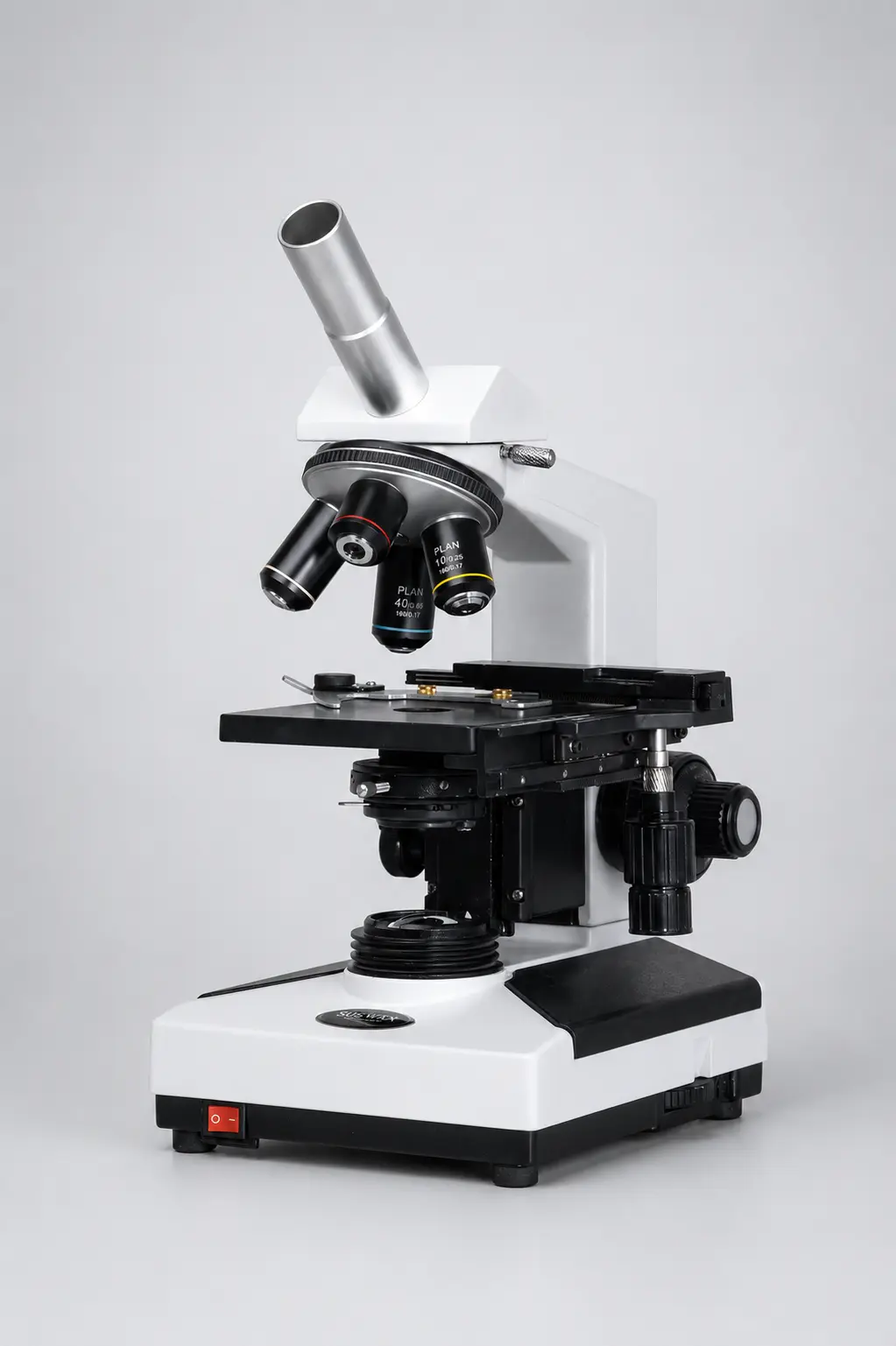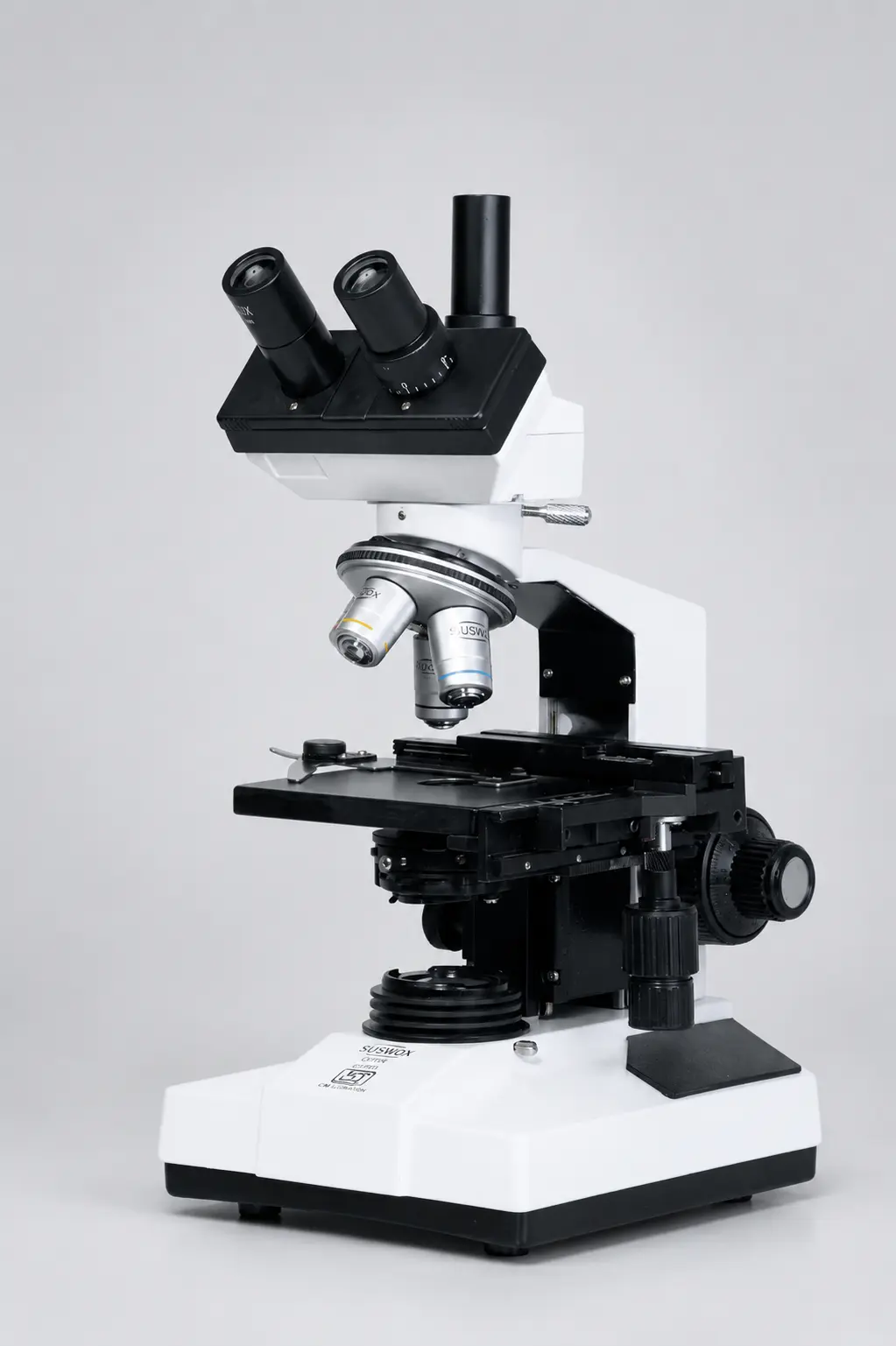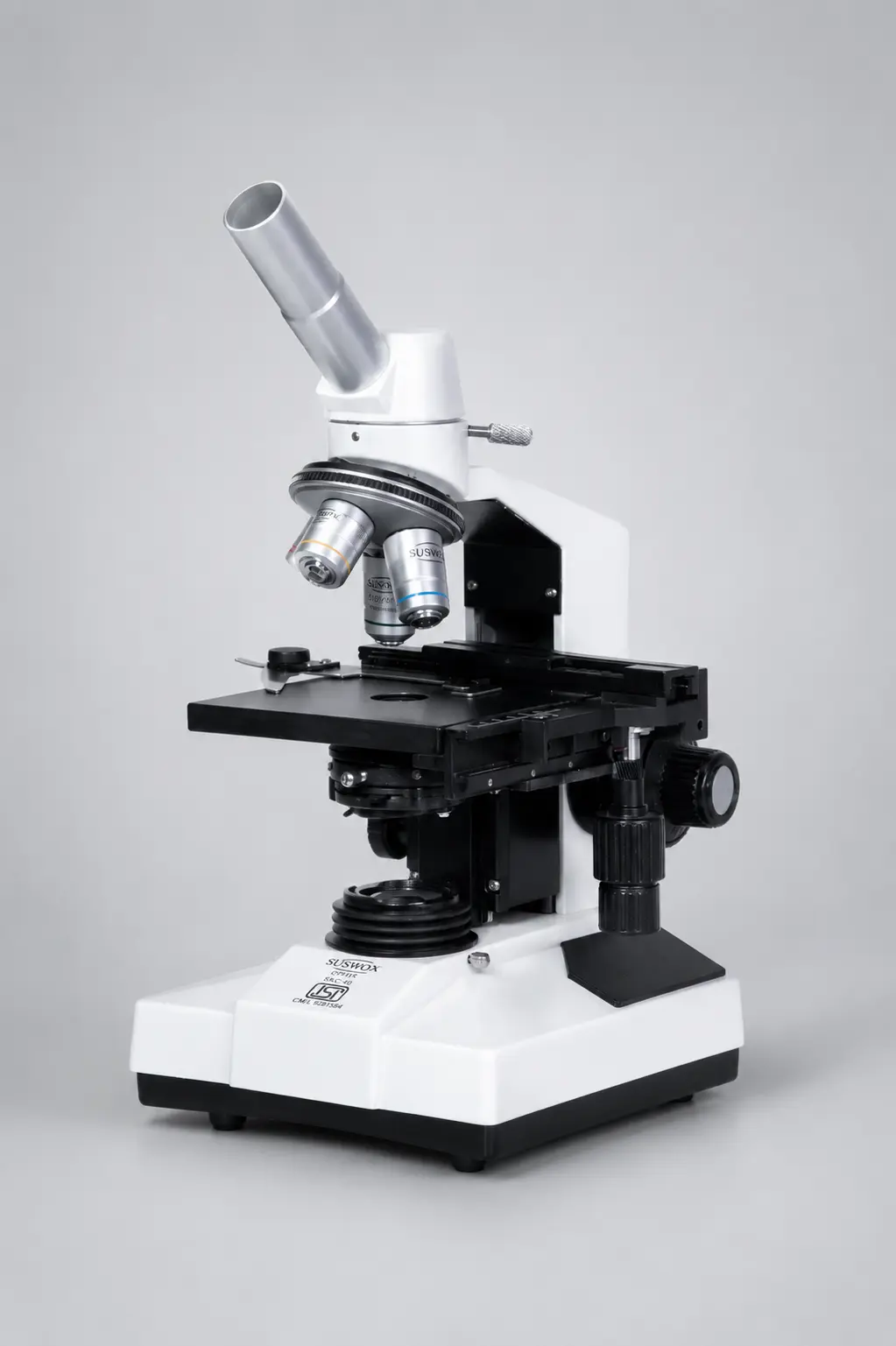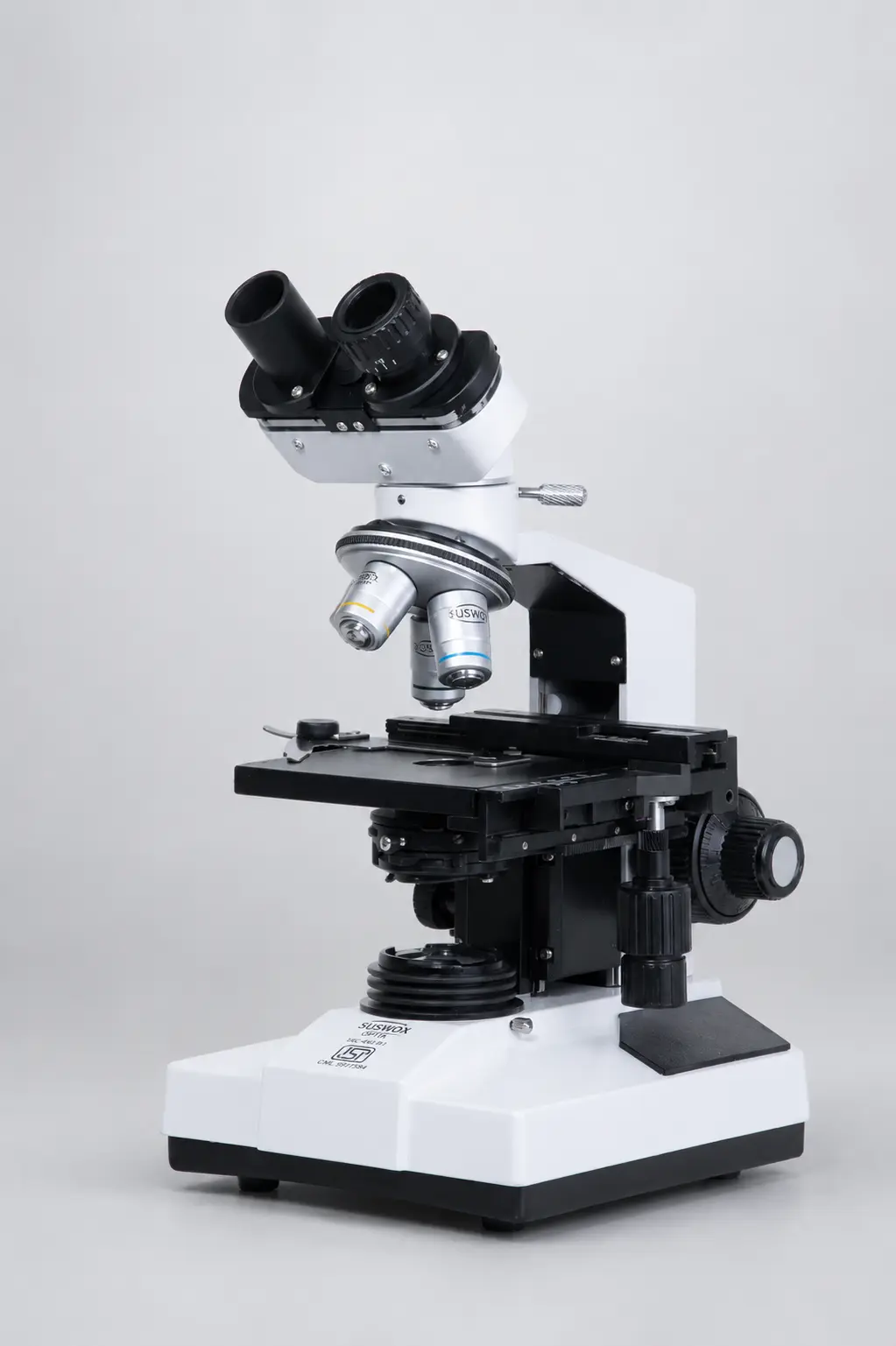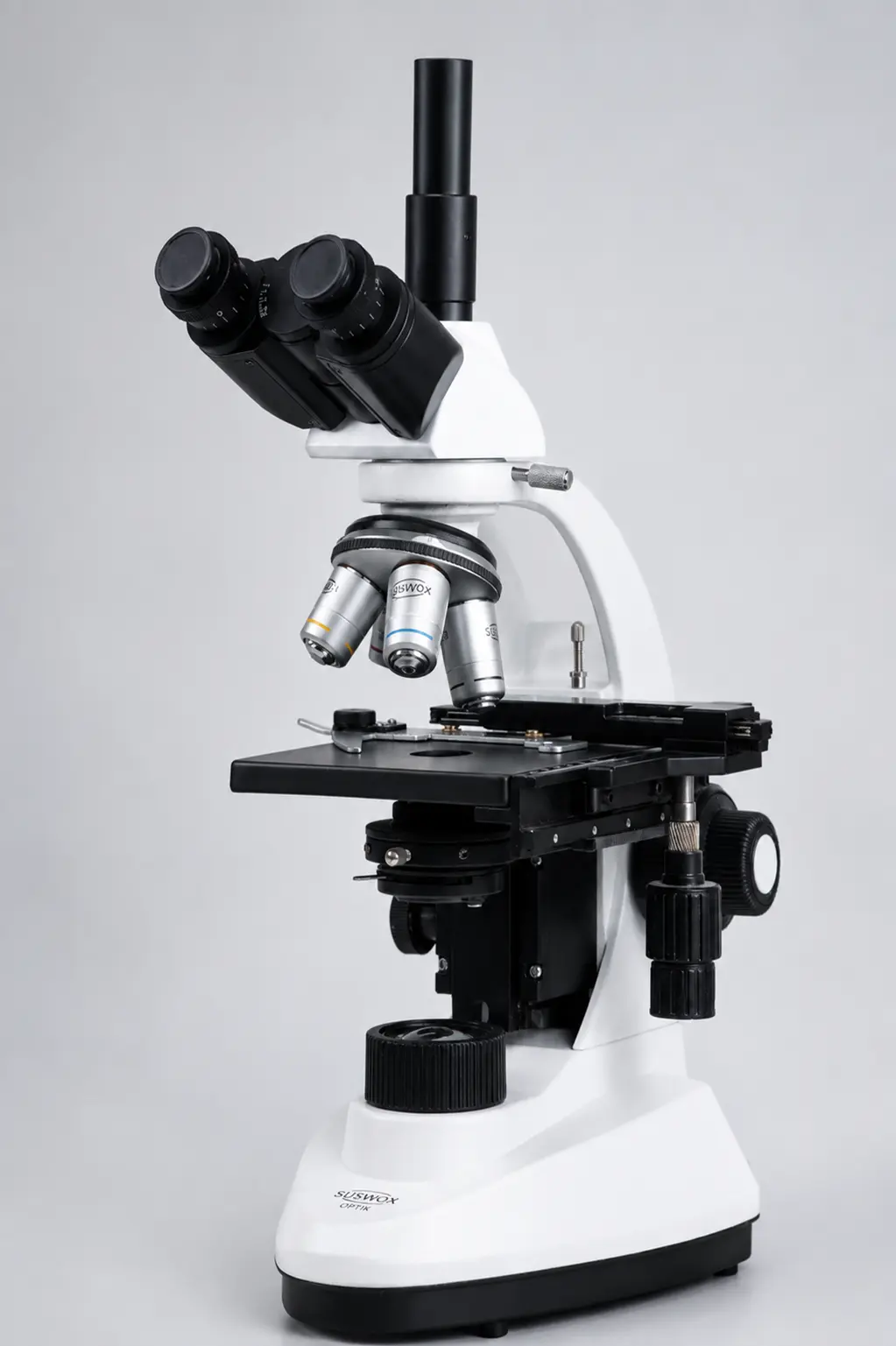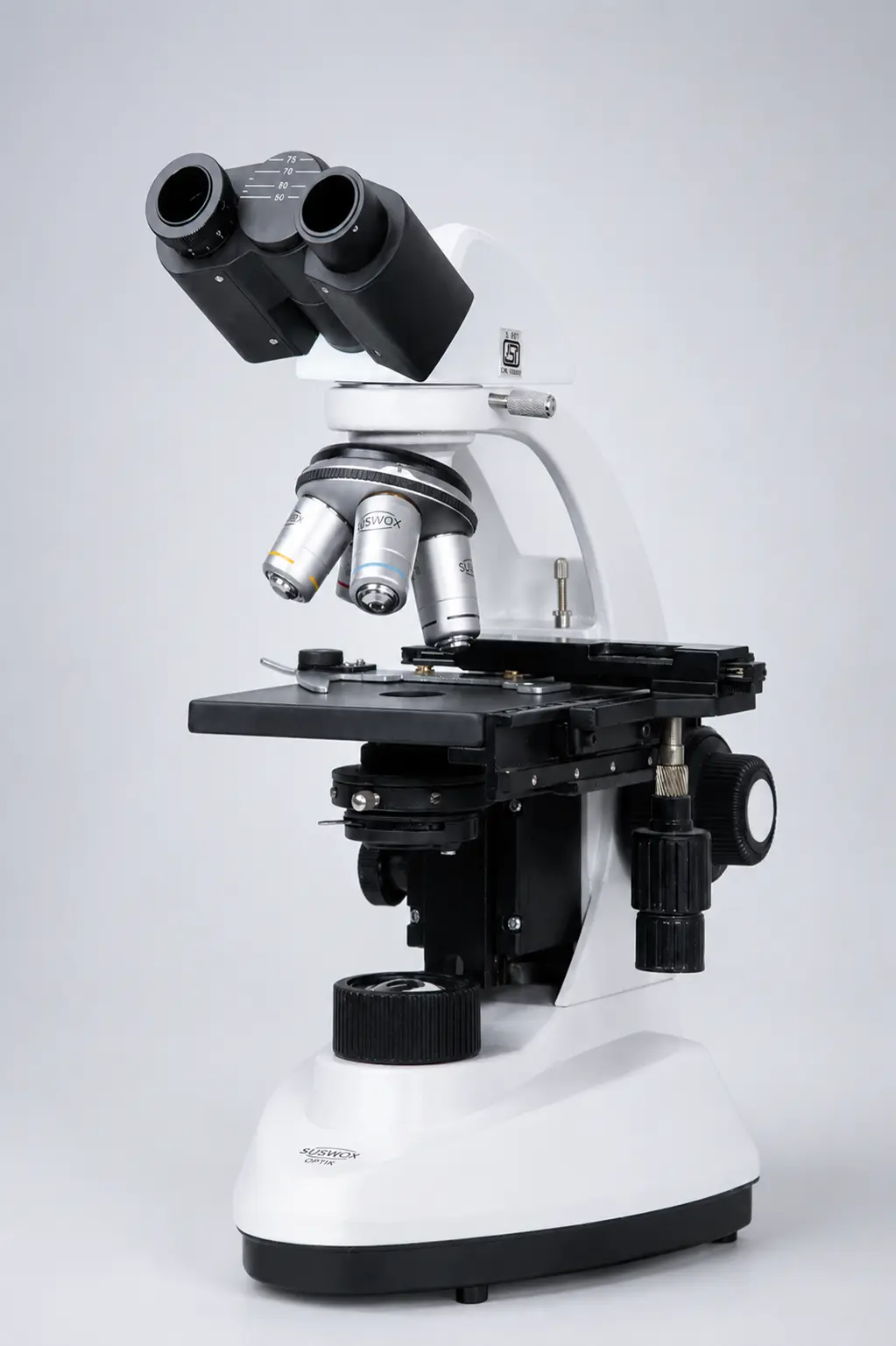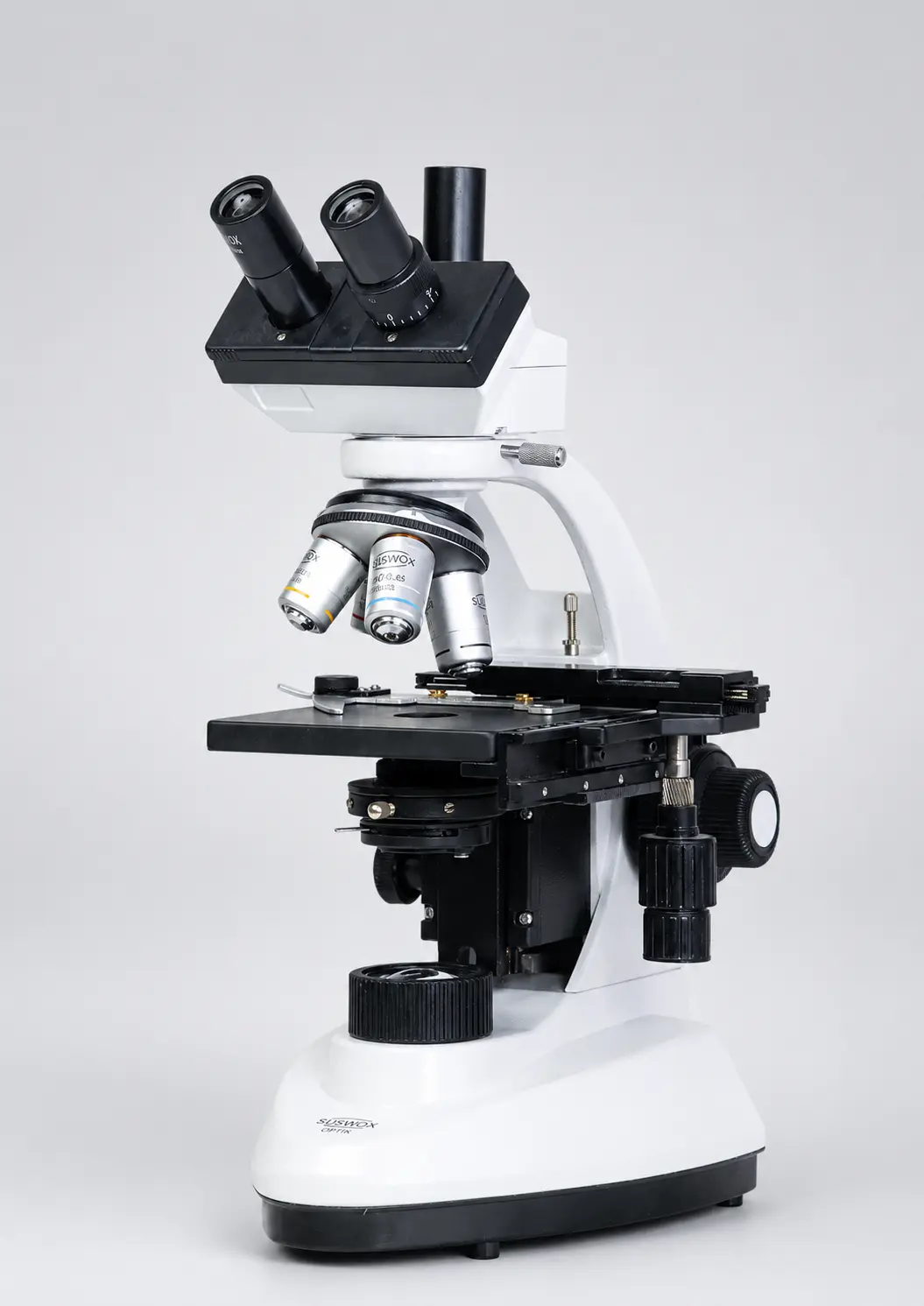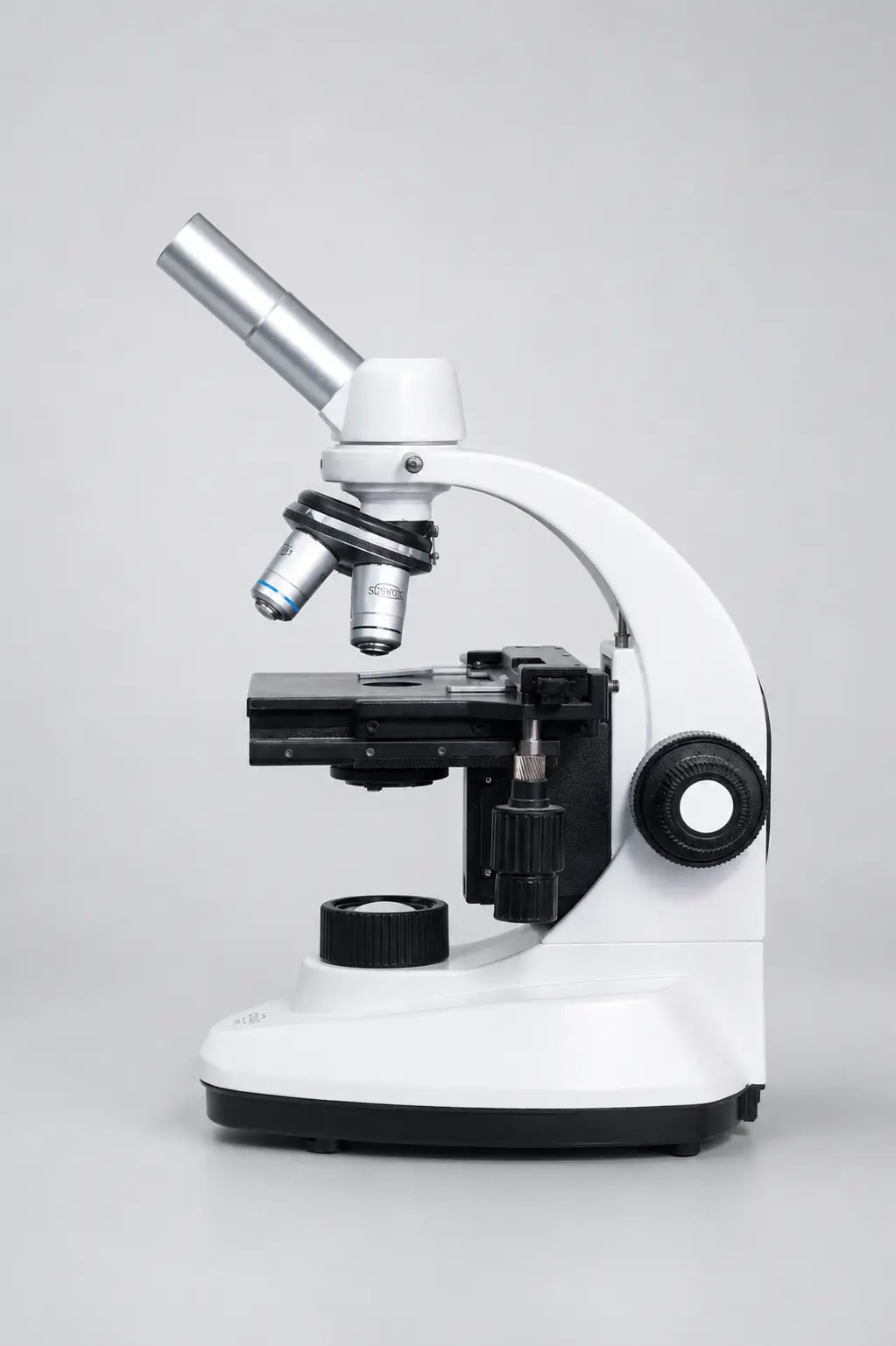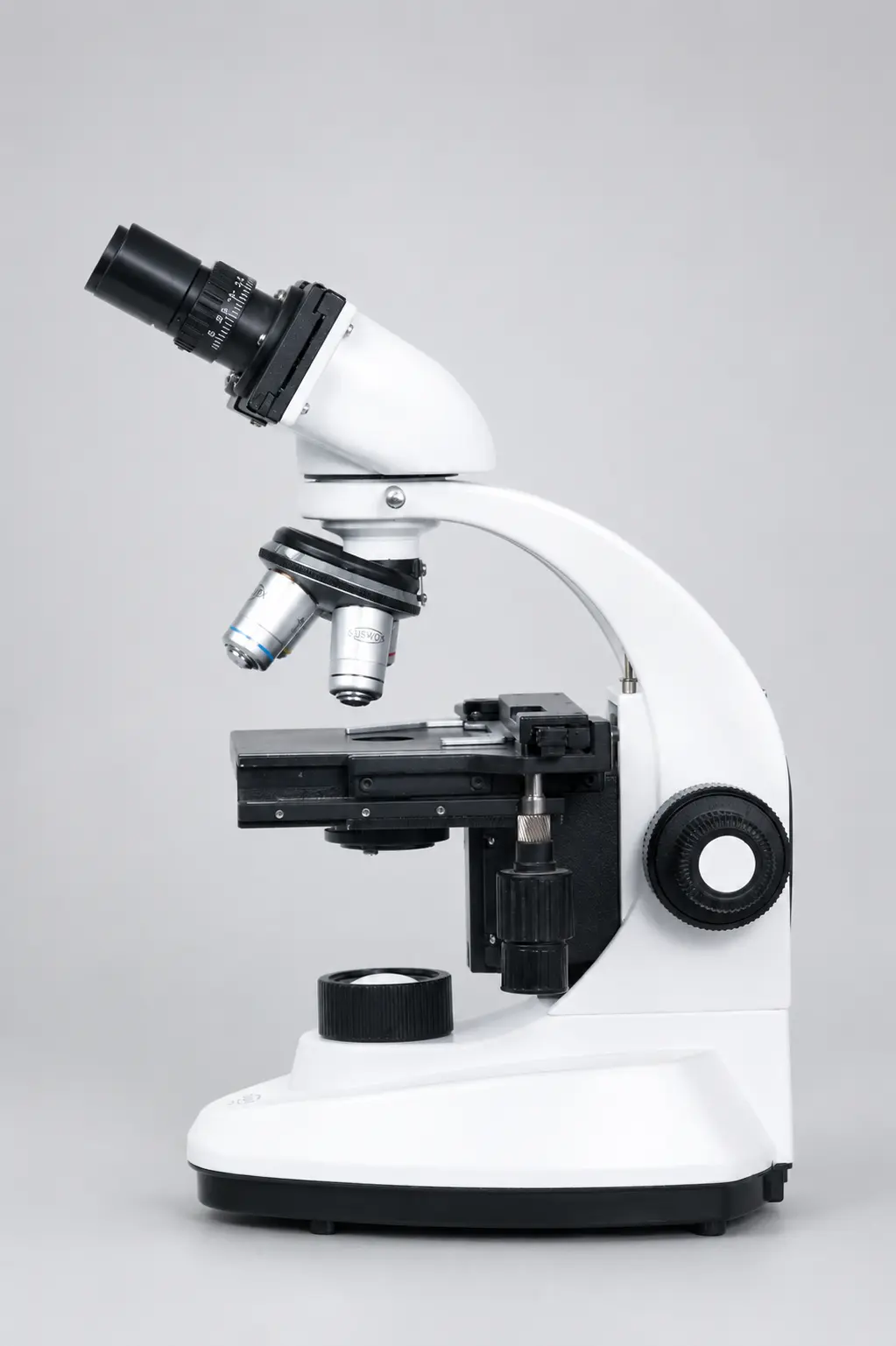
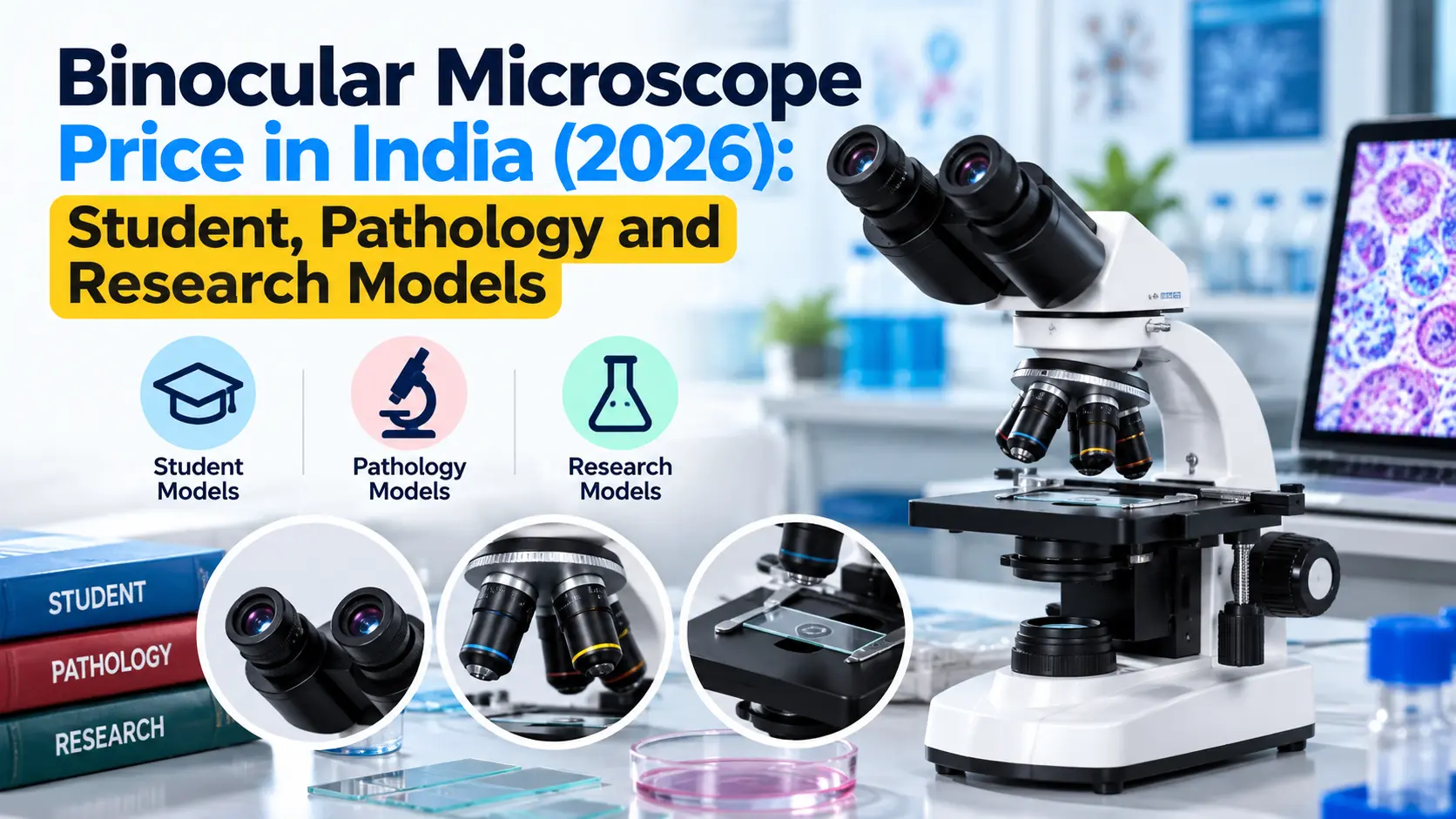
Type “binocular microscope” into any shopping site and you will see prices from about ₹7,000 to over ₹1.3 lakh. All of them have two eyepieces. All of them say 1000X.
So why is one twenty times the price of another?
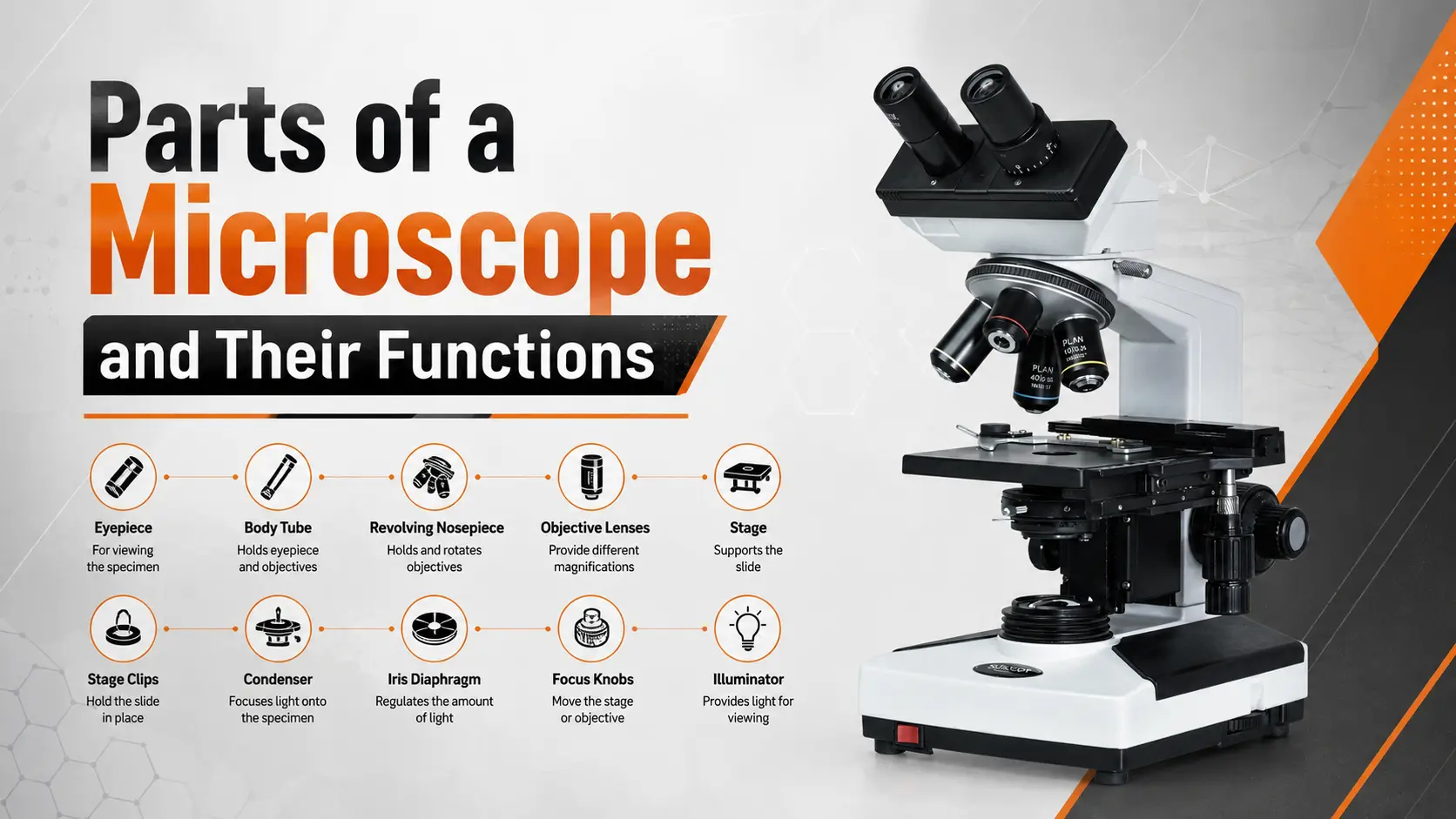
The answer is in the parts you cannot see in a photo: the objectives, the condenser, the stage, the build and the support behind it. This guide explains the real binocular microscope price in India in 2026, what each price level gets you, and how much a school, a pathology lab or a research department should budget. It is written by SUSWOX, a microscope manufacturer in India making ISI-marked microscopes in Ambala since 1973.
What is the price of a binocular microscope in India?
A binocular microscope in India usually costs ₹7,000 to ₹15,000 for a basic student model, ₹15,000 to ₹45,000 for a pathology or coaxial lab model, and ₹40,000 to ₹80,000 for an advanced Indian research model. Imported brands start at around ₹1.3 lakh and go much higher.
| Price tier | Typical price | What you usually get |
| Student / basic | ₹7,000 to ₹15,000 | Achromatic or basic semi-plan objectives, LED light, simple stage, lighter body. Fine for short classroom use. |
| Pathology / lab | ₹15,000 to ₹45,000 | Semi-plan objectives, Abbe 1.25 condenser with iris, double-layer mechanical stage, coaxial focus, metal body. Built for daily slide reading. |
| Advanced / research (Indian) | ₹40,000 to ₹80,000 | Plan or infinity-corrected objectives, Siedentopf head, Köhler illumination, wider field eyepieces, larger stage. |
| Imported brands | ₹1,30,000 and above | Global brand research models, for example Olympus CX23 and Nikon Ei, listed around ₹1.3 to ₹1.4 lakh. Premium models go much higher. |
Price ranges are based on public B2B and marketplace listings in India, September 2026. GST and accessories may be extra.
What changes the price of a binocular microscope?
| Part | Cheaper version vs better version |
| Objectives | Achromatic (edges blur) → semi-plan (sharper) → plan (flat, sharp to the edge) → infinity-corrected plan (best, and ready for add-ons). This is the single biggest price factor. |
| Head | Basic binocular head → Siedentopf head, which keeps focus steady when you adjust eye distance. |
| Eyepieces | 16 to 18 mm field of view → 20 to 22 mm, which shows more of the slide at once. |
| Condenser | Fixed or basic → Abbe N.A. 1.25 with iris diaphragm → Köhler-compatible, for even, bright light at 100X oil. |
| Stage | Simple clips → double-layer mechanical stage with vernier scale → larger hard-coated stage. |
| Focus | Separate coarse and fine knobs → coaxial focus with fine division of 0.002 mm. |
| Illumination | Basic LED or halogen → dimmable LED with 50,000-hour life and stable SMPS power for Indian voltage. |
| Body | Plastic parts → full metal body that stays aligned for years. |
| Certification and support | No marks → CE, ISI and ISO marked, with warranty and spares stocked for years. |
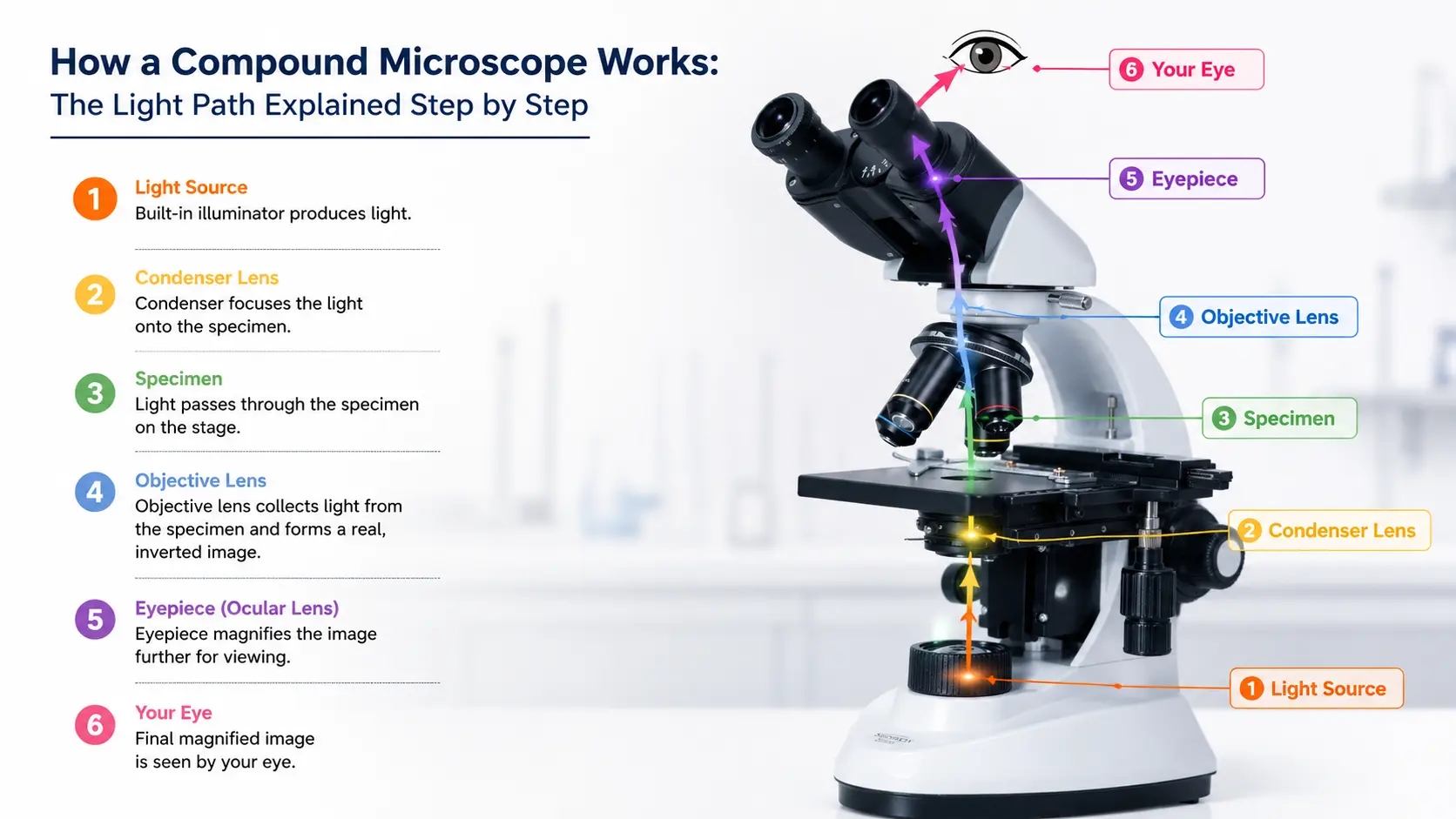
Want to see how objective quality affects the image? Our guide on the resolving power of a microscope explains it with real numbers.
Binocular microscope price by user
| Buyer | What to look for | Budget tier | SUSWOX model |
| Schools and junior colleges | Sturdy body, LED, safe for students. A monocular often works for young students. | Student | Student range |
| College practical labs | Semi-plan objectives, metal body, coaxial focus | Pathology / lab | CXL Bi |
| Pathology and diagnostic labs | Semi-plan or plan objectives, Abbe 1.25 condenser, comfortable head for long shifts | Pathology / lab | SK-77 Bi, SC-300 Bi |
| Hospital and medical college labs | Plan objectives, Köhler-compatible light, ISI mark for tenders | Pathology to advanced | SC-300 R, SKC 400 R |
| Research and PG departments | Infinity-corrected optics, Siedentopf head, wide-field eyepieces | Advanced | APEX Bi, Supreme Bi |
| Vet, food and water testing labs | Reliable semi-plan optics, LED, easy spares | Pathology / lab | CXL Bi, SK-77 Bi |
[CONFIRM] Client to check the model-to-tier mapping against their price list.
SUSWOX binocular microscopes: specs at a glance
Every SUSWOX binocular microscope below is made in Ambala, carries CE, ISI and ISO marks, has a 50,000-hour LED option, and comes with a 1 to 2 year warranty depending on the model, plus spares stocked for 10 years.
| Model | Objectives | Focus and stage | Stand-out features |
| CXL Bi | Semi-plan 4X, 10X, 40X, 100X oil | Coaxial, 145 × 125 mm stage | 360° head, diopter ±5, Abbe 1.25 with iris |
| SK-77 Bi | Semi-plan / plan achromatic | Separate coarse and fine, low-position stage | SMPS power for Indian voltage, 2-year warranty |
| SC-300 Bi | Semi-plan / plan achromatic | Coaxial, ball-bearing | 30°/45° head, Köhler-compatible condenser, 2-year warranty |
| SKC 400 R | Semi-plan / plan achromatic | Coaxial, fine 0.01 mm | Anti-fungal coated optics, double-layer stage |
| APEX Bi | Infinity achromatic, spring 40X and 100X | Coaxial, fine 0.002 mm, 175 × 145 mm stage | Siedentopf head, PL10X/22 mm eyepieces, Köhler |
| Supreme Bi | Infinity-corrected (premium series) | Research stage | Top of the SUSWOX binocular range |
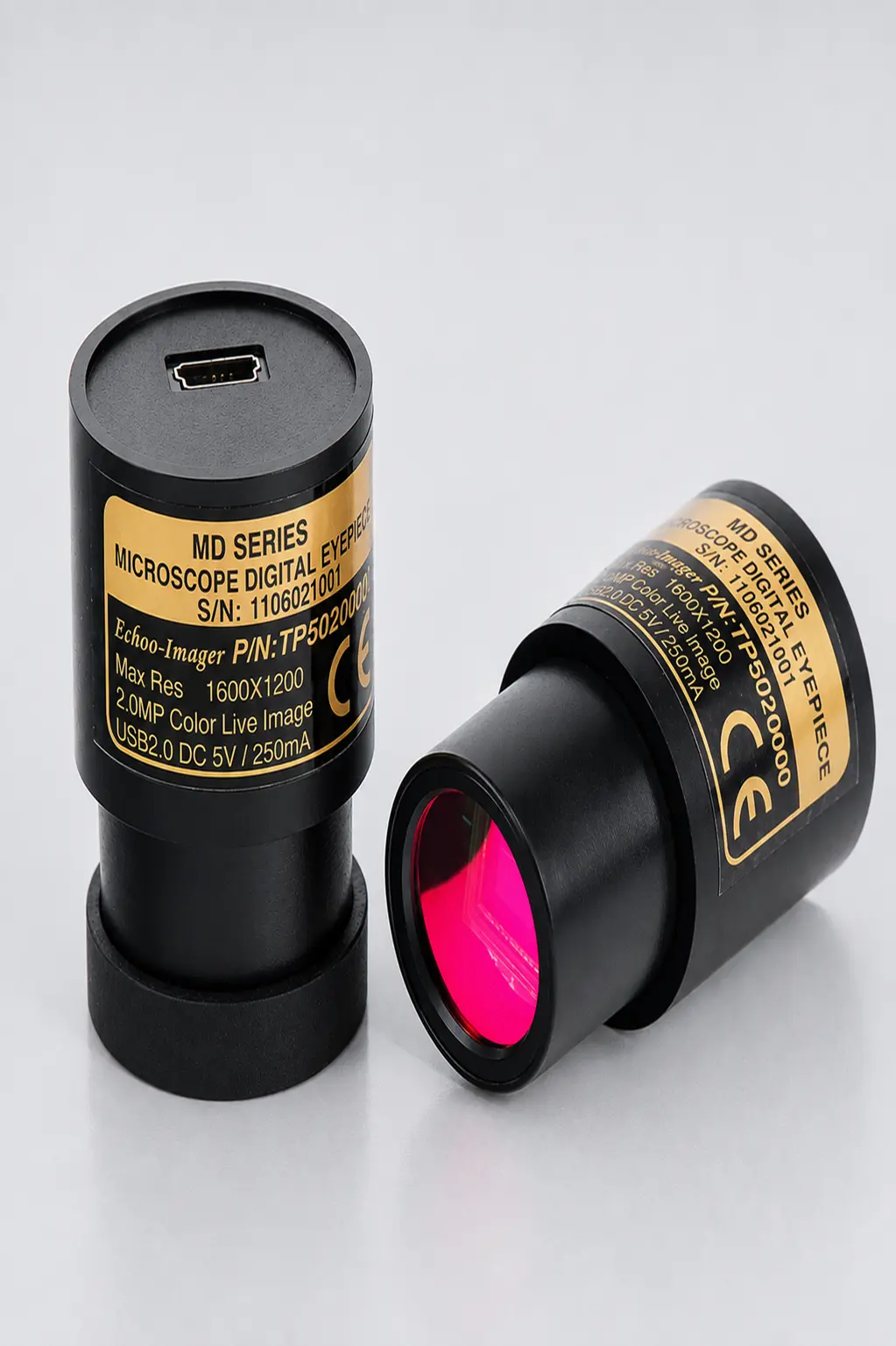
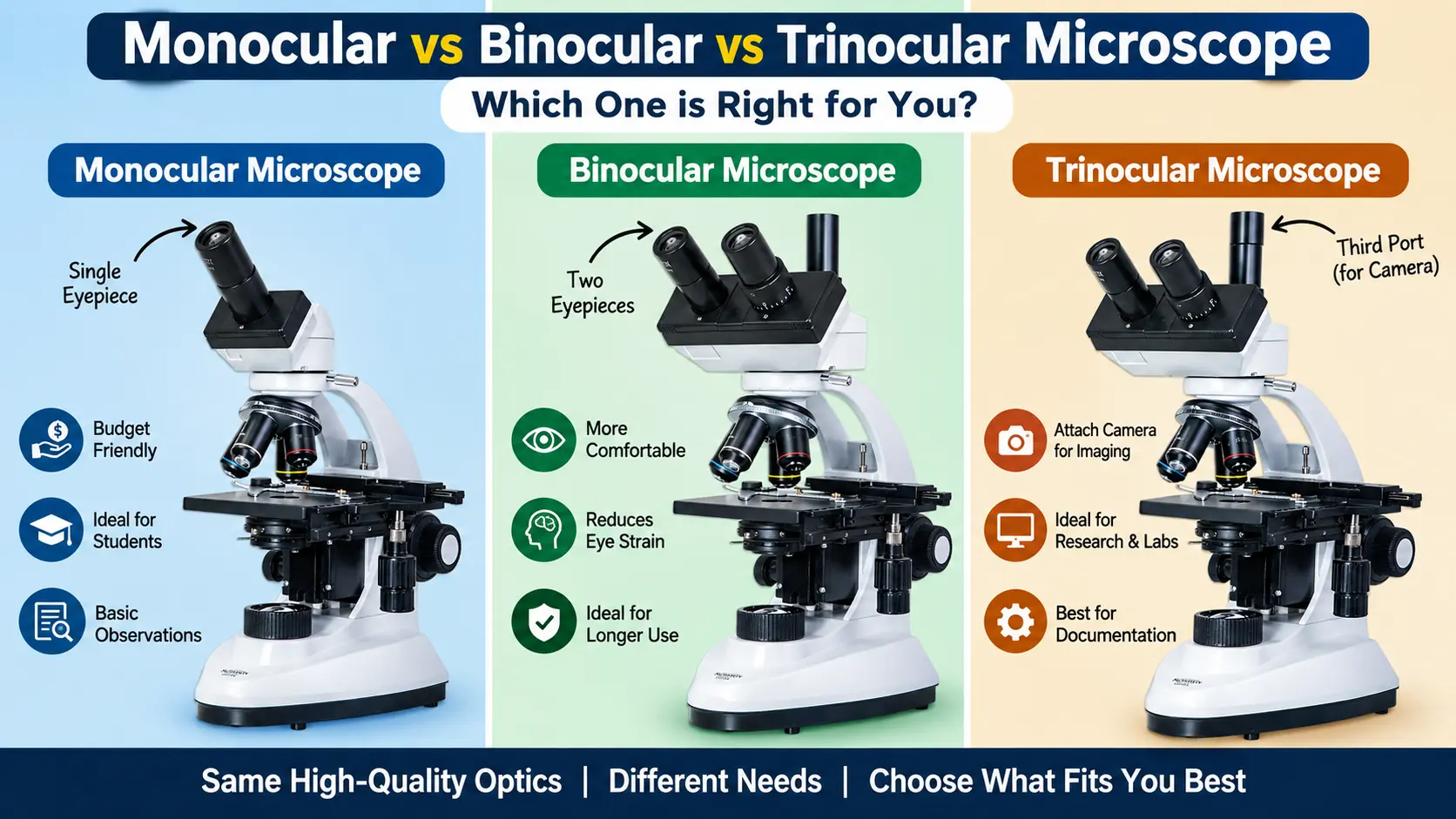
Need to take photos later? Choose a trinocular version instead of adding an eyepiece camera. Our monocular vs binocular vs trinocular guide explains why. See all laboratory microscopes or research microscopes.
Indian vs imported binocular microscope: is the extra cost worth it?
Imported research binoculars cost about two to three times more than a good Indian research model. You pay for the brand, import duty and the dealer chain.
For advanced research, fluorescence add-ons or when a tender asks for a specific brand, imported can make sense. For daily pathology, college labs and diagnostic work, a well-made Indian binocular with semi-plan or plan objectives does the job, costs far less and is easier to service.
We go deeper into this in made in India vs imported microscopes.
Hidden costs to check in any quote
- Spare eyepieces and bulbs: ask if a spare set is included.
- Dust cover and immersion oil: small items, but often missing.
- Plan objectives upgrade: some quotes show semi-plan as standard and plan as extra.
- Battery backup: useful where power cuts are common.
- GST, packing and delivery: check whether they are included.
- Installation and training: important for bulk lab orders.
How to avoid overpaying
- Ask what objectives are included. “Achromatic”, “semi-plan” and “plan” are very different at the same price.
- Test at 100X oil, not only at 10X. Cheap optics fall apart at high power.
- Check for a metal body and a double-layer mechanical stage.
- Ask for the ISI licence number and verify it.
- Ask about spares for 5+ years.
- Buy from the maker when you can. No middle margin, direct service.
Why buy a binocular microscope from SUSWOX?
- Manufacturer since 1973, made and tested in Ambala.
- CE, ISI and ISO marked models, ready for tenders.
- Anti-fungal coated optics on models like the SKC 400 R, built for Indian humidity.
- SMPS power supply that handles Indian voltage swings.
- 1 to 2 year warranty and 10 years of spares.
- Trusted by AIIMS campuses, BHU, MDU Rohtak and Haffkine Institute. Buyers in the capital can see our Delhi NCR supply page.
Frequently asked questions
What is the price of a binocular microscope in India?
A basic student binocular microscope costs about ₹7,000 to ₹15,000 in India. Pathology and lab models cost ₹15,000 to ₹45,000, advanced Indian research models ₹40,000 to ₹80,000, and imported brands start at around ₹1.3 lakh.
What is the price of a pathological binocular microscope?
A pathological binocular microscope with semi-plan objectives, an Abbe 1.25 condenser, a mechanical stage and coaxial focus usually costs between ₹15,000 and ₹45,000 from Indian manufacturers, depending on objectives and build quality.
What is the price of a student binocular microscope?
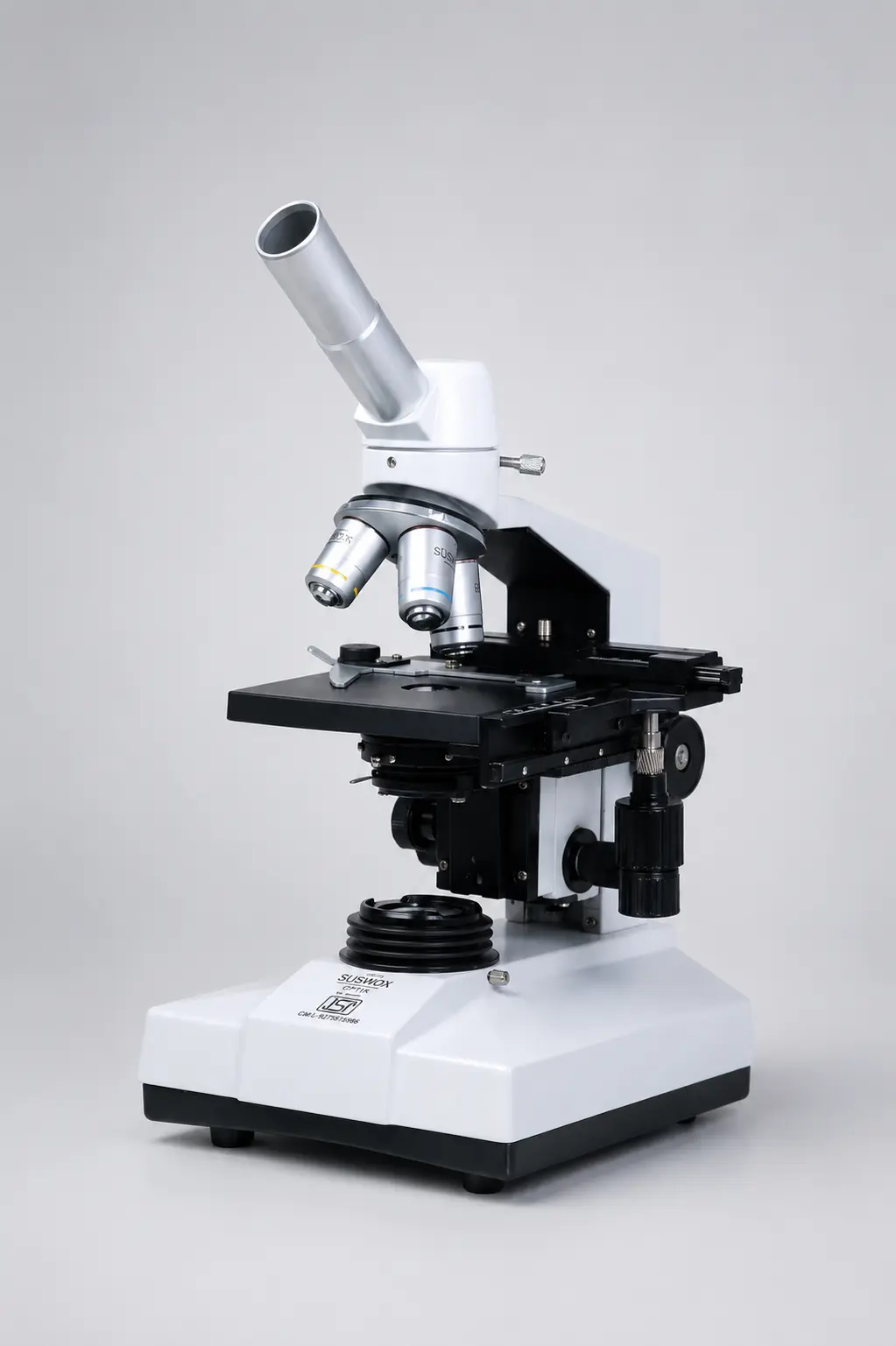
Student binocular microscopes usually cost ₹7,000 to ₹15,000. For young school students, a good monocular microscope is often a better and cheaper choice because small children may find it hard to adjust a binocular head.
How much more does a binocular cost than a monocular microscope?
Within the same series, a binocular usually costs somewhat more than a monocular because of the extra eyepiece tube and prism head. The gap is small compared to the comfort gained during long lab sessions.
Are plan objectives worth the extra cost?
Yes, for pathology and research. Plan objectives keep the whole field sharp, including the edges, which saves time and reduces eye strain. For basic student use, semi-plan objectives are usually enough.
Is an LED or halogen binocular microscope better?
LED is better for most users. It runs cool, uses less power and lasts up to 50,000 hours. Halogen gives a warmer light that some pathologists prefer, but bulbs need changing more often.
Are Indian binocular microscopes as good as imported ones?
Good Indian binocular microscopes with semi-plan or plan objectives handle daily pathology, college and diagnostic work very well at a much lower price. Imported brands make more sense for advanced research or when a tender asks for a specific brand.
How can I get the price of a SUSWOX binocular microscope?
Share your use, preferred objectives, quantity and delivery location through the contact page, phone or WhatsApp. SUSWOX sends a written factory quote with configuration, GST and delivery details.
Get the exact price for your binocular microscope
Tell us who will use it, what they will look at and how many units you need. We will recommend the right model and send a written factory quote.
[Request a quote](https://suswox.com/contact-us/) | Call +91 8727015757 | WhatsApp us | sales@suswox.com
Related reading
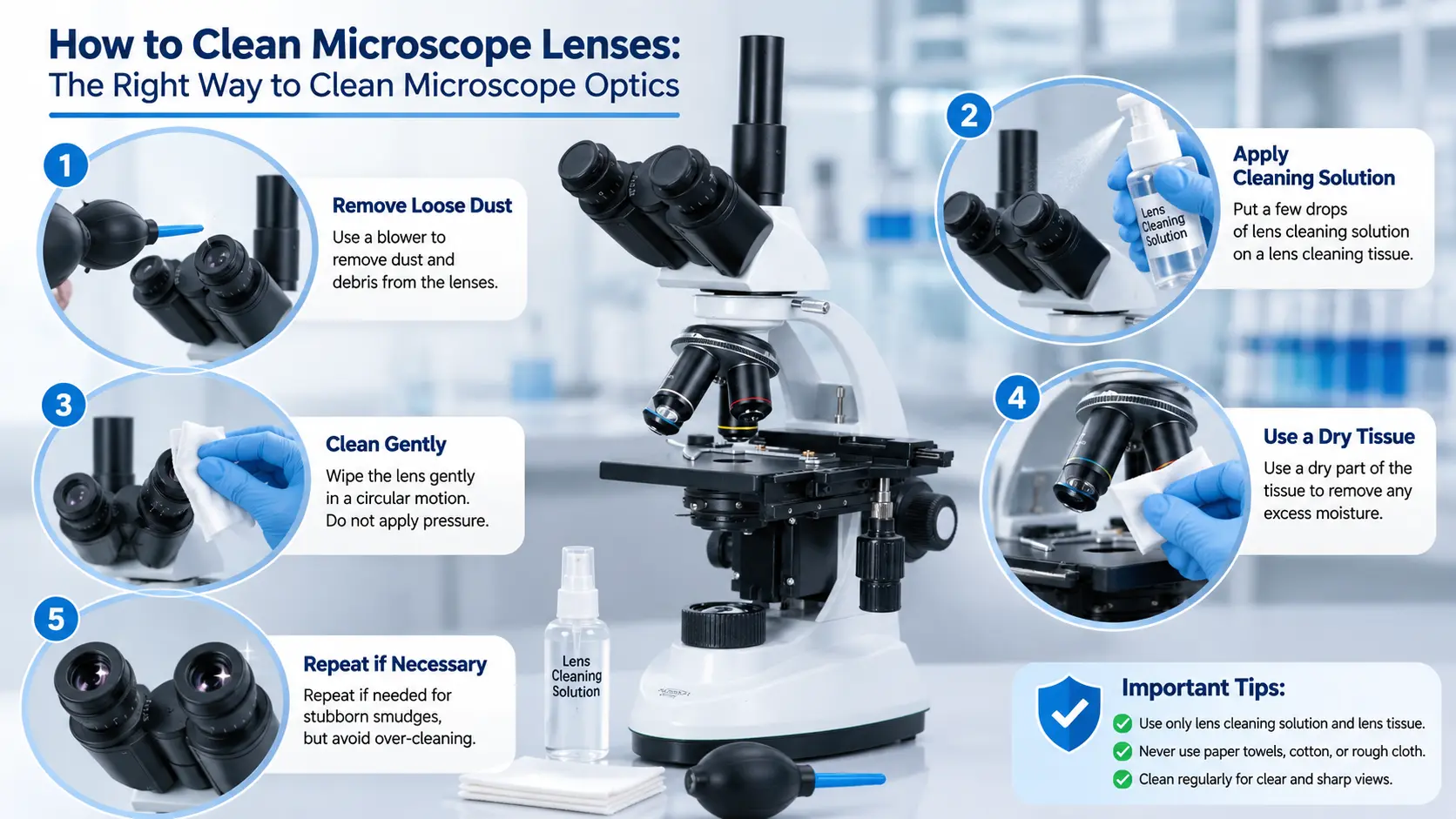
What is a Binocular Microscope? | How to Clean Microscope Lenses | Stereo Zoom Microscope Price in India | Inverted Microscope Price in India