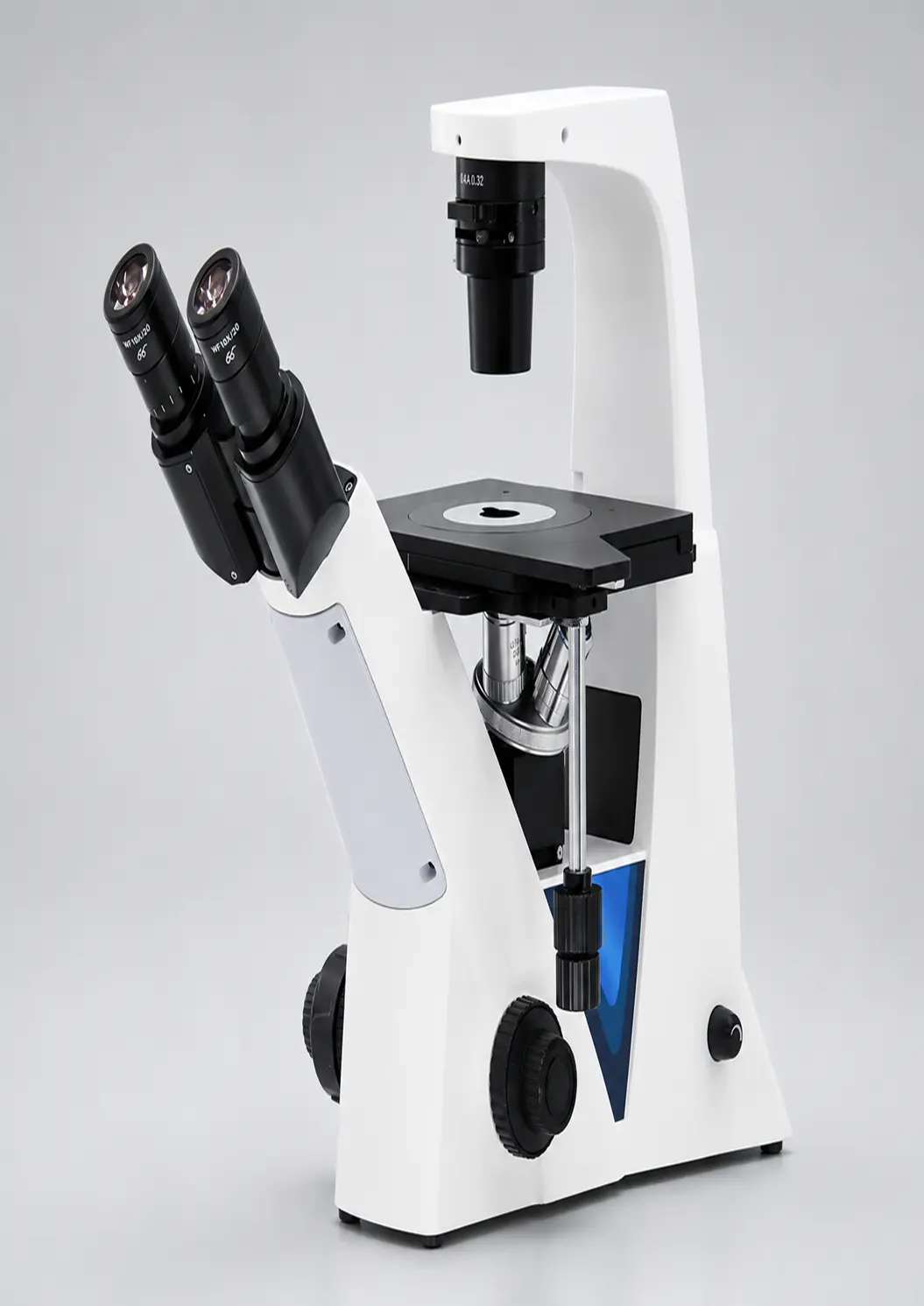
A mobile repair technician in Ambala once ordered a microscope online to inspect solder joints on phone boards. He picked the listing with the biggest number on it — 1000x, binocular, looked professional.
It arrived. He put a circuit board on the stage and saw a black screen.
Then he tried moving the board left, and the image slid right. And there was barely a centimetre of space under the lens, nowhere near enough to fit a soldering iron.
He had bought a compound microscope. He needed a stereo microscope. Two completely different tools with almost identical-sounding names.
This guide clears that up in plain terms.
What is the difference between a stereo microscope and a compound microscope?
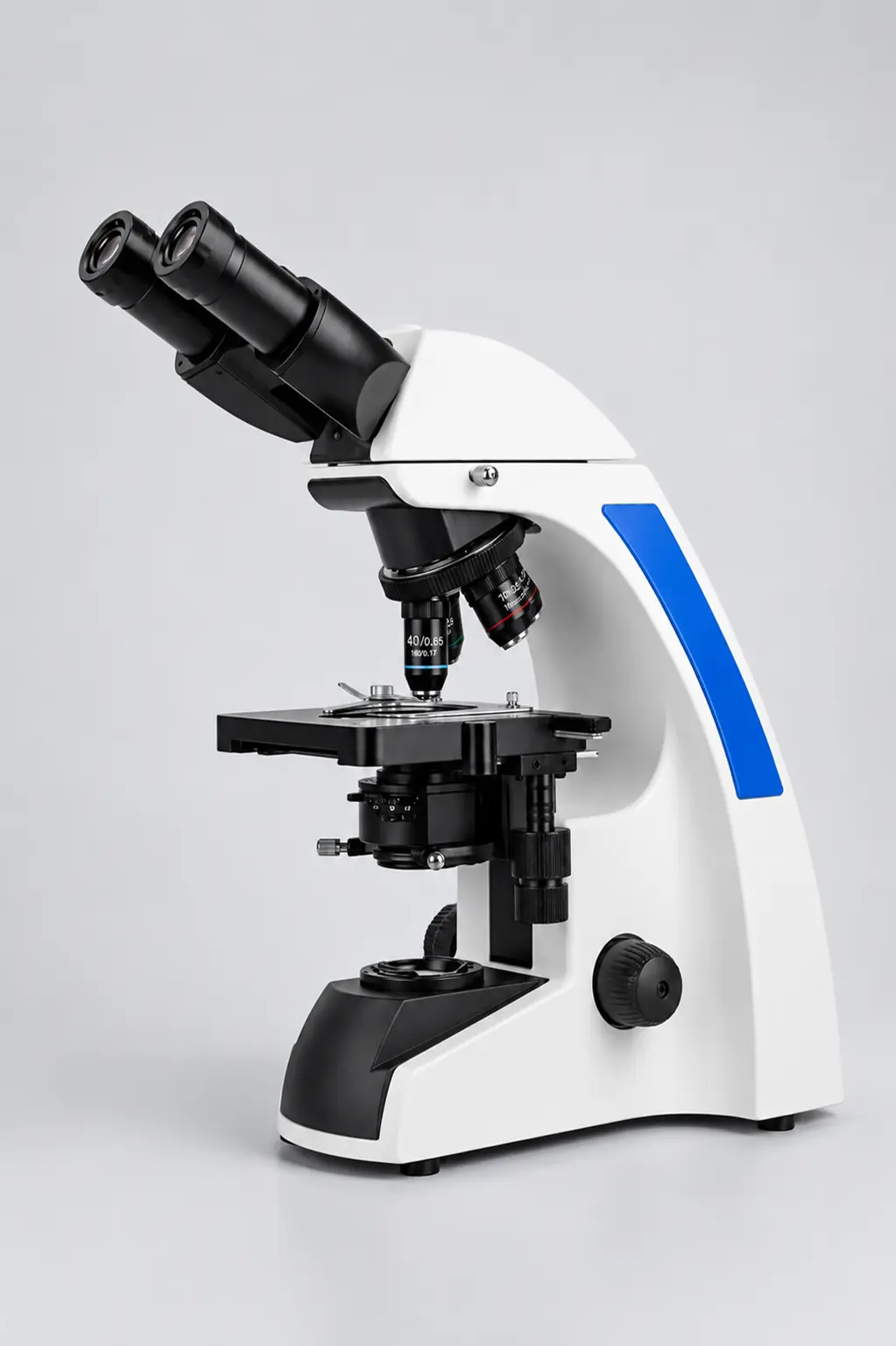
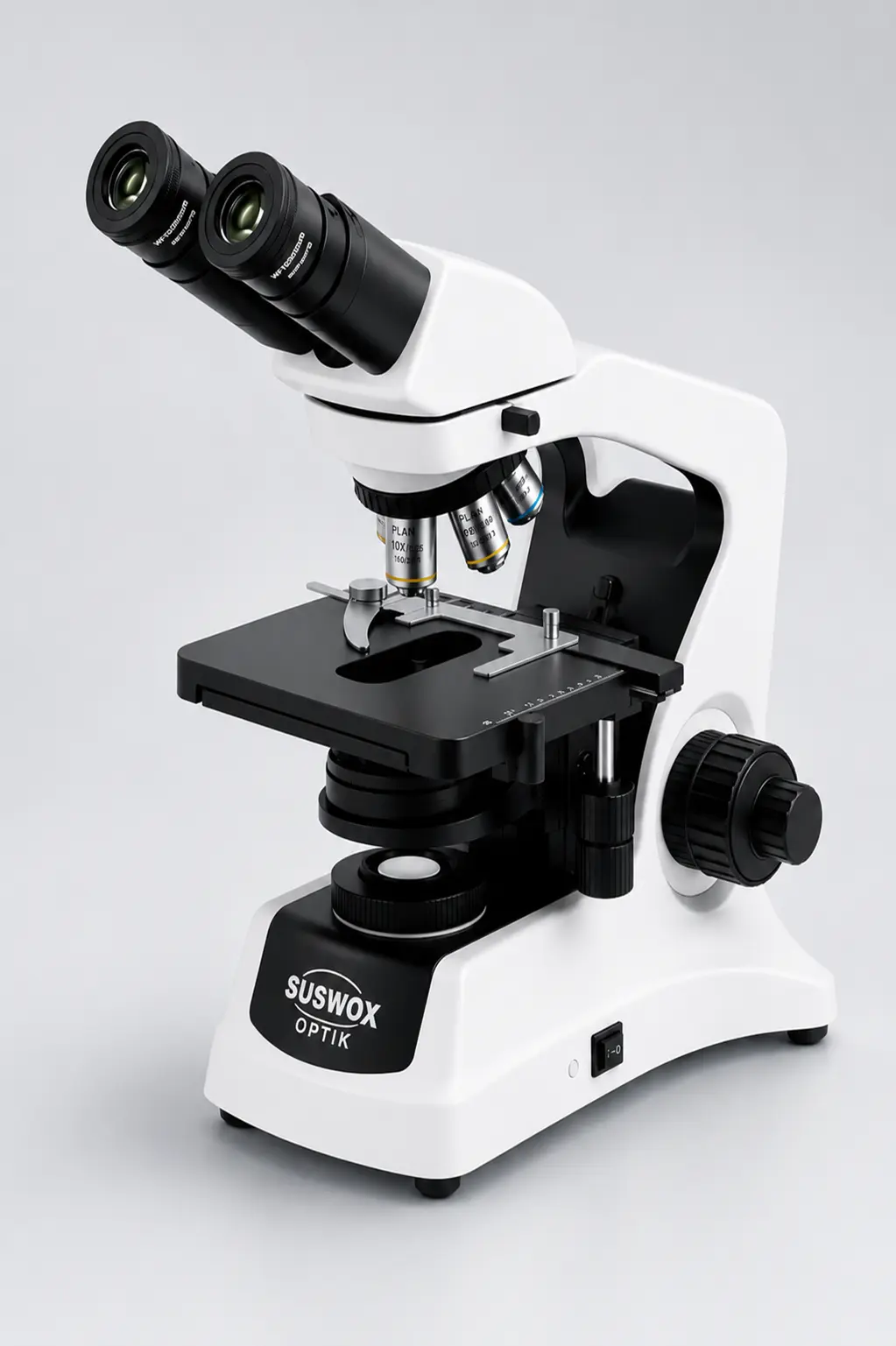
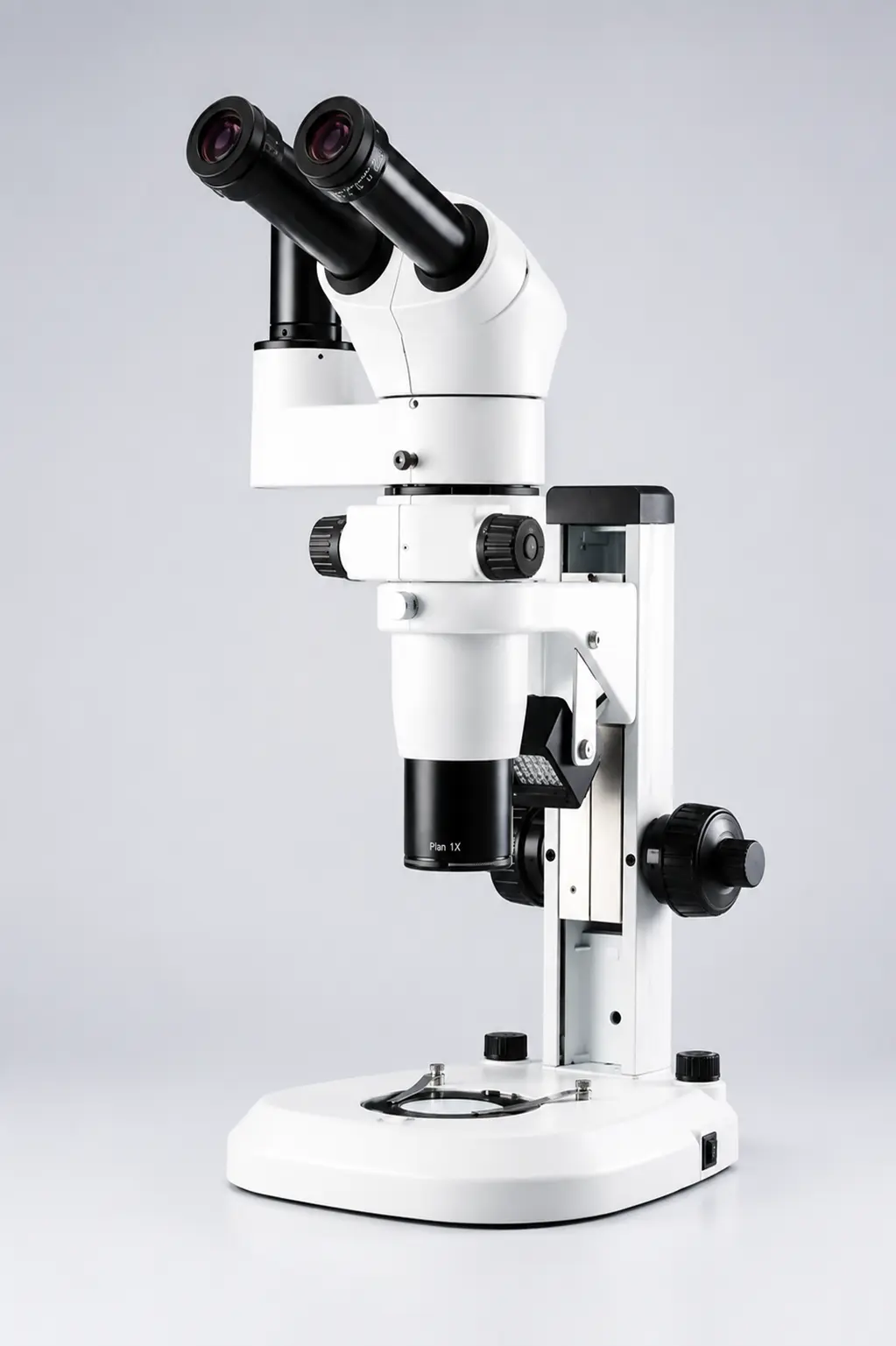
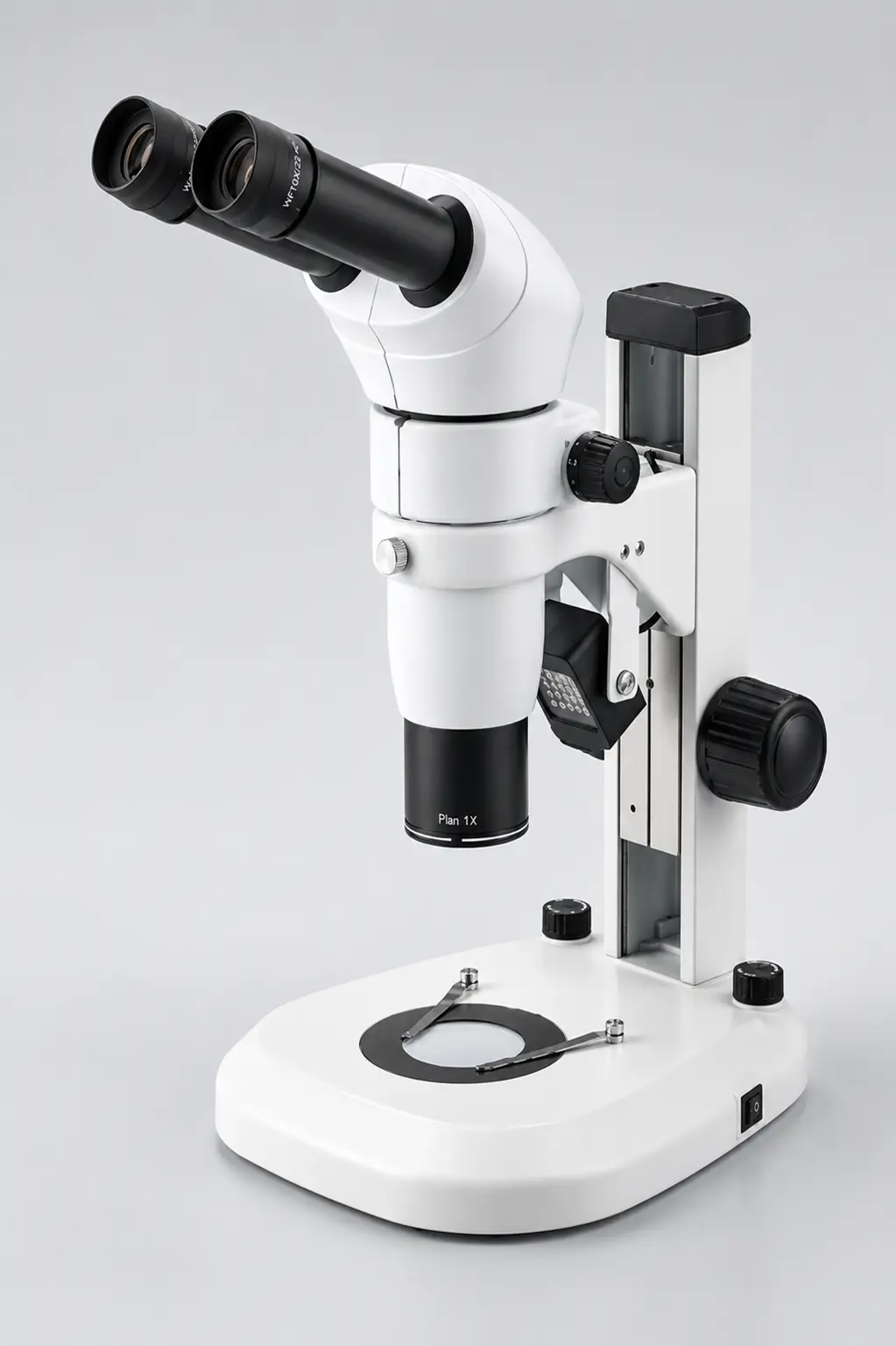
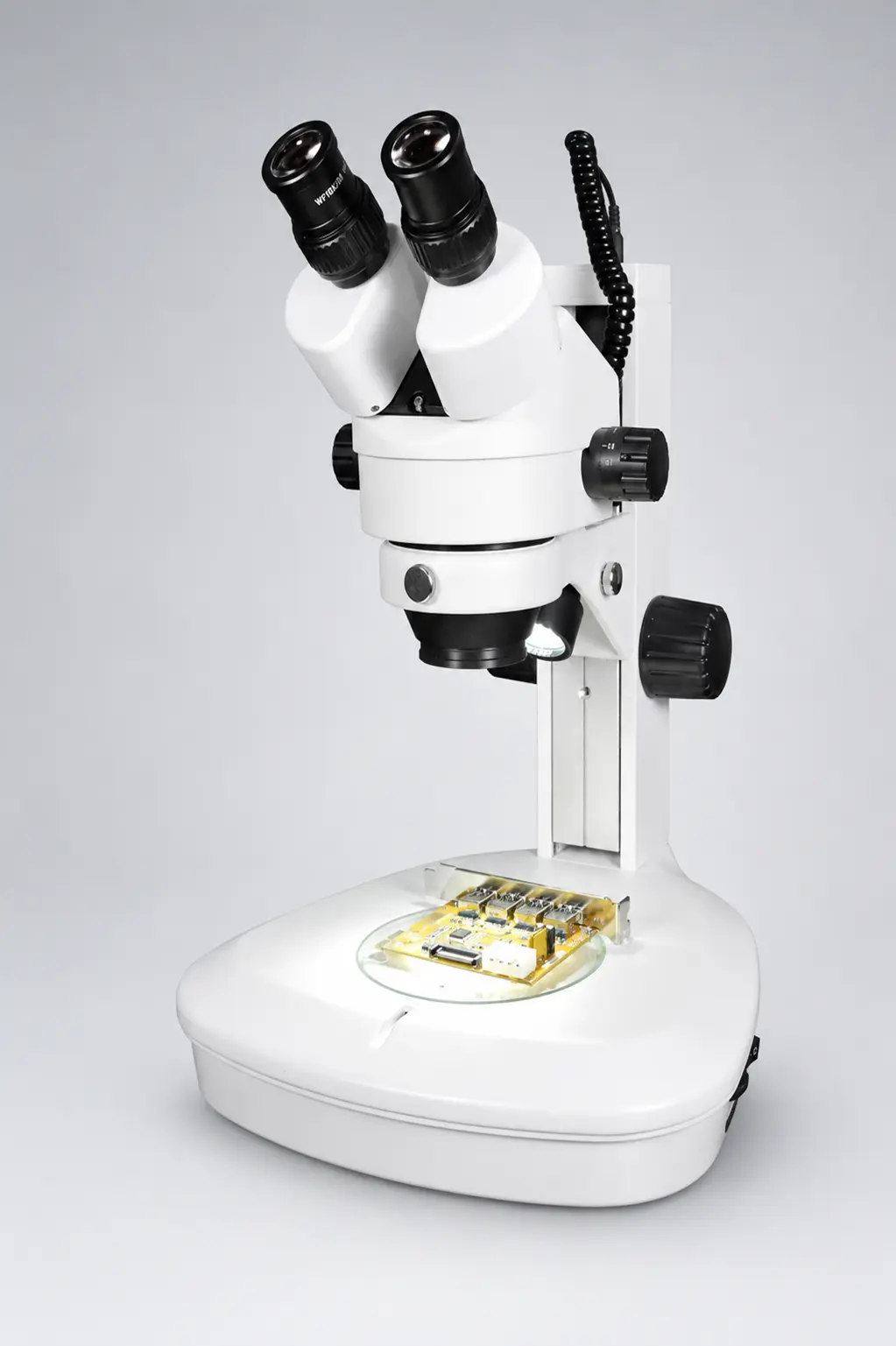
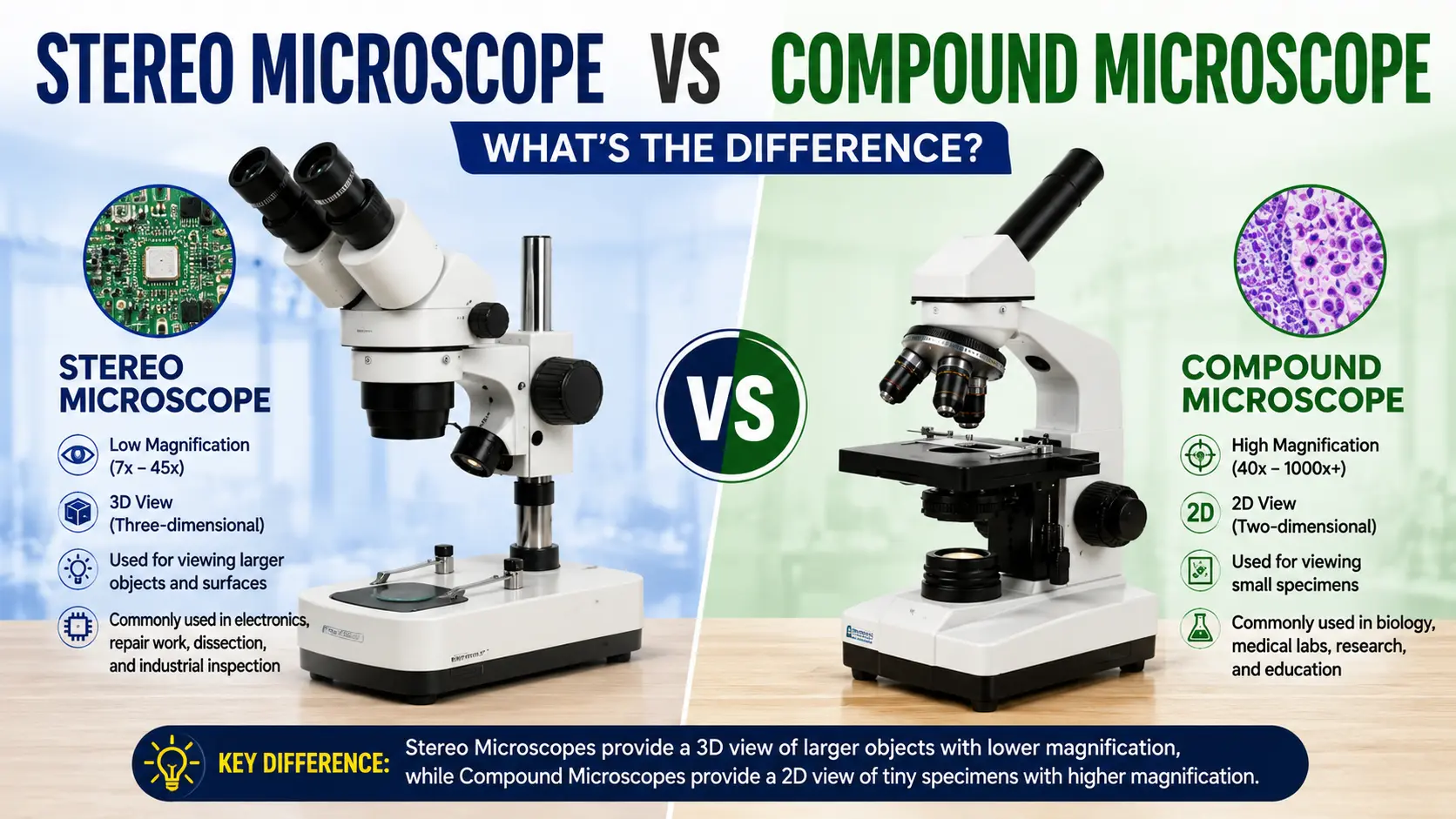
A compound microscope uses one optical path to view thin, transparent samples on a glass slide at 40x to 1000x, producing a flat, inverted image. A stereo microscope uses two separate optical paths to view solid, opaque objects at 6.5x to 90x, producing a three-dimensional, upright image with wide working space underneath.
In one line: compound is for looking through something. Stereo is for looking at something.
Quick Comparison Table
| Point of Difference | Compound Microscope | Stereo Microscope |
| Optical paths | One shared path | Two separate paths (one per eye) |
| Image | 2D, flat | 3D, with depth |
| Image orientation | Inverted and reversed | Upright and correct |
| Magnification | 40x – 1000x | 6.5x – 90x |
| Working distance | 0.2 mm – 20 mm | 80 mm – 100 mm |
| Sample type | Thin, transparent, on a slide | Solid, opaque, any shape |
| Illumination | Transmitted (from below) | Reflected (from above), often both |
| Sample preparation | Slide, cover slip, often staining | None — place the object and look |
| Can you work under it? | No | Yes, comfortably |
| Also called | Biological / lab microscope | Dissecting / low-power microscope |
| Typical price in India | ₹8,000 – ₹1,50,000 | ₹12,000 – ₹80,000 |
What is a Compound Microscope?
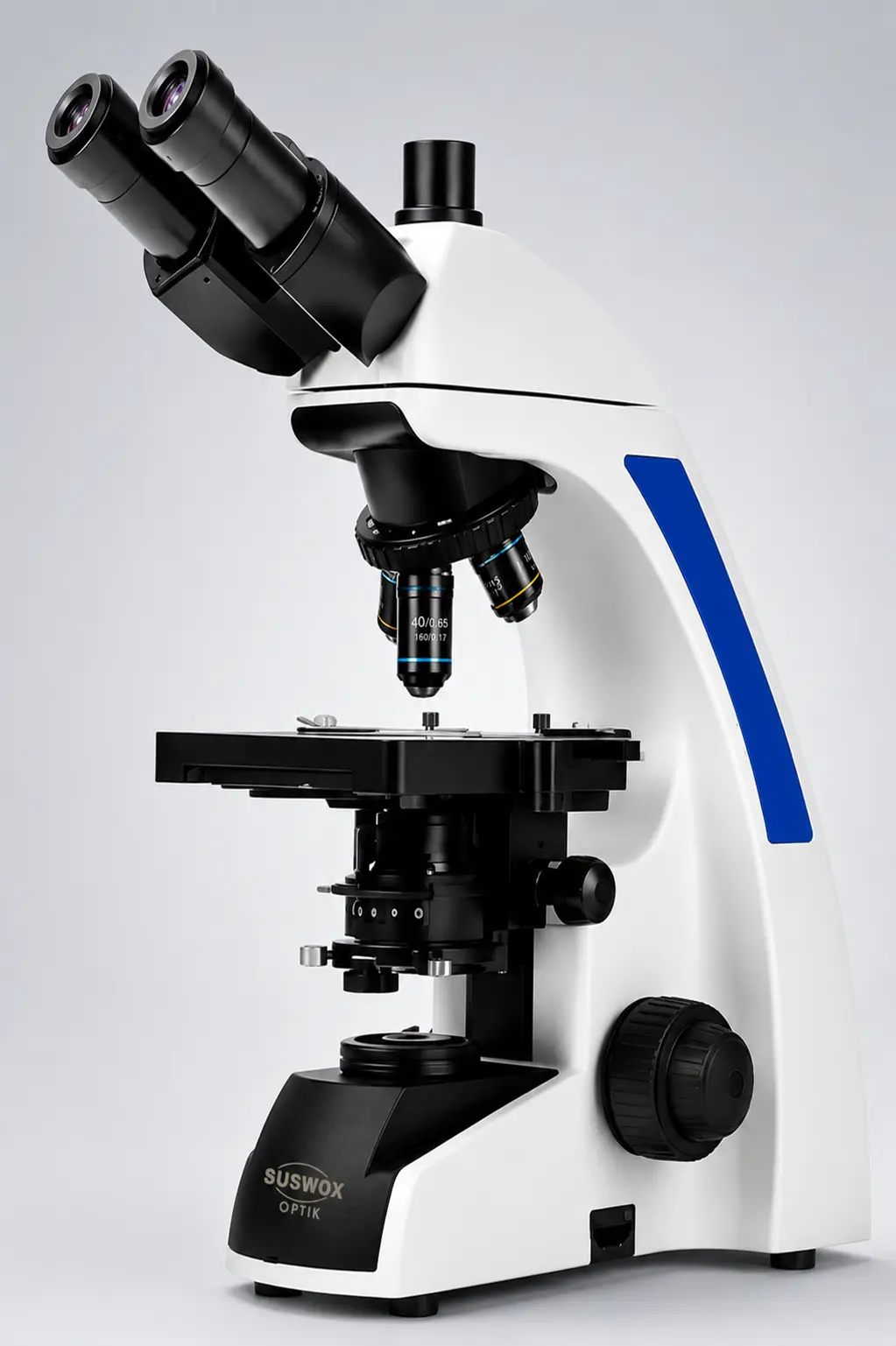
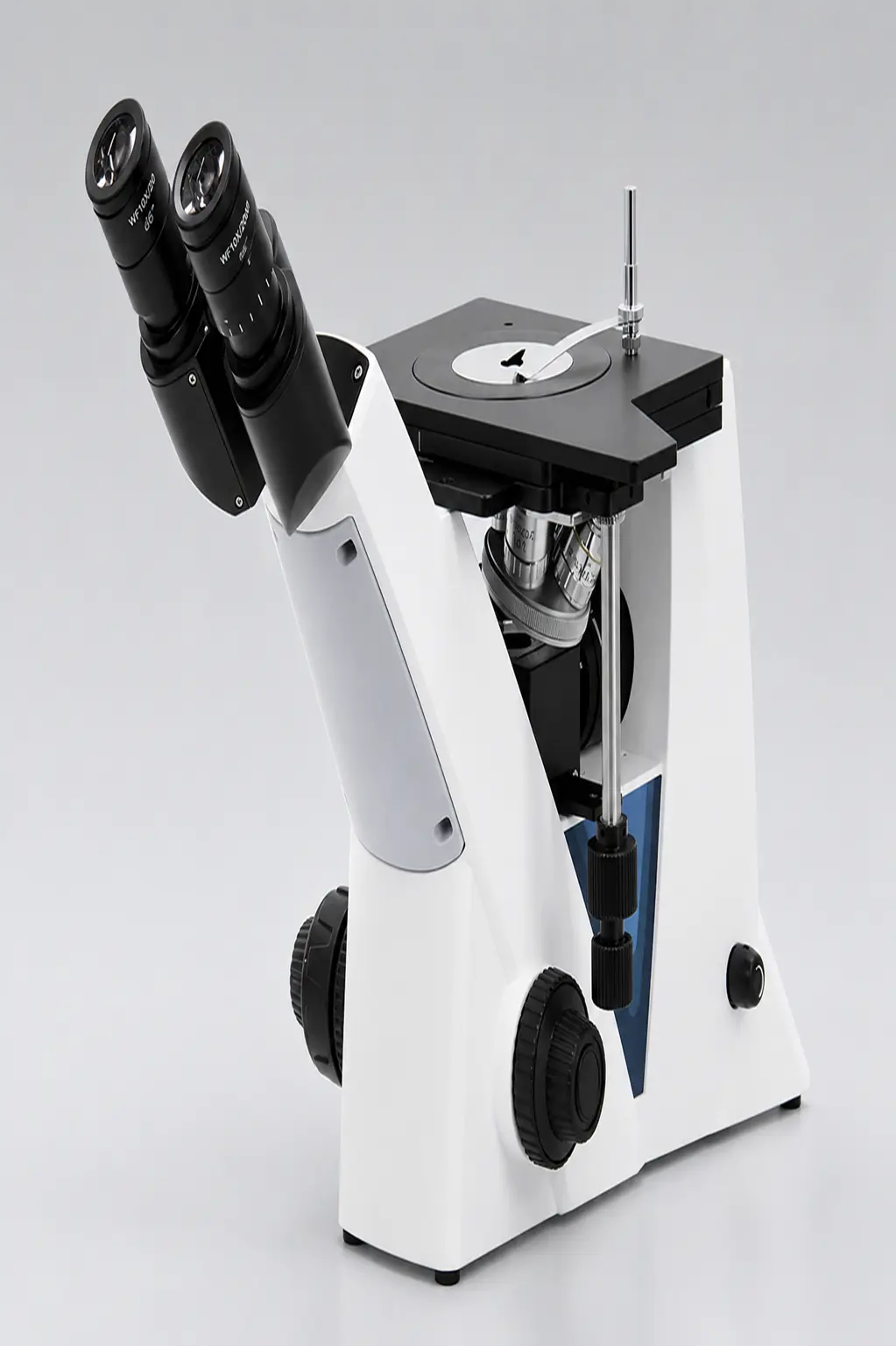
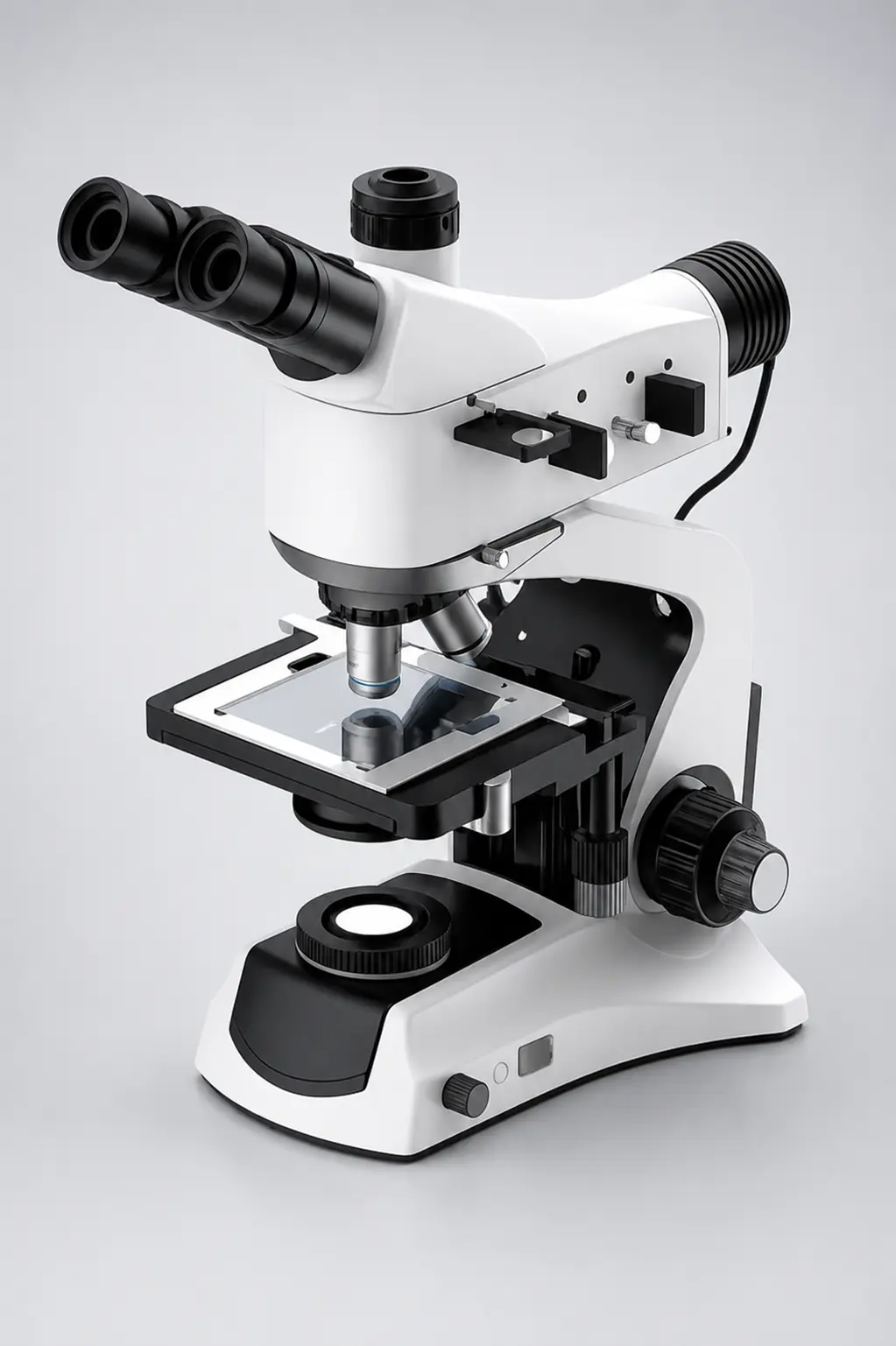
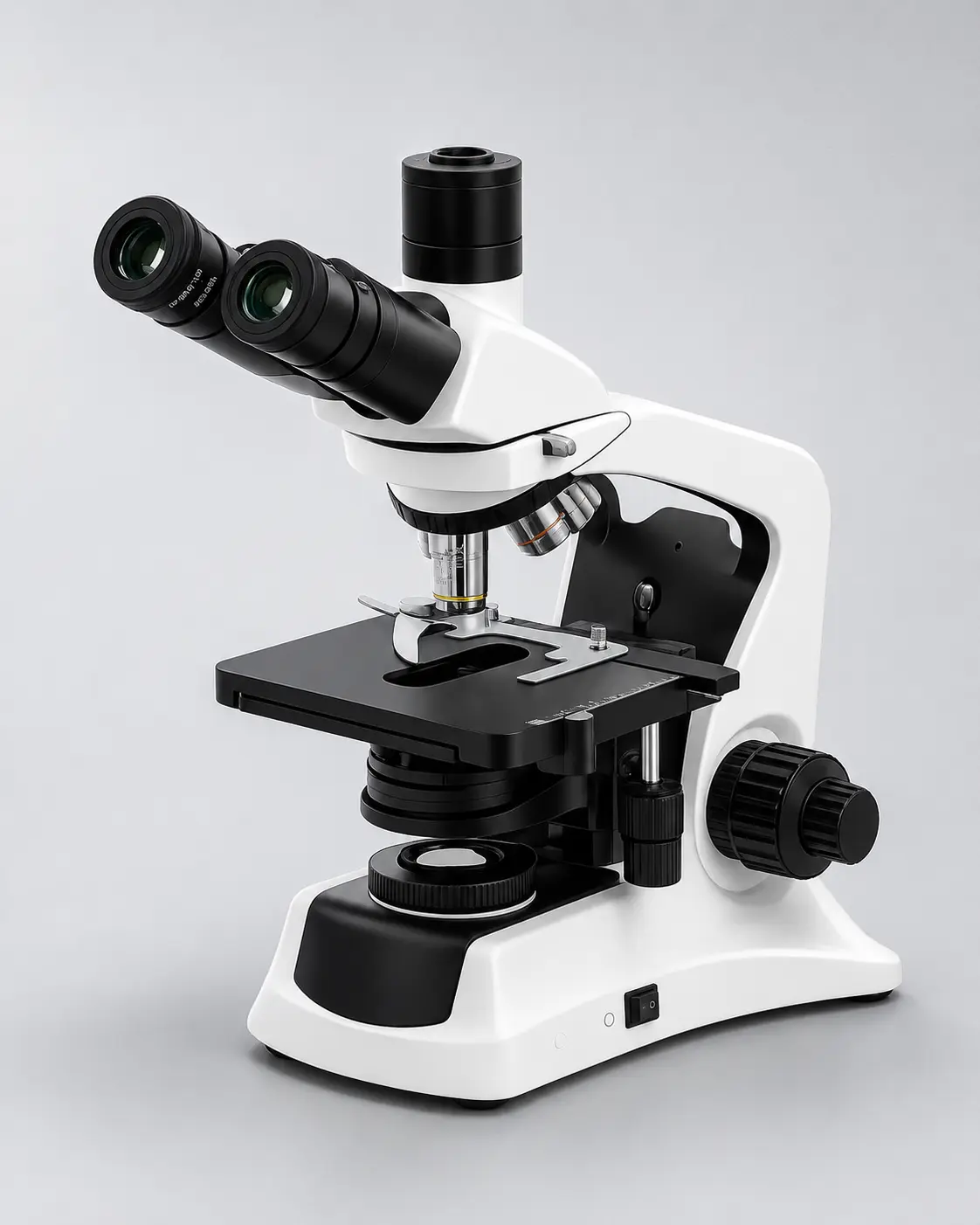
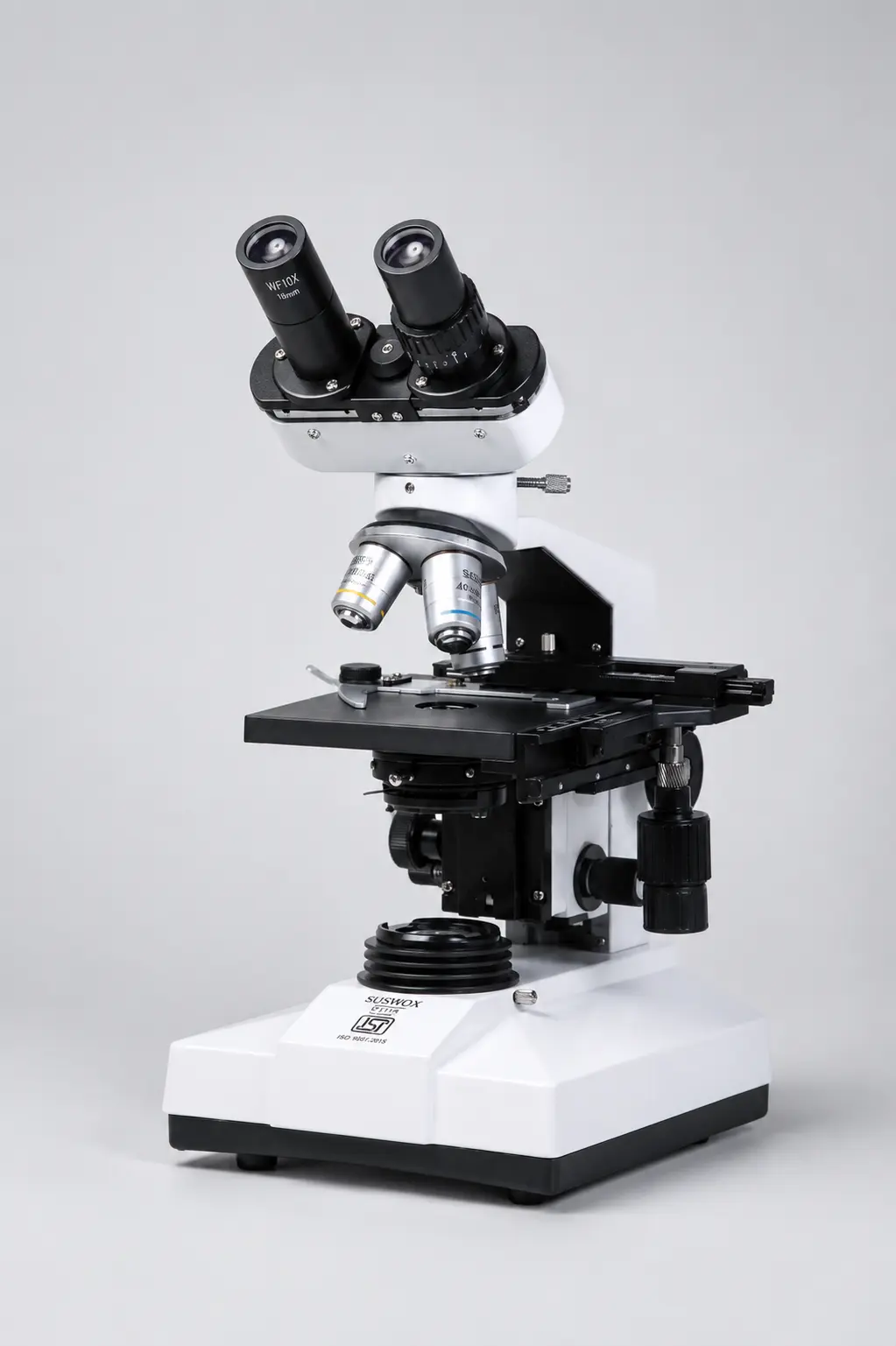
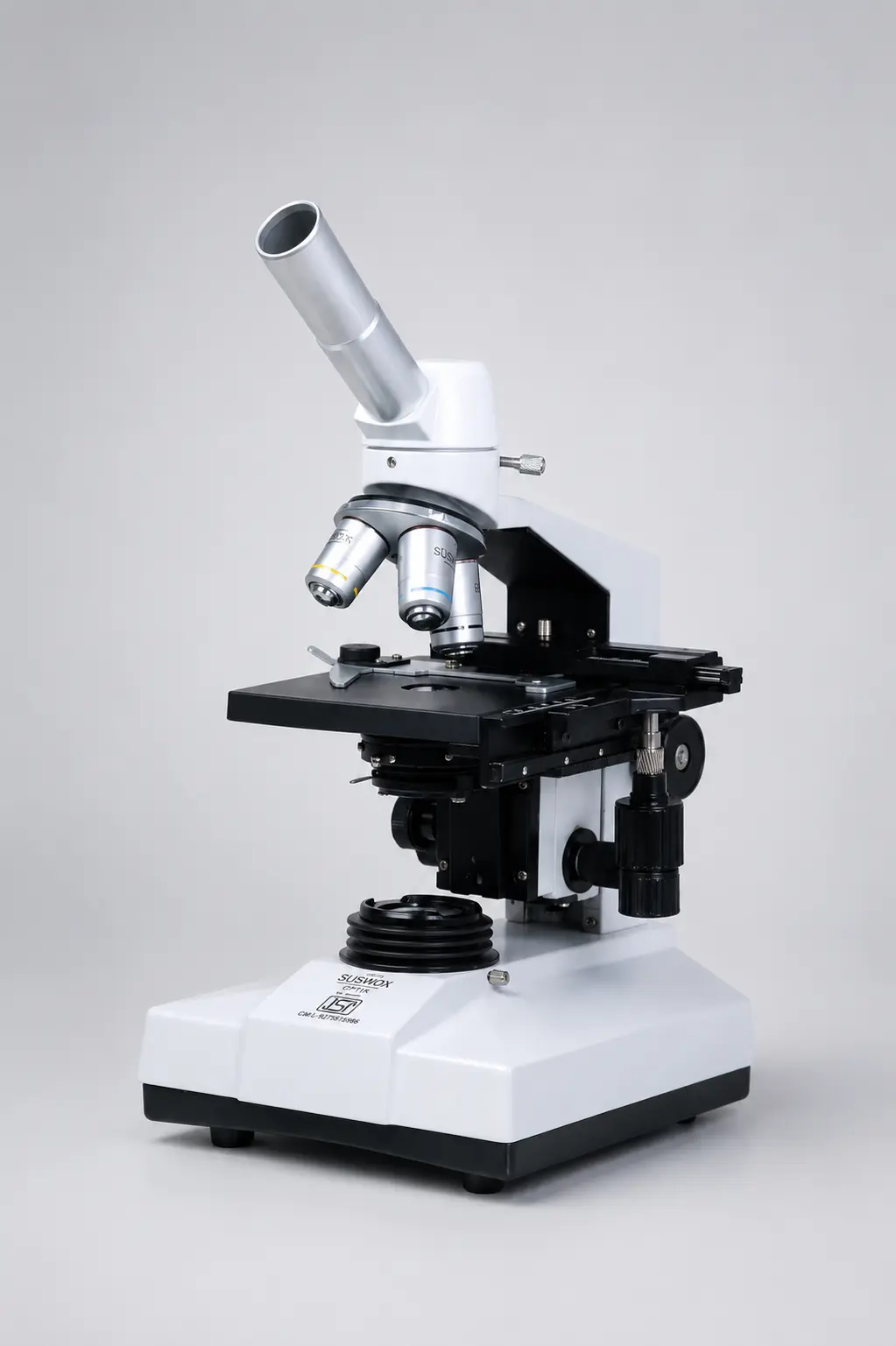
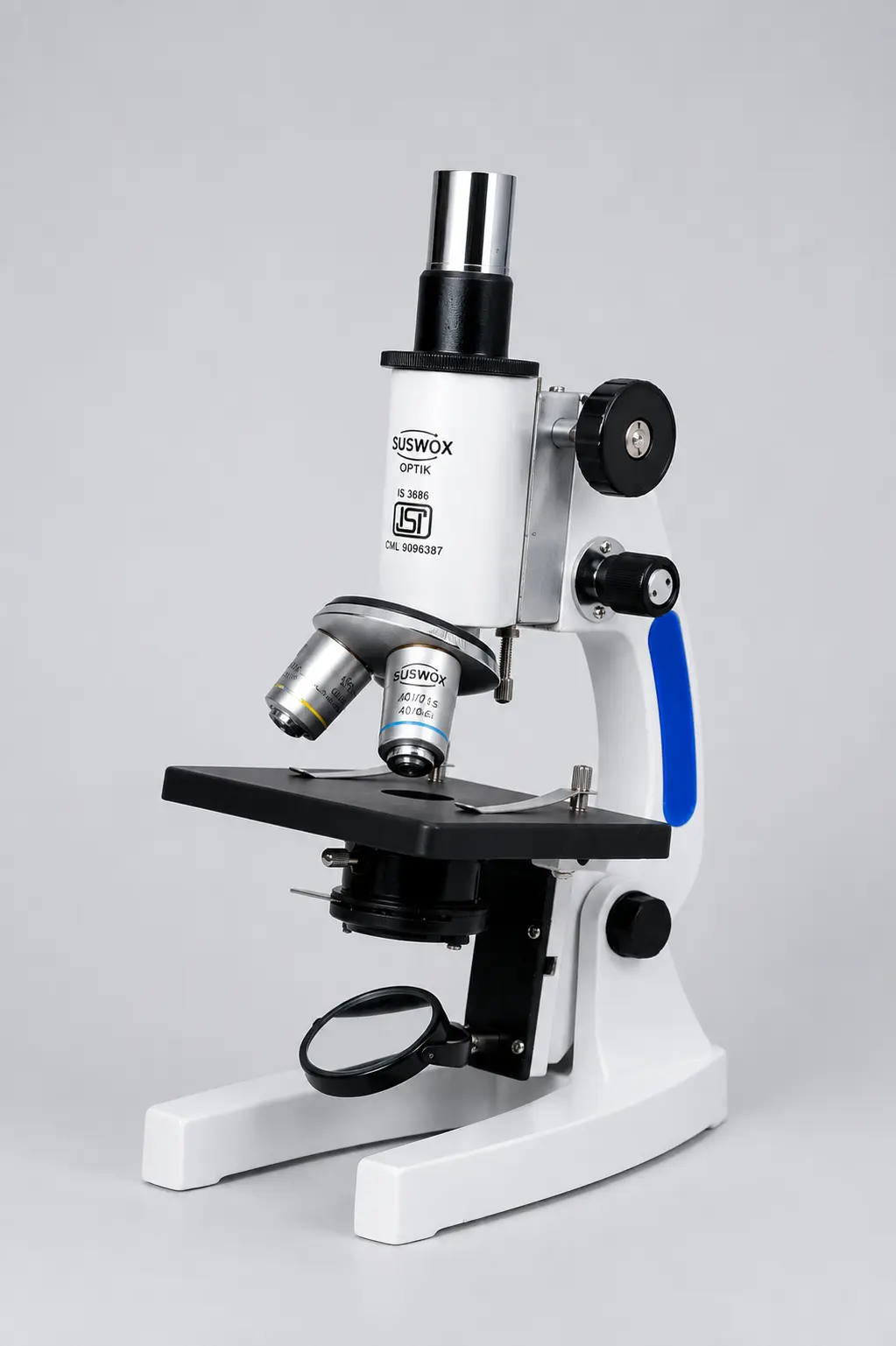
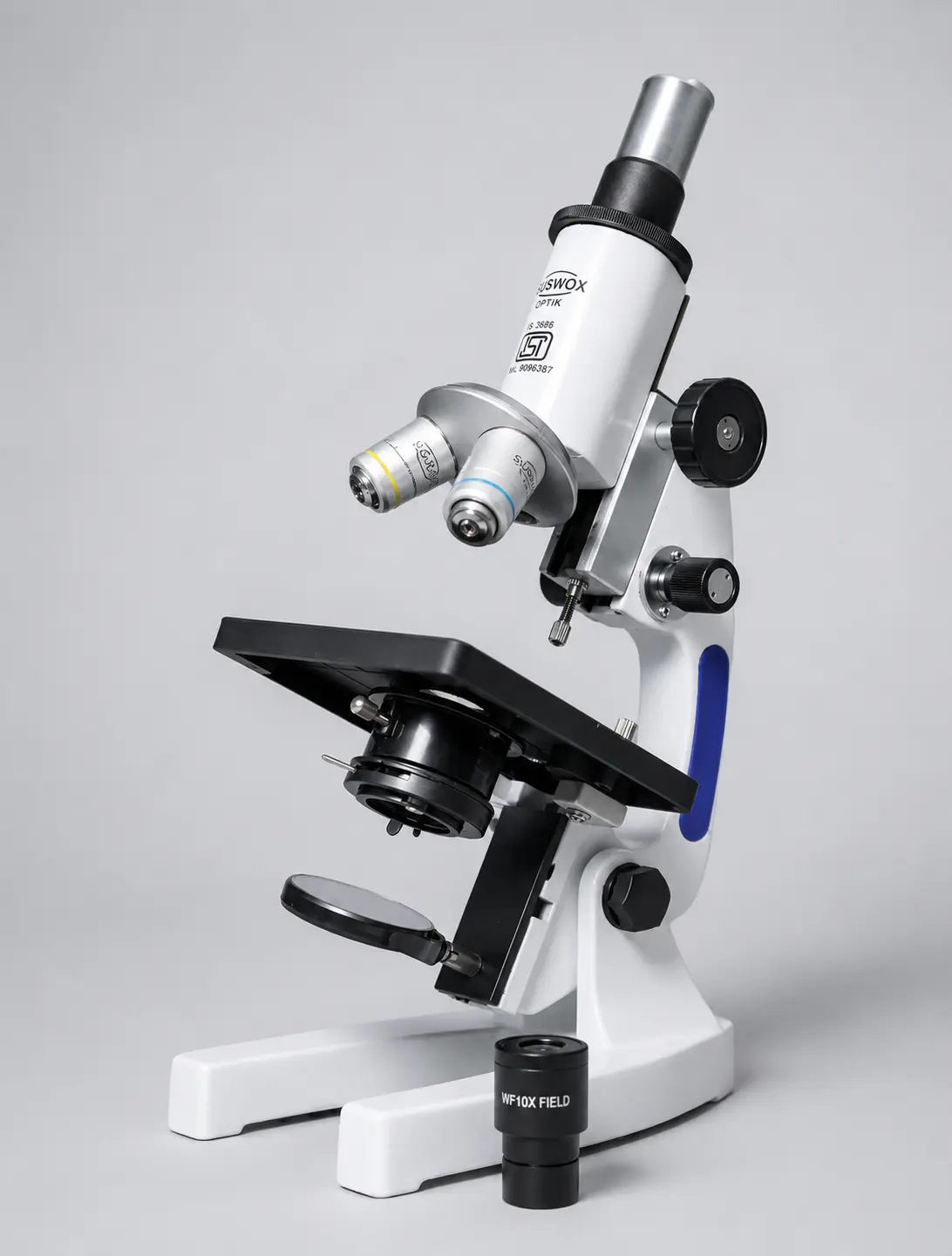
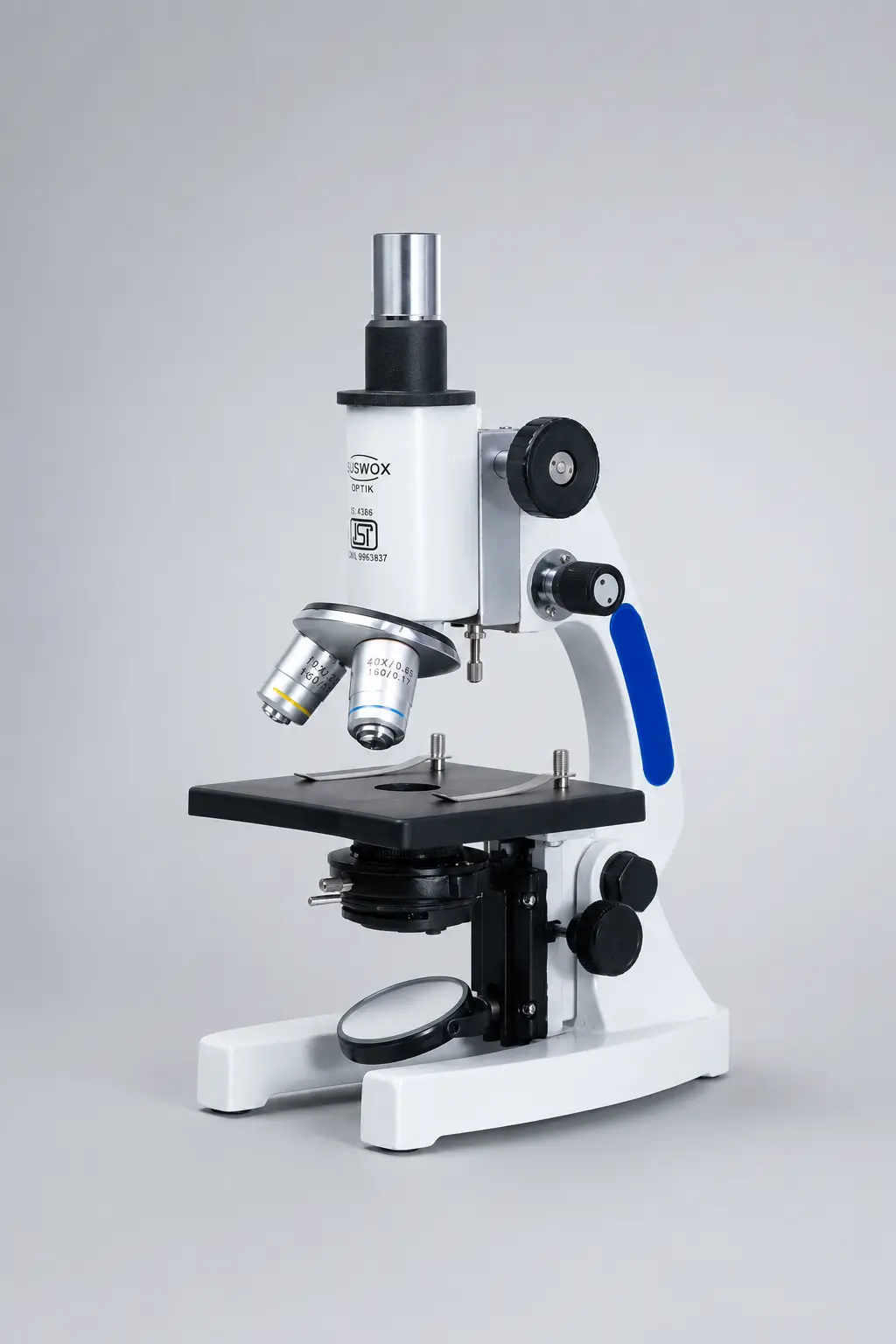
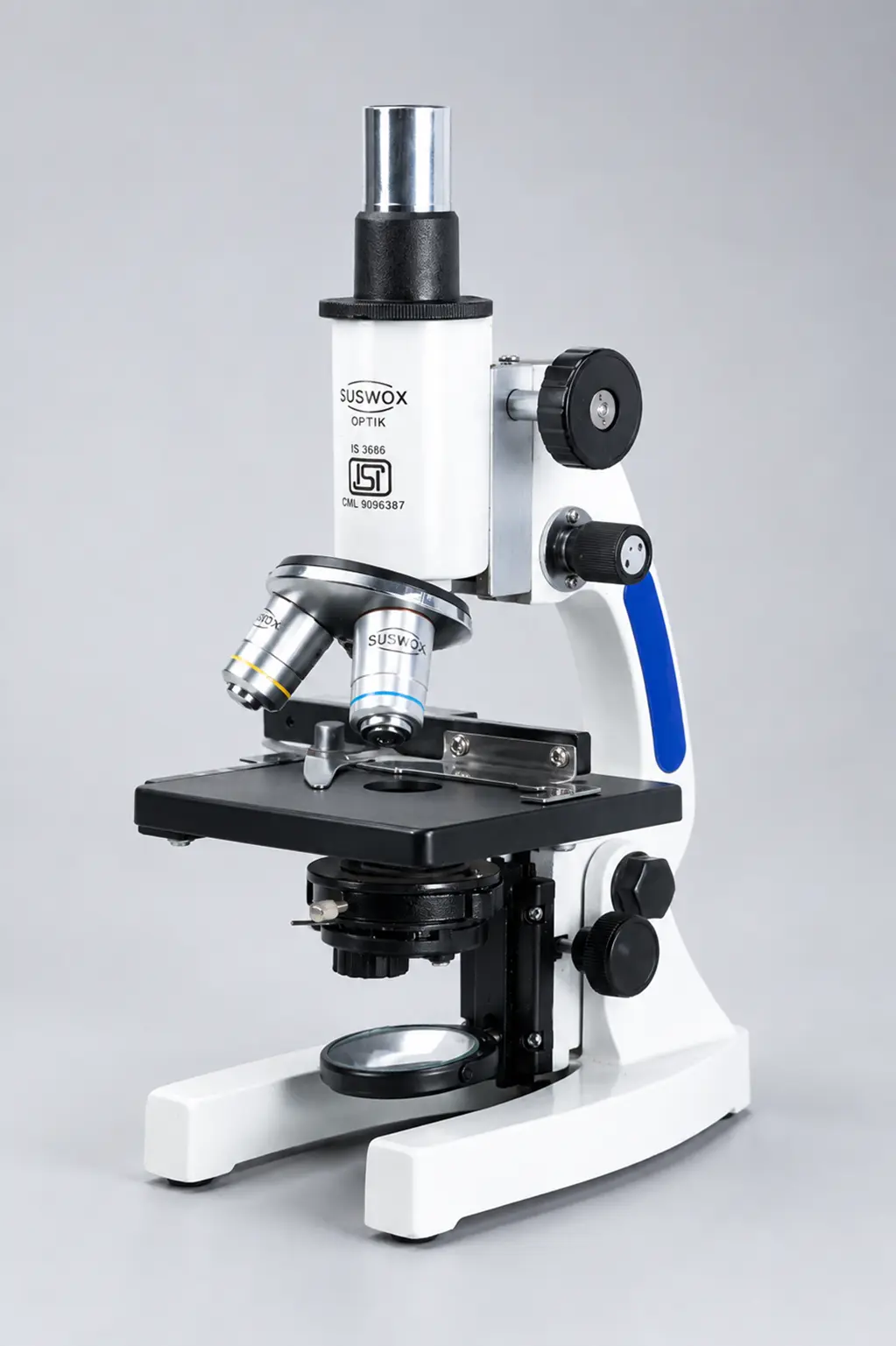
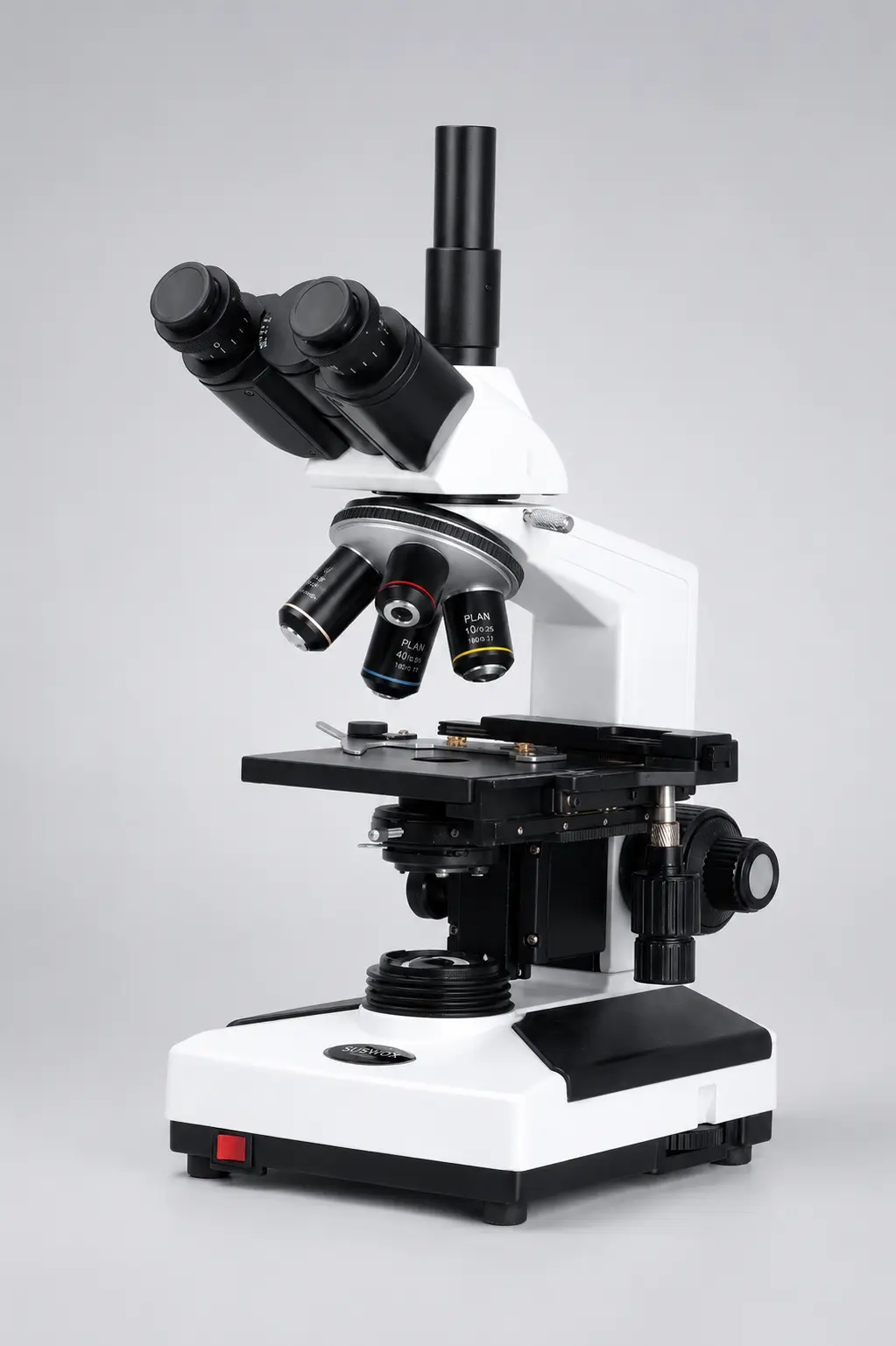
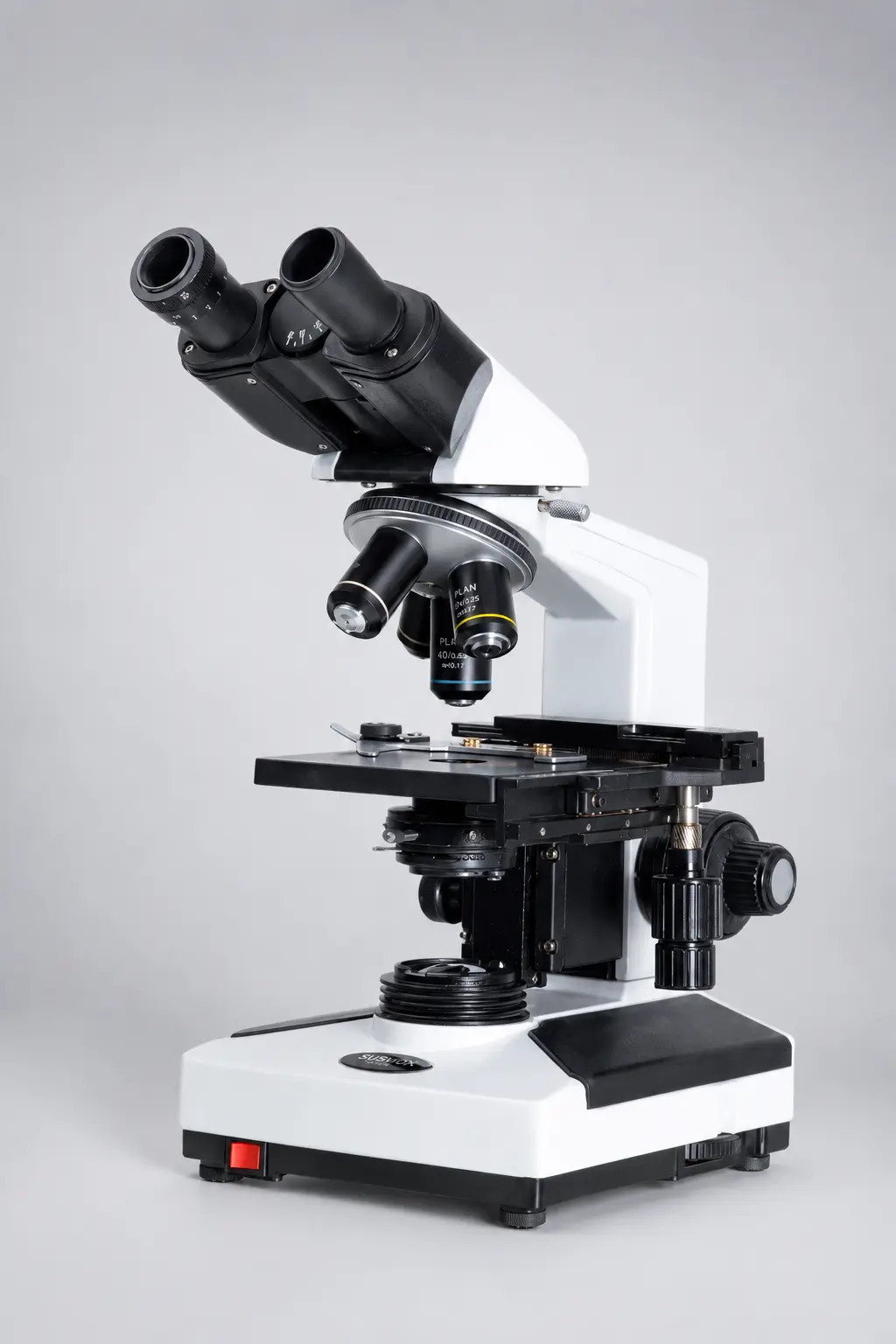
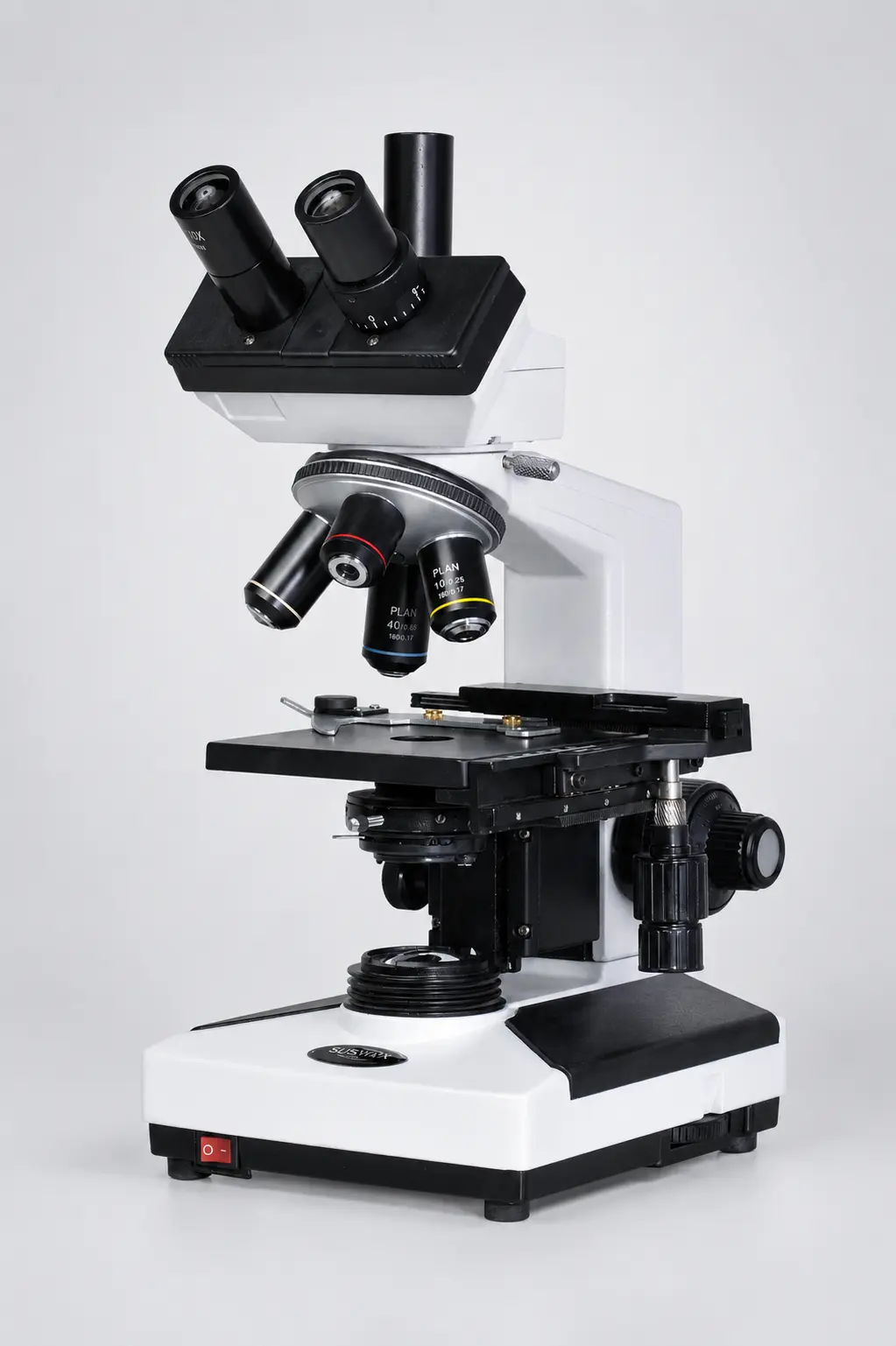
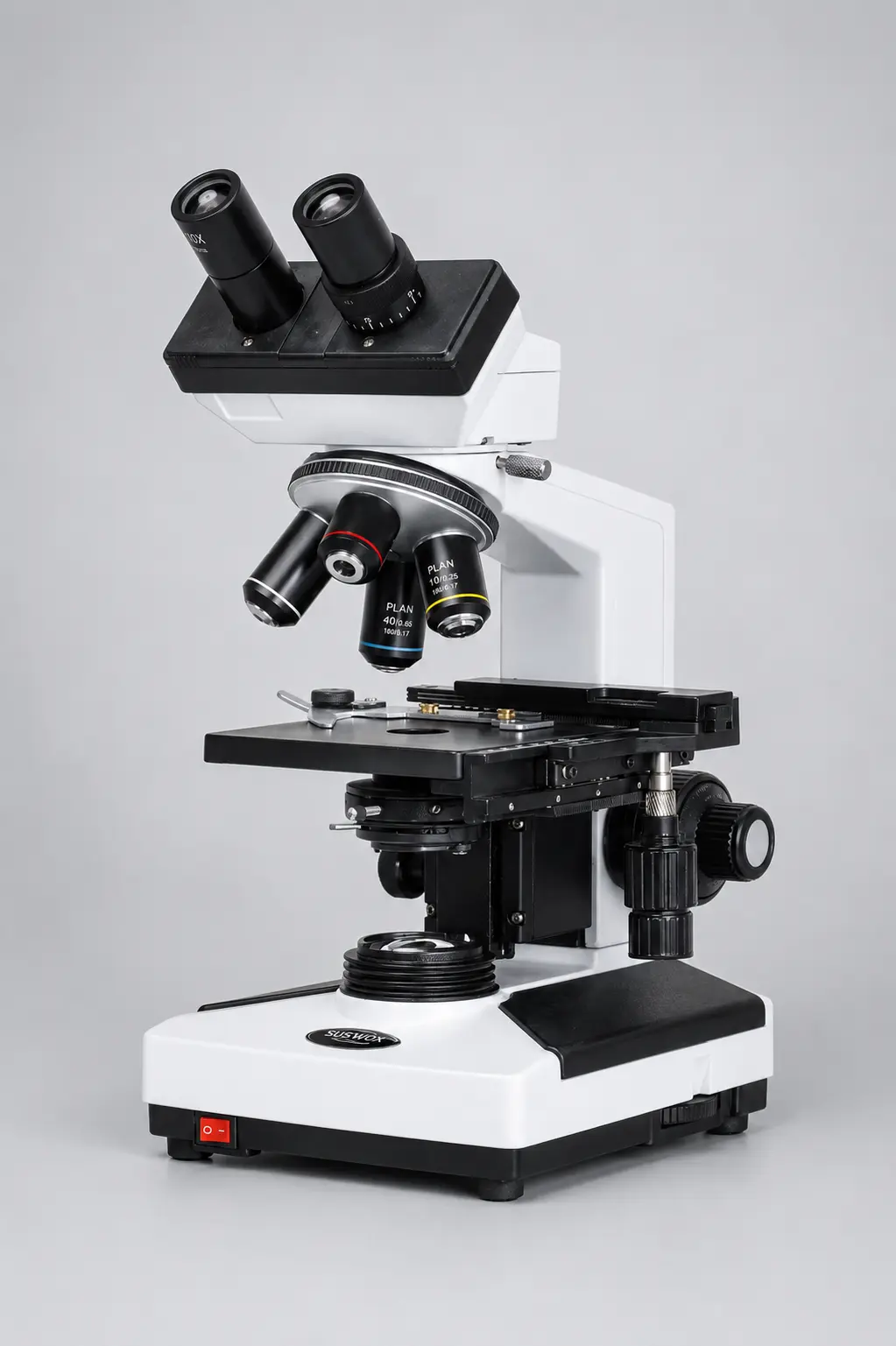
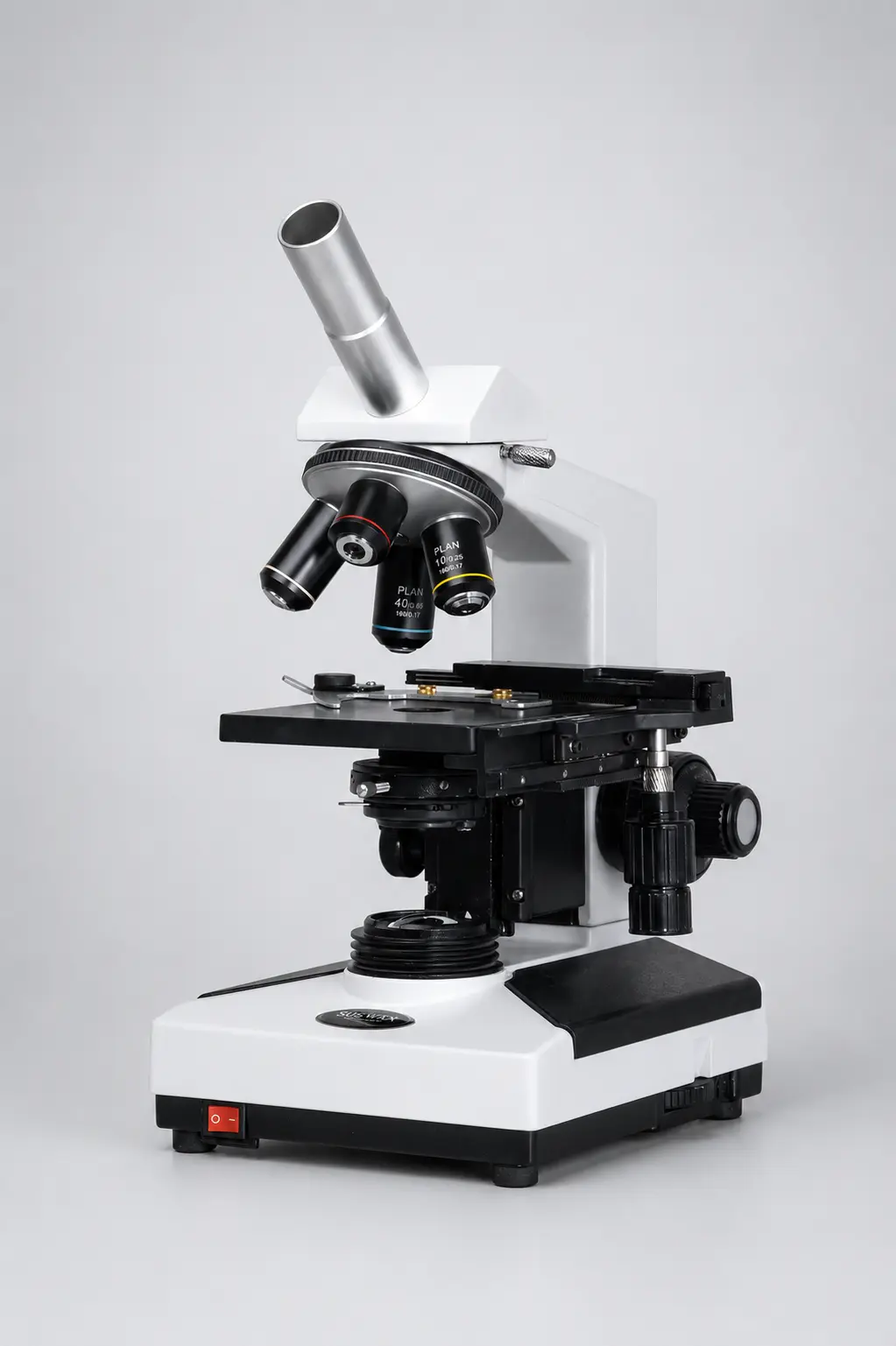
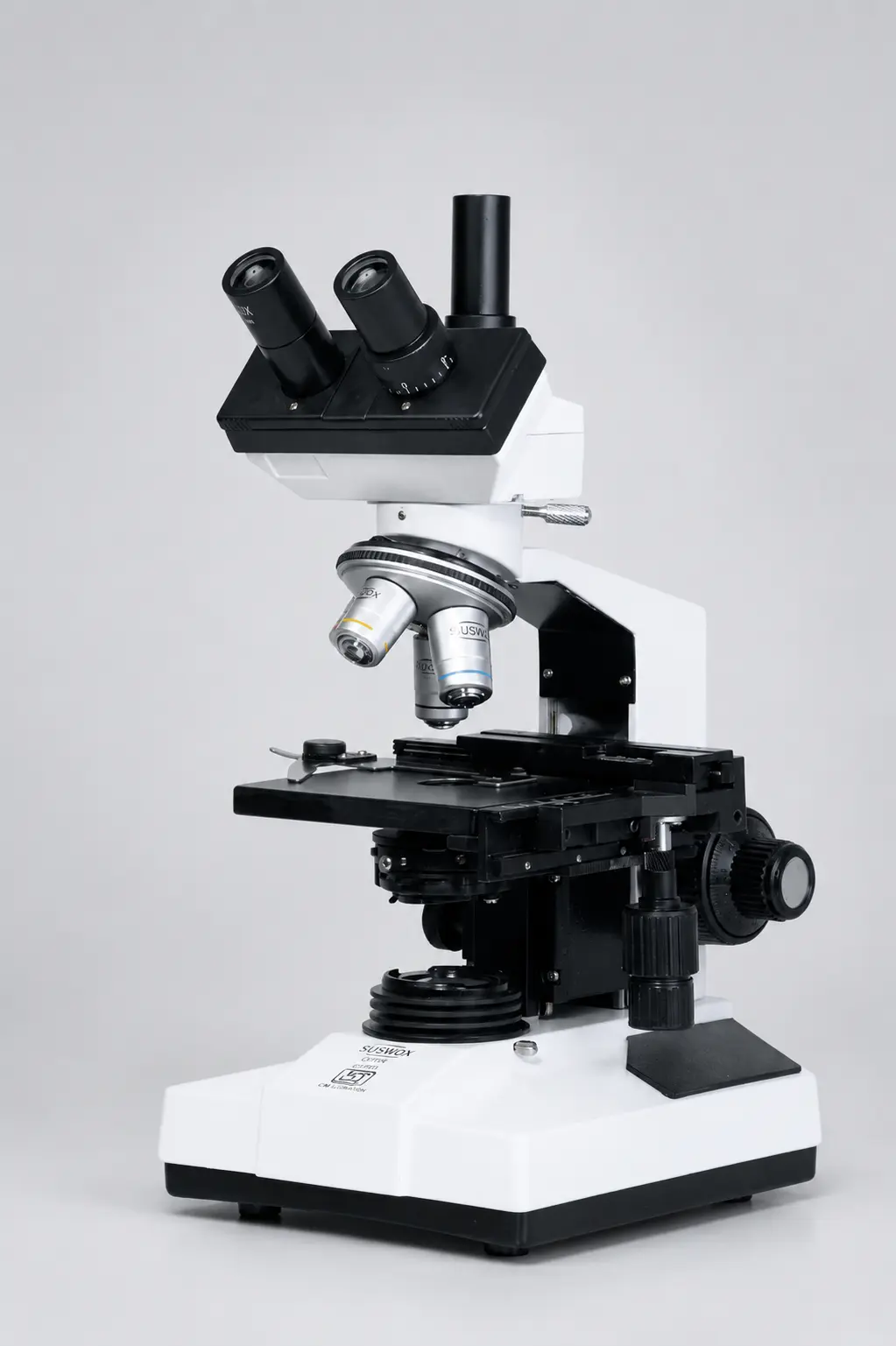
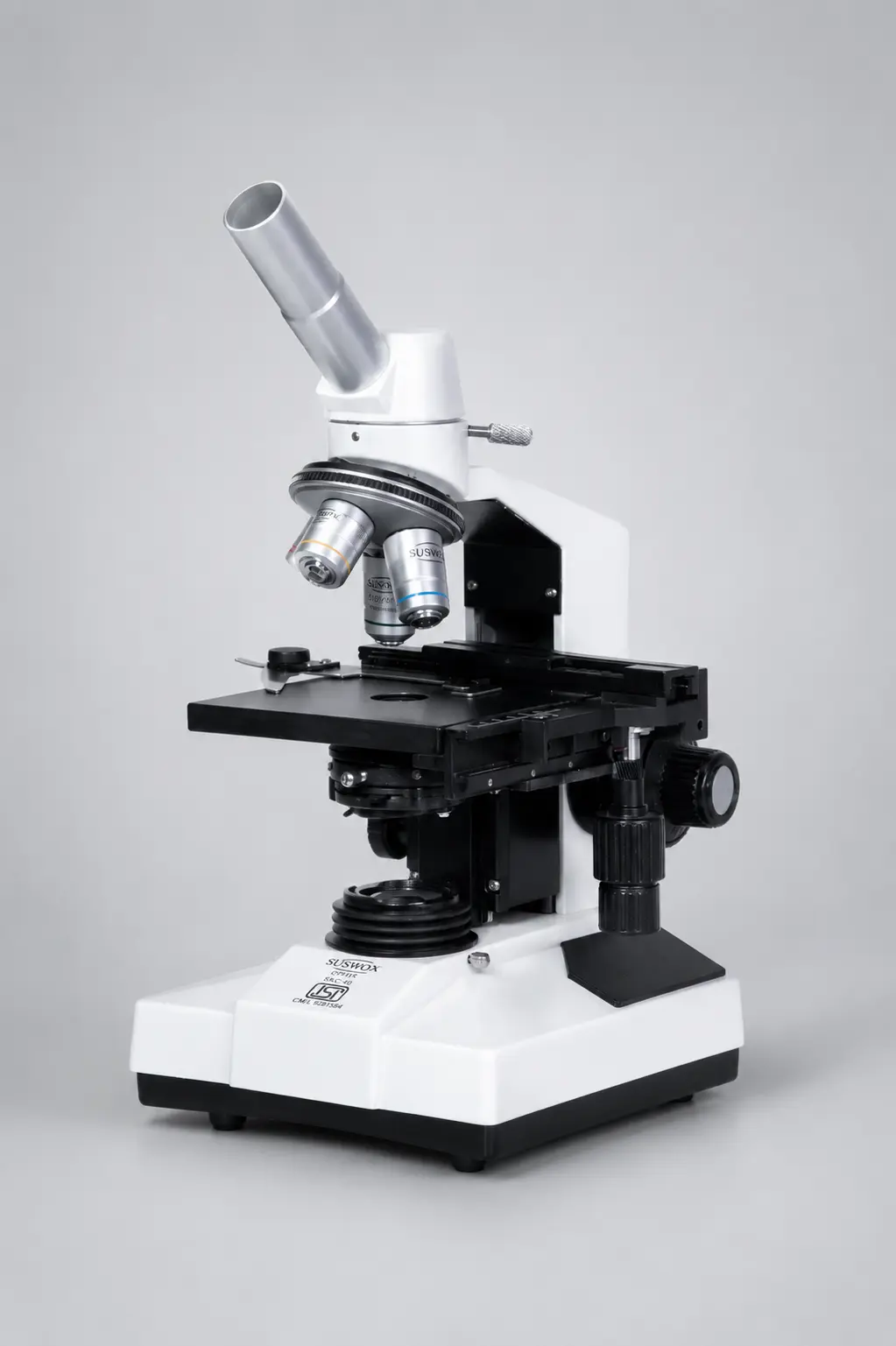
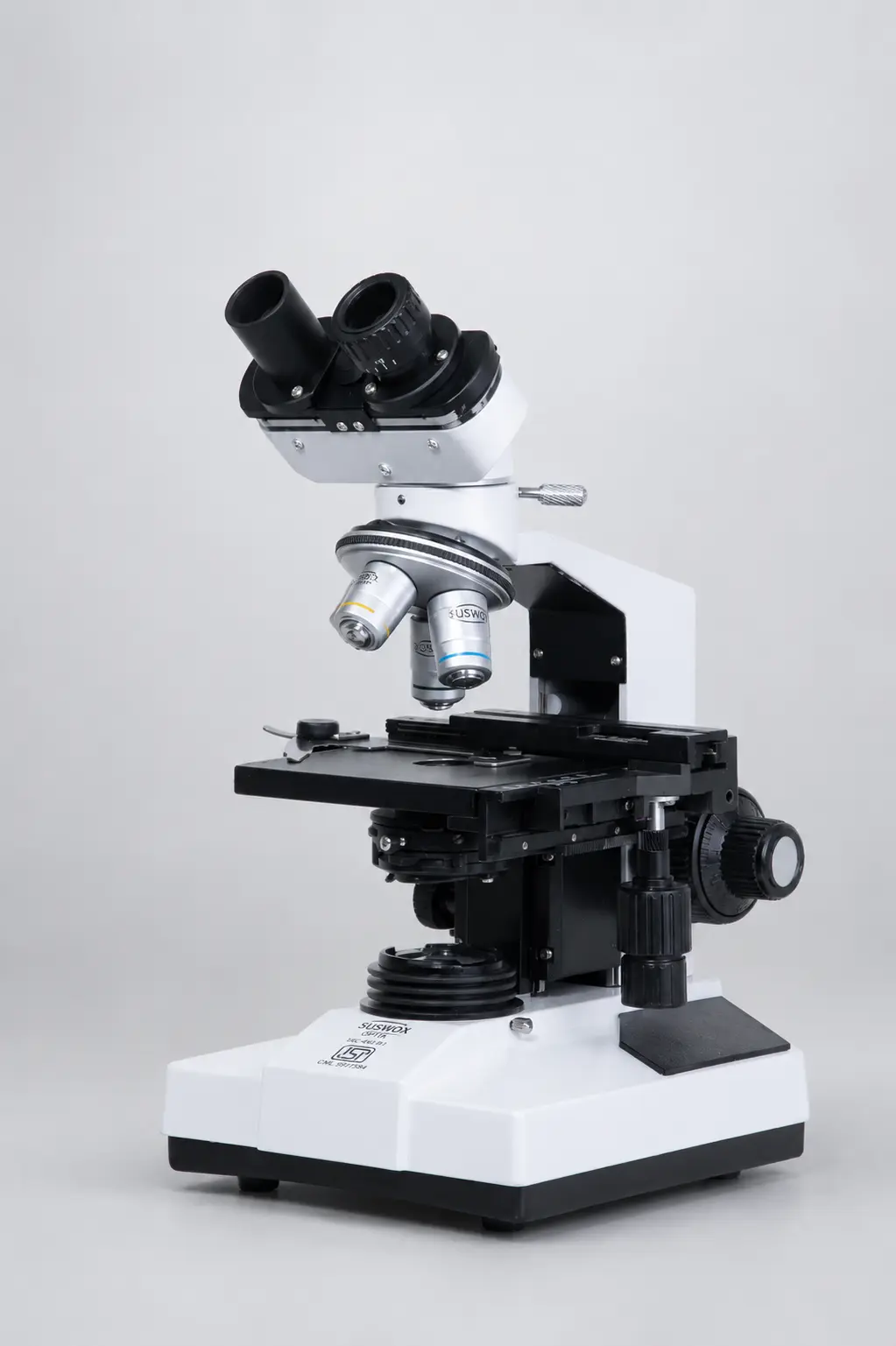
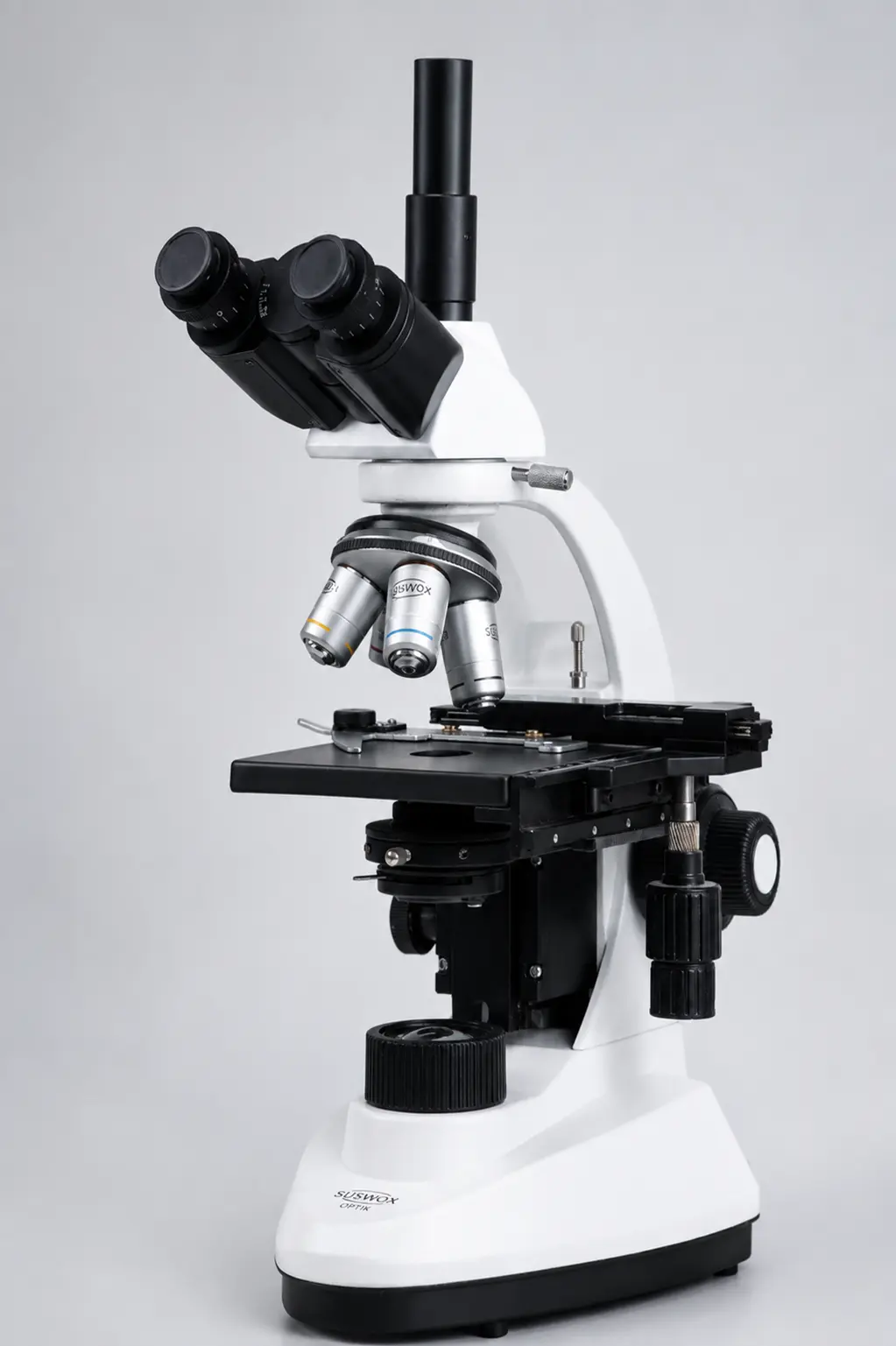
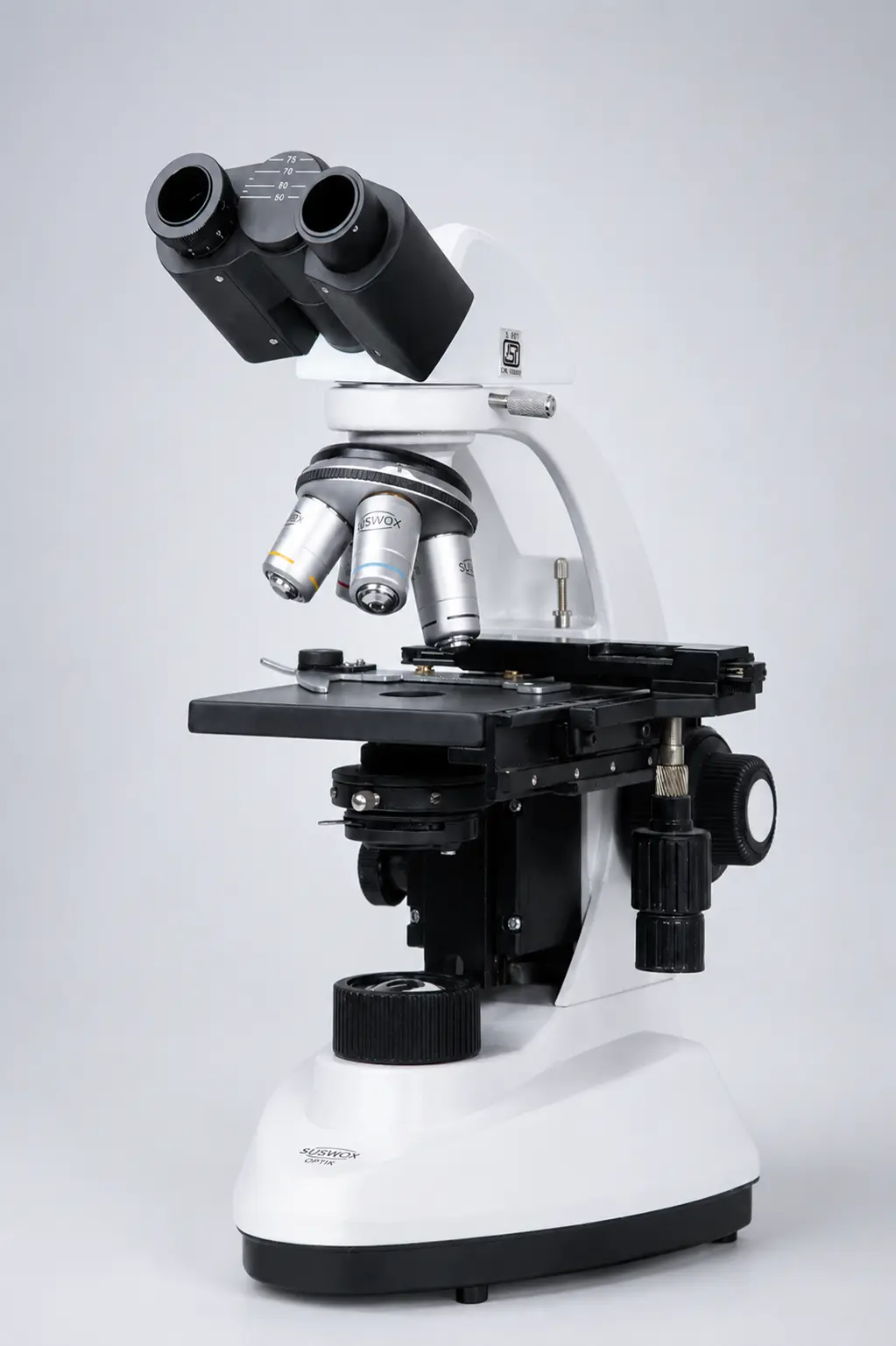
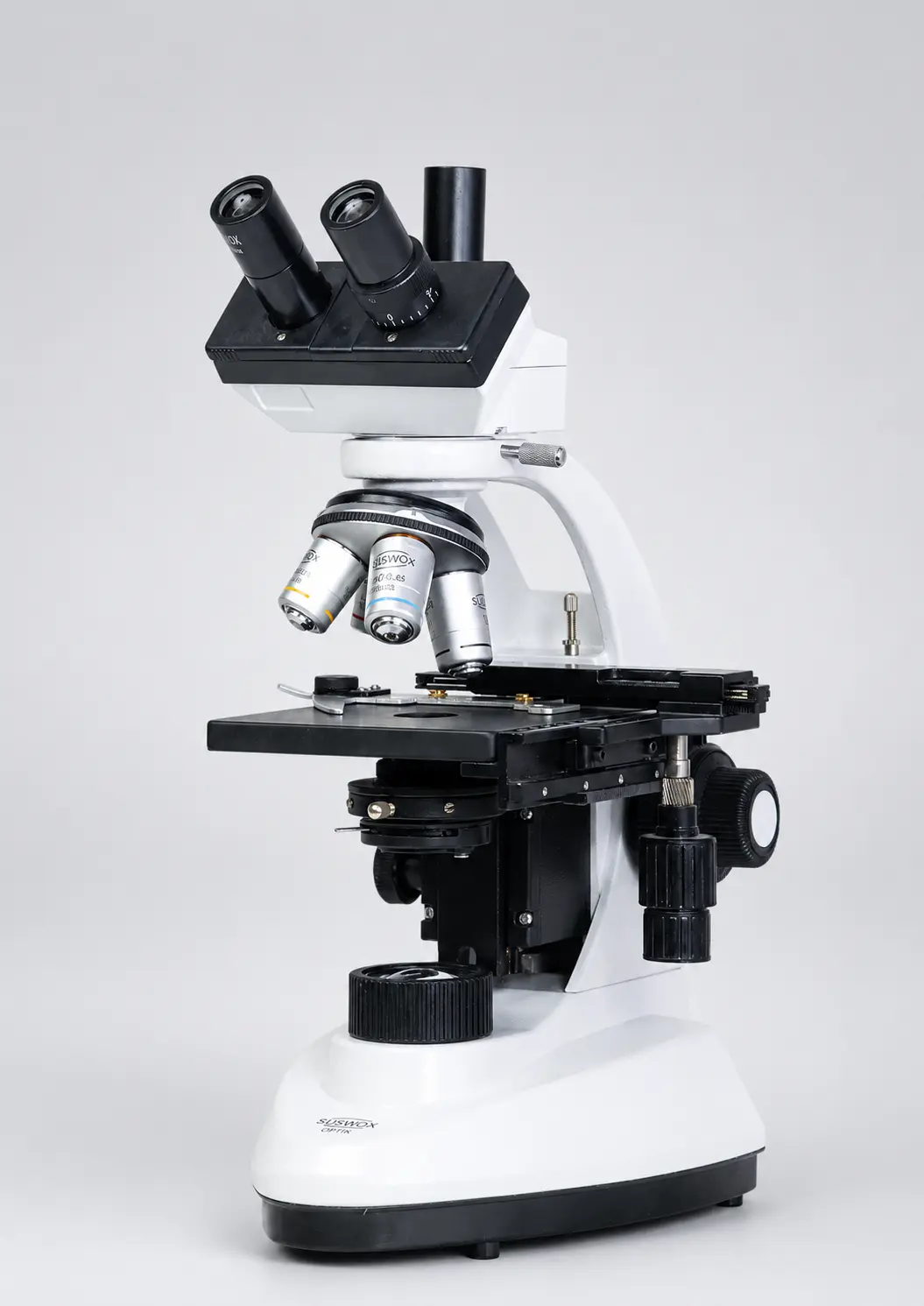
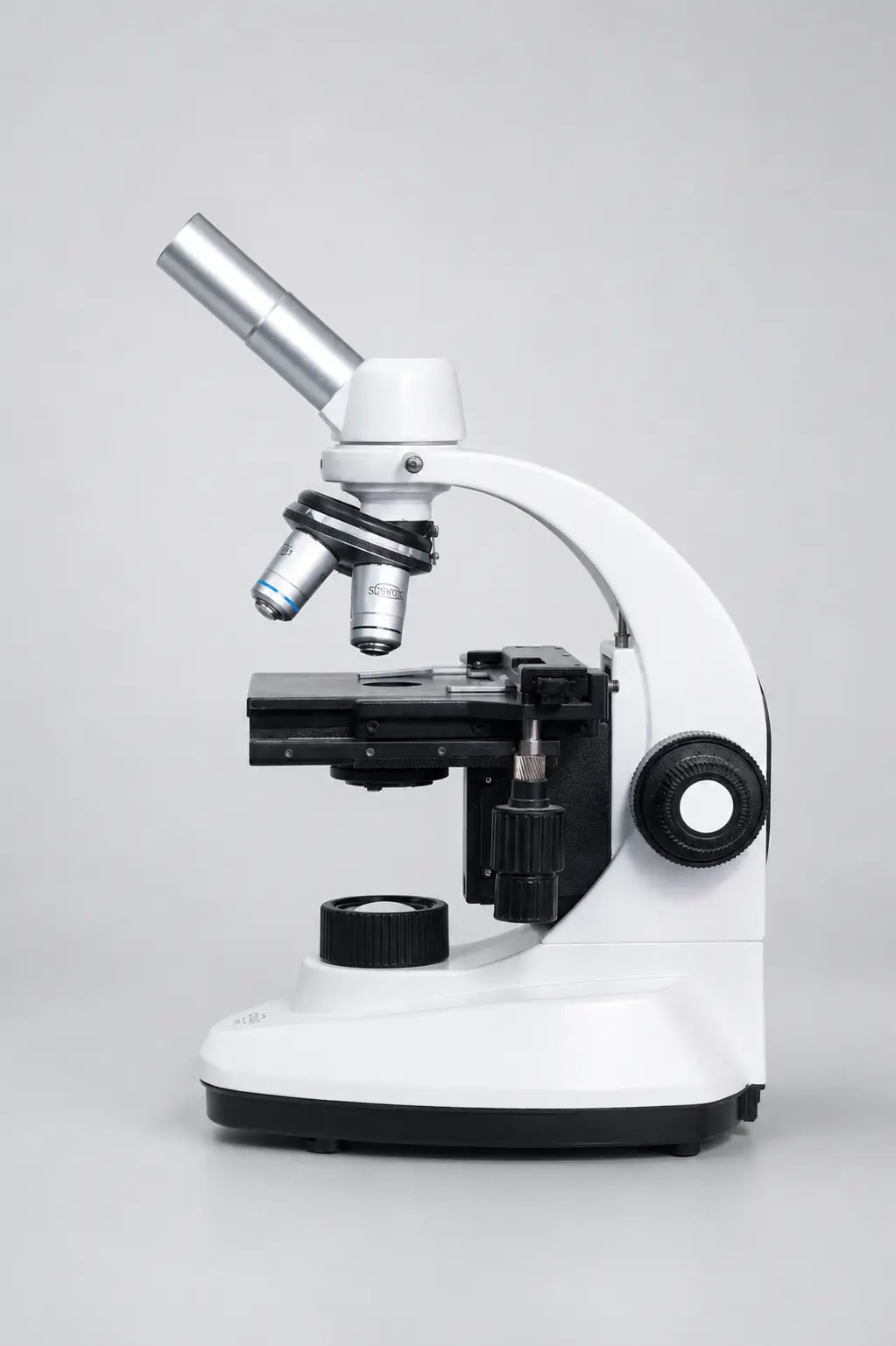
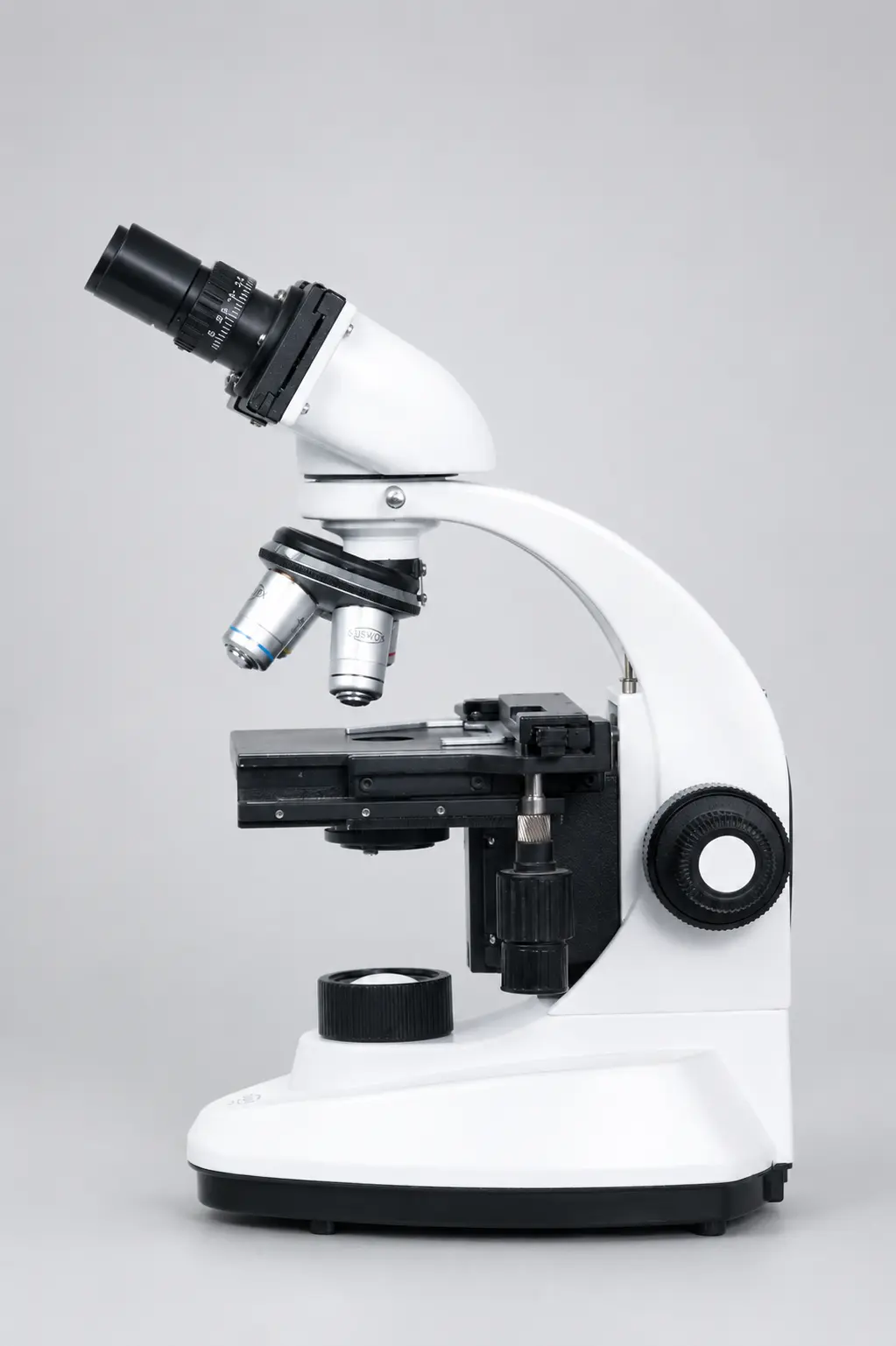
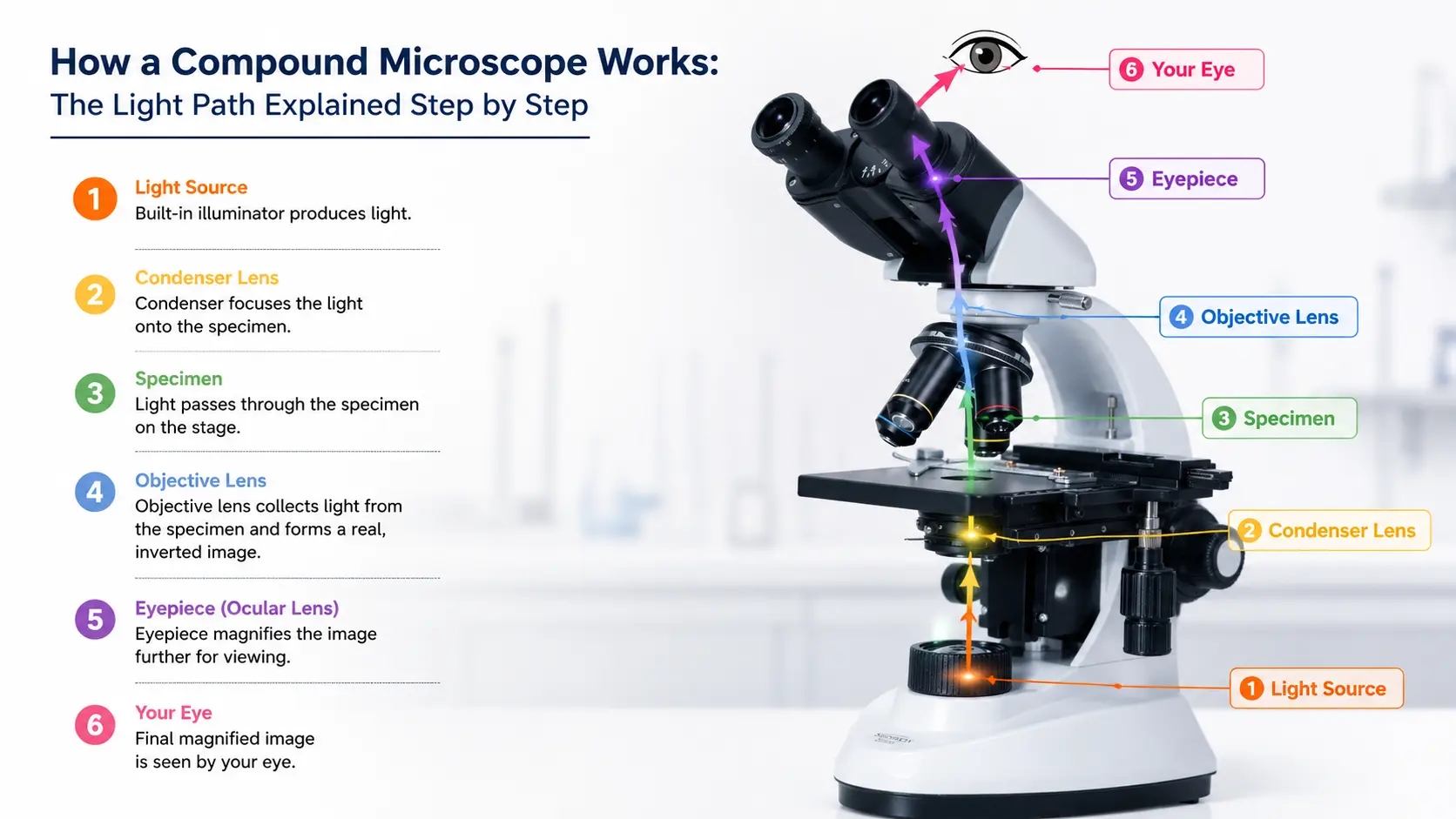
A compound microscope magnifies in two stages. The objective lens near the specimen enlarges it, and the eyepiece enlarges that image again — which is where the word “compound” comes from.
Light travels from below, passes through the specimen, and reaches your eye. That single fact decides everything about how it is used.
Key points:
- Sample must be thin enough for light to pass through
- Standard objectives: 4x, 10x, 40x and 100x oil immersion
- Total magnification = eyepiece × objective (10x eyepiece + 40x objective = 400x)
- Shows cells, bacteria, blood smears, tissue sections
- Available in monocular, binocular and trinocular heads
We have explained the full working principle and parts in our detailed guide on what a compound microscope is.
What is a Stereo Microscope?
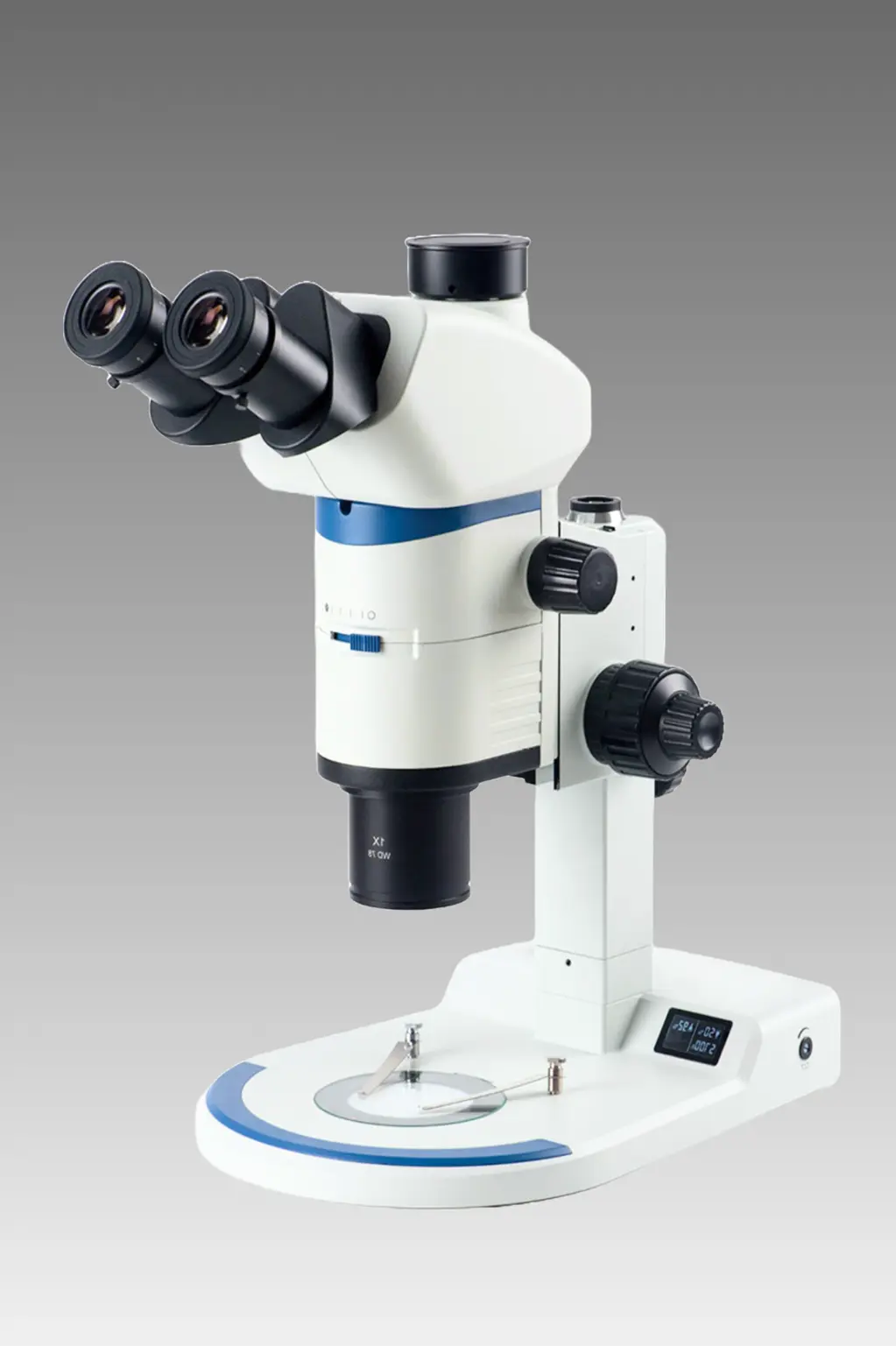
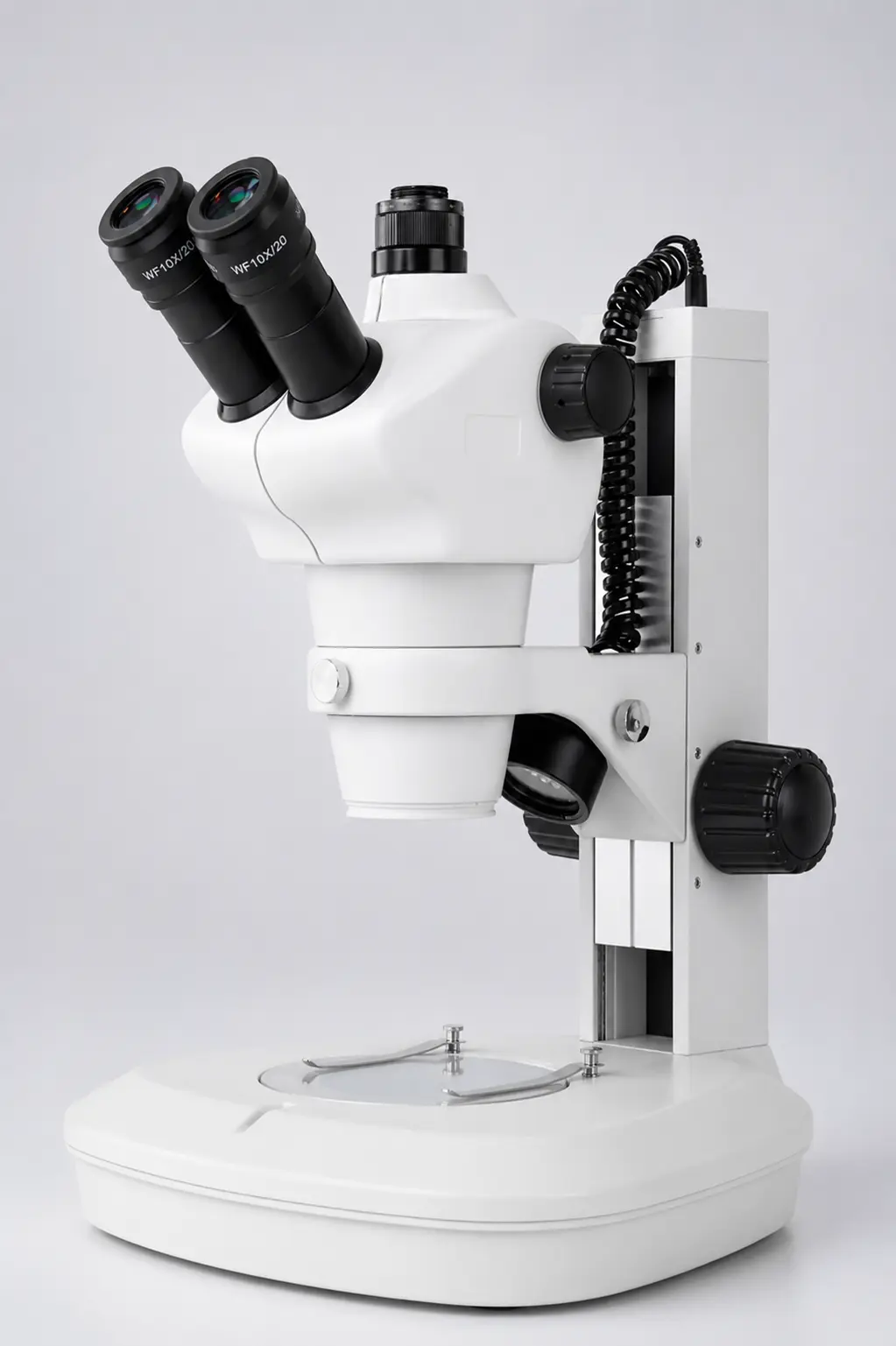
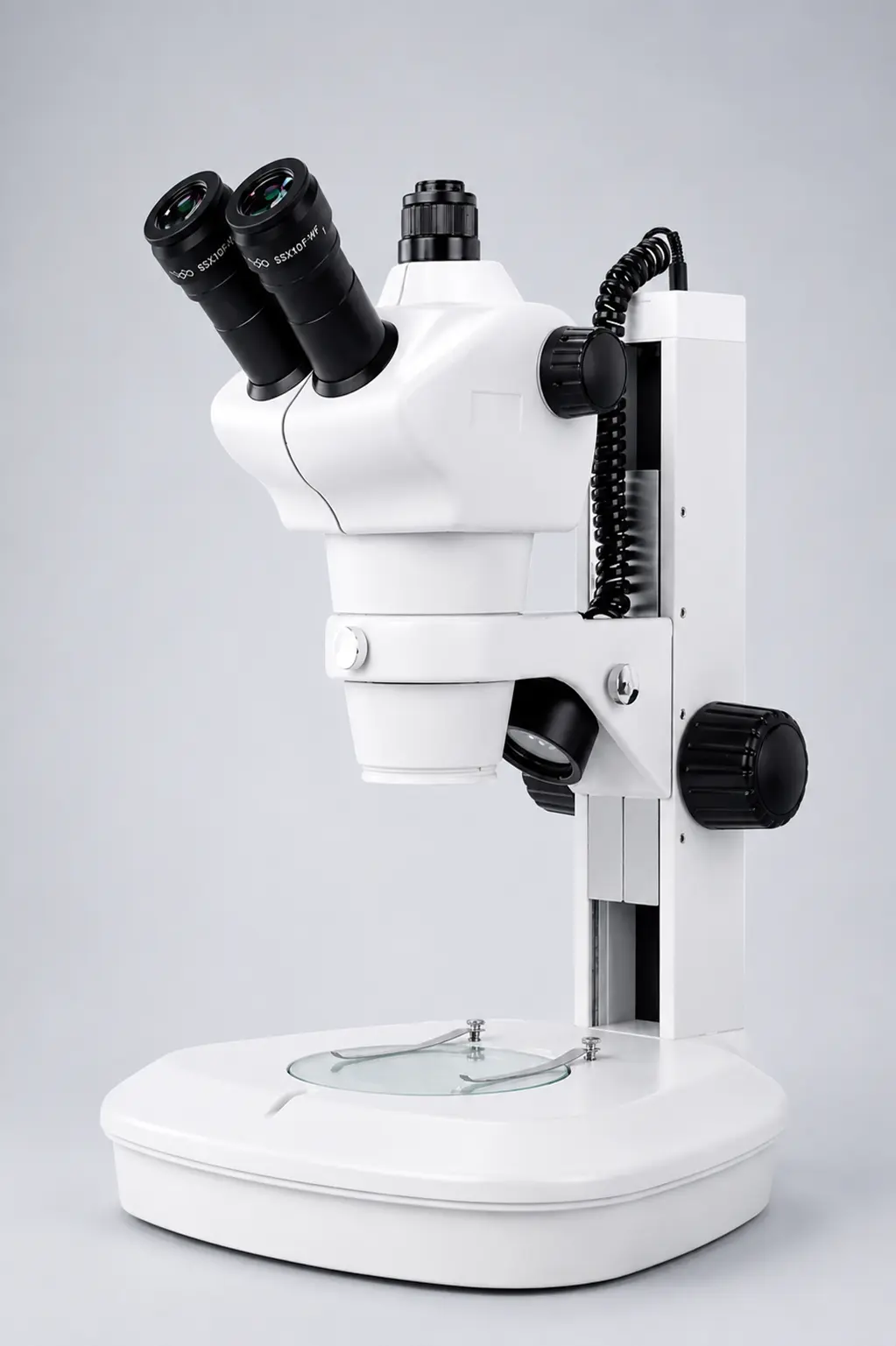
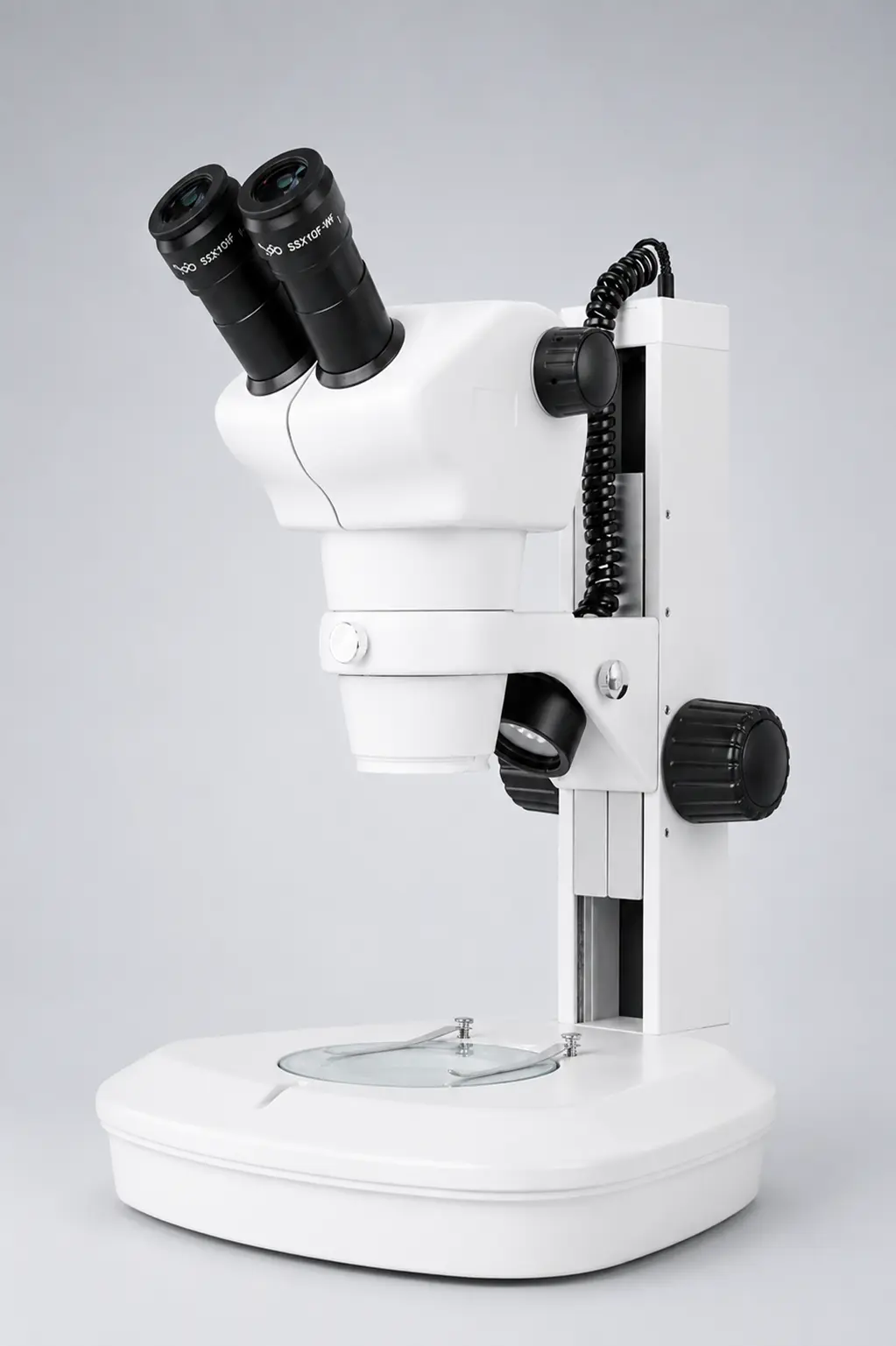
A stereo microscope, also called a dissecting microscope, sends two slightly different views to your two eyes — exactly the way normal human vision works. Your brain merges them, and you perceive depth.
That is the whole point of it. Depth.
Light usually comes from above and bounces off the object, so opaque things work perfectly. There is no slide, no cover slip, no staining. You put the object down and look at it.
Key points:
- Views solid objects: circuit boards, coins, insects, gemstones, plants
- Magnification stays low, usually 6.5x to 45x with a zoom knob
- Image is upright and correctly oriented — move right, it goes right
- 80–100 mm of clear space below the lens for tools and hands
- Available with LED top light, bottom light, or both
Suswox manufactures this category in the STZ and SPZ series — see the stereo zoom microscope range.
The 6 Differences That Actually Matter
1. Flat image vs 3D image
A compound microscope gives you a flat cross-section. Excellent for structure, useless for judging shape or height.
A stereo microscope shows depth. You can tell which solder joint sits higher, which seed coat is cracked, where a fibre lies over another.
2. Image orientation
Under a compound microscope everything is upside down and reversed. Push the slide up, the image goes down. Students get used to it in ten minutes because they are only moving a slide.
Now try soldering a 0.4 mm component while your hands move in the opposite direction to what you see. You cannot. A stereo microscope keeps directions correct, which is exactly why every electronics workbench uses one.
3. Working distance
This is the single most practical difference.
| Objective | Approximate Working Distance |
| Compound 40x | About 0.6 mm |
| Compound 100x oil | About 0.2 mm |
| Stereo zoom | 80 – 100 mm |
Under a compound microscope at high power, the lens is almost touching the slide. Under a stereo microscope you have room for tweezers, a scalpel, a soldering iron and both hands.
4. What kind of sample you have
- Transparent and thin — onion peel, blood smear, tissue section → compound
- Opaque and solid — PCB, coin, insect, gemstone, weld → stereo
Put a coin under a compound microscope and you see a black circle, because no light passes through it. Put a stained blood smear under a stereo microscope and you see a pink smudge, because 45x is nowhere near enough for cells.
5. Magnification range
Compound goes to 1000x. Stereo stops around 90x.
But higher is not better — it is different. Bacteria need 1000x. A solder joint at 1000x is a meaningless grey blur. Choose the magnification your work needs, not the biggest number available.
6. Sample preparation time
A compound microscope needs slides, cover slips, mounting medium and often staining. That is real time and consumable cost.
A stereo microscope needs nothing. Object goes on the stage, light goes on, done.
Which One Should You Buy?
Answer three questions and the choice makes itself.
Choose a compound microscope if you:
- Run a pathology, microbiology or water testing lab
- Teach school or college biology practicals
- Examine blood, urine, tissue, bacteria or plant sections
- Work with prepared slides
- Need magnification above 100x
Choose a stereo microscope if you:
- Repair phones, PCBs or watches
- Do dissection in zoology or botany labs
- Inspect gemstones, jewellery or coins
- Run quality control on manufactured parts
- Need to hold tools under the lens while working
Buy both if you: run a college science department, a forensic lab, or an R&D unit. Most well-equipped labs in India keep both, because the two instruments do not overlap at all. One does not replace the other — they simply answer different questions.
For a wider view of every category available, see our guide to the 12 types of microscopes. And if you are comparing head styles, our post on binocular microscopes covers monocular versus binocular versus trinocular.
Frequently Asked Questions
Is a stereo microscope more powerful than a compound microscope?
No. A compound microscope reaches 1000x while a stereo microscope typically stops at 45x to 90x. But power is not the point of a stereo microscope — depth perception, upright image and working space are. They are built for different tasks, not for competition.
Can a stereo microscope see cells?
Not individual cells. At 45x you can see plant tissue structure, insect anatomy and large single-celled organisms in a droplet, but resolving human cells or bacteria requires 400x to 1000x on a compound microscope.
Is a dissecting microscope the same as a stereo microscope?
Yes. Dissecting microscope, stereo microscope, stereo zoom microscope and low-power microscope all refer to the same instrument. “Dissecting” is the older name from biology labs, where it was mainly used for specimen dissection.
Which microscope is used for mobile and PCB repair?
A stereo microscope, usually with 7x to 45x zoom and LED top illumination. The upright 3D image and 80–100 mm working distance let a technician solder and inspect components while looking through the eyepieces.
Which microscope do schools need?
Both, ideally. Compound microscopes for cell biology practicals, and stereo microscopes for dissection and specimen study. If the budget allows only one, compound is the standard requirement for CBSE, ICSE and state board biology syllabi.
What is the price difference between the two in India?
Student compound microscopes start around ₹8,000 and lab models run ₹15,000 to ₹1,50,000. Stereo microscopes generally cost ₹12,000 to ₹80,000 depending on zoom range, head type and illumination.
Buying From a Microscope Manufacturer in India
Both instruments are precision optical products, and where they come from matters more than most buyers expect.
Suswox (Sudheer Scientific Works) is a microscope manufacturer in India operating from 1265 Bengali Mohalla, Ambala, Haryana since 1973. Ambala has been India’s scientific instruments manufacturing hub for decades, and Suswox builds both categories in-house — compound laboratory and student microscopes in the SC-300, SKC, CXL and SK series, and stereo zoom microscopes in the STZ and SPZ series.
The instruments are in daily use at AIIMS Bathinda, AIIMS Nagpur, AIIMS Bilaspur, BHU, Kurukshetra University, MDU Rohtak and the Haffkine Institute.
Why buy direct rather than through microscope suppliers in India who only trade:
- Factory pricing with no reseller margin added
- Spare parts and servicing for the working life of the instrument
- Custom configuration — objectives, illumination, head type, stage
- Anti-fungal treated optics, which matter in humid Indian conditions
- Bulk institutional supply with matched optics across every unit
- GeM and tender documentation support
That last point is where genuine microscope manufacturers separate themselves from traders. When a college needs twelve identical microscopes with the same optics and one service contract, a factory can deliver that consistently. A trading company usually cannot.
Suswox — Sudheer Scientific Works 1265 Bengali Mohalla, Ambala (HR), India 133001 +91 8727015757 | +91 9416025615 | sales@suswox.com
Browse all microscopes · Stereo zoom range · Request a quote
The Short Answer
If light needs to pass through your sample, you need a compound microscope. If you need to see depth and work with your hands underneath, you need a stereo microscope.
Get that one distinction right and you will not end up like the repair technician staring at a black screen.