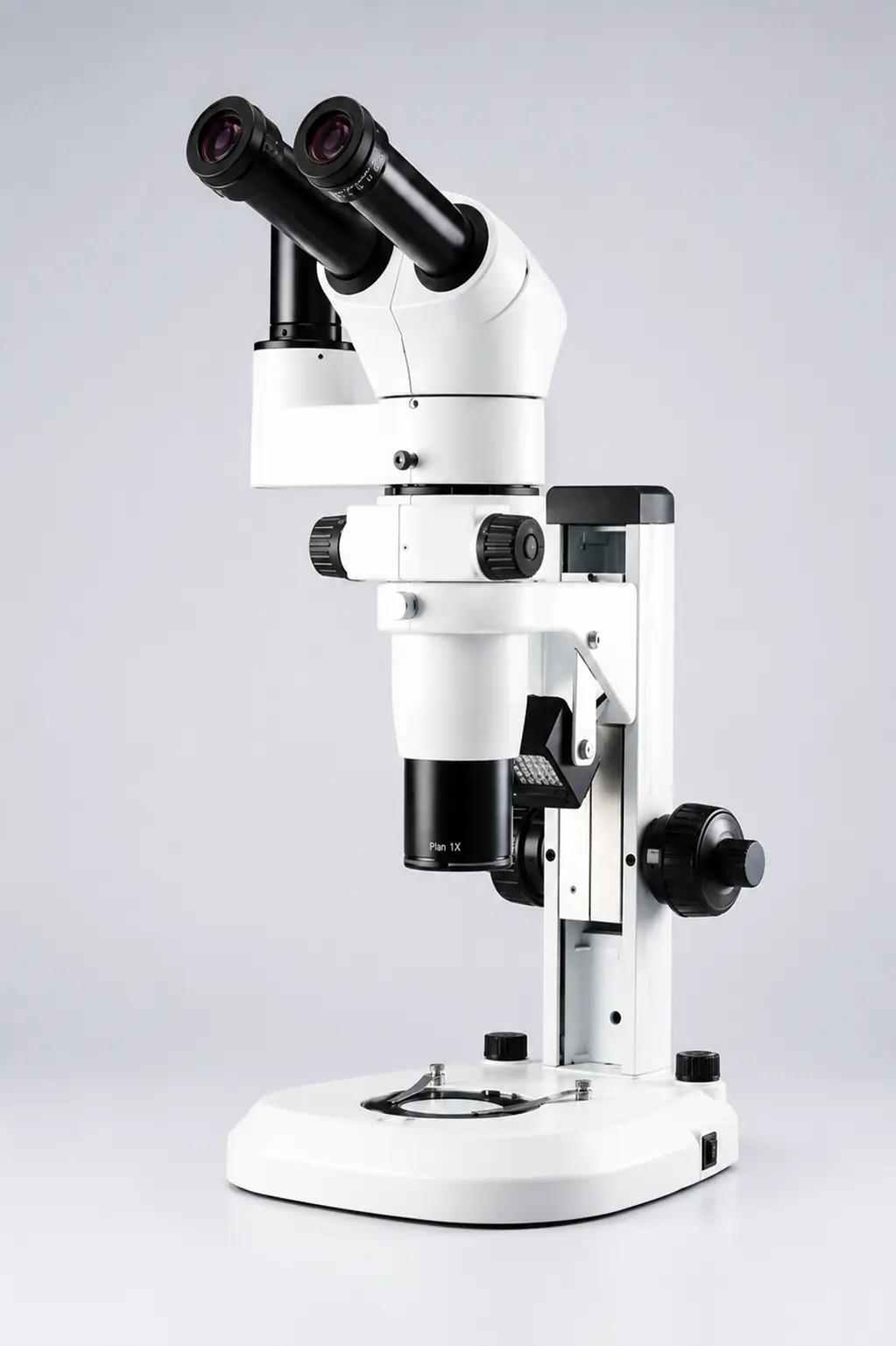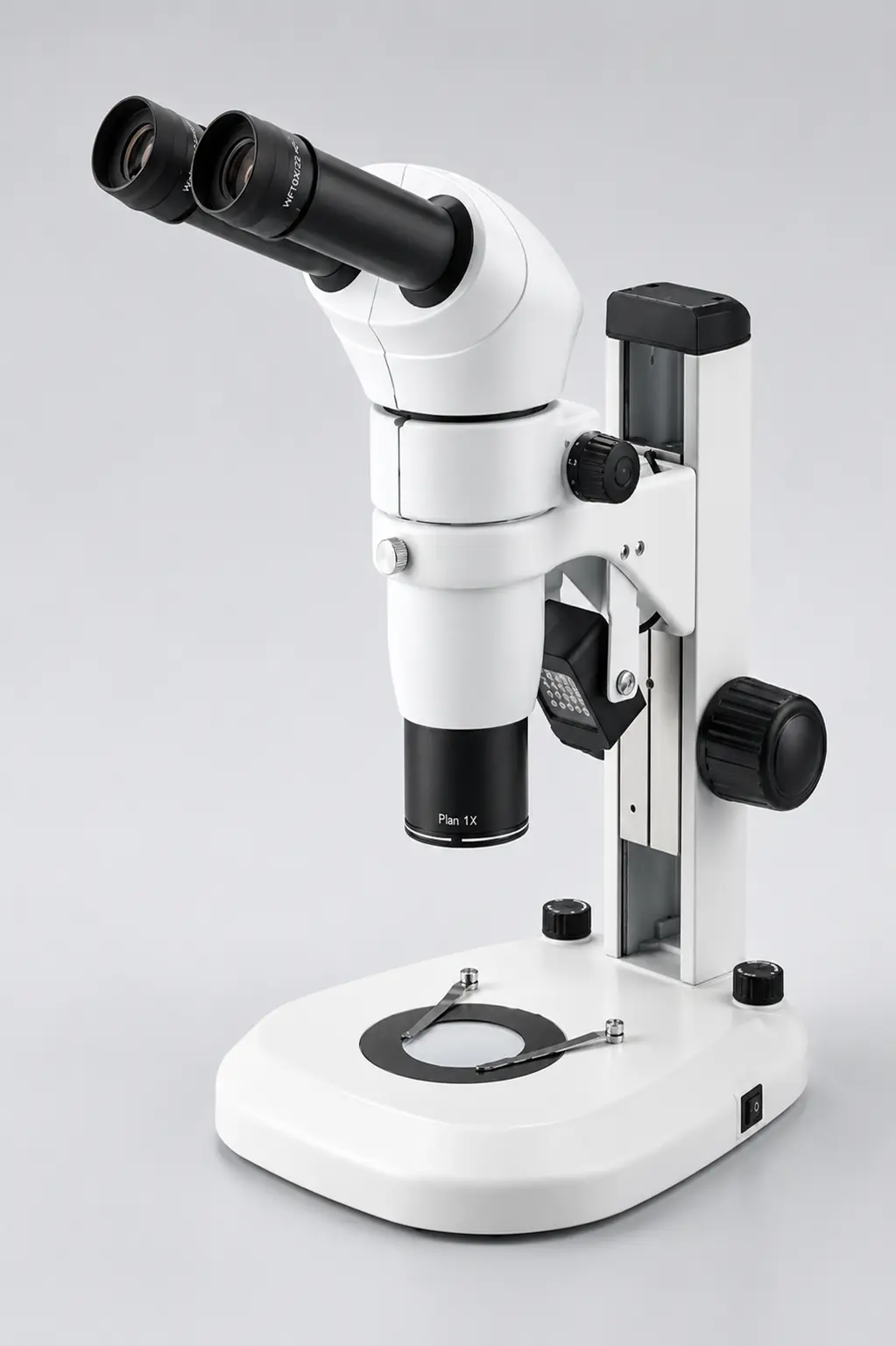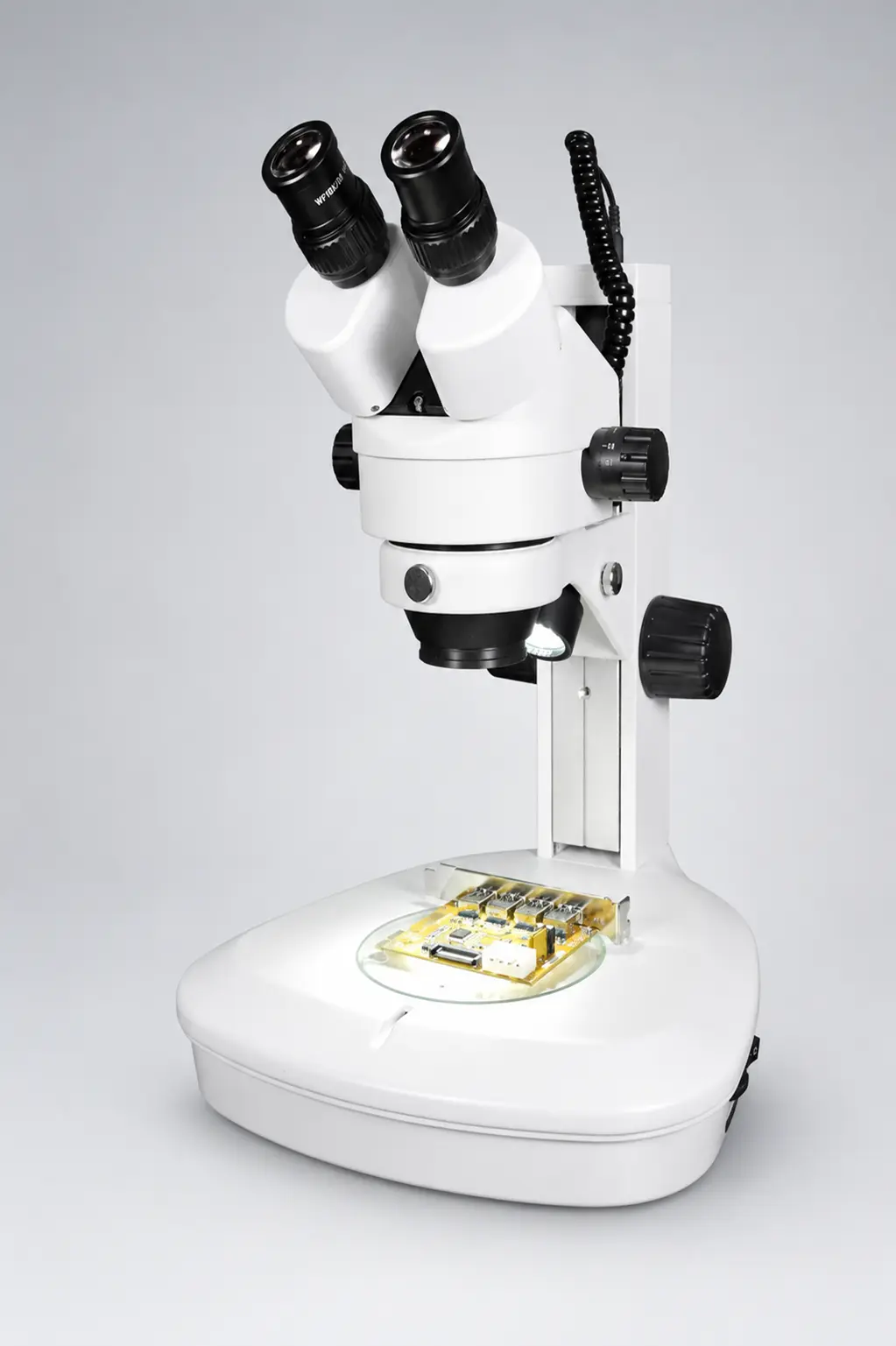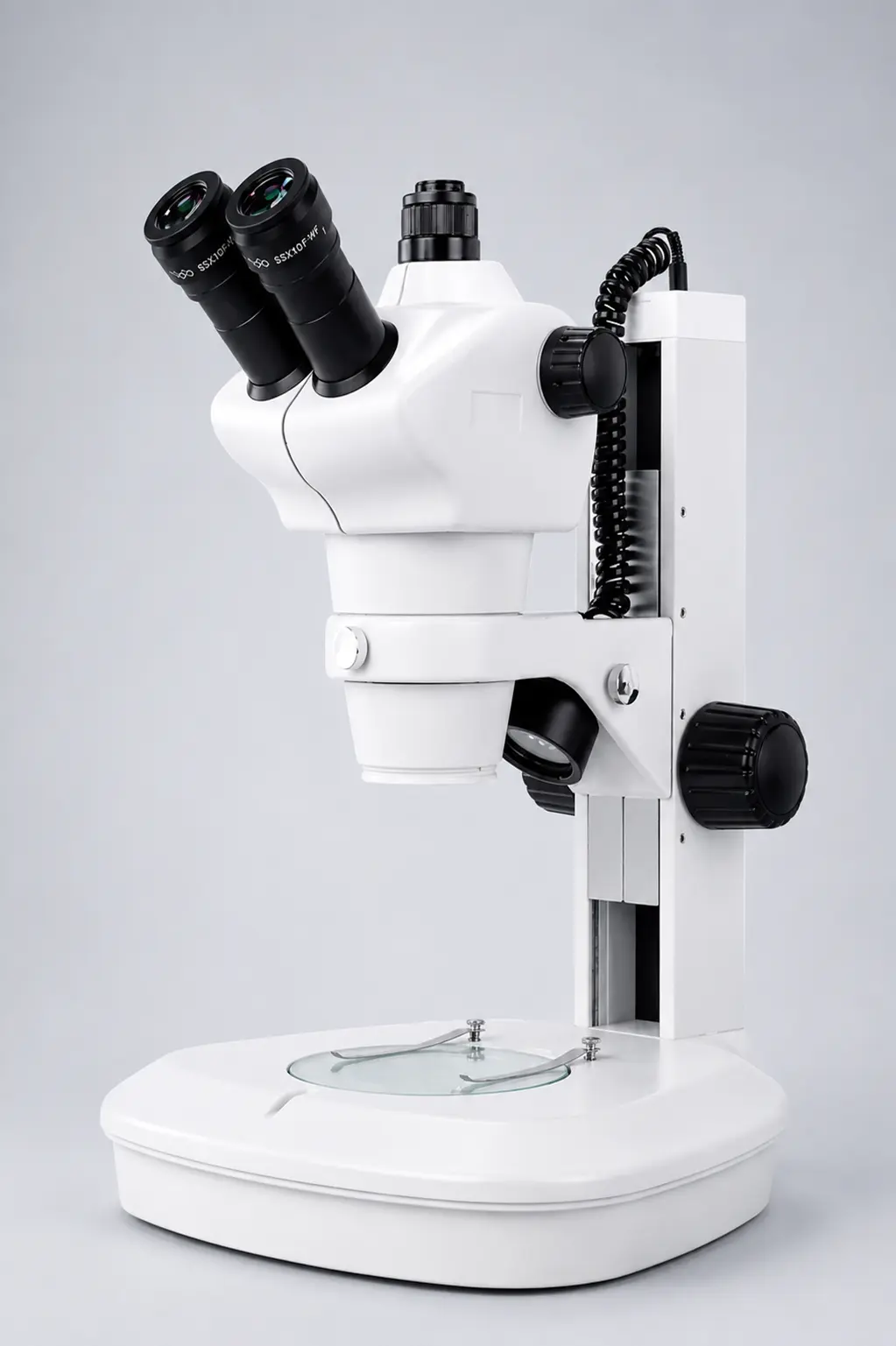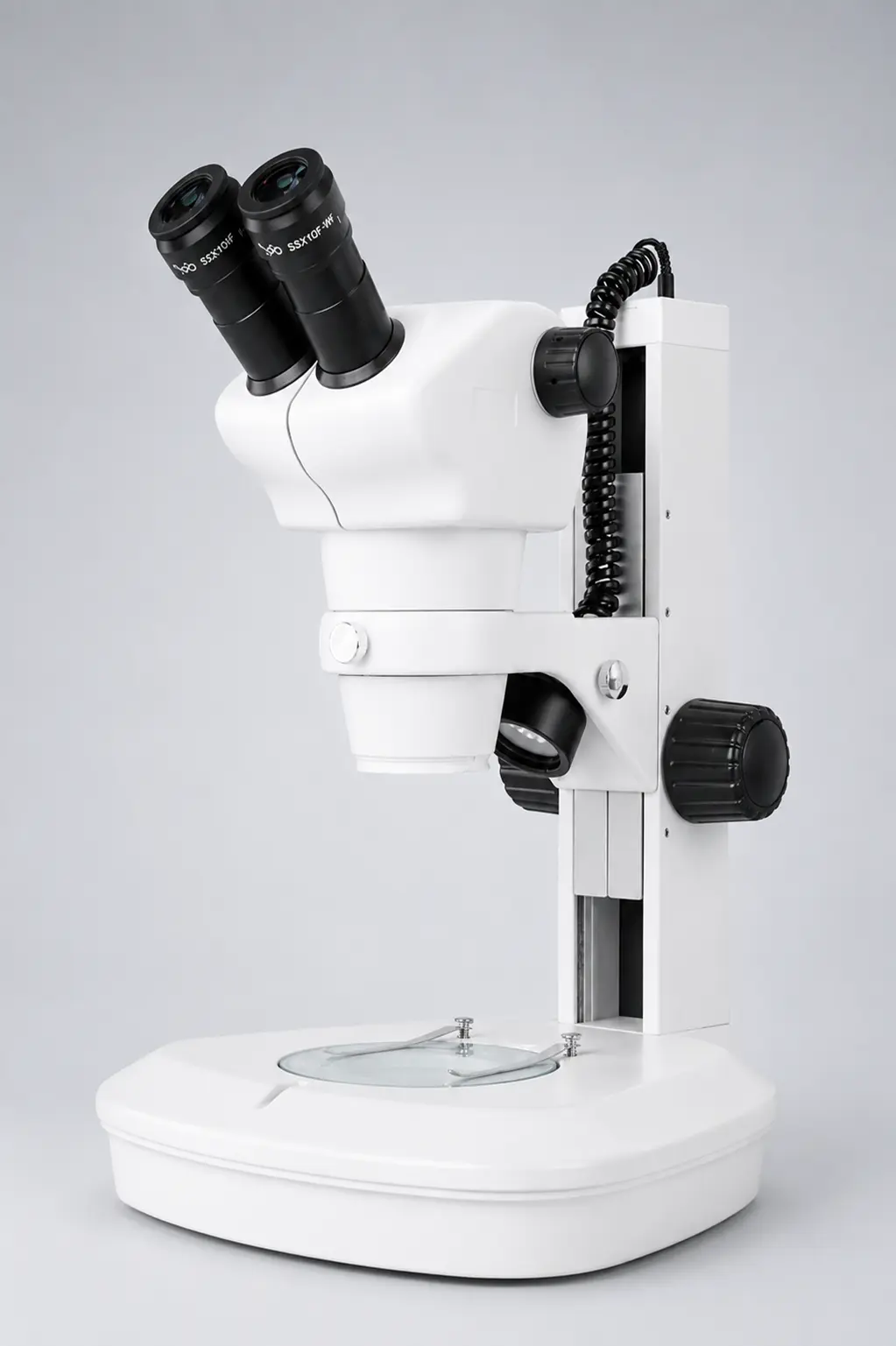
A stereo microscope is a low-magnification microscope that gives a three-dimensional (3D) view of solid objects. It uses two separate optical paths, one for each eye, so you see depth just like normal vision. Most stereo microscopes magnify between about 7X and 45X, and you look at the surface of an object, not through a thin slide.
That is why the same instrument shows up in a biology dissection lab, a mobile repair shop and a jewellery workshop. Anywhere you need to see a small thing clearly and work on it with your hands, a stereo microscope makes sense.
Stereo Microscope Principle
The stereo microscope principle is simple: give each eye a slightly different view of the object, and the brain combines them into a 3D image.
Each eyepiece has its own objective path set at a small angle (about 10 to 15 degrees) to the other. Your left eye sees the object from a slightly left angle and your right eye from a slightly right angle. The brain merges the two, and you get real depth.
There are two optical designs:
| Design | How it works | Typical use | Price level |
|---|---|---|---|
| Greenough | Two separate small objectives angled toward the object | Education, dissection, routine inspection | Lower |
| Common Main Objective (CMO / parallel optics) | One large objective with two parallel light paths | Research, documentation, high-end industrial inspection | Higher |
Most stereo zoom microscopes under ₹1 lakh use Greenough optics. Our stereo zoom microscope price in India guide explains when parallel optics are worth paying for.
Parts of a Stereo Microscope (Diagram Explained)
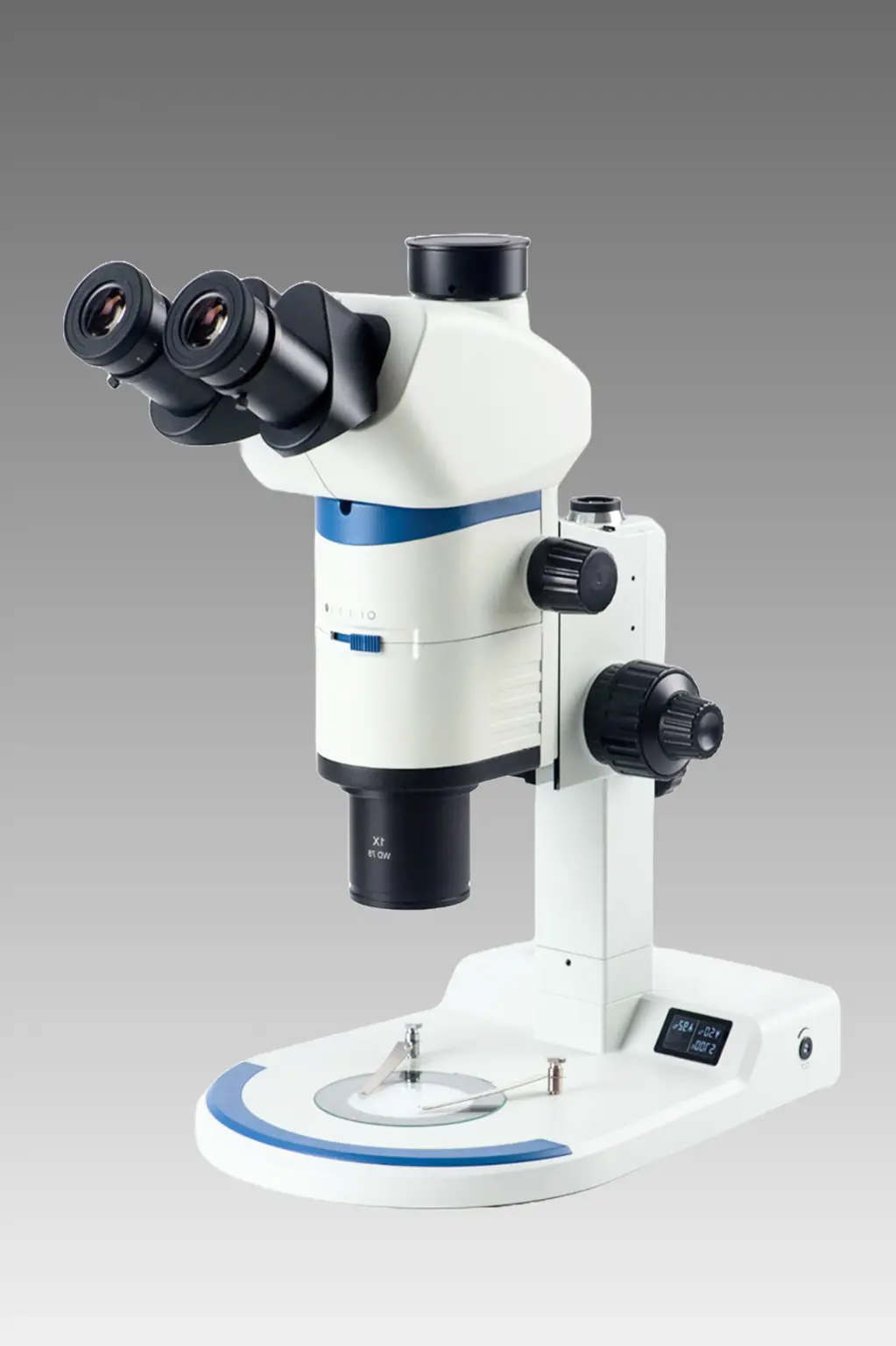
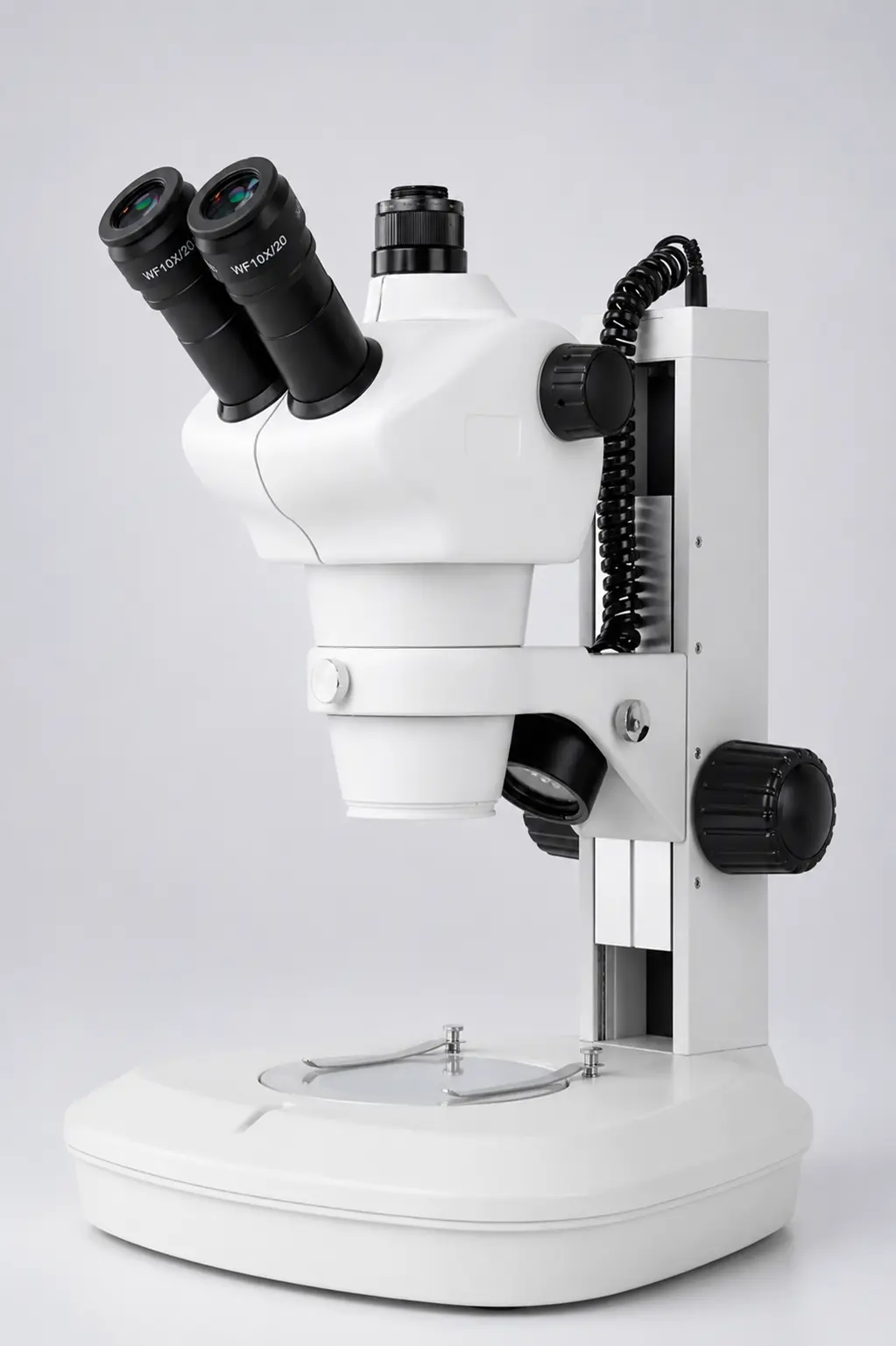
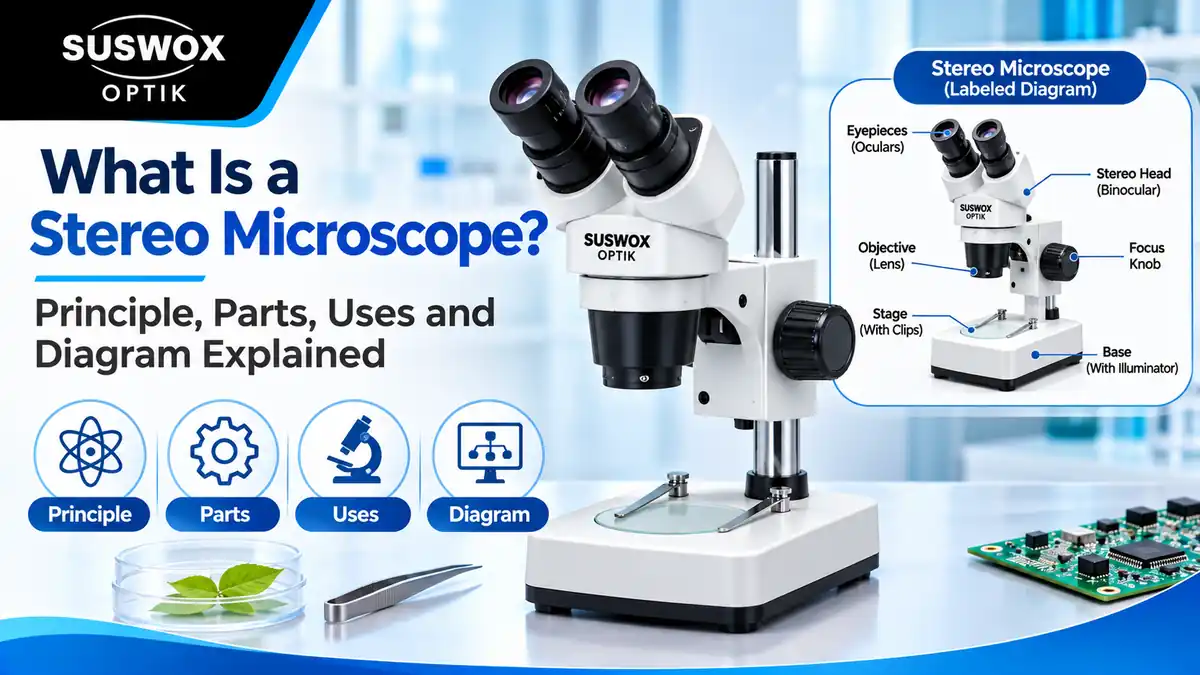
If you draw a stereo microscope diagram, these are the parts to label from top to bottom:
- Eyepieces (oculars): Two eyepieces, usually 10X or 20X wide field, with diopter adjustment on at least one side.
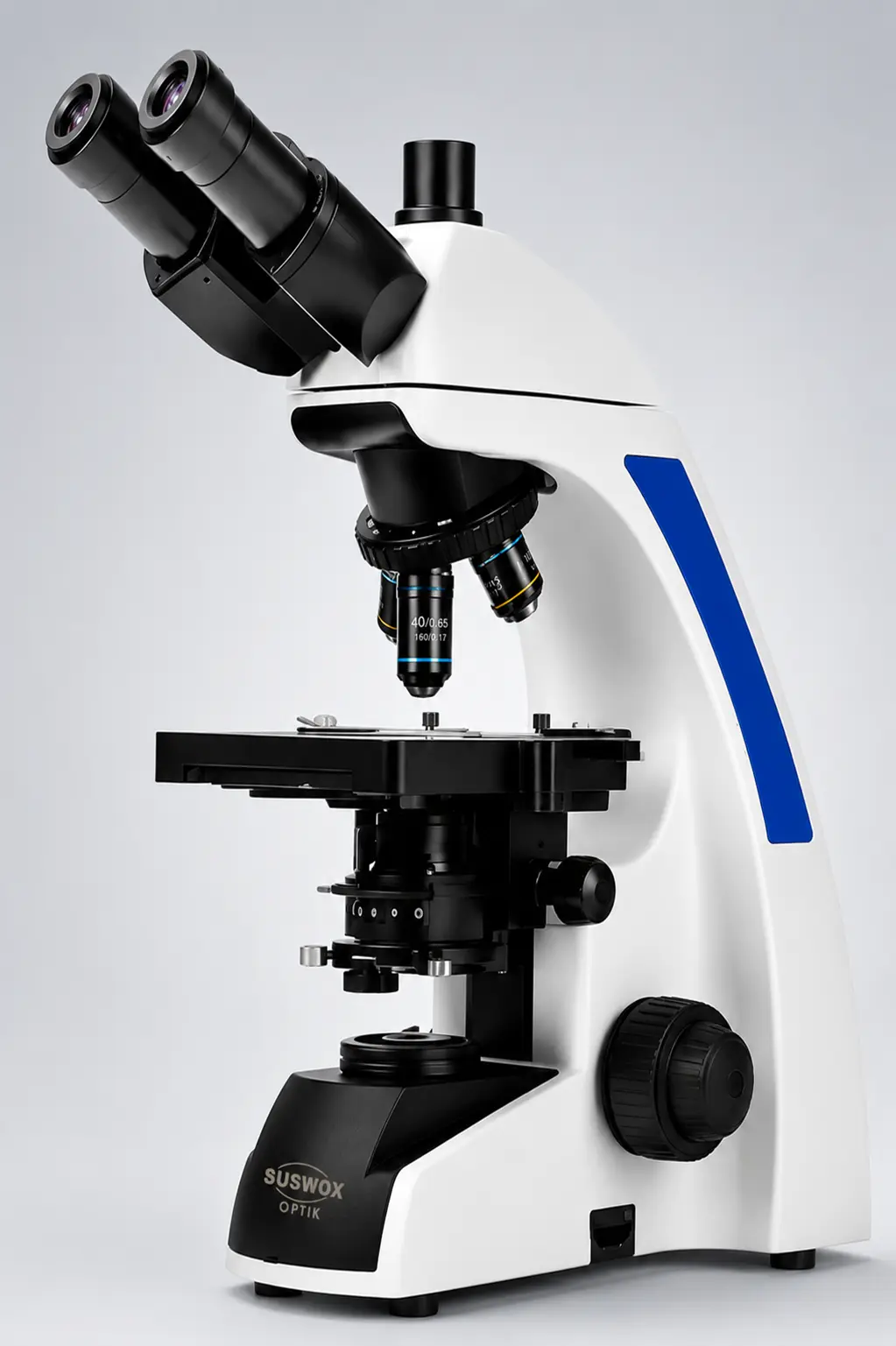
- Binocular or trinocular head: Holds the eyepieces. The interpupillary distance can be adjusted. A trinocular head has a third port for a camera.
- Zoom knob or turret: Changes magnification. Zoom models change smoothly, for example 0.7X to 4.5X. Step models click between fixed settings.
- Objective lens: Sits at the bottom of the optical body and faces the object.
- Focus knob: Moves the whole head up and down on the stand. There is no fine-focus stage as on a compound microscope.
- Stand or pillar: Track stand, pillar stand or boom stand. Boom stands let you look at large objects.
- Stage plate: Usually a black and white or frosted glass plate with clips.
- Illumination: Top light (incident) for solid objects and bottom light (transmitted) for thin or see-through samples. Modern models use LED or ring lights.
For the parts of a regular light microscope, see our guide to the parts of a microscope.
Uses of a Stereo Microscope
The uses of a stereo microscope come from two features: depth perception and long working distance (often around 100 mm between the lens and the object). That space lets you use tools under the microscope.
- Biology and zoology: Dissection of insects, flowers, seeds and small animals.
- Electronics and PCB inspection: Checking solder joints and SMD components, and mobile phone repair.
- Quality control: Inspecting machined parts, plastics, coatings and cracks.
- Jewellery and gemmology: Grading stones and checking settings.
- Watch repair and precision work: Assembling small mechanisms.
- Forensics: Examining fibres, tool marks and documents.
- Dental and medical labs: Fine work on crowns, models and small samples.
- Agriculture and entomology: Seed testing and pest identification.
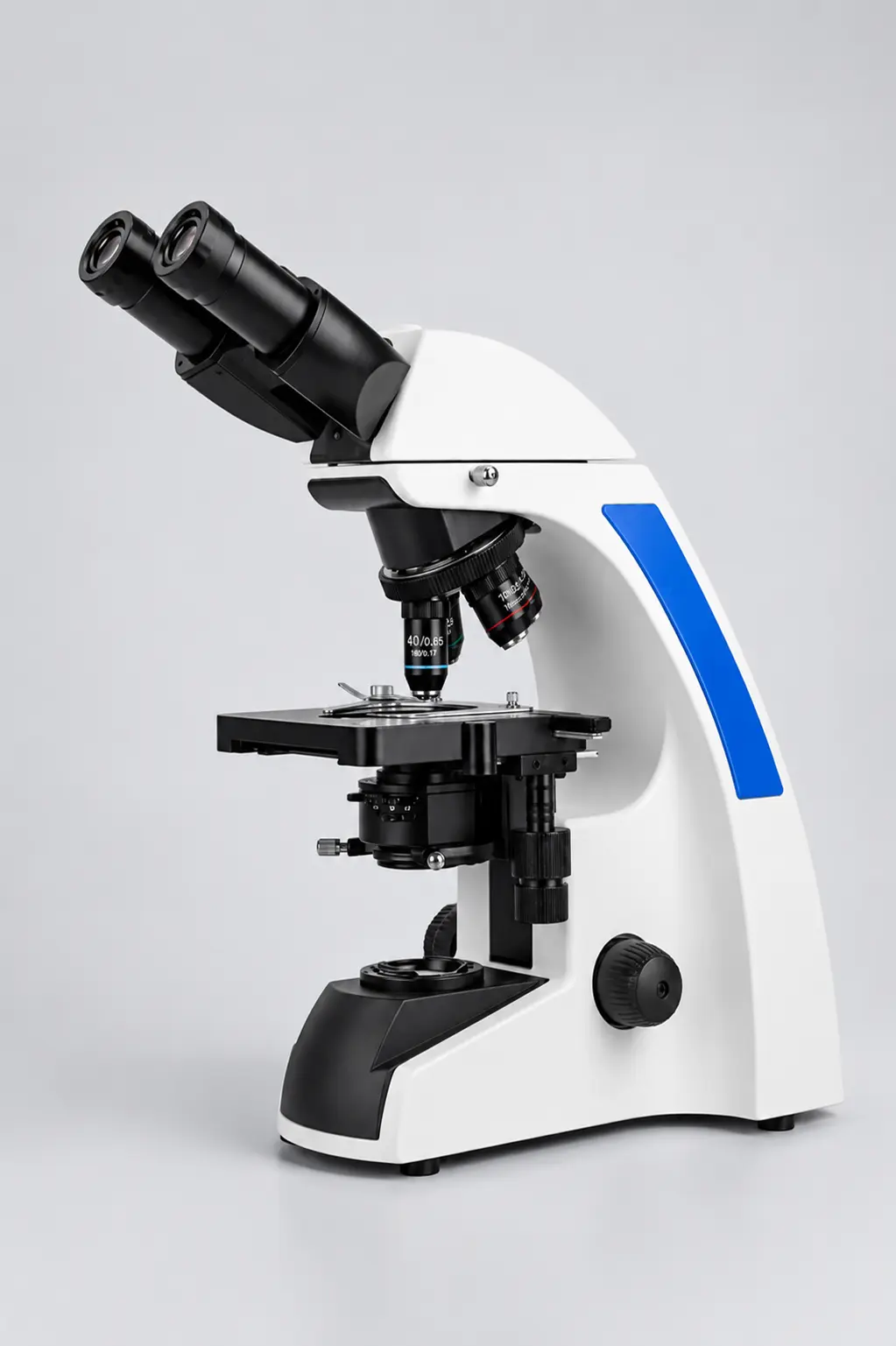
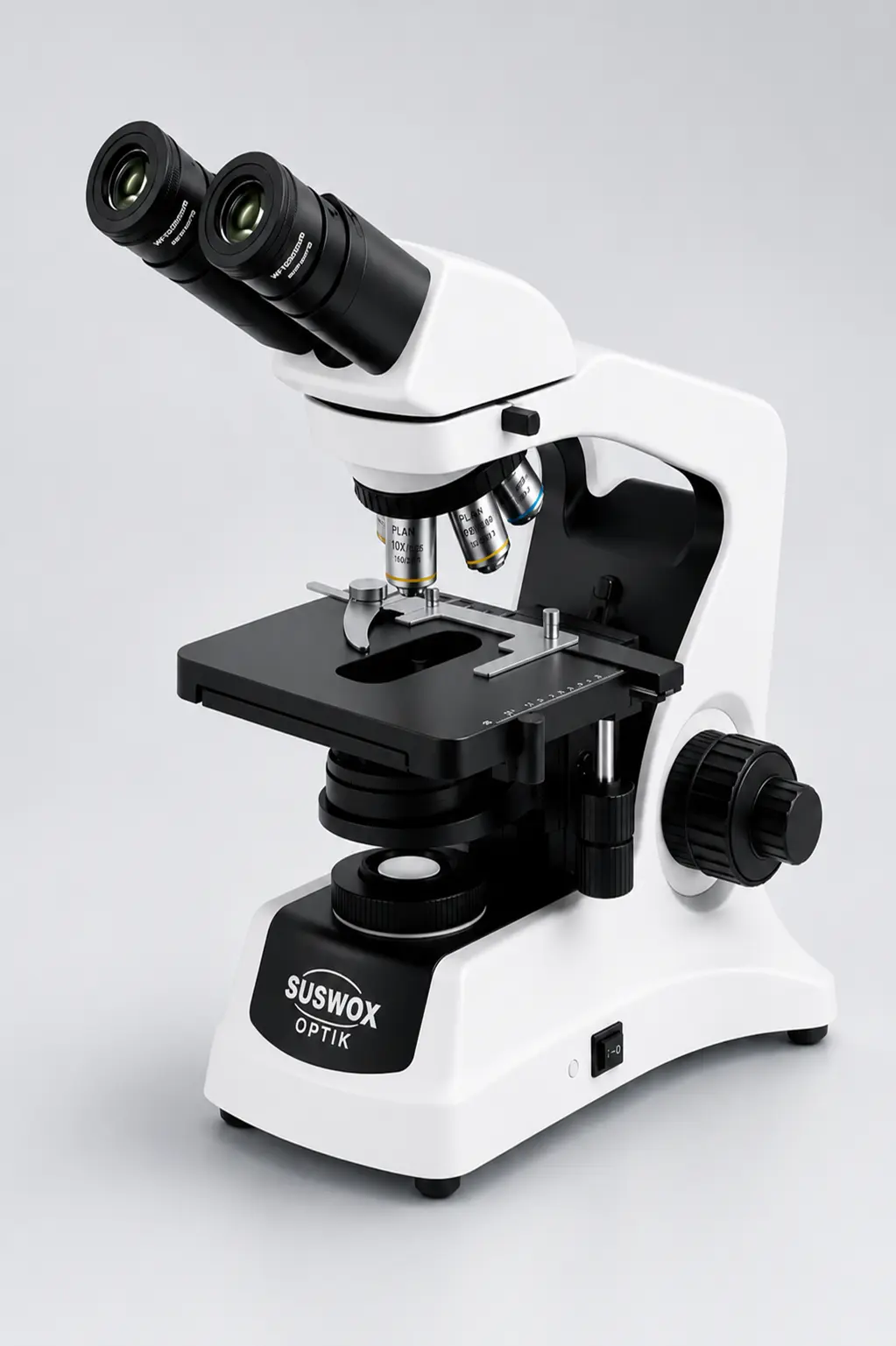
Stereo Microscope vs Compound Microscope
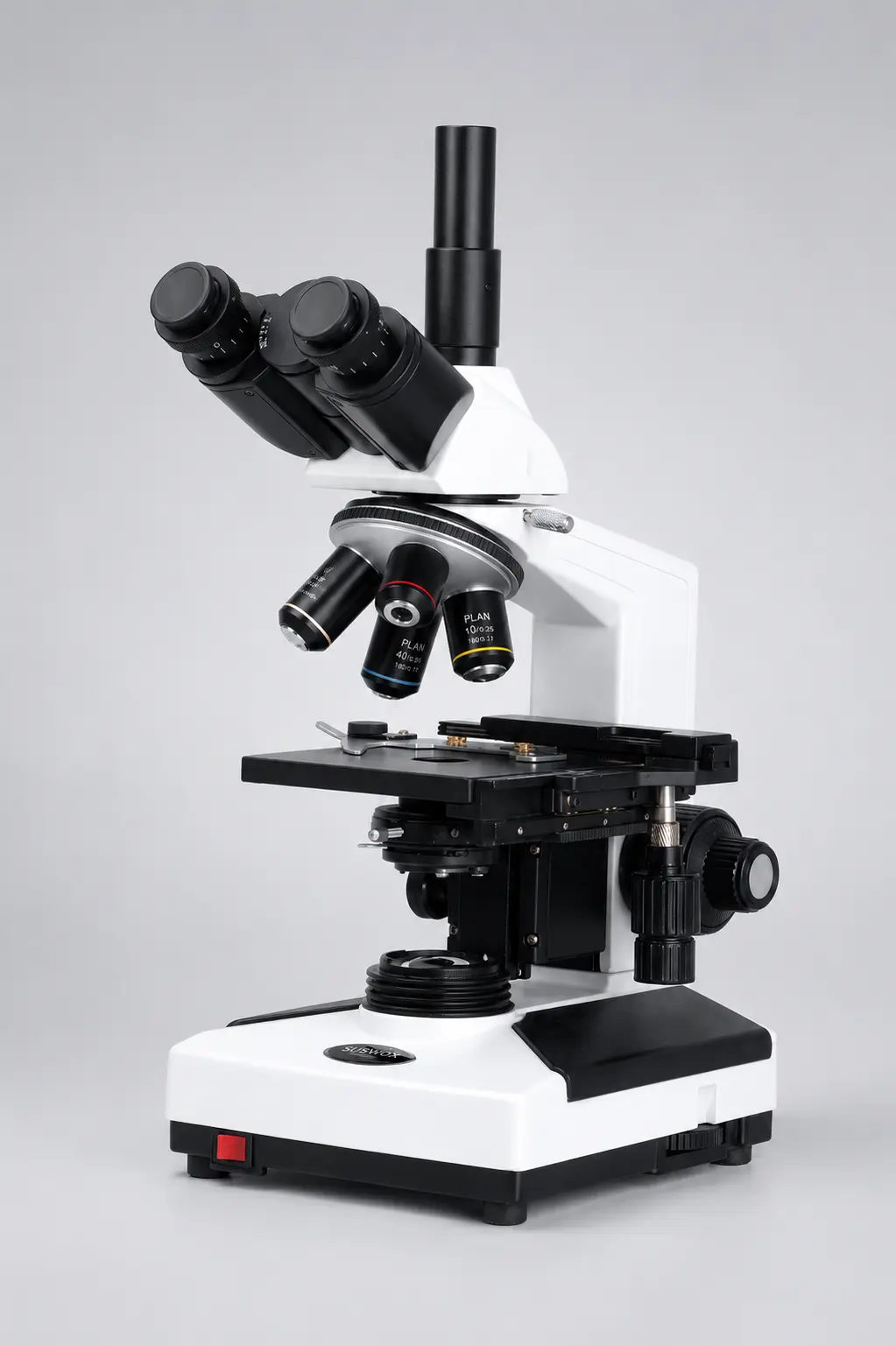
The short version: a compound microscope looks through a thin, stained slide at high magnification (40X to 1000X) and gives a flat 2D image. A stereo microscope looks at the surface of a solid object at low magnification and gives a 3D image.
We have a full comparison in our article on stereo microscope vs compound microscope. If you need to see cells, choose a compound microscope. If you need to see and work on objects, choose a stereo microscope.
How to Choose a Stereo Zoom Microscope
- Zoom range: 7X to 45X covers most work. Go higher only if you inspect very fine features.
- Binocular or trinocular: Choose trinocular if you will record images or show them on a screen.
- Stand type: A track stand suits benches. A boom stand suits large parts or PCBs.
- Lighting: A ring light removes shadows for PCB and metal inspection. Bottom light helps with thin biological samples.
- Working distance: More distance gives you more room for tools.
SUSWOX Stereo Zoom Microscopes
We make a full range of stereo zoom microscopes in Ambala:
- STZ-Bi Stereo Microscope: a professional binocular stereo zoom for labs and inspection.
- SPZ-Bi Stereo Microscope: a versatile binocular stereozoom for precision work.
- GZX-8 T Zoom Microscope: a trinocular model for industrial inspection with a camera.
- GZX-12 Stereo Microscope: parallel-optics zoom for high-precision industrial and research use.
Frequently Asked Questions
What is a stereo microscope used for?
A stereo microscope is used to view and work on solid objects in 3D at low magnification. Common uses include dissection, PCB and mobile repair, quality inspection, jewellery, watch repair and forensics.
What is the principle of a stereo microscope?
A stereo microscope sends two slightly different images to the two eyes through separate optical paths set at an angle. The brain combines them into a single 3D image with depth.
What is the magnification of a stereo microscope?
Most stereo microscopes magnify between 7X and 45X. With 20X eyepieces or auxiliary lenses, some models reach 90X or more.
Is a stereo microscope the same as a dissecting microscope?
Mostly, yes. A dissecting microscope is a type of stereo microscope used in biology labs. Stereo zoom microscopes add continuous zoom, better optics and options for cameras and industrial stands.
Why does a stereo microscope give a 3D image?
Because each eye looks at the object from a slightly different angle, just like normal human vision. The brain turns that difference into depth.
Looking for a stereo microscope for your lab or workshop? Tell us what you inspect and we will recommend the right zoom range and stand.