
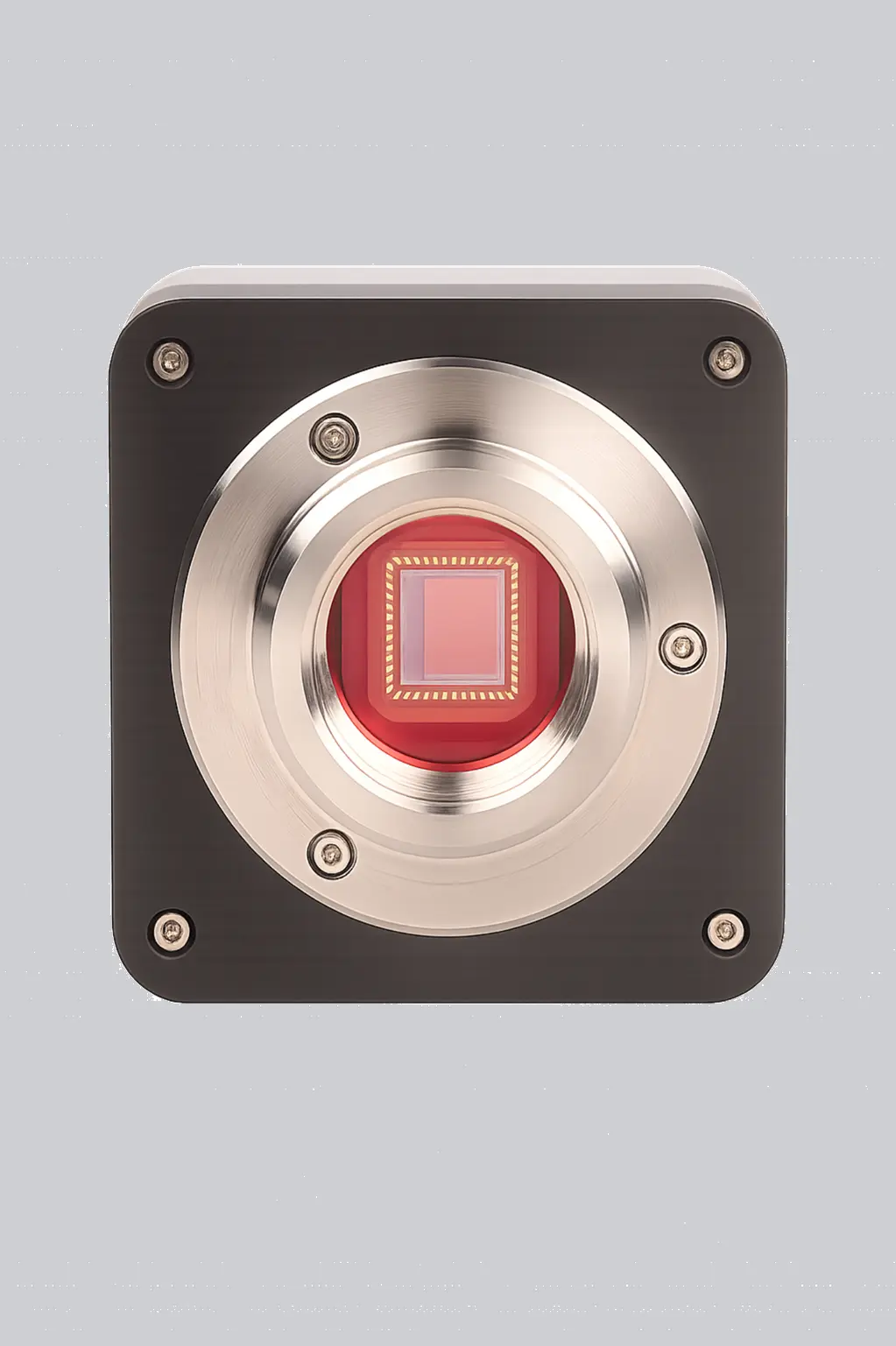
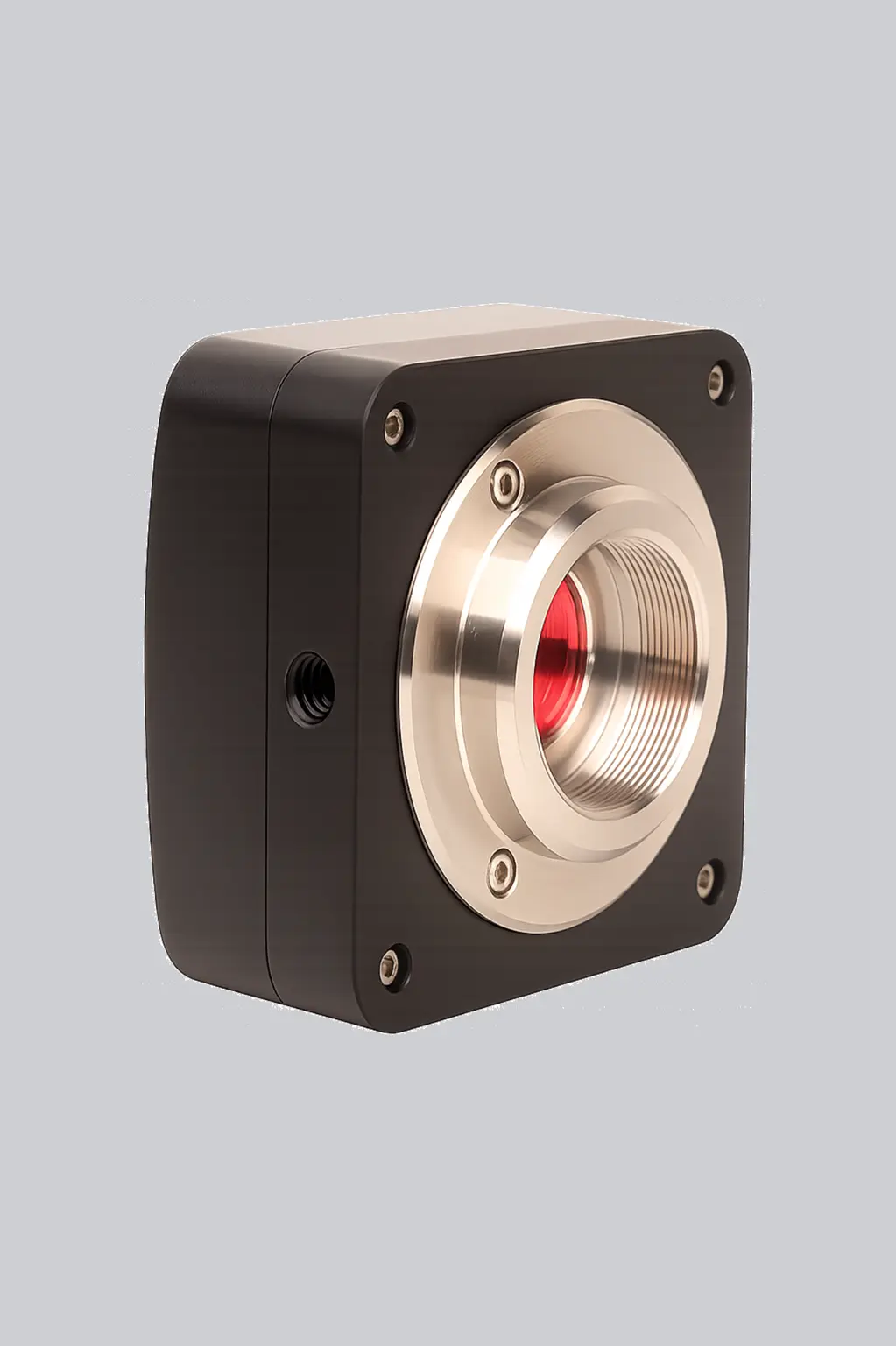
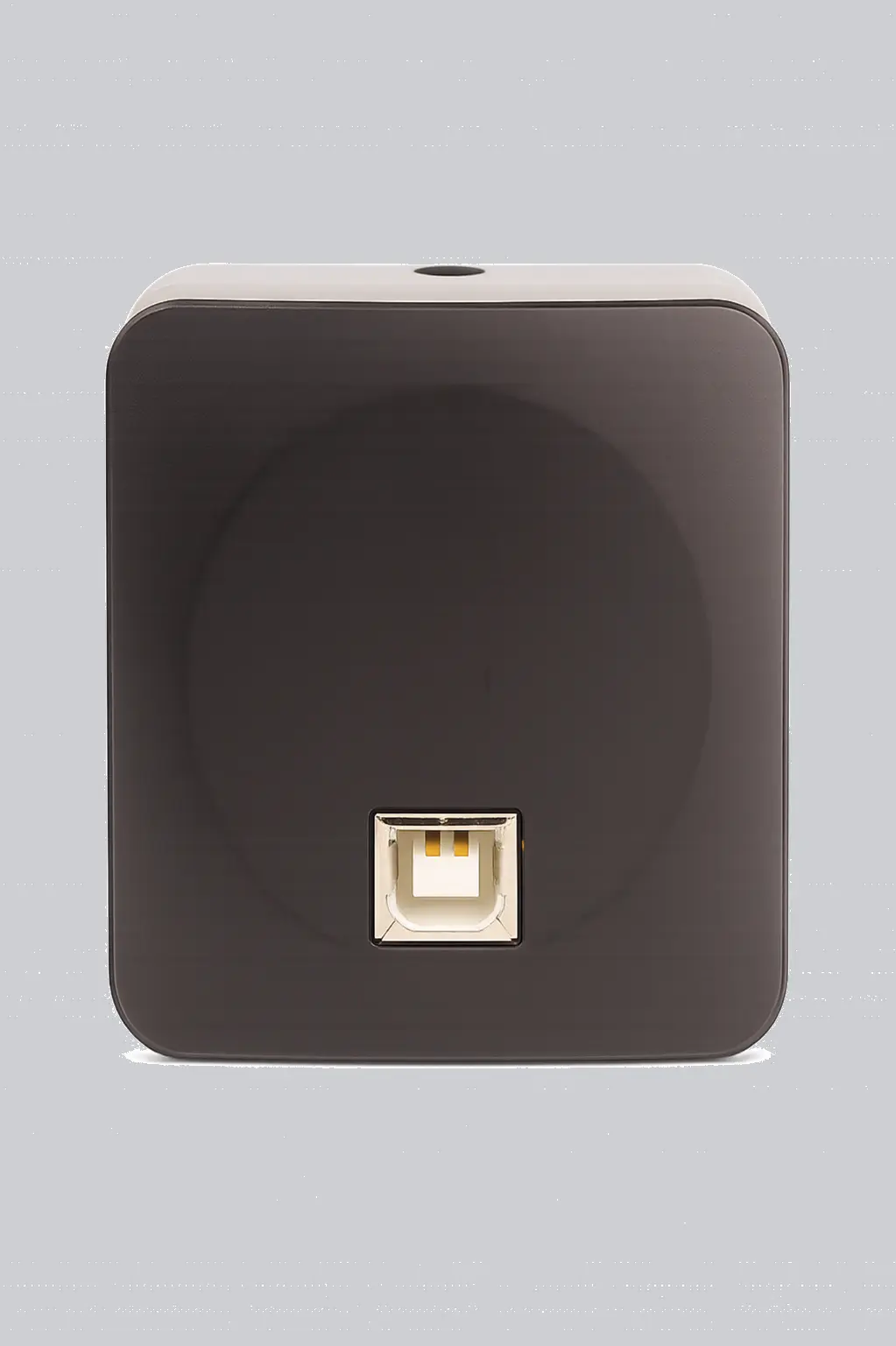
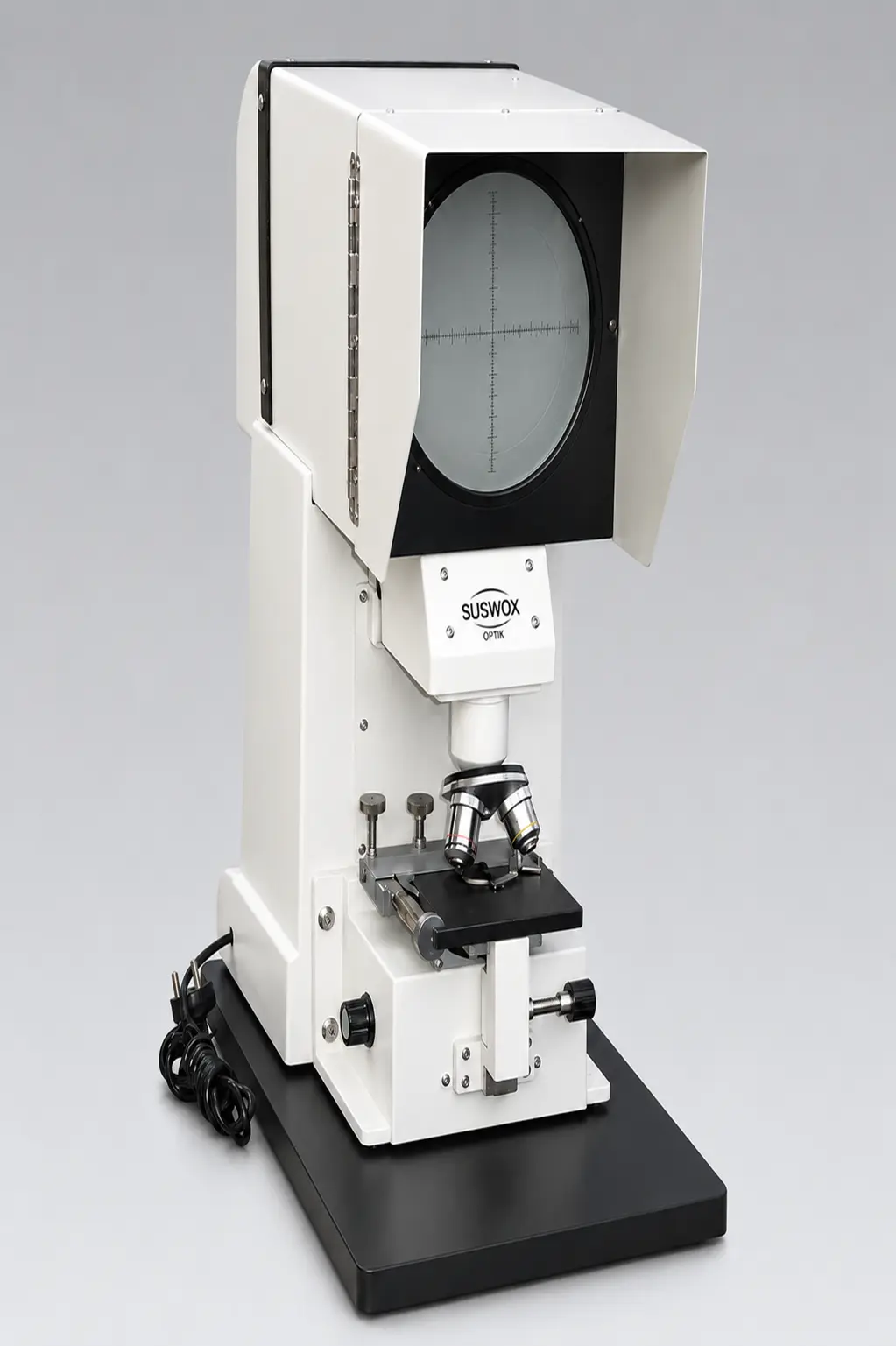
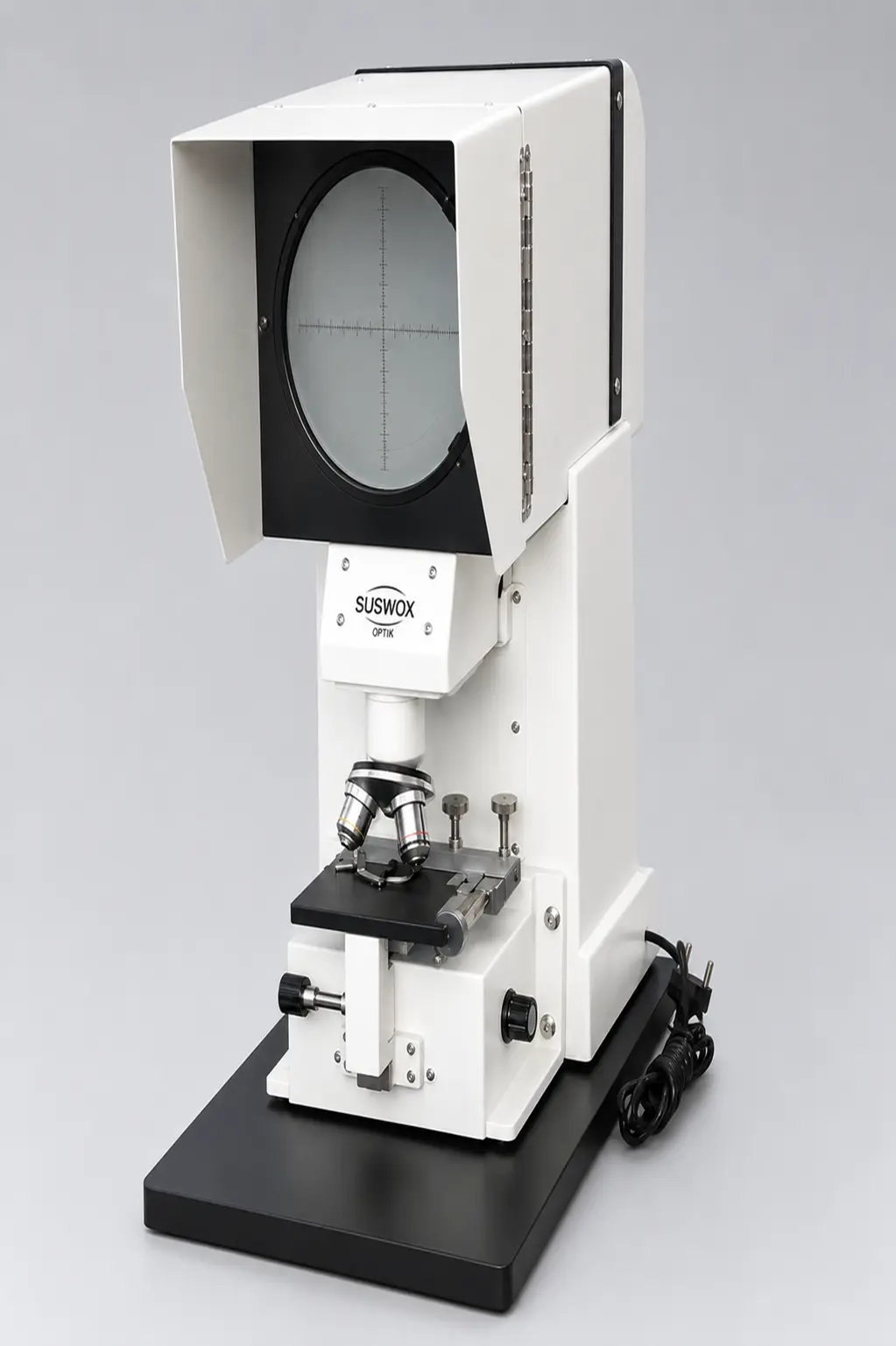
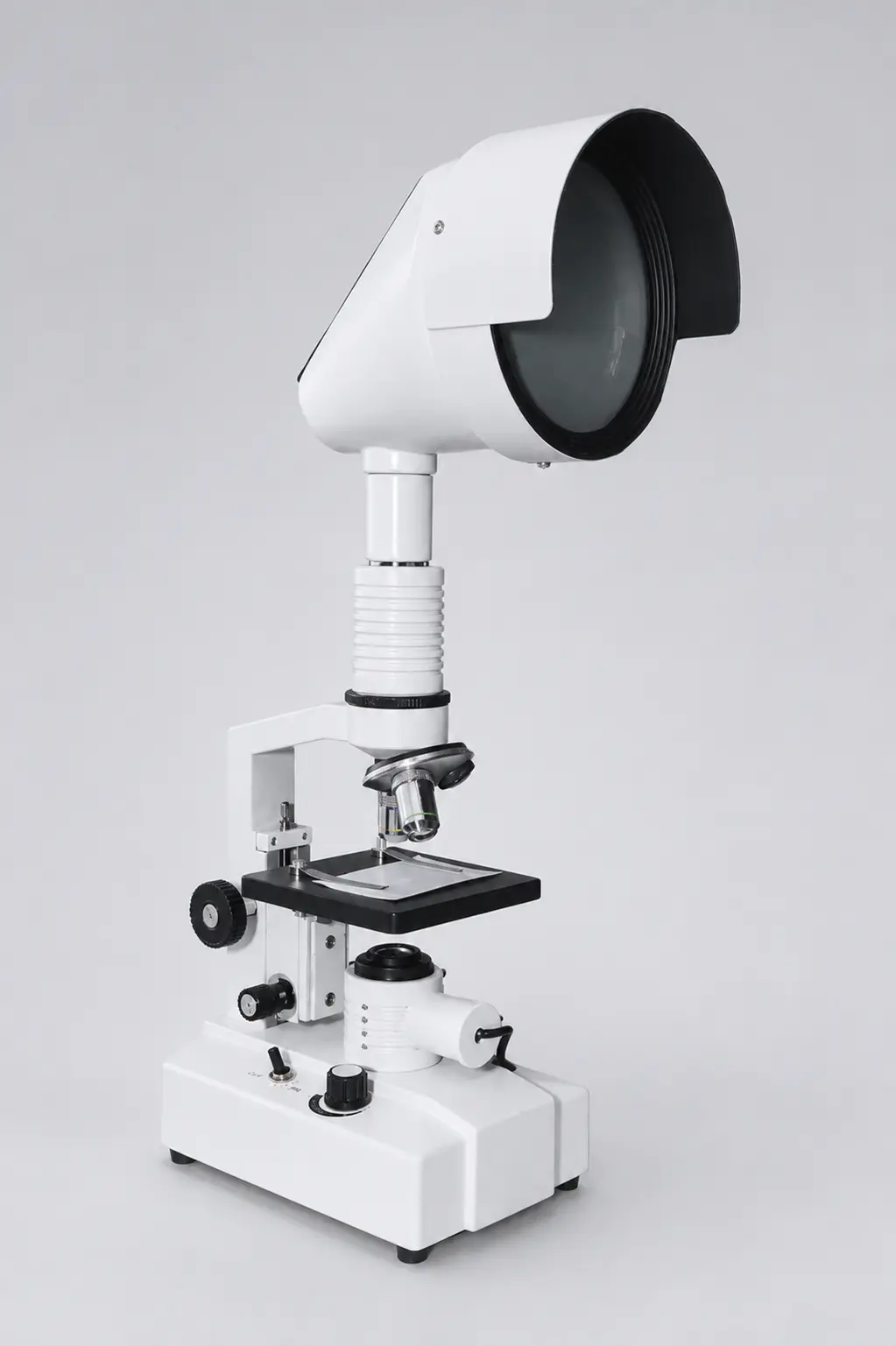
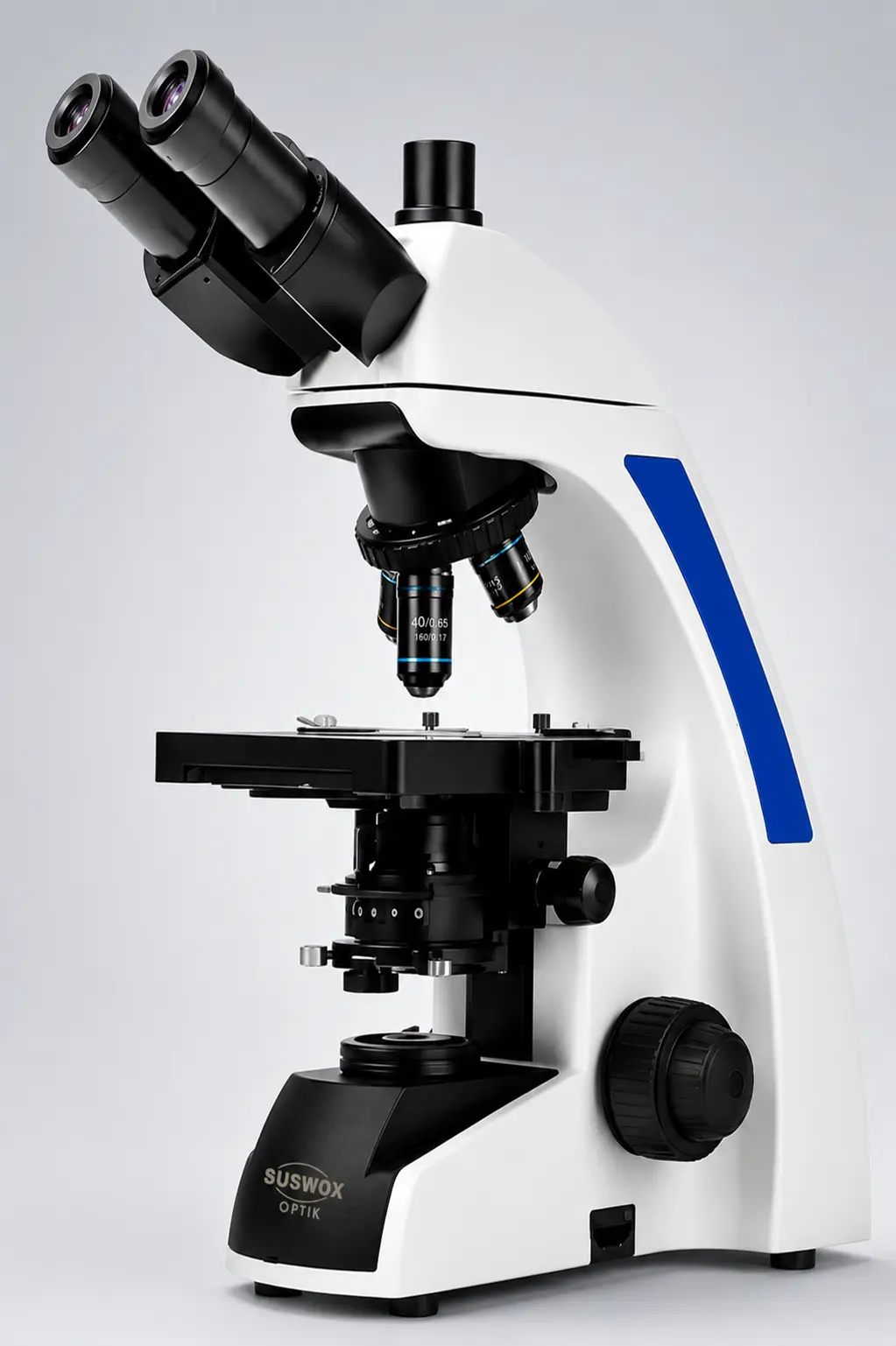
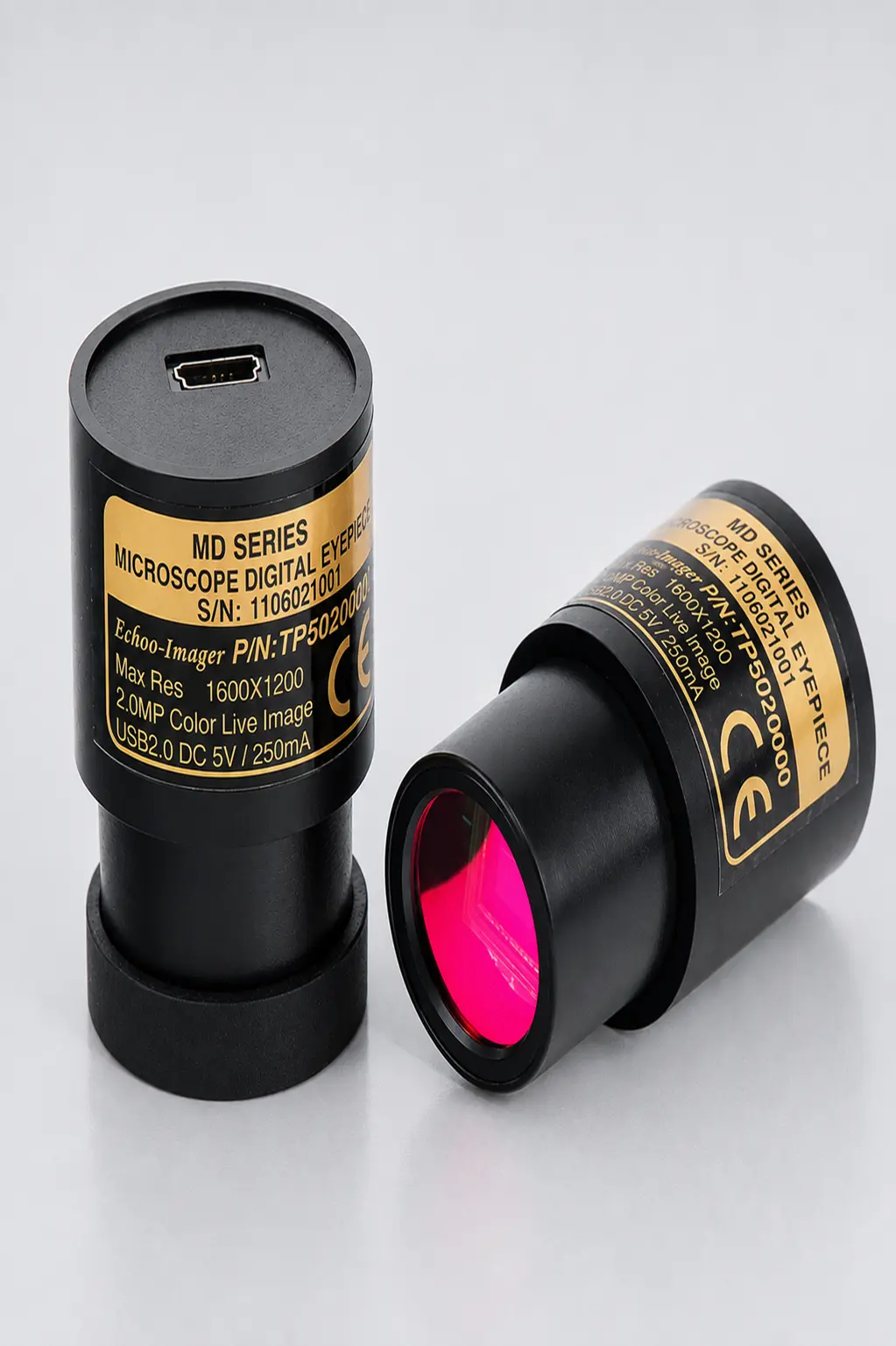
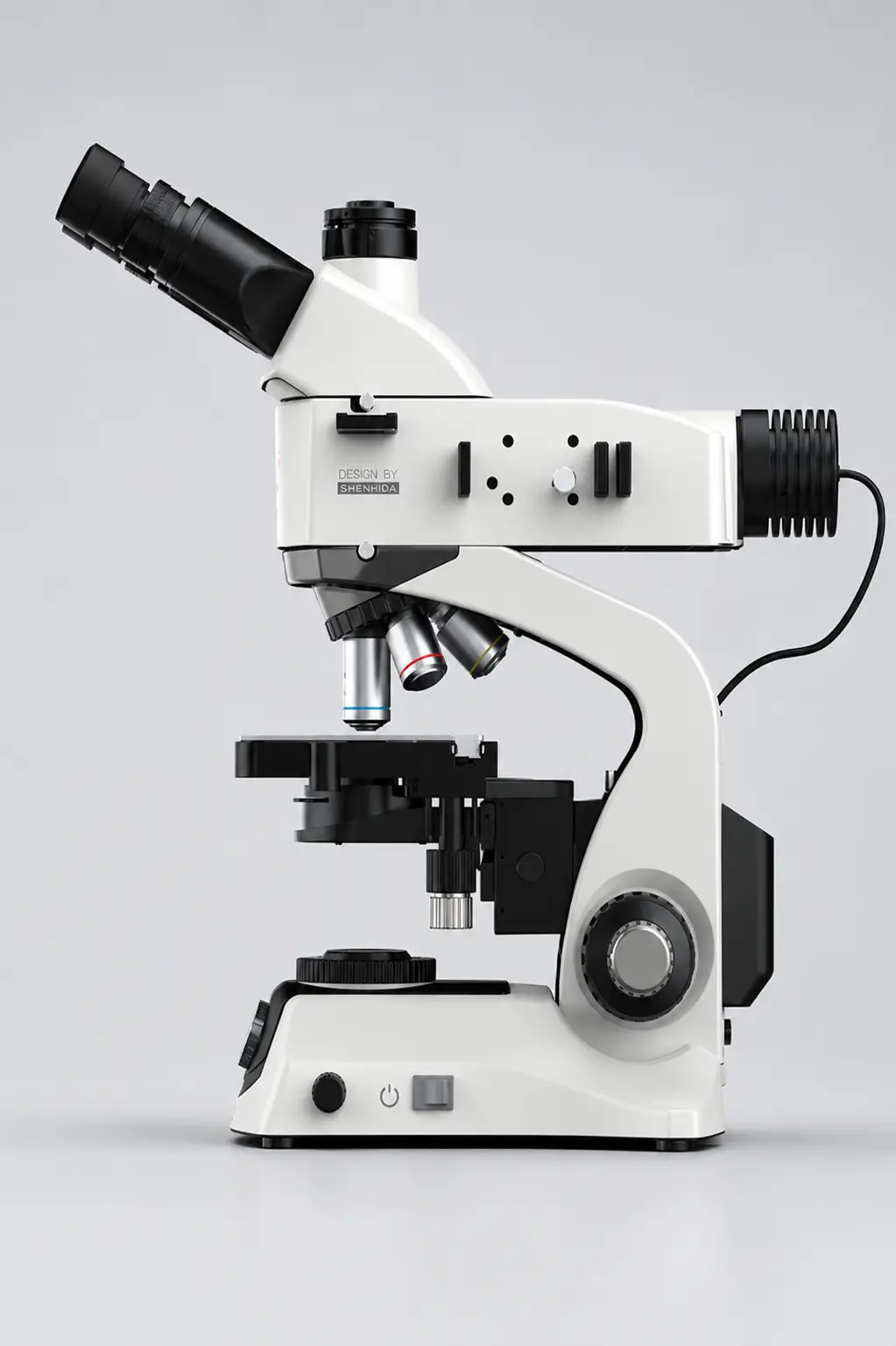
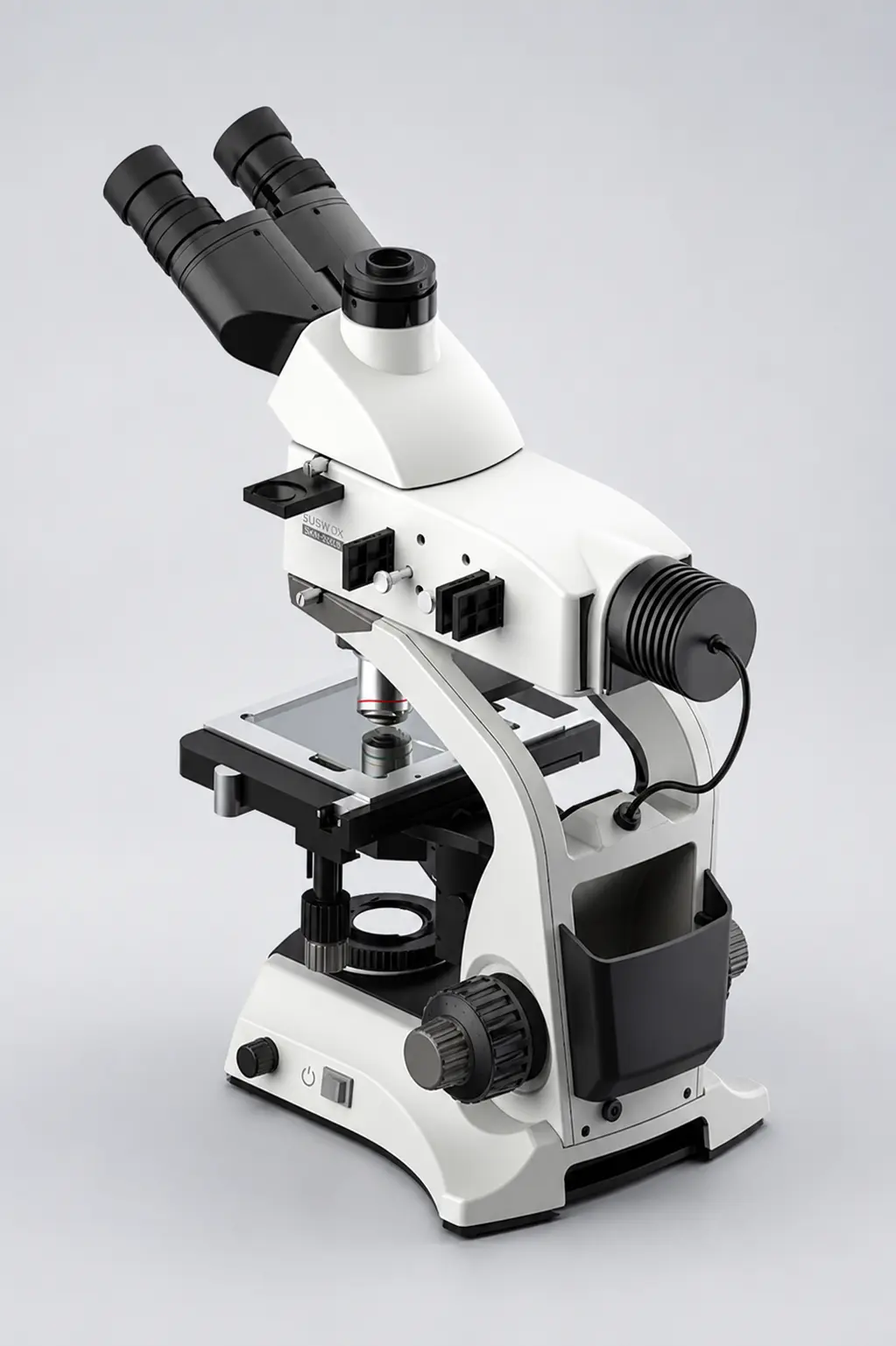
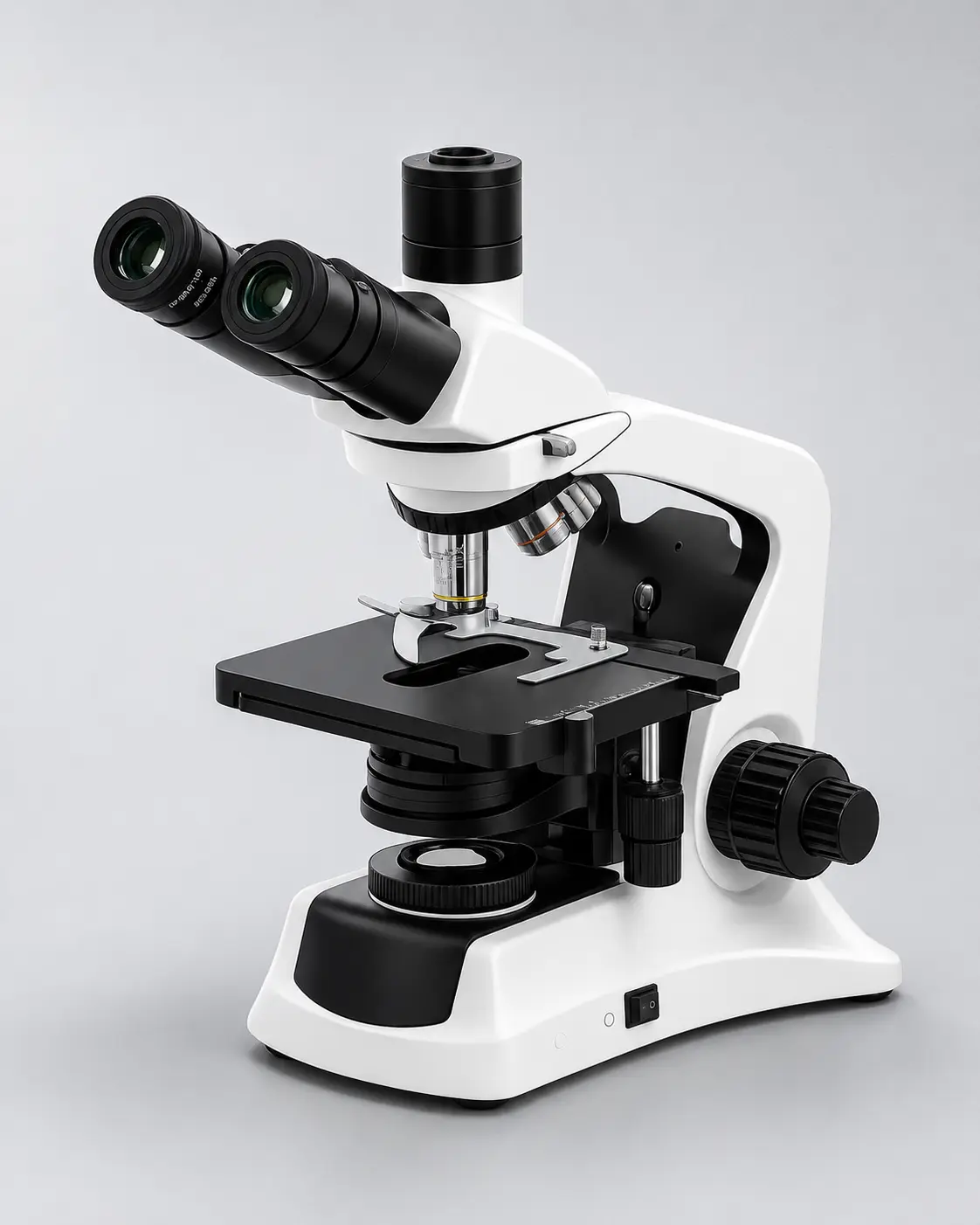
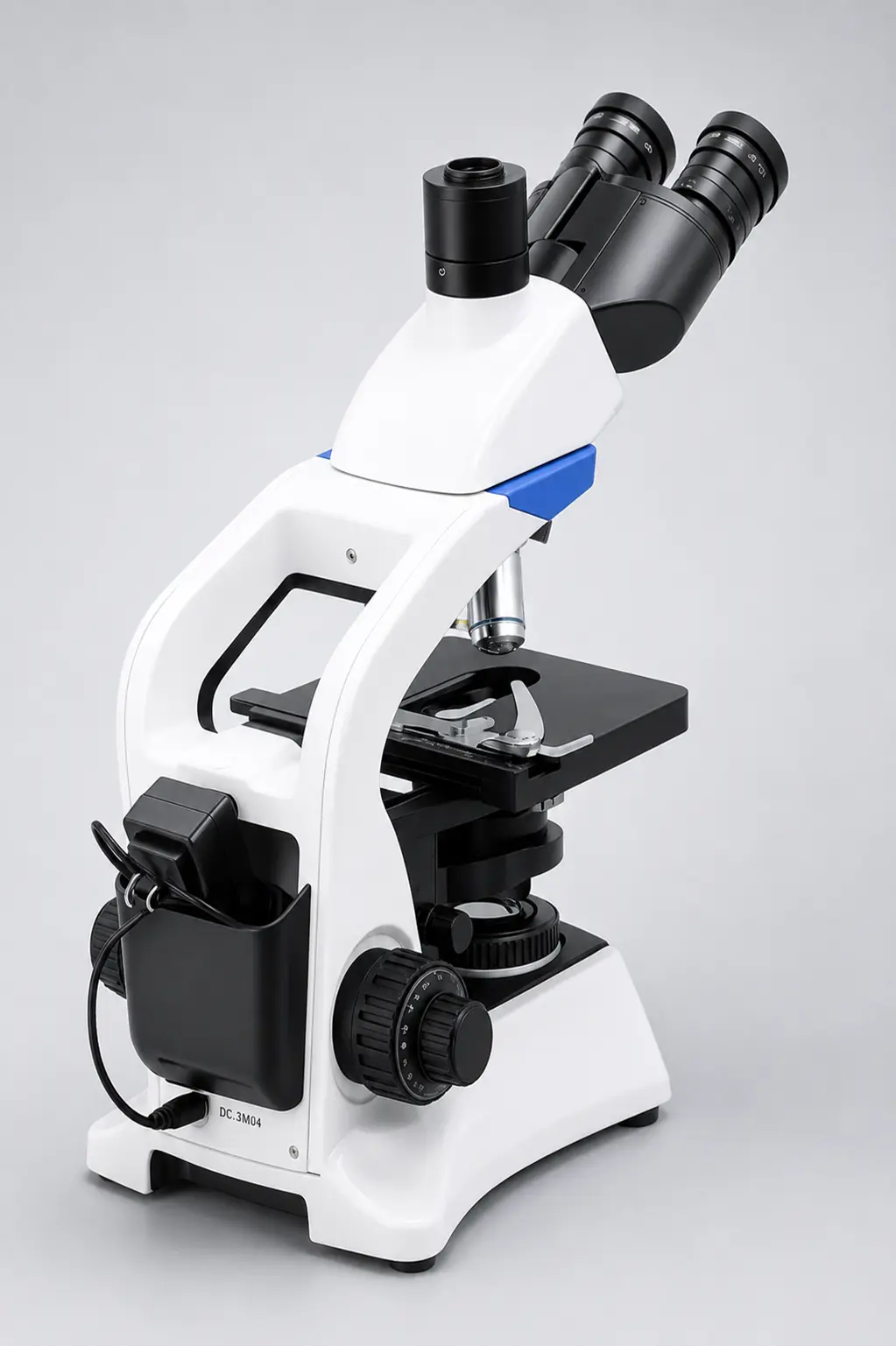
The UCMOS series features C-mount USB2.0 microscopy cameras designed for educational, routine scientific research, and general industrial documentation applications. Equipped with high-sensitivity, low-noise CMOS sensors (Aptina/onsemi and others, model dependent), these cameras achieve plug-and-play operation with excellent compatibility through 480 Mbit/s USB2.0 connectivity, ensuring simple installation and deployment. Resolution coverage spans approximately 0.35–14 MP with aluminum alloy CNC precision construction providing durability and reliability for long-term stable operation.
The built-in Ultra-Fine color processing engine performs demosaicing, auto exposure/gain control, one-click white balance, and color/gamma/contrast optimization on the camera/software side, delivering natural and consistent color presentation. Each camera includes ToupView/ToupLite software and provides cross-platform SDK support (Windows/Linux/macOS/Android) for convenient system integration and secondary development.
Maximum total magnification
ABBE double-lens condenser
Rated LED lamp life
SMPS, handles Indian supply swings
| Specification | Details |
|---|---|
| Sensor Optical Format | 1/2.8″ |
| Active Pixels | 2M |
| Pixel Size | 2.9µm x 2.9µm |
| Active Sensor Area | 5.57mm x 3.13mm |
| Specification | Details |
|---|---|
| Video Resolution | 1920 x 1080 |
| Video Framerate | 30fps |
| Video Capture | Supported |
| Photo Capture | Button snap/timed snap |
| Image Adjustment Parameters | Saturation / Hue / Brightness / Contrast / Monochrome / Flip vertical / Flip horizontal / FOV |
| Calibration and Measurement | Supported |
| Microscope Mount | 42.5 / 42 / 44 mm |
| Power | 5VDC 1A |
| Specification | Details |
|---|---|
| Screen Size | 7″ (diagonal) |
| Panel Type | IPS |
| Storage | SD Card |
| Dimensions | 182mm x 125mm x 85mm |
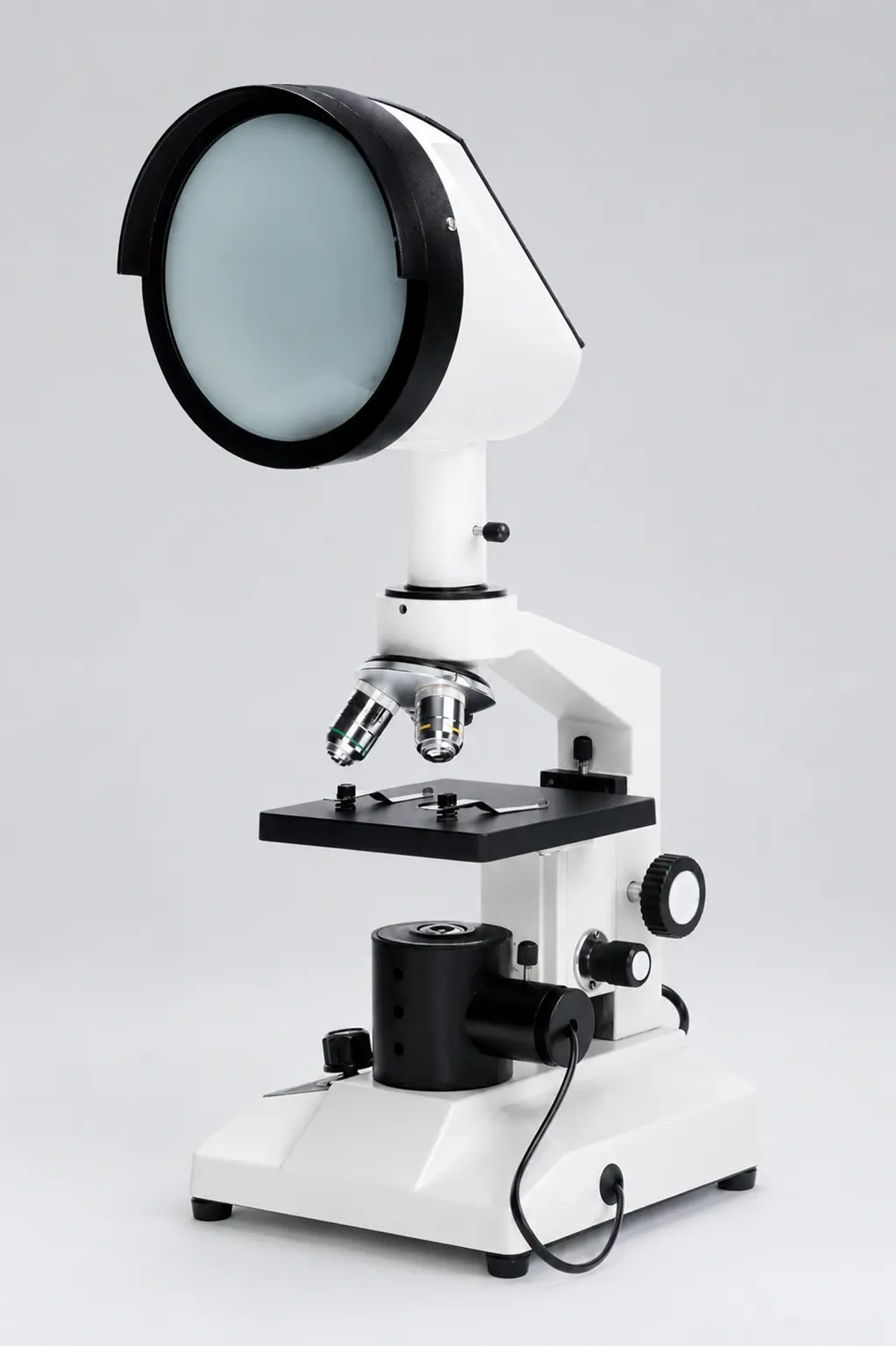
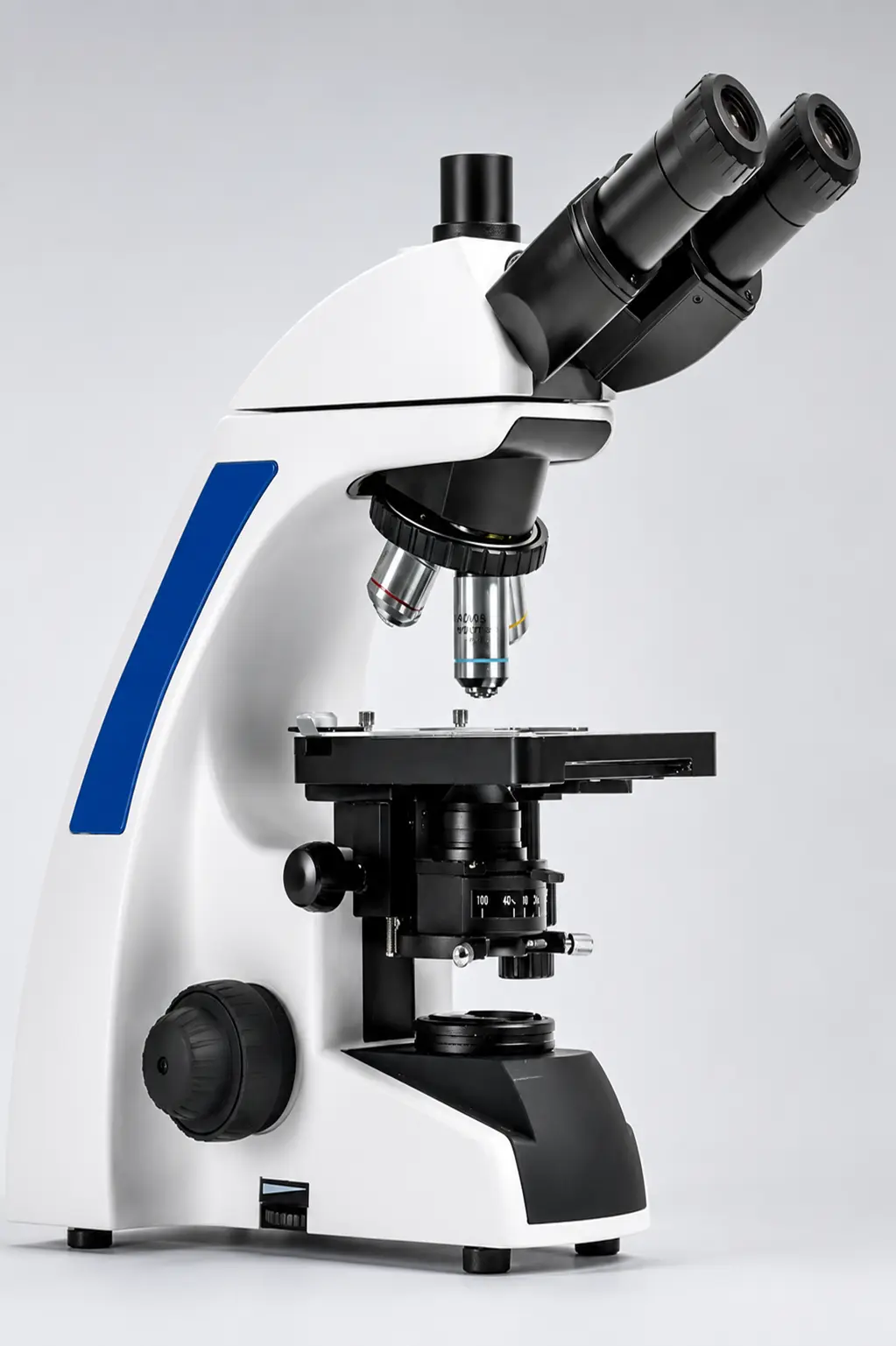
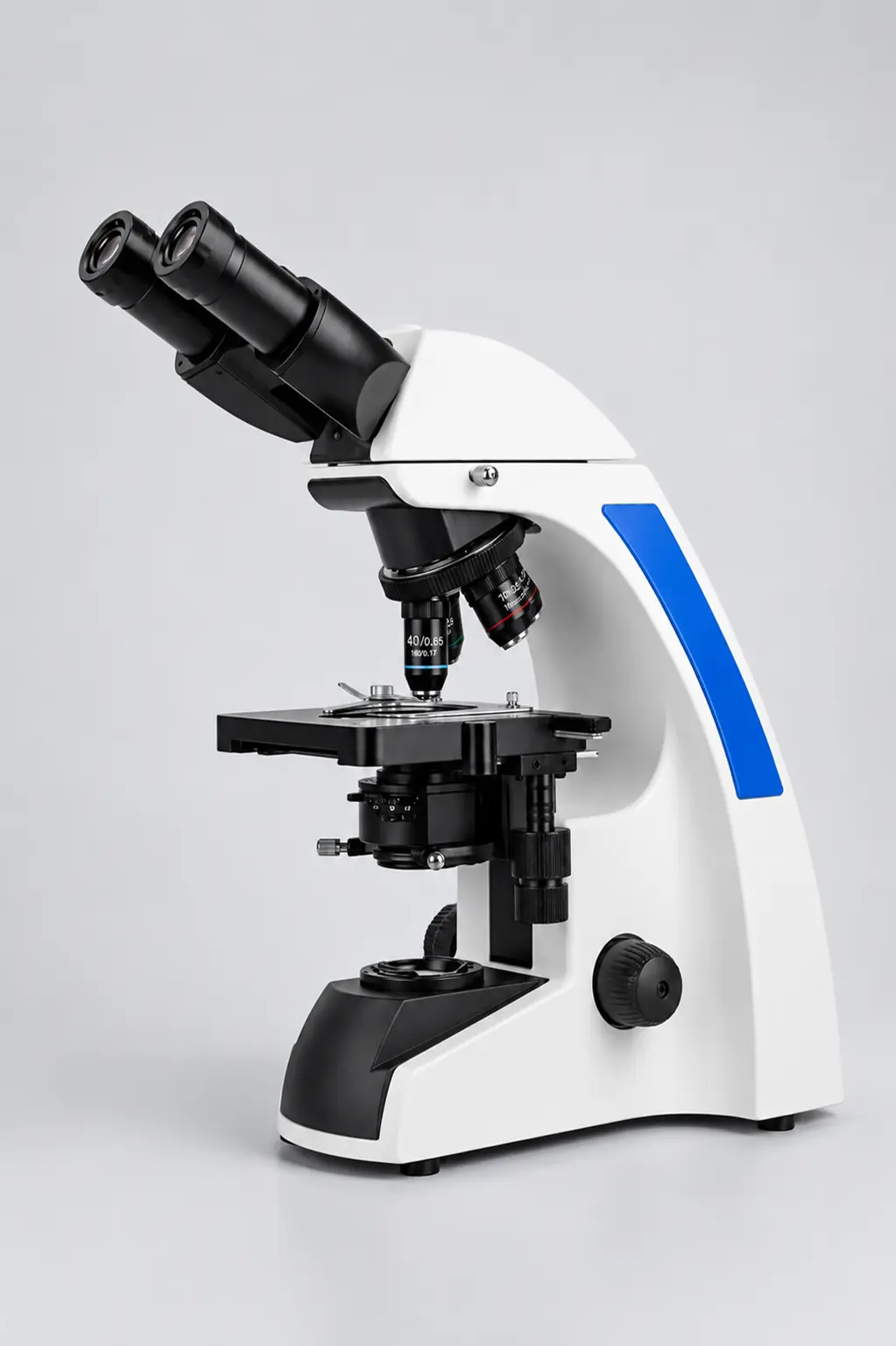
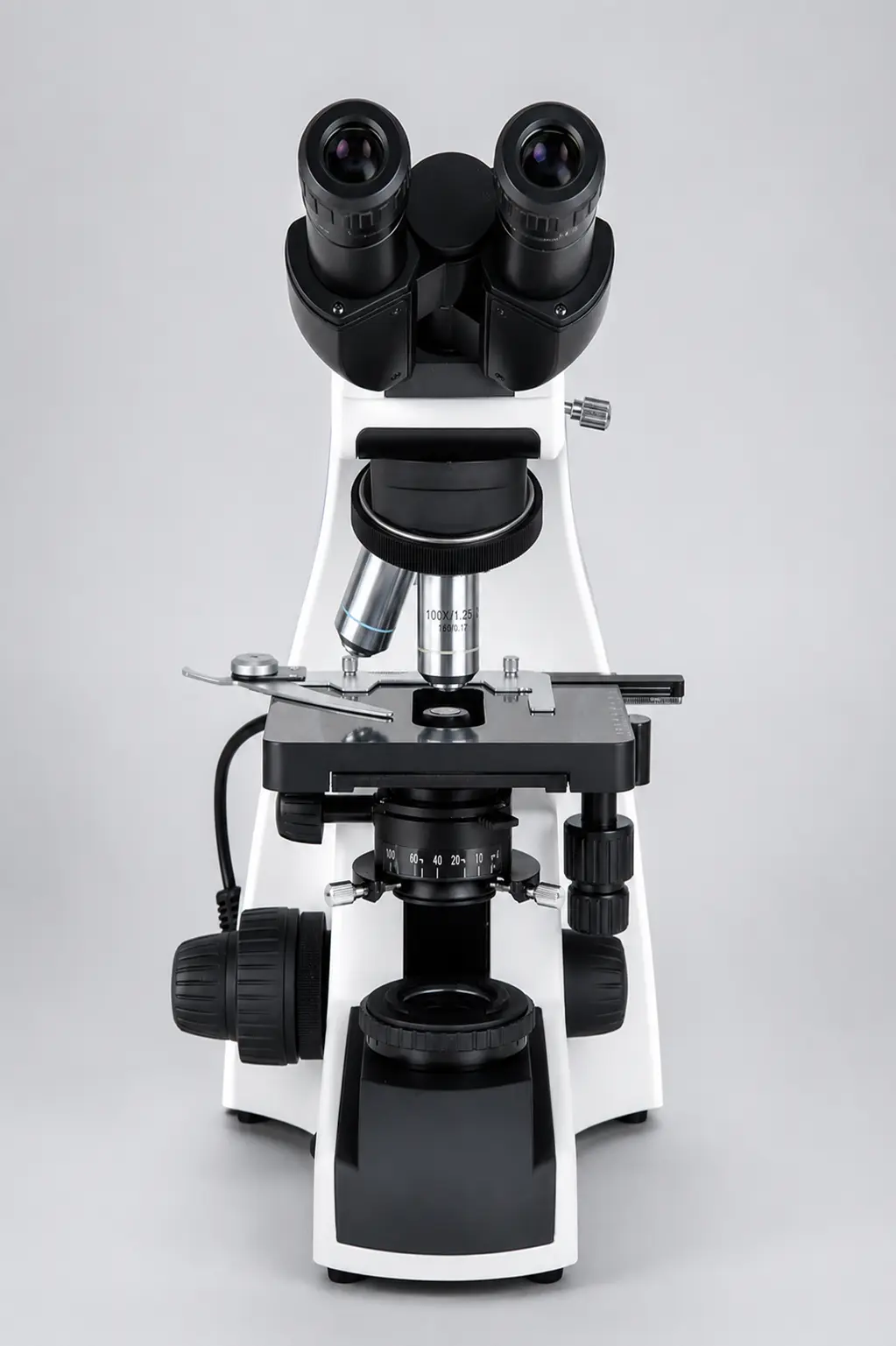
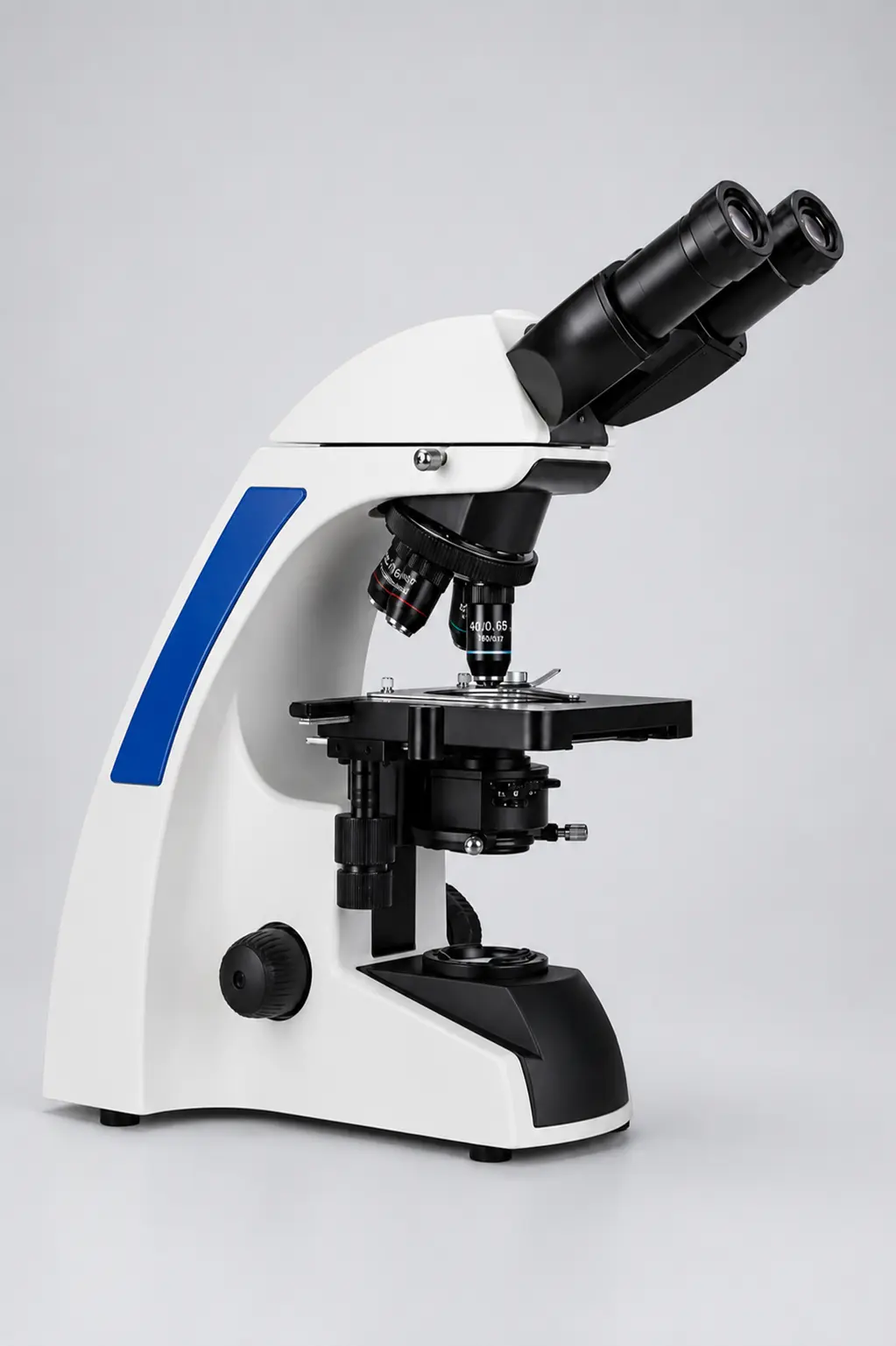
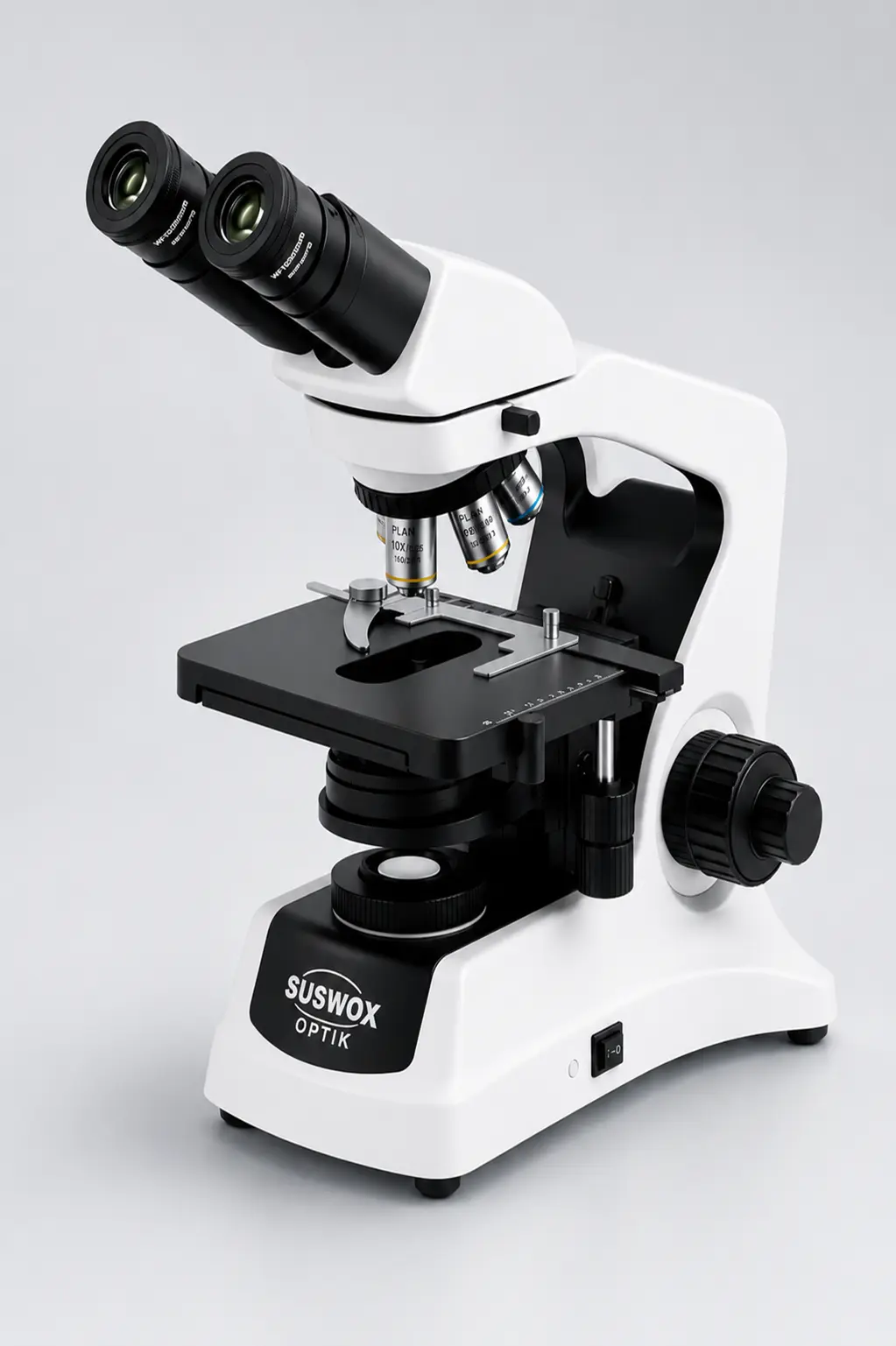
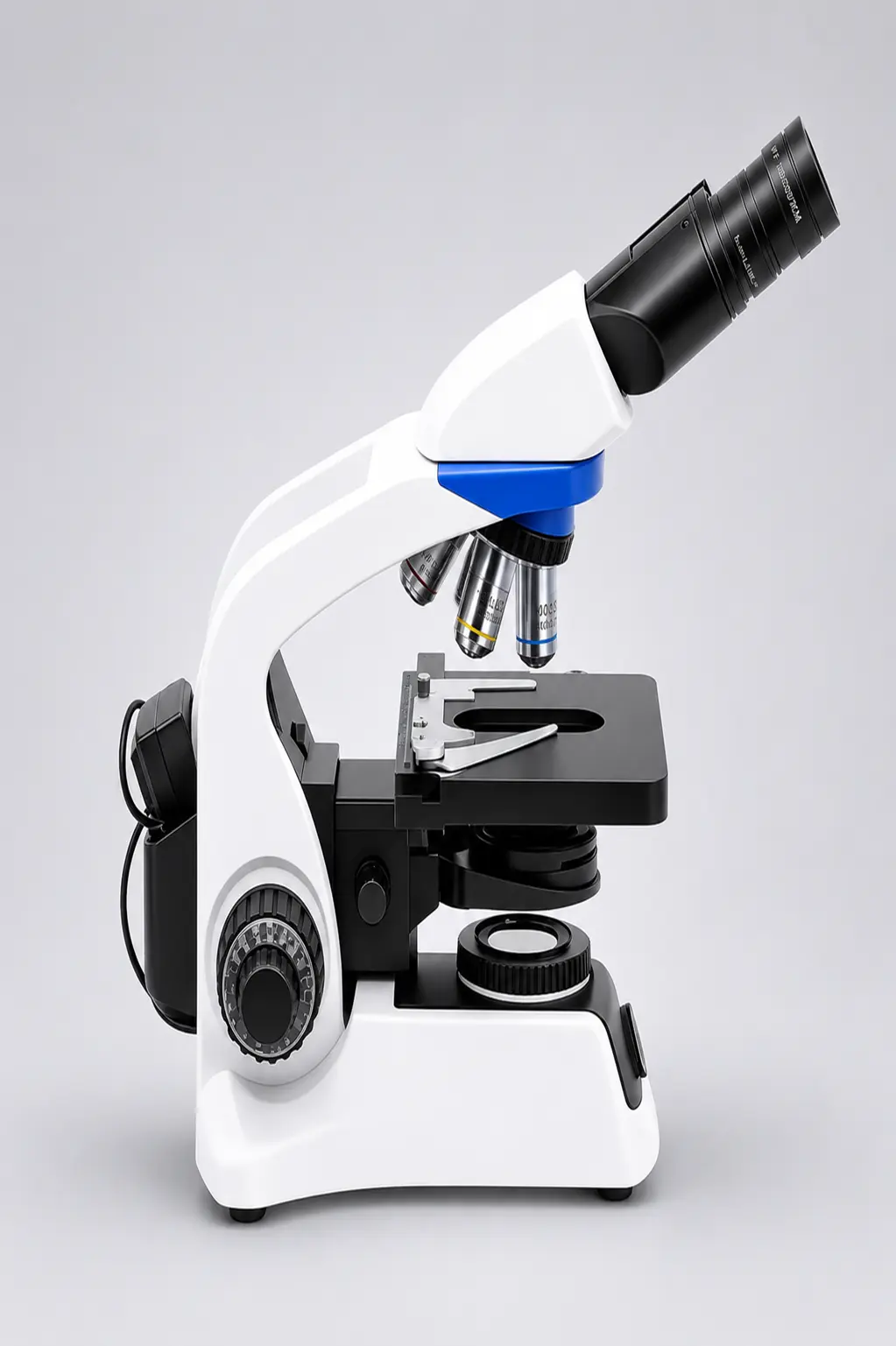
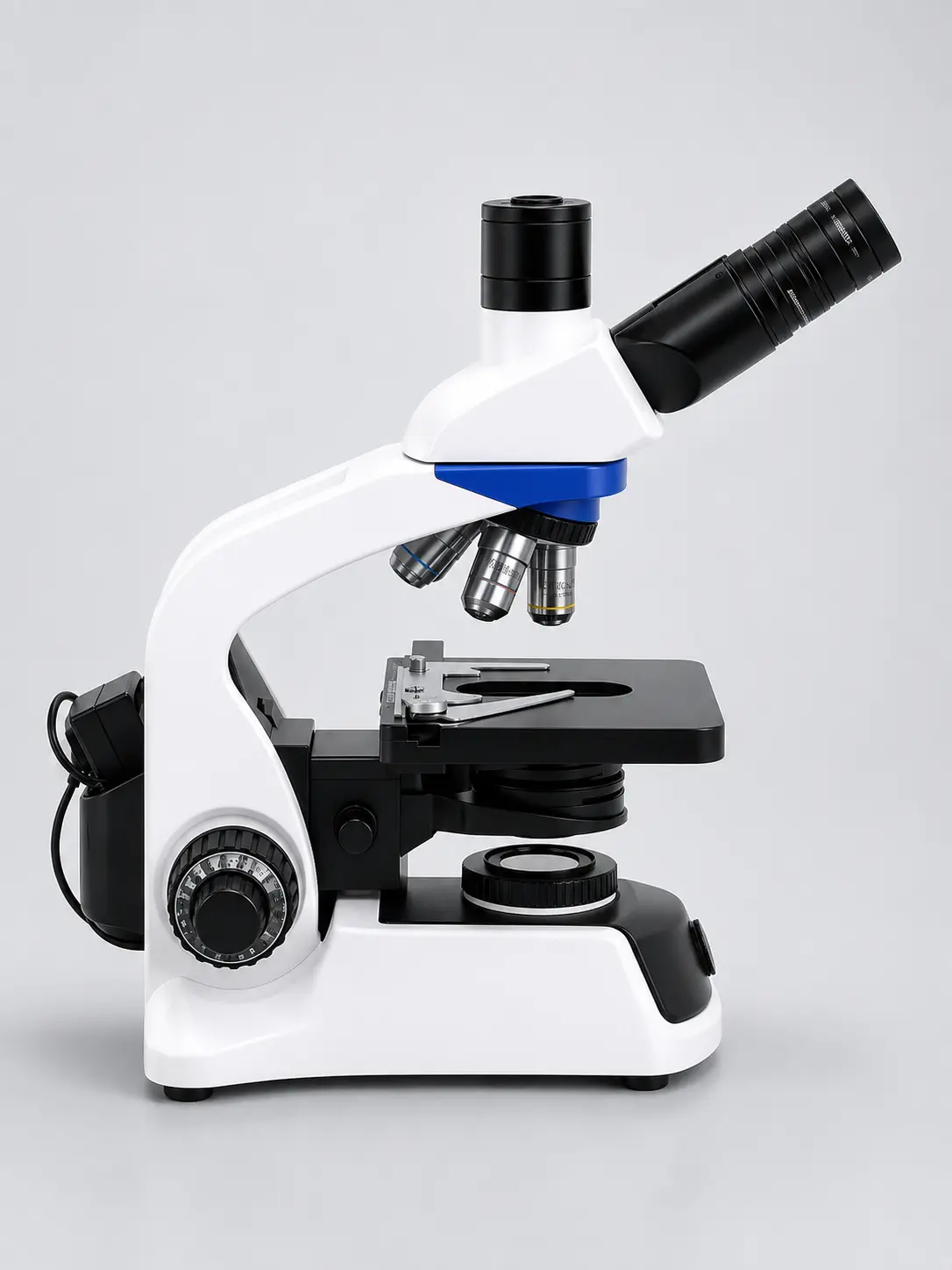
1000×. The WF10X eyepieces multiply with the 100X oil immersion objective, giving 40×, 100×, 400× and 1000× across the four positions on the nosepiece. Beyond 1000× you gain no additional detail with this optical system — you are only enlarging an image the numerical aperture has already limited.
You need it for the 100X objective. Without oil filling the gap between the coverslip and the front lens, light bends away at the glass–air boundary and the effective N.A. drops well below 1.25 — the image goes dim and soft. A vial is included in the box. Wipe the objective with lens tissue after each session.
Semi-plan objectives give a flat, sharp image across roughly 80% of the field, with slight softening at the extreme edge. Plan objectives correct the full field but cost significantly more. For routine screening and teaching, semi-plan is the practical choice; for photomicrography where edge-to-edge sharpness is published, ask us about the plan upgrade.
LED for almost every lab. It runs at 50,000 hours against roughly 1,000 for halogen, stays cool so it does not dry your specimen, and holds colour temperature as you dim it. Halogen remains available if your protocol was validated on it or you need its warmer spectrum for particular stains.
Yes. The sliding binocular head accepts our XCAM Mini and X Cam C-mount cameras through an adapter. If documentation is a daily requirement rather than an occasional one, consider a trinocular model instead so you keep both eyepieces and the camera port live at the same time.
Stock units dispatch in 3–5 business days. We ship across India by surface and air freight, and export with wooden crating on request. Institutional and tender orders with specific documentation requirements are handled by our sales desk — call +91 8727015757.
The unit carries a one-year warranty on body, optics and electricals. We stock spares — objectives, eyepieces, LED assemblies, stage parts — for ten years from the date of manufacture. Most issues are resolved over a video call; parts ship direct to your lab.
Pricing depends on configuration (LED or halogen, objective set, camera adapter) and order quantity, so we quote per enquiry rather than list a single figure. Send your requirement through the form below or on WhatsApp and you will have a written quotation with GST and freight the same working day.
Lets Have A Chat