
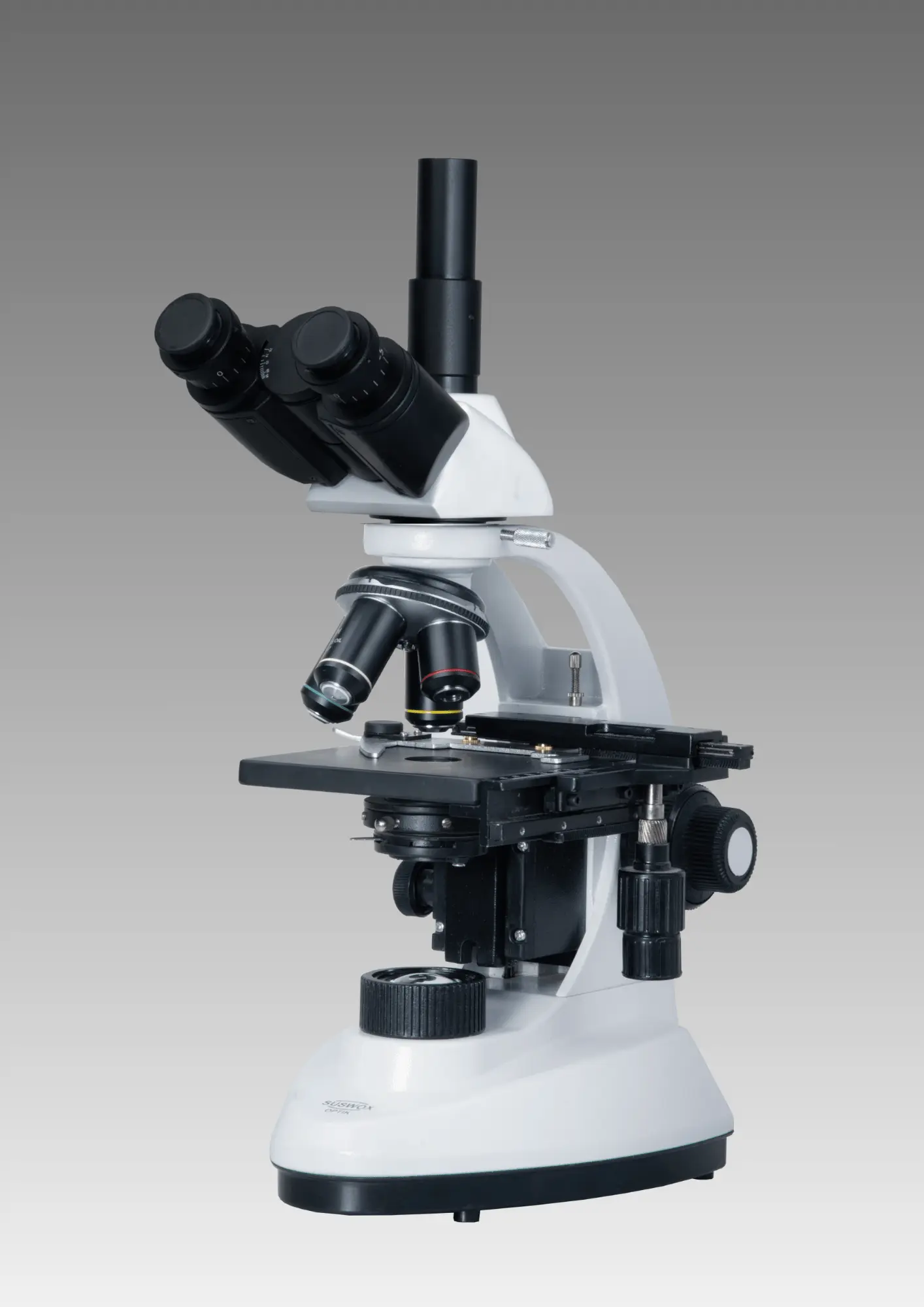
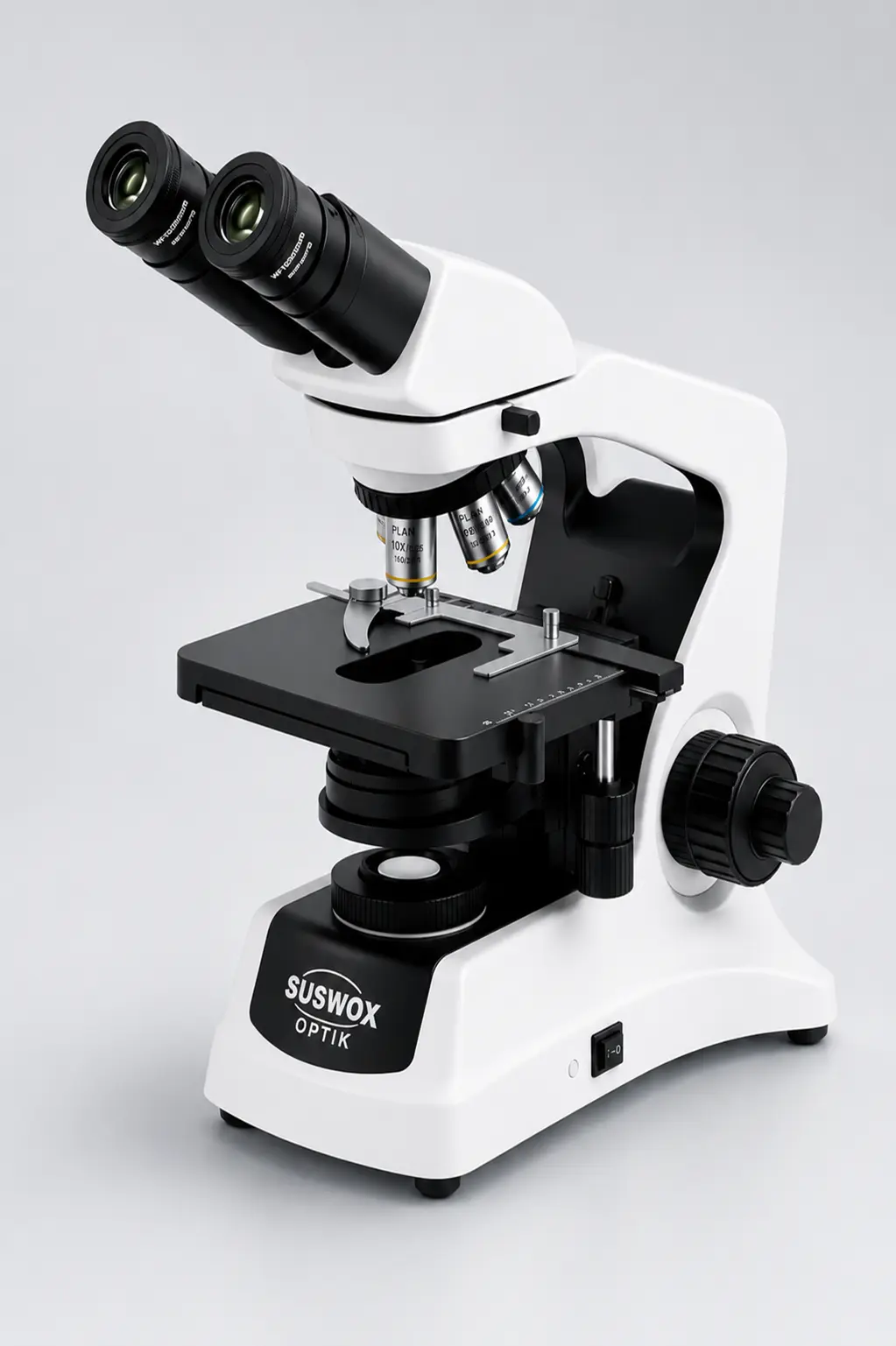
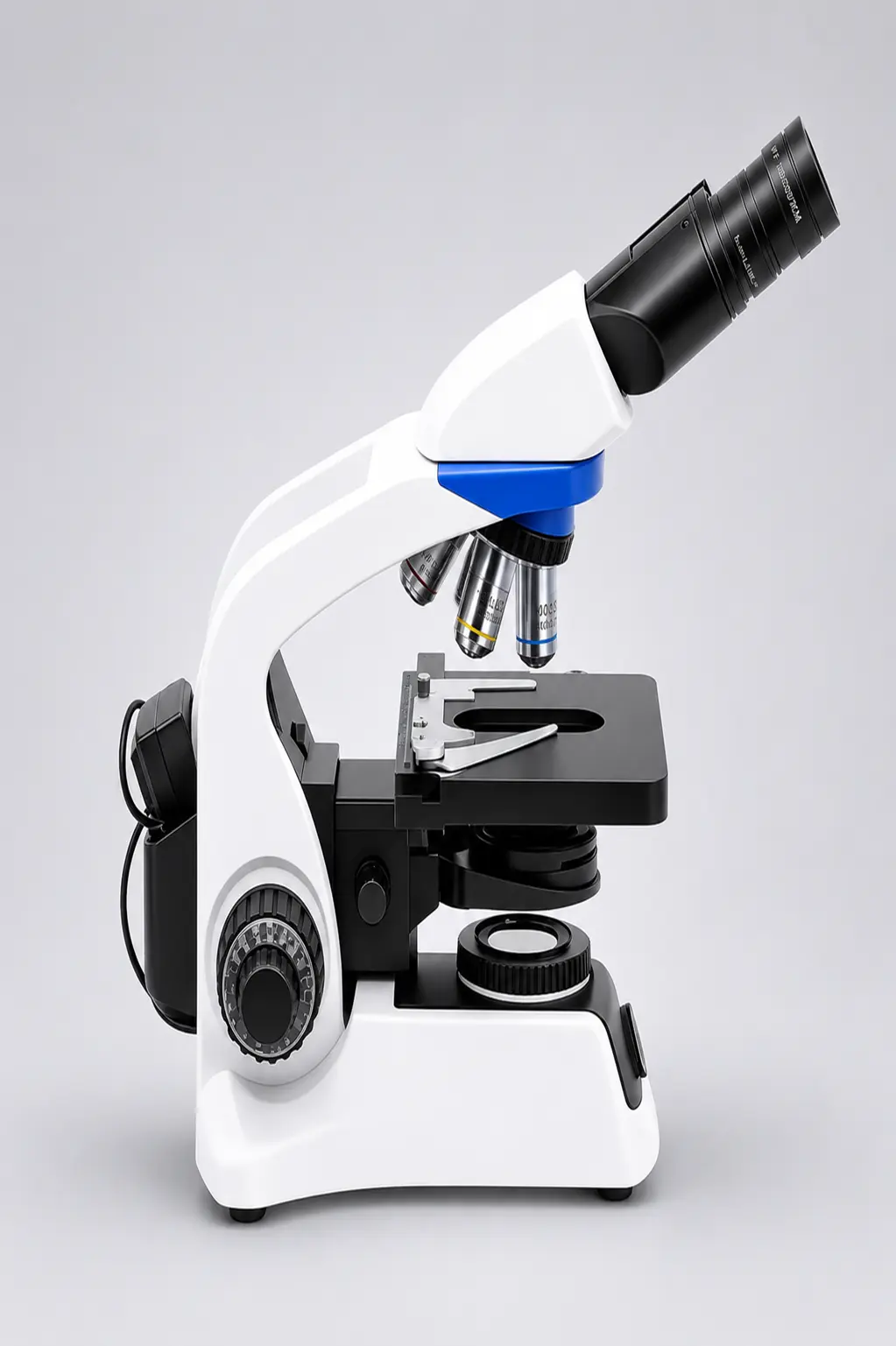
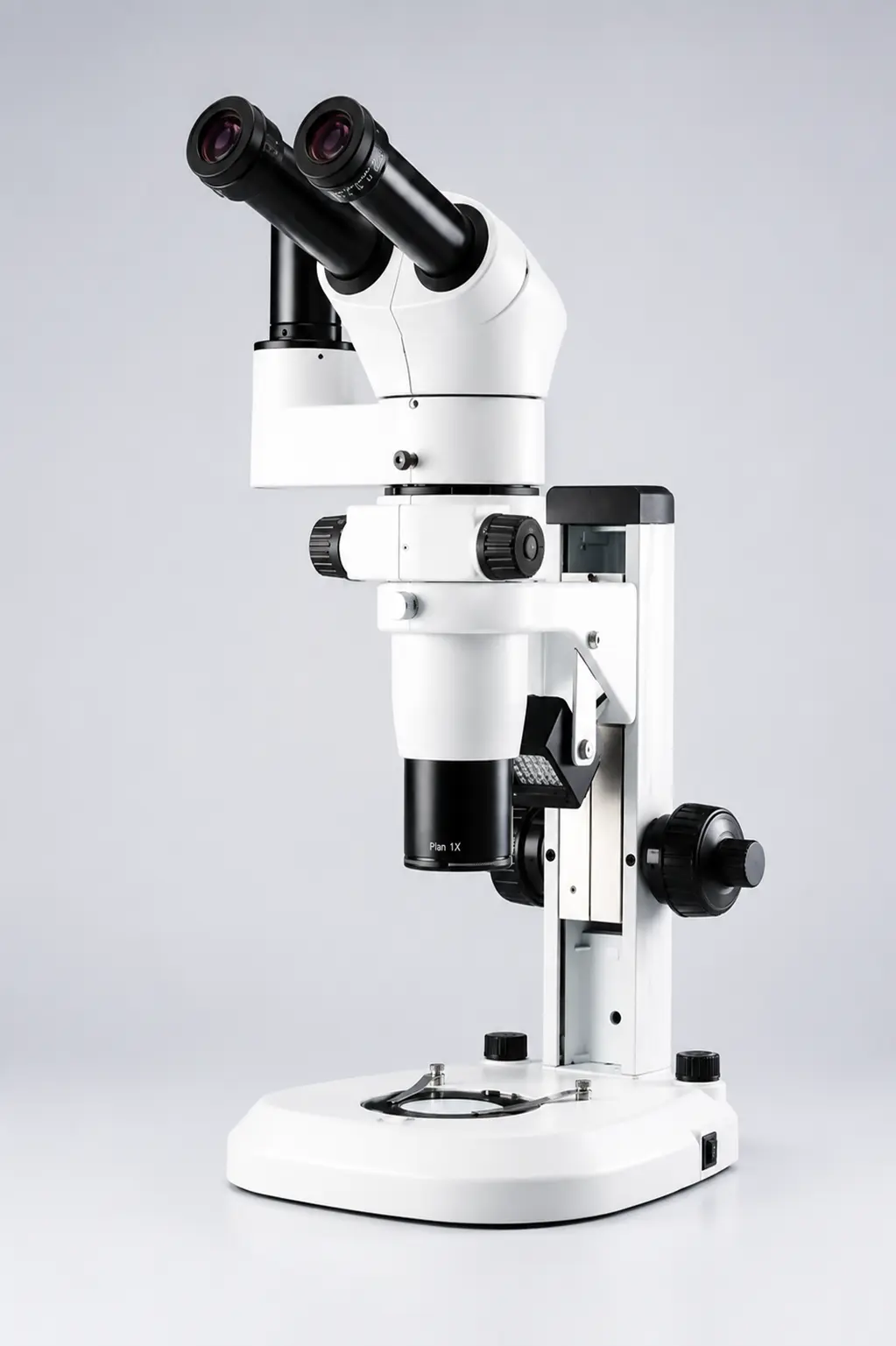
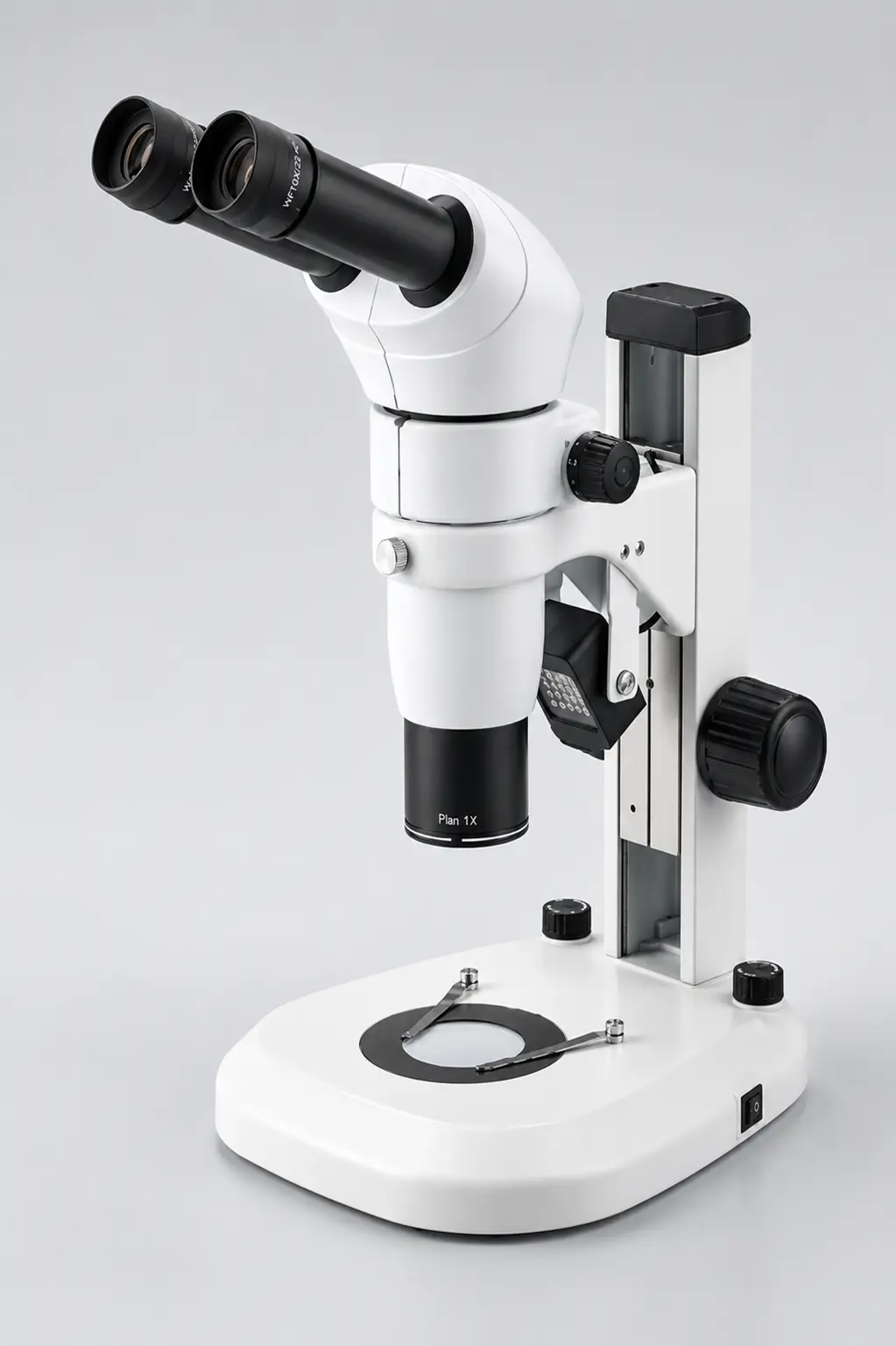
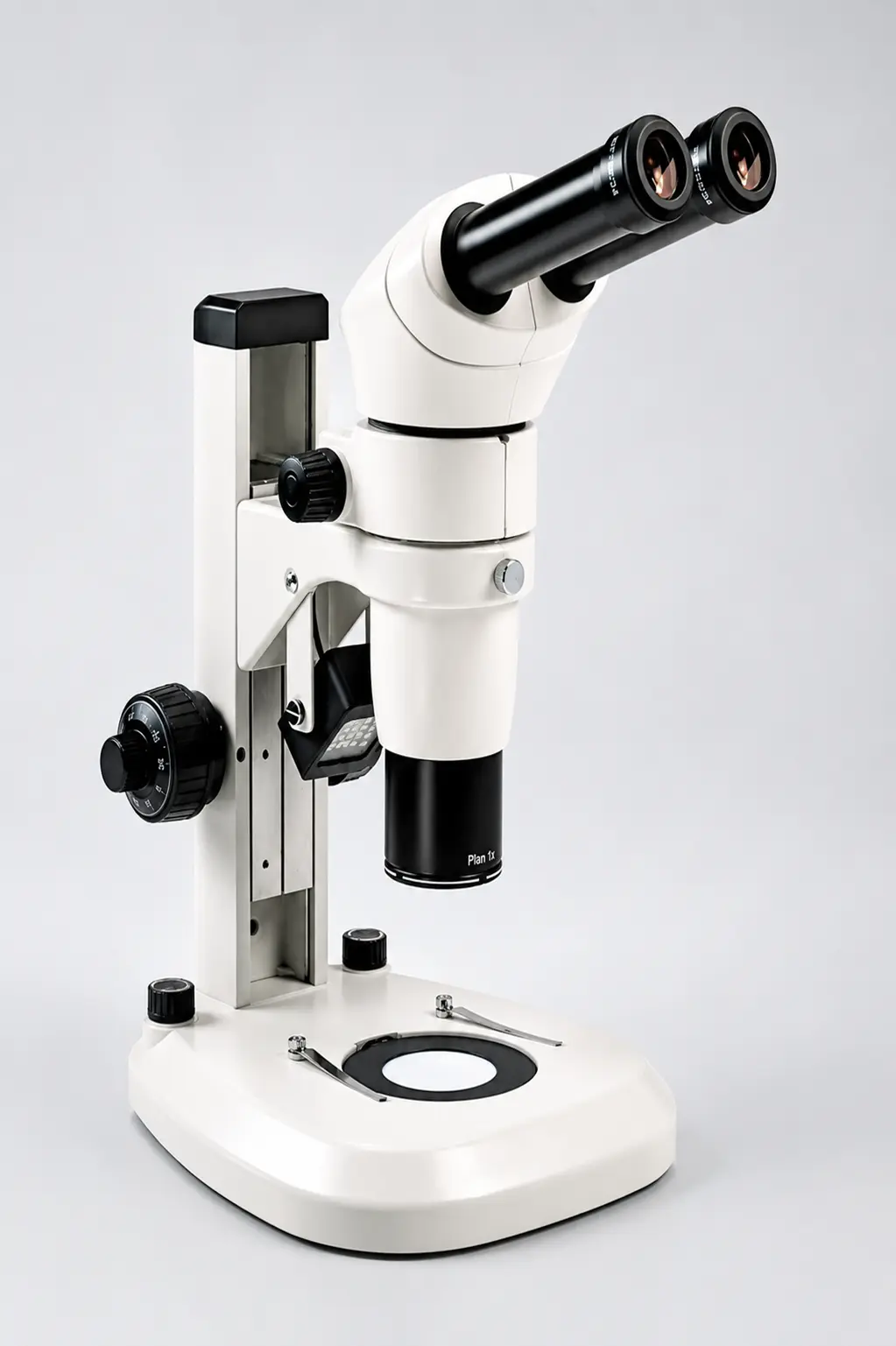
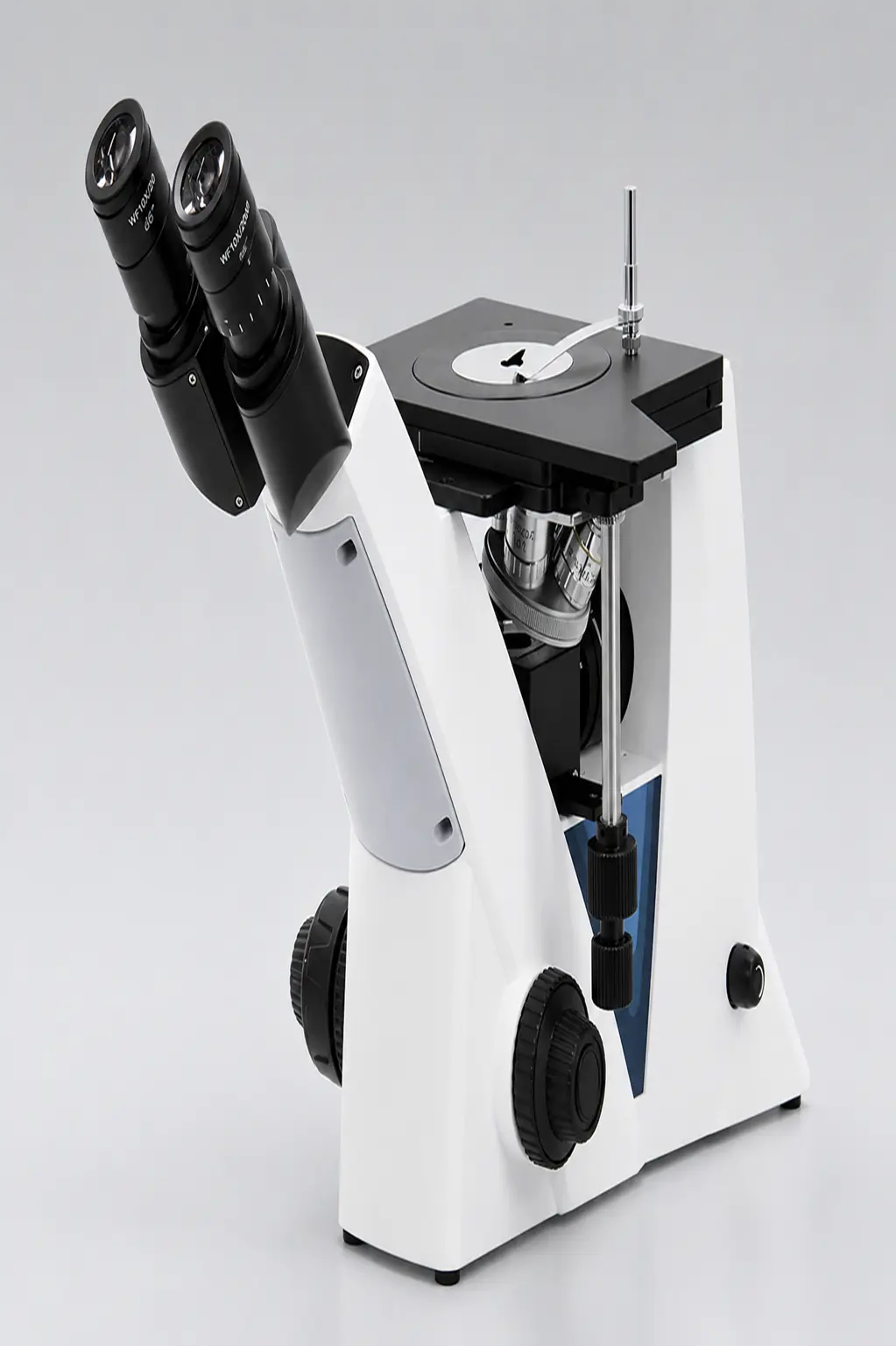
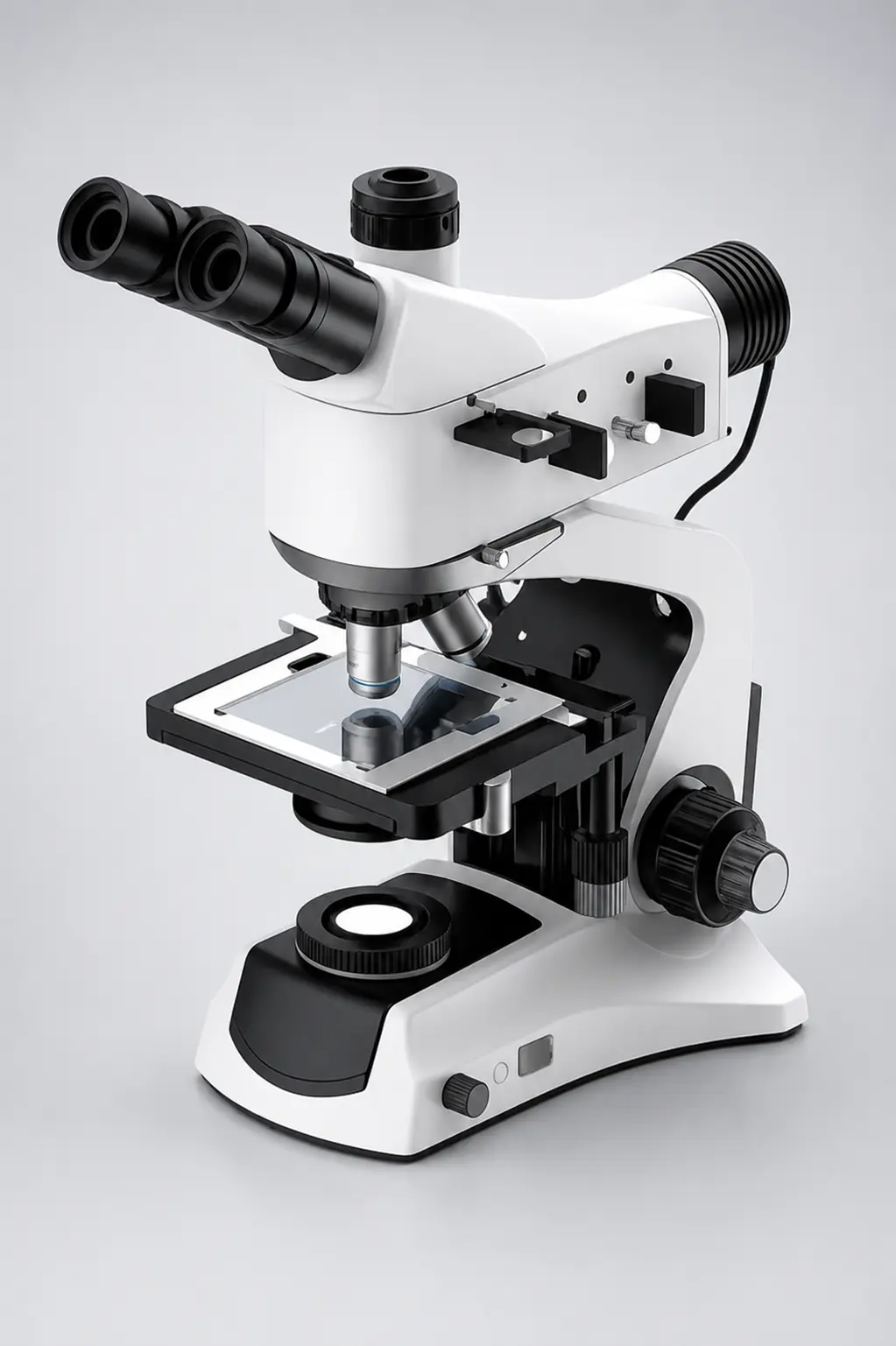
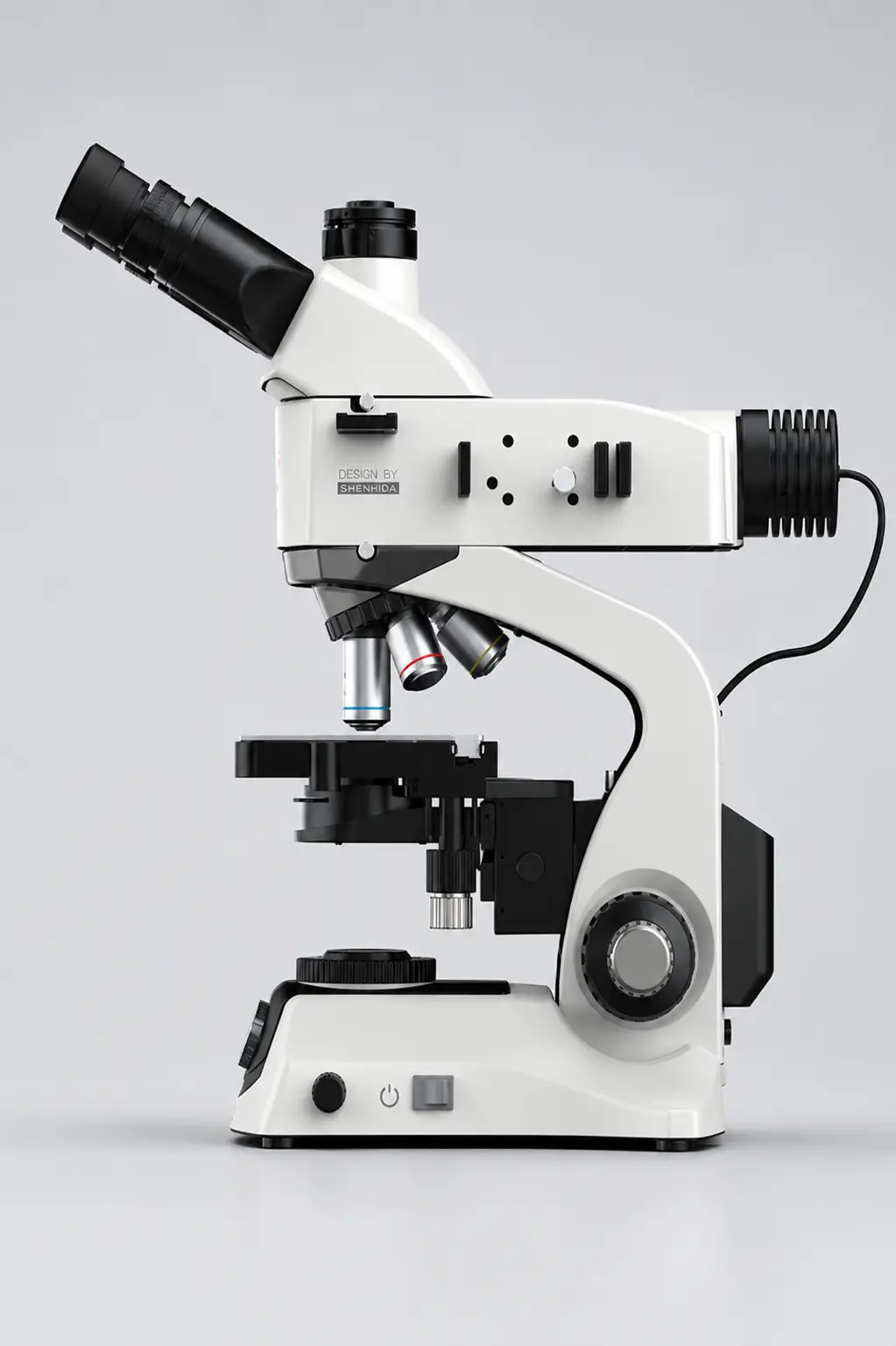
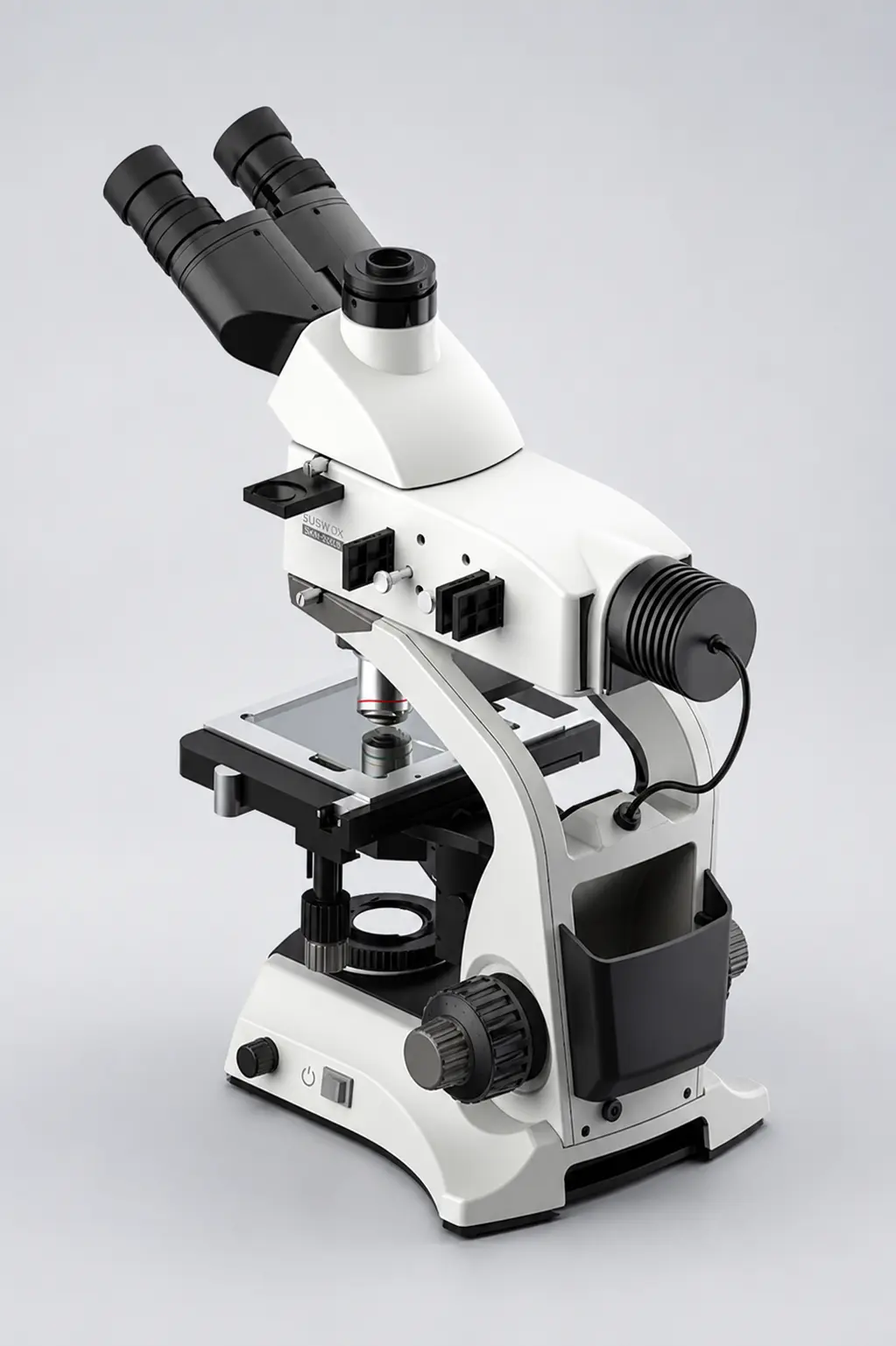
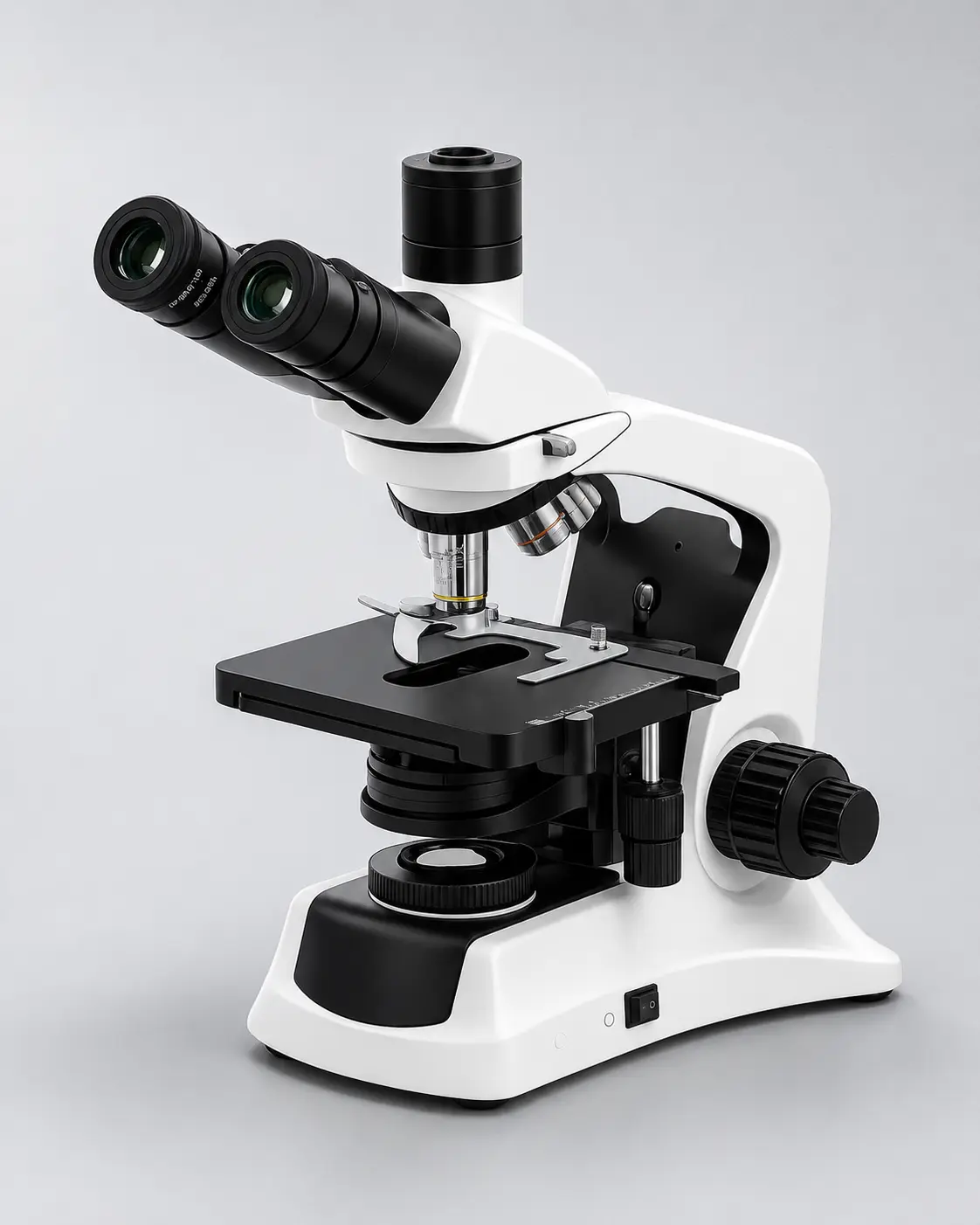
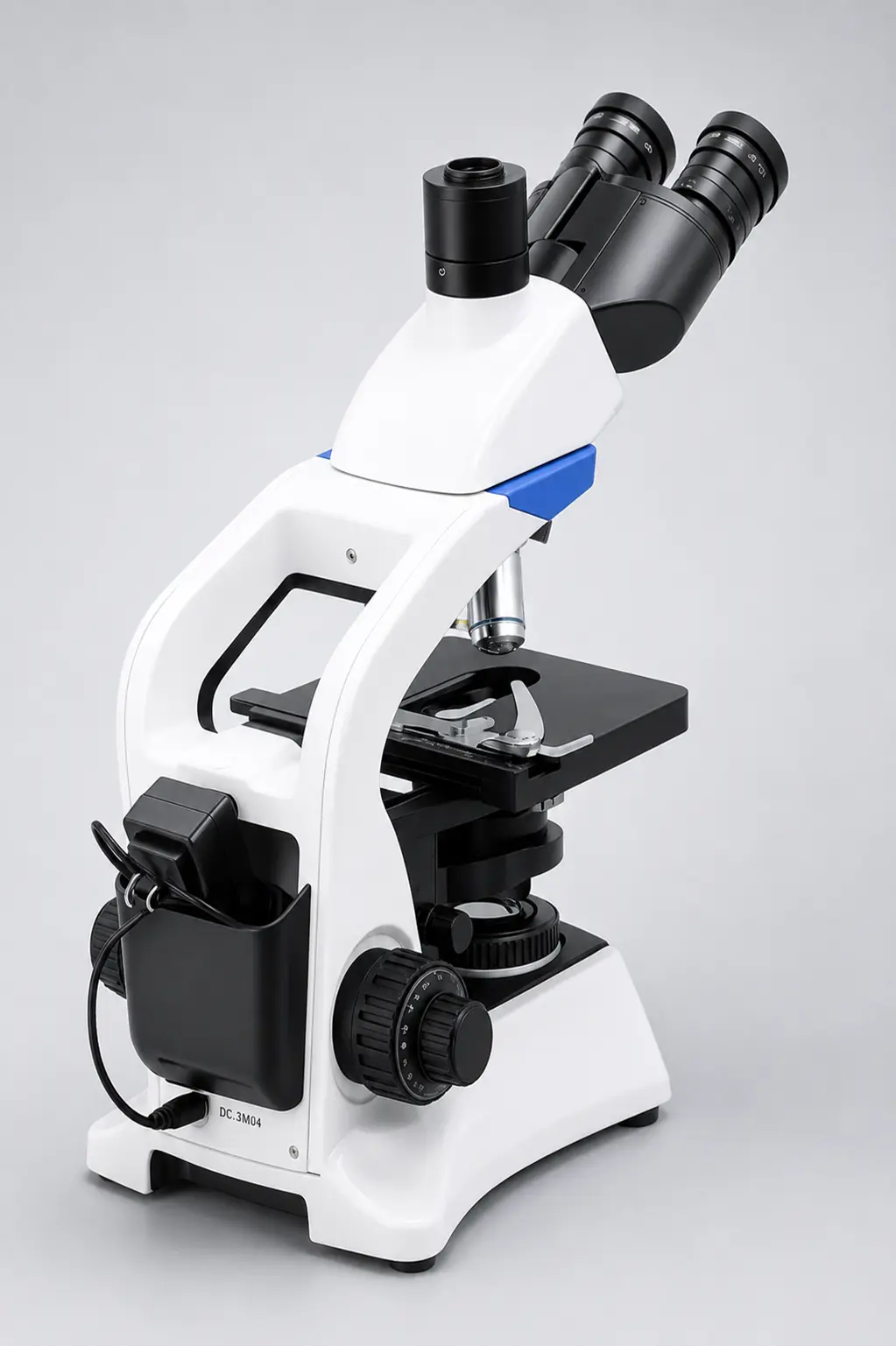
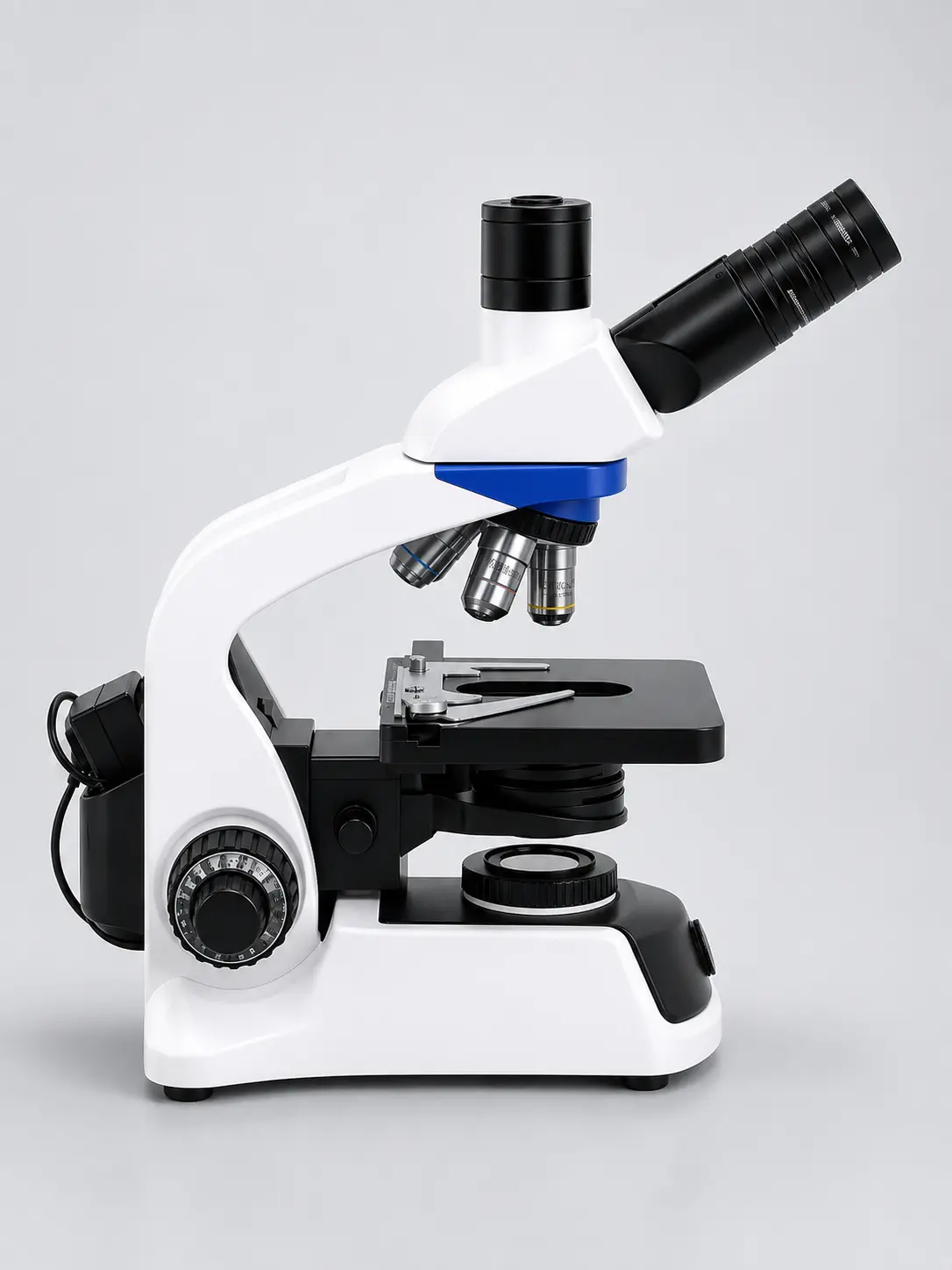
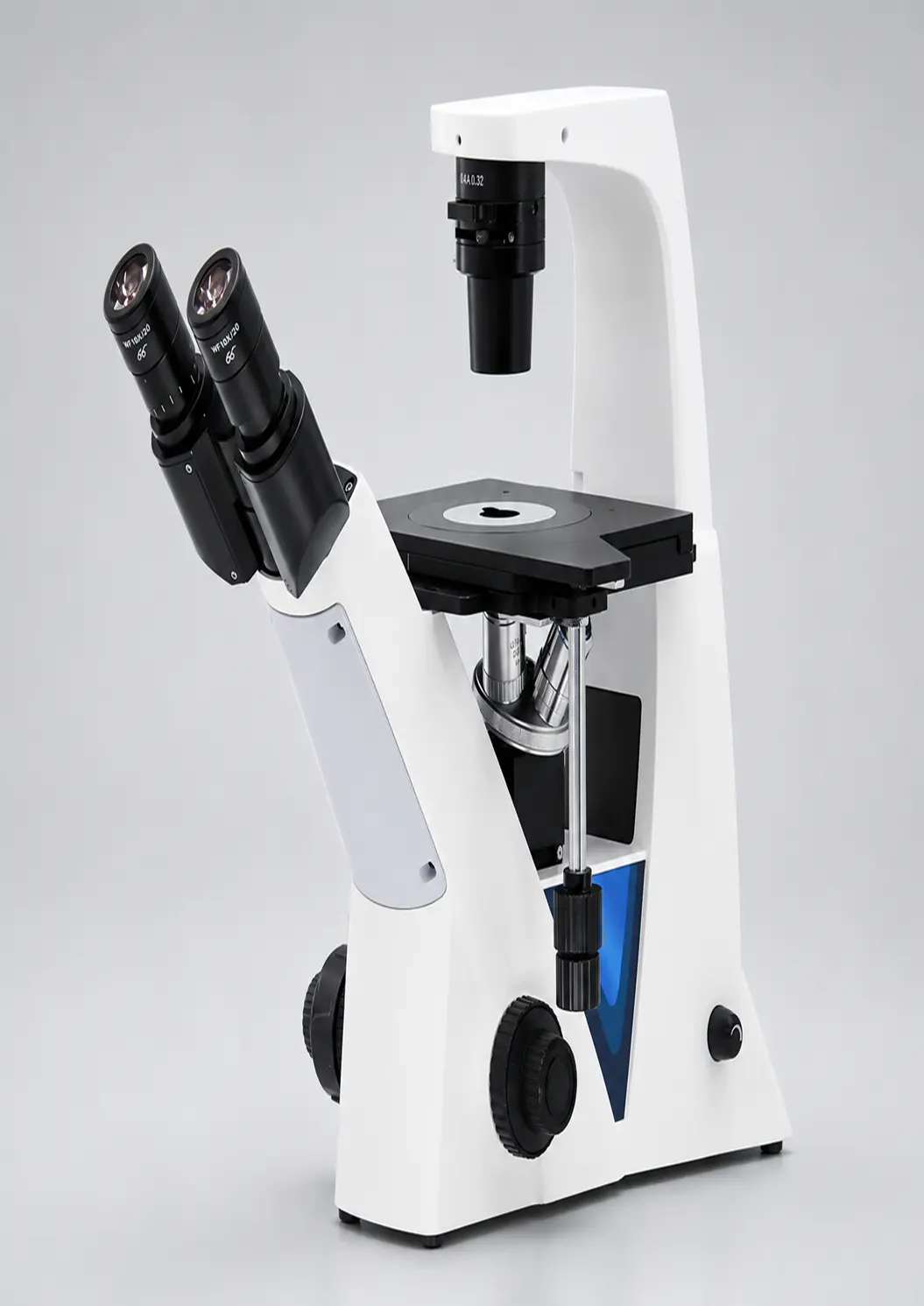
Economical Binocular Pathological Microscope
10x wide field
4x/5x, 10x, 40x/45x&100x
Ball Bearing Mechanical Stage
300 inclined Siedentopf Viewing Head
LED Illumination
Coaxial Fine and coarse focusing
Maximum total magnification
ABBE double-lens condenser
Rated LED lamp life
SMPS, handles Indian supply swings
| Specification | Details |
|---|---|
| Body | Robust mould, ergonomic design sturdy body with three built-in filters: daylight and neutral density filters |
| Eyepiece | High Eye Point, Chromatic Corrected, Wide Field WF10X with FOV 18 mm, diopter adjustment on one eyepiece (±5) |
| Viewing Head | Siedentopf Trinocular Head, 30° inclined and 360° rotatable, inter-pupillary distance 48–75 mm, 2-position splitting ratio (for trinocular) |
| Objectives | Semi-Plan/Plan Achromatic: 4X N.A. 0.10, 10X N.A. 0.25, 40X N.A. 0.65, 100X N.A. 1.25 |
| Condenser | Double Lens Abbe Condenser, N.A. 1.25 |
| Optical System | Infinite/Finite optical system, multi-layered hard-coated, color corrected, anti-fungal, anti-bacterial, anti-reflection coated |
| Mechanical Stage | Single Layer Mechanical Stage, right/left-hand control, hard-coated surface 145 × 125 mm, low position coaxial movement, travel range 50 × 80 mm, vernier scale X-Y axis, precision 0.1 mm |
| Nosepiece | Dust-Protected Quadruple with multiple ball-bearing, rubber grip & positive click stop |
| Illumination | Fixed/Köhler 3W LED (50,000 hrs life) or Halogen lamp 6V 20W, intensity adjustable, centre pre-setting |
| Power Supply | 90–240V / 50Hz AC, SMPS transformer |
| Certification | CE, ISI, ISO |
The CXL Bi sits in the working middle of our range: more stage precision and optical correction than a teaching scope, without the cost of a plan-apochromatic research stand.
Peripheral smears, urine sediment, gram stains and H&E sections. The
100X oil objective with a 1.25 N.A. condenser resolves chromatin detail
and bacterial morphology cleanly.
Routine screening loads where the same scope is shared across shifts.
The ball-bearing stage and click-stop nosepiece hold calibration through
heavy handling.
Binocular viewing removes the eye strain that kills a three-hour
practical. Fixed-Koehler LED keeps illumination consistent across a room
full of units.
Faecal floats, milk somatic cell counts, seed and soil work. Anti-fungal
coated optics survive humid storerooms far better than uncoated glass.
Microbial load checks, algae identification and adulteration screening
under 40X, with vernier co-ordinates so a field can be found again.
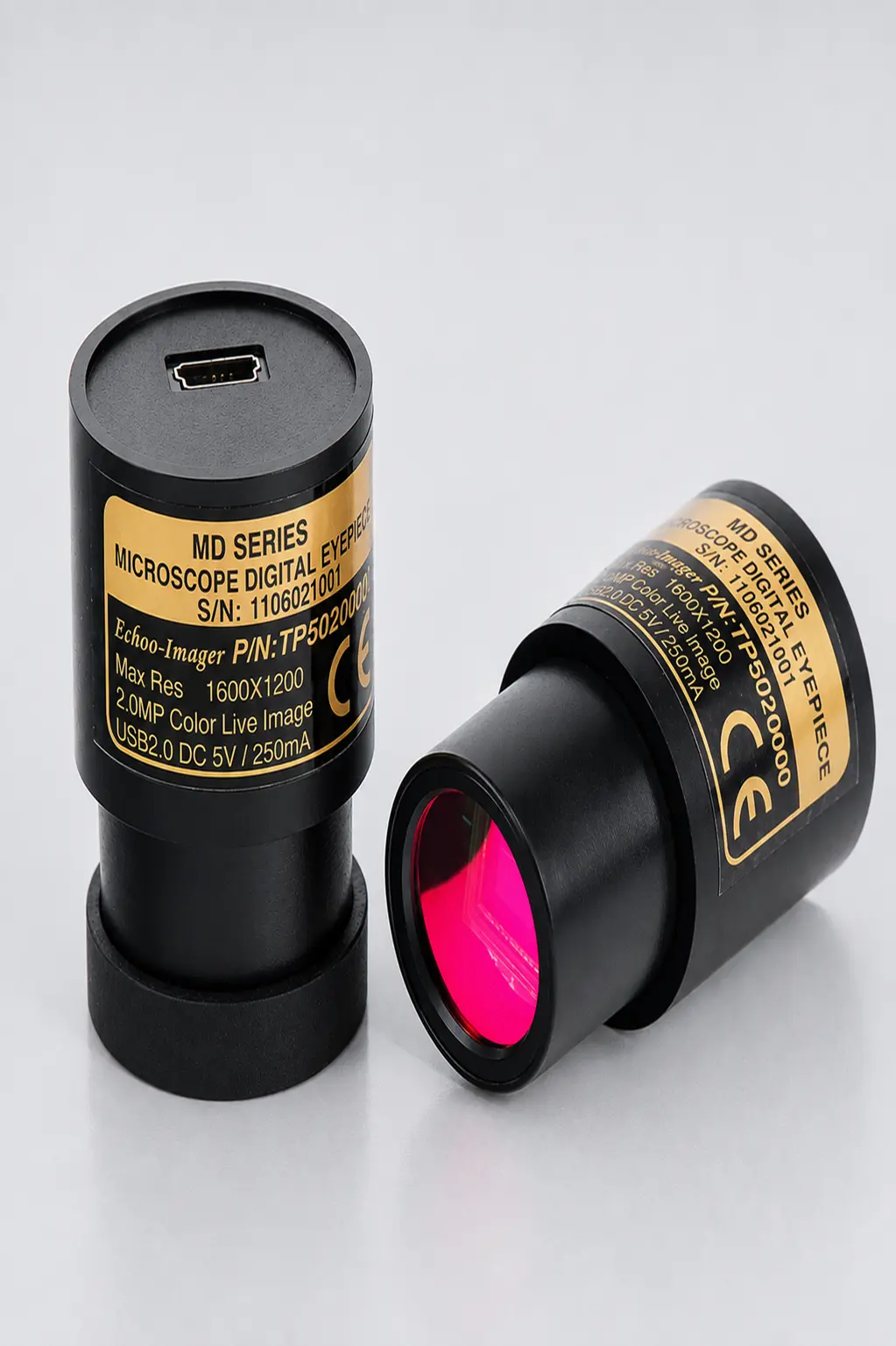
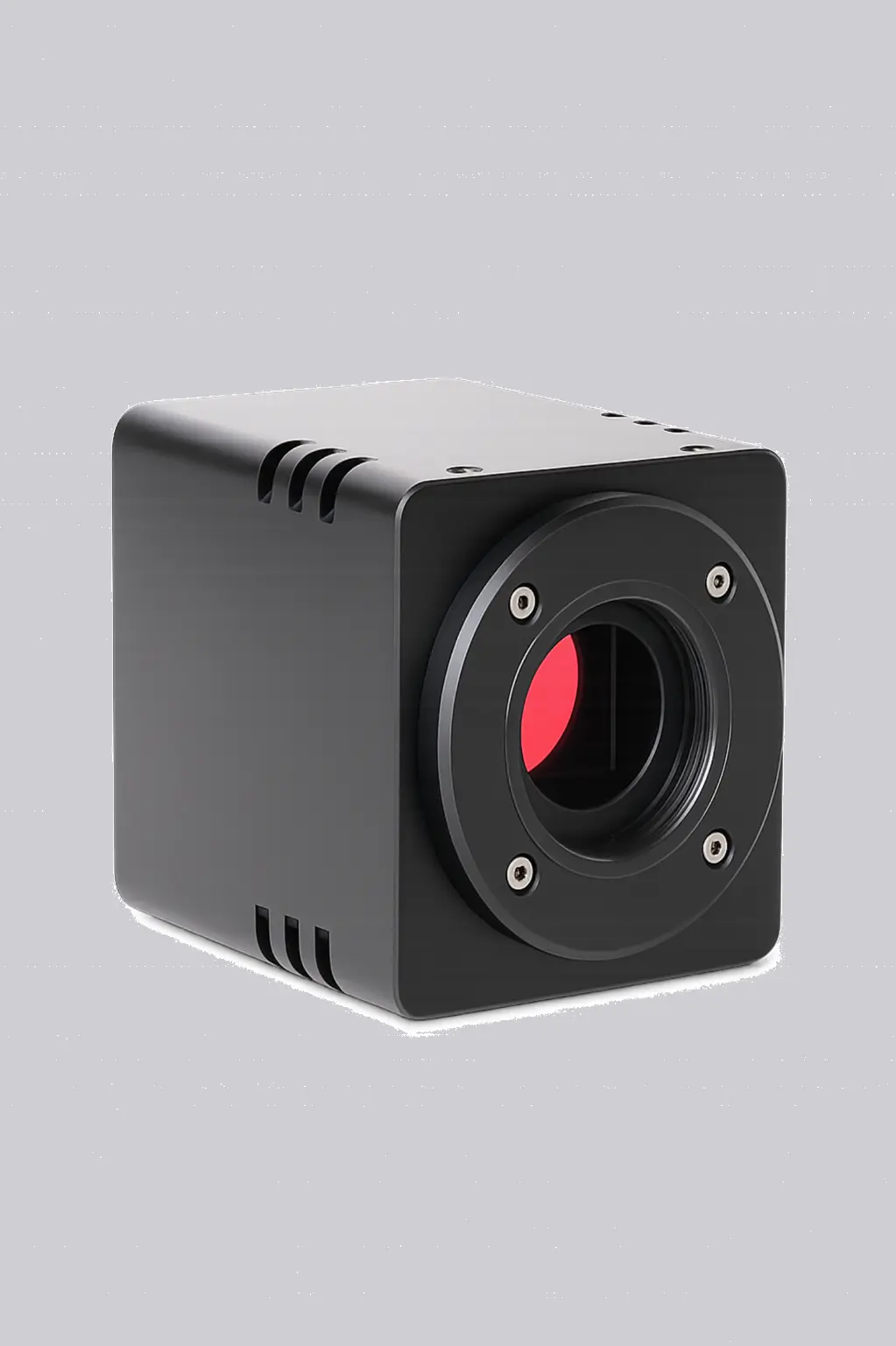
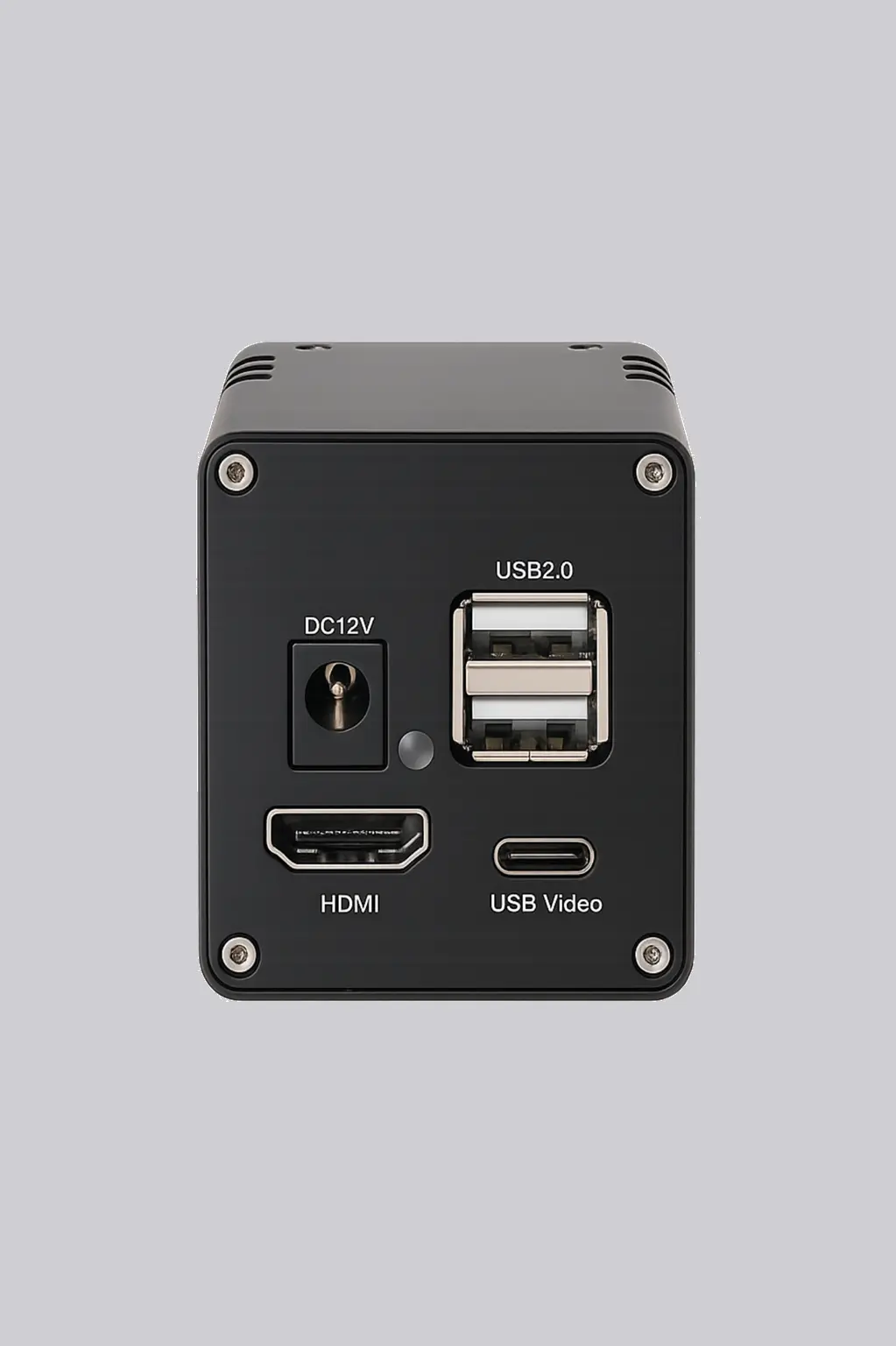
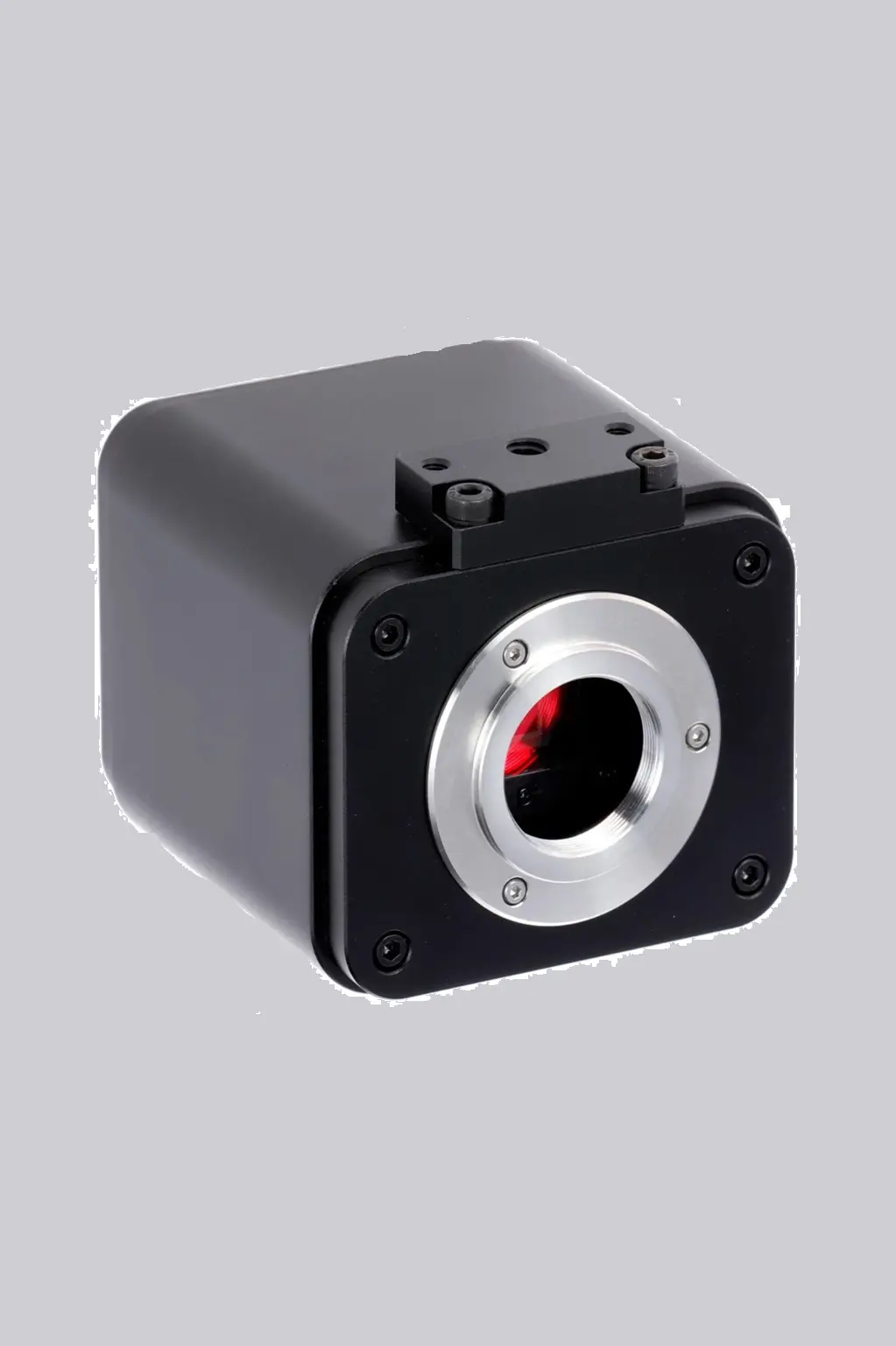
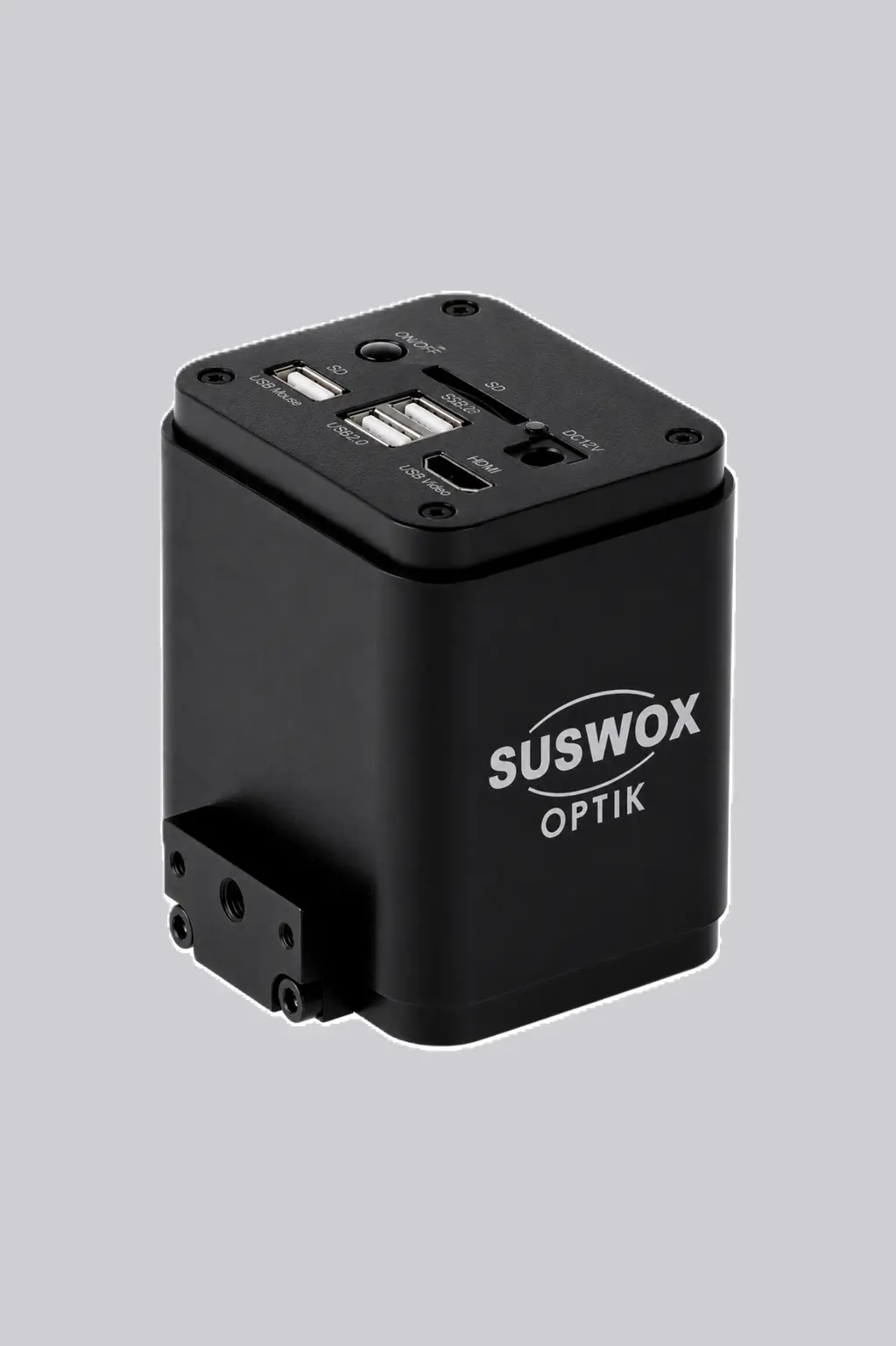
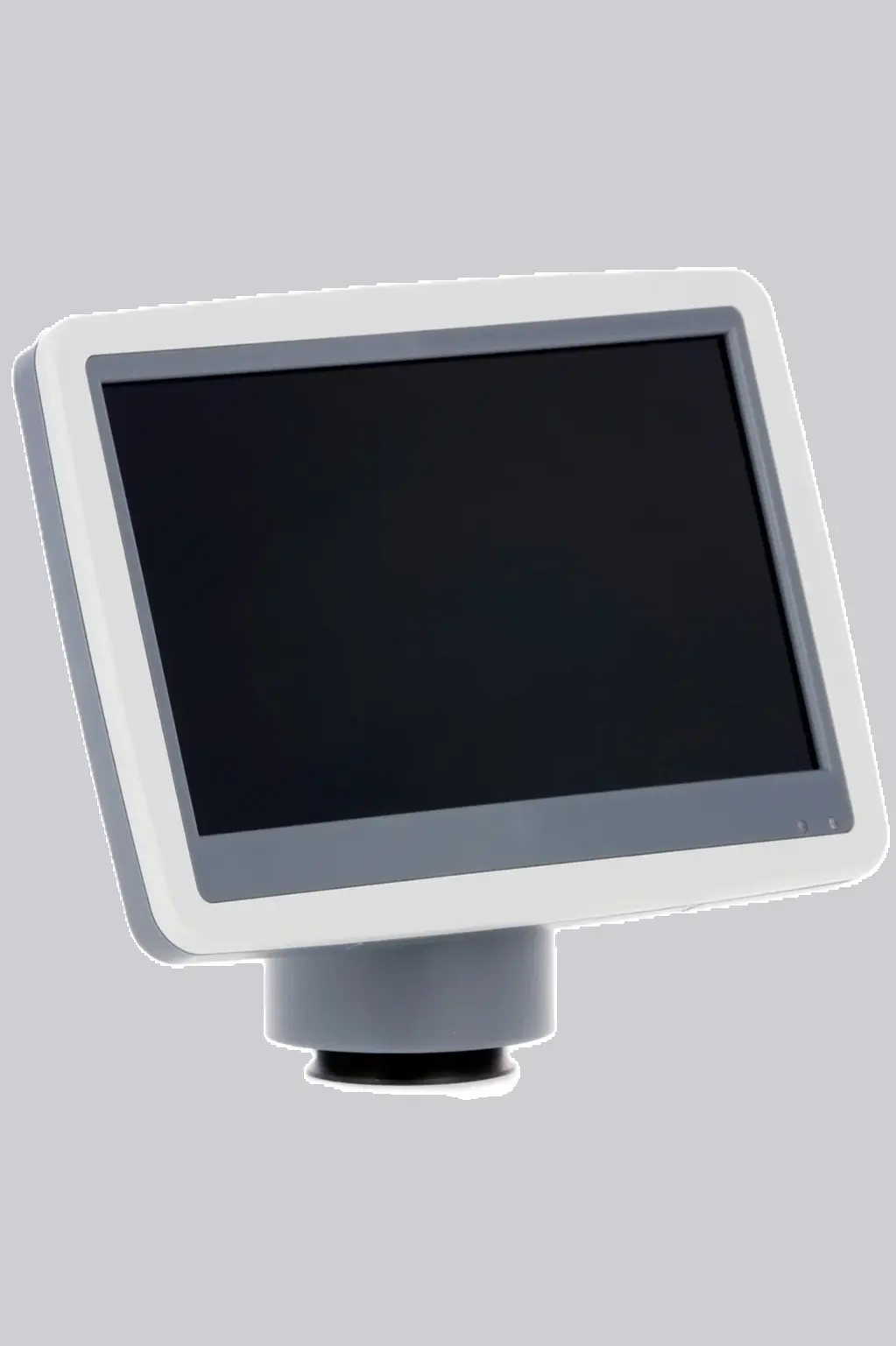
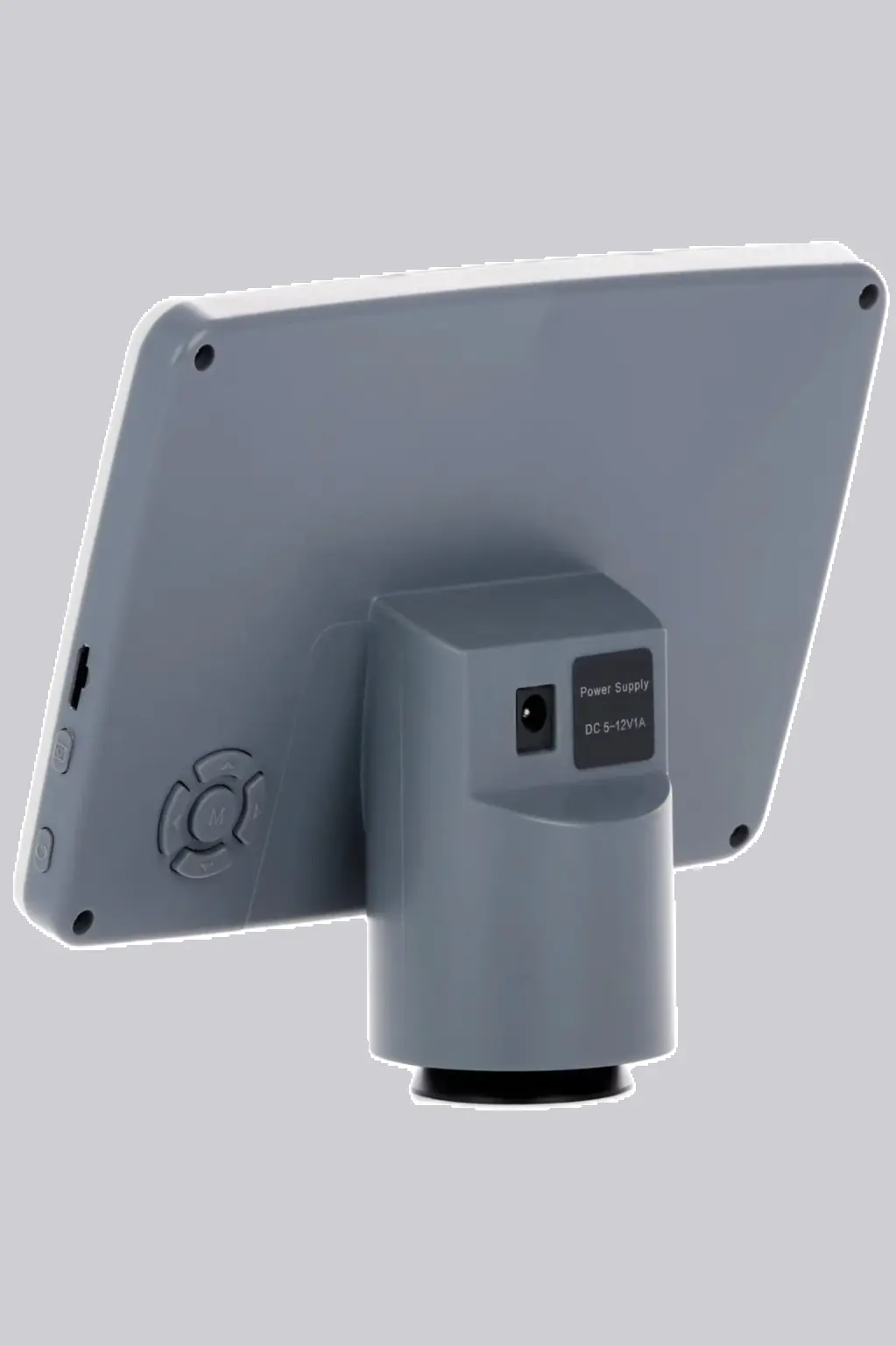
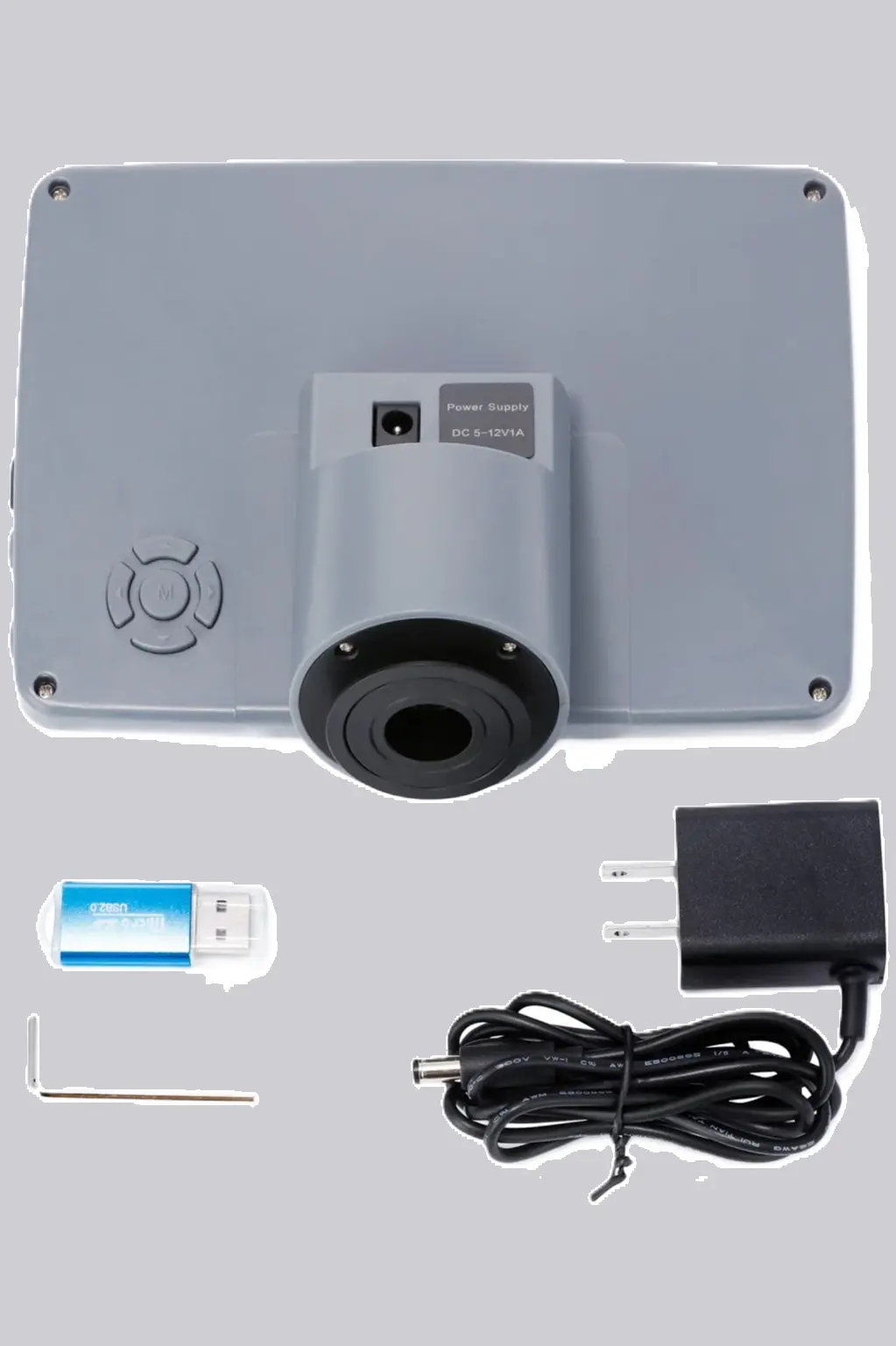
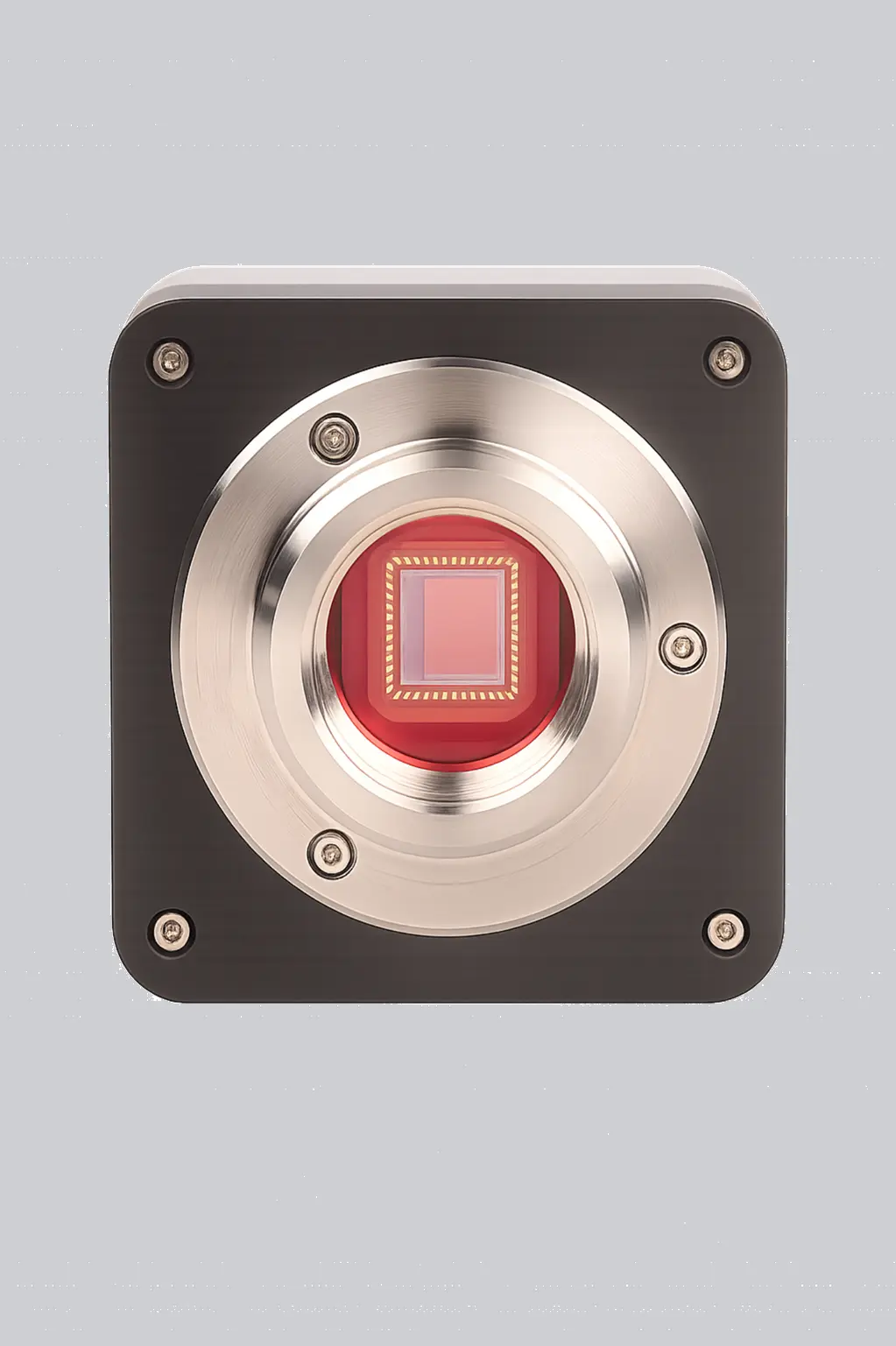
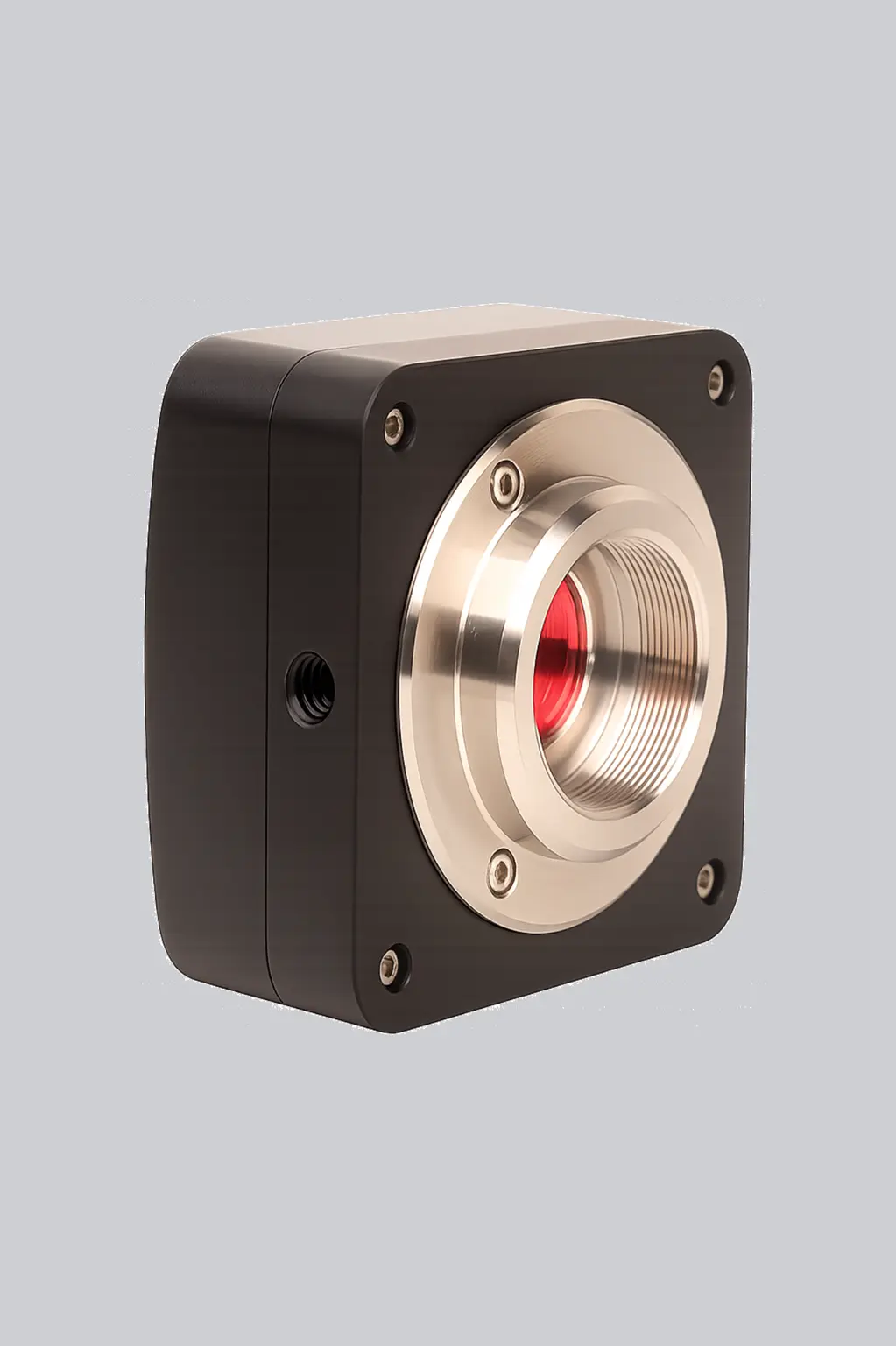
The sliding binocular head accepts our XCAM series C-mount cameras, so
the same body moves from eyepiece work to screen sharing and
documentation.
1000×. The WF10X eyepieces multiply with the 100X oil immersion objective, giving 40×, 100×, 400× and 1000× across the four positions on the nosepiece. Beyond 1000× you gain no additional detail with this optical system — you are only enlarging an image the numerical aperture has already limited.
You need it for the 100X objective. Without oil filling the gap between the coverslip and the front lens, light bends away at the glass–air boundary and the effective N.A. drops well below 1.25 — the image goes dim and soft. A vial is included in the box. Wipe the objective with lens tissue after each session.
Semi-plan objectives give a flat, sharp image across roughly 80% of the field, with slight softening at the extreme edge. Plan objectives correct the full field but cost significantly more. For routine screening and teaching, semi-plan is the practical choice; for photomicrography where edge-to-edge sharpness is published, ask us about the plan upgrade.
LED for almost every lab. It runs at 50,000 hours against roughly 1,000 for halogen, stays cool so it does not dry your specimen, and holds colour temperature as you dim it. Halogen remains available if your protocol was validated on it or you need its warmer spectrum for particular stains.
Yes. The sliding binocular head accepts our XCAM Mini and X Cam C-mount cameras through an adapter. If documentation is a daily requirement rather than an occasional one, consider a trinocular model instead so you keep both eyepieces and the camera port live at the same time.
Stock units dispatch in 3–5 business days. We ship across India by surface and air freight, and export with wooden crating on request. Institutional and tender orders with specific documentation requirements are handled by our sales desk — call +91 8727015757.
The unit carries a one-year warranty on body, optics and electricals. We stock spares — objectives, eyepieces, LED assemblies, stage parts — for ten years from the date of manufacture. Most issues are resolved over a video call; parts ship direct to your lab.
Pricing depends on configuration (LED or halogen, objective set, camera adapter) and order quantity, so we quote per enquiry rather than list a single figure. Send your requirement through the form below or on WhatsApp and you will have a written quotation with GST and freight the same working day.
Lets Have A Chat